
IRS Dispute Lawyers in Alabama
Resolve severe tax controversies by connecting with experienced Alabama IRS dispute lawyers who protect your financial assets from aggressive federal and state collections. Dedicated tax attorneys regularly secure structured installment agreements, offers in compromise, and audit dismissals, preventing devastating wage levies and bank seizures. Browse our verified directory below to consult an attorney for your tax matter.

Gilpin Givhan, PC - Montgomery, AL
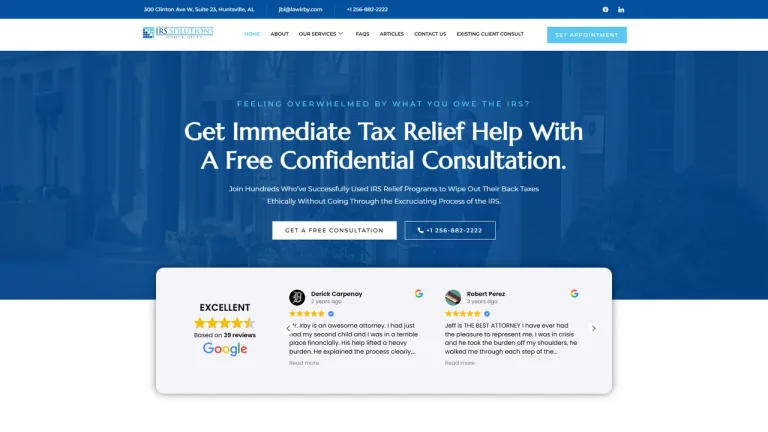
Jeffrey B. Irby, P.C. - Huntsville, AL

Steve Martin Attorney - Hoover, AL

The Law Office of Joshua A. Lowenthal, PLC - Tuscaloosa, AL

Partners Tax Defense - Mobile, AL

Defense Tax Partners - Montgomery, AL
Advent Tax Law Firm - Huntsville, AL
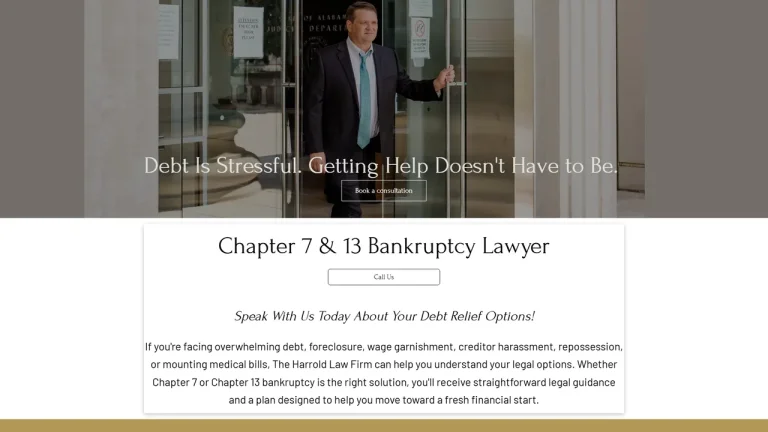
Randy Harrold LLC - Montgomery, AL
McBride Law, LLC - Montgomery, AL
Defense Tax Partners - Tuscaloosa, AL

Partners Tax - Tuscaloosa, AL
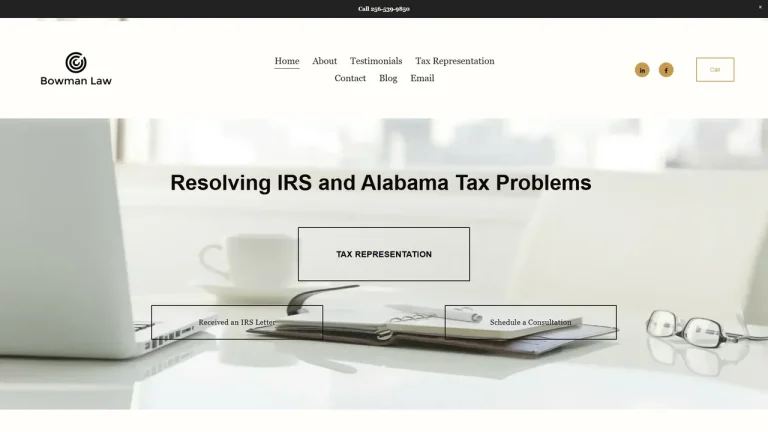
Bowman Law Firm - Huntsville, AL
Mobile Tax Attorney IRS Tax Settlement - AL
Navigating Federal and Alabama State Tax Controversies
Tax disputes place severe financial and emotional strain on Alabama individuals and business owners. Tax controversy practice across the state encompasses dual jurisdictions: the federal framework governed by the Internal Revenue Service (IRS) and the state system administered by the Alabama Department of Revenue (ADOR) in Montgomery. Whether you are facing a corporate payroll tax audit in Birmingham, an individual income assessment in Huntsville, or an offshore reporting inquiry in Mobile, experienced legal counsel is essential to protect your assets.
Federal tax litigation for Alabama taxpayers is concentrated in the United States Tax Court, which holds regular trial sessions in Birmingham and Mobile, as well as the U.S. District Courts for the Northern, Middle, and Southern Districts of Alabama. On the state level, the Alabama Tax Tribunal serves as an independent executive tax court established under Ala. Code § 40-2B-1 to hear appeals from final assessments issued by ADOR, providing an impartial judicial forum separate from the revenue department itself.
Navigating this complex landscape requires an attorney admitted to the Alabama State Bar and licensed to practice before the U.S. Tax Court and federal district courts. A seasoned advocate understands the interplay between federal adjustments and automatic state tax liabilities, ensuring that settlement negotiations, administrative appeals, and installment relief resolve both federal and state exposures simultaneously.
Legal Fee Structures for Tax Controversy Matters in Alabama
| Case Scenario | Fee Structure | Estimated Cost (USD) | Key Cost Determinants |
|---|---|---|---|
| IRS Audit Defense & Information Document Requests | Hourly Billing | $2,500 - $6,000 | Audit examination scope, business entity complexity, adequacy of financial books and records. |
| Collection Due Process (CDP) & Levy Relief | Flat Fee or Hourly | $3,500 - $8,500 | Urgency of bank levy or wage garnishment, Form 12153 filings, asset transparency. |
| Offer in Compromise (OIC) & Penalty Abatement | Flat Fee | $4,000 - $10,000 | Total tax liability, Reasonable Collection Potential (RCP) analysis, asset equity calculation. |
| U.S. Tax Court & Alabama Tax Tribunal Litigation | Hourly ($300 - $600 / hr) | $7,500 - $25,000+ Advance Retainer | Stipulation of facts preparation, evidentiary complexity, expert testimony, trial duration. |
Critical Legal Deadlines & Statutes for Alabama Taxpayers
Tax disputes are strictly deadline-driven, and failing to respond within statutory timeframes will extinguish your appeal rights forever. Under federal law, receiving an IRS Notice of Deficiency gives you exactly 90 days to petition the United States Tax Court pursuant to 26 U.S. Code § 6213(a); this deadline cannot be extended by judges or IRS agents. For collection matters, you must file a Collection Due Process hearing request within 30 days of receiving a Final Notice of Intent to Levy under 26 U.S. Code § 6330 to preserve judicial review and pause involuntary seizures.
At the state level, the Alabama Taxpayers' Bill of Rights sets rigorous procedural clocks. Under Ala. Code § 40-2A-7(b)(4), taxpayers have only 30 days from the mailing date of a preliminary assessment to file a written notice of appeal with the Alabama Department of Revenue. Once a final assessment is entered, Ala. Code § 40-2A-7(b)(5) mandates that an appeal to the Alabama Tax Tribunal or the appropriate county Circuit Court must be initiated within 30 days. Additionally, federal tax assessment is limited to three years under 26 U.S. Code § 6501(a), and collections are limited to ten years under 26 U.S. Code § 6502(a).
Self-Representation vs. Retaining Specialized Tax Counsel
While taxpayers have the legal right to communicate directly with IRS revenue officers or file petitions pro se before the Alabama Tax Tribunal, doing so without legal representation is fraught with peril. Under Ala. Code § 12-12-31, Alabama small claims courts handle general civil matters up to $6,000, but they possess zero jurisdiction over state or federal tax assessments. Tax disputes require deep knowledge of the Internal Revenue Code and the Alabama Tax Code, where unintentional disclosures to IRS agents can quickly expand a routine civil examination into a criminal tax fraud investigation.
Furthermore, navigating complex programs such as the IRS Fresh Start initiative, Currently Not Collectible (CNC) status, or innocent spouse relief under 26 U.S. Code § 6015 requires precise financial calculations. Unlike non-attorney tax resolution services or retail preparers, a licensed tax attorney possesses attorney-client privilege under Ala. Code § 12-21-161 and federal common law, ensuring that confidential financial revelations cannot be compelled as evidence against you in court.
Red Flags & Safeguards in Tax Controversy Representation
- National call-center guarantees: Beware of national tax relief companies advertising pennies-on-the-dollar settlements; promising guaranteed acceptance of an Offer in Compromise violates professional ethics.
- Non-lawyer sales representatives: Never retain a firm where initial assessments are conducted by aggressive commission-based sales agents rather than licensed Alabama or Tax Court attorneys.
- Ignoring Alabama state tax liabilities: An agreement reached with the IRS does not resolve state debts; ensure your attorney explicitly coordinates relief with the Alabama Department of Revenue.
- Lack of Tax Court admission: Always confirm that your legal counsel is formally admitted to practice before the United States Tax Court and maintains good standing with the Alabama State Bar.
Frequently Asked Questions
What is the difference between a tax attorney and a CPA in an IRS dispute?
While CPAs prepare returns and analyze books, only licensed tax attorneys provide full attorney-client privilege and courtroom representation in the United States Tax Court, federal district courts, and the Alabama Tax Tribunal. Attorneys are trained in statutory interpretation, evidentiary rules, and defending against civil or criminal fraud charges.
What should I do if I receive an IRS Notice of Deficiency in Alabama?
You have exactly 90 calendar days from the date stamped on the notice to file a formal petition with the United States Tax Court pursuant to 26 U.S. Code § 6213(a). This jurisdictional deadline cannot be extended, making it critical to retain an experienced tax controversy attorney immediately.
Can an Alabama tax attorney stop an ongoing wage garnishment or bank levy?
Yes. By filing a timely Collection Due Process (CDP) appeal under 26 U.S. Code § 6330 or negotiating an immediate installment agreement, Currently Not Collectible status, or emergency levy release with the IRS, an attorney can halt aggressive collection enforcement.
How does the Alabama Tax Tribunal handle state revenue disputes?
Established under Ala. Code § 40-2B-1, the Alabama Tax Tribunal is an independent judicial body that hears appeals from final assessments of the Alabama Department of Revenue. It provides an impartial forum where taxpayers and their attorneys can present evidence before a specialized administrative law judge.
How long can the IRS legally collect back taxes in Alabama?
Under 26 U.S. Code § 6502(a), the IRS generally has a ten-year Collection Statute Expiration Date (CSED) from the date of formal assessment to collect taxes, unless specific tolling events like bankruptcy or pending offers in compromise extend the timeframe.