
Employment & Labor Lawyers in Alaska
Retaining an experienced Alaska employment attorney protects your workplace rights and safeguards your career under state and federal labor laws. Professional legal counsel assists in negotiating severance agreements, recovering unpaid overtime, and filing timely discrimination claims. Explore our verified statewide directory below to connect with qualified Alaska labor attorneys today.
Faulkner Banfield Law P.C. - Juneau, AK
Sonosky, Chambers, Sachse, Miller & Monkman, LLP - Juneau, AK
Cashion Gilmore & Lindemuth - Anchorage, AK
Zorea Law - Anchorage, AK

Manley Brautigam Bankston P.C. - Anchorage, AK
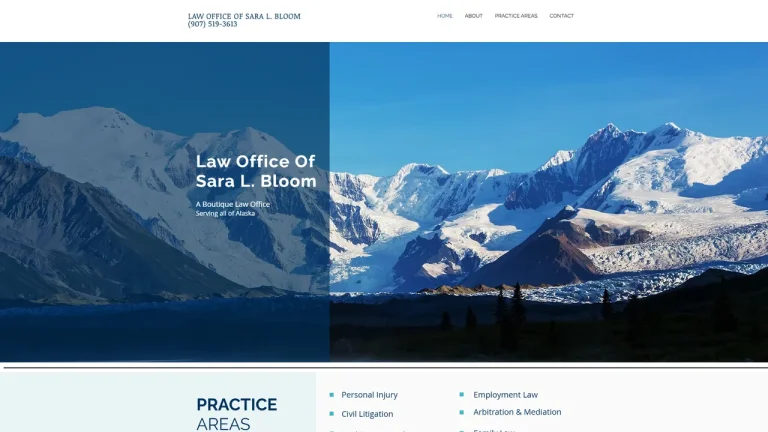
Law Office of Sara L. Bloom - Anchorage, AK

Schwabe - Anchorage, AK
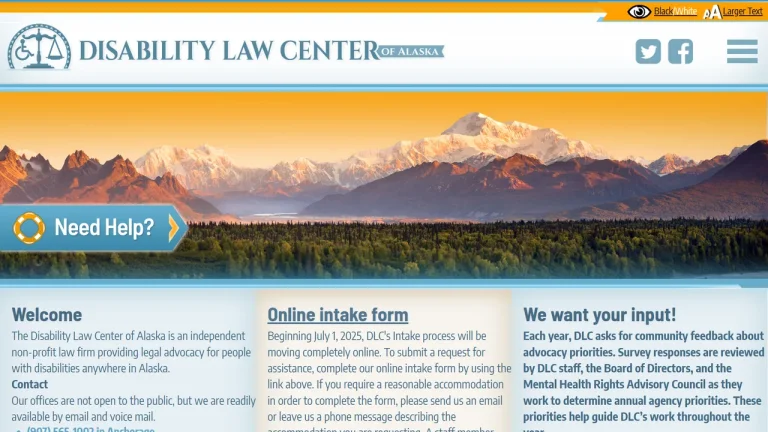
Mark W. Regan - Juneau, AK
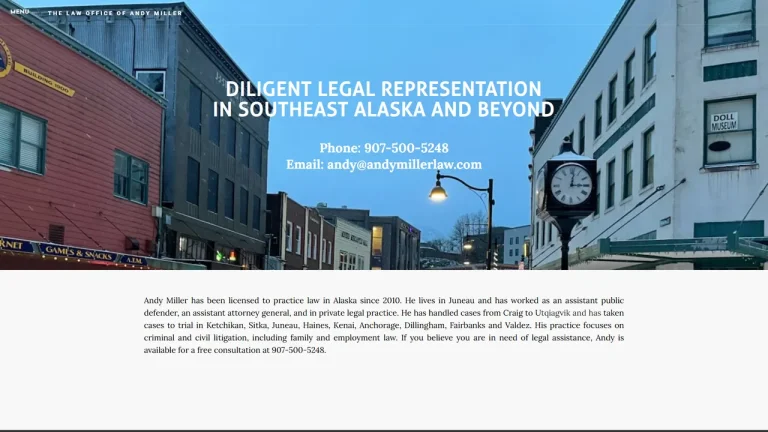
The Law Office of Andy Miller - Juneau, AK
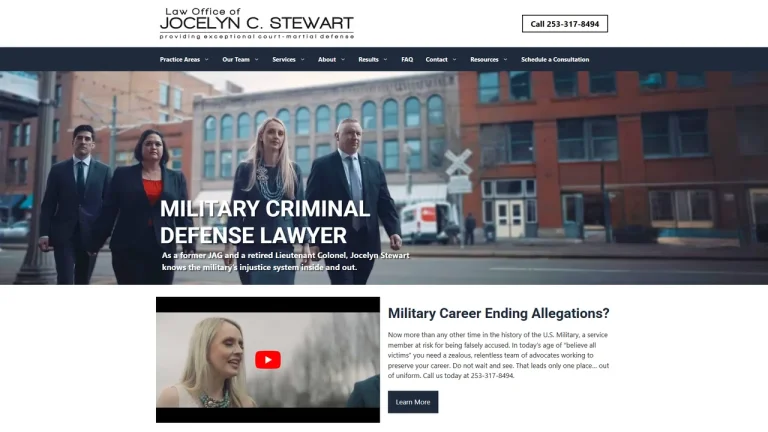
Law Office of Jocelyn C. Stewart - Anchorage, AK

Perkins Coie LLP - Anchorage, AK
Davis Wright Tremaine LLP - Anchorage, AK

Farley & Graves, P.C. - Anchorage, AK
Birch Horton Bittner and Cherot - Anchorage, AK

Paul H Grant Law Offices - Juneau, AK

Nicholas J.R. Gasca - Juneau, AK

Lessmeier and Winters, LLC - Juneau, AK

Stoel Rives LLP - Anchorage, AK

Ashburn & Mason Attorneys - Anchorage, AK

Juneau Mediation Center - Juneau, AK

The Brown Law Firm, LLC - Anchorage, AK

Dorsey & Whitney LLP - Anchorage, AK

Sedor Wendlandt Evans and Filippi, LLC - Anchorage, AK
Navigating Alaska Workplace Protections and Labor Jurisdictions
Securing knowledgeable legal counsel in Alaska is critical when navigating wage disputes, unlawful workplace harassment, retaliatory discharge, or employment contract negotiations. While Alaska operates as an at-will employment jurisdiction, this doctrine is strictly governed by the implied covenant of good faith and fair dealing recognized by the Alaska Supreme Court, requiring employers to act with basic fairness toward employees.
Statutory workplace civil rights in the state are protected under the Alaska Human Rights Act, codified in Alaska Stat. § 18.80.220. This statute prohibits employment discrimination based on race, religion, color, national origin, age, sex, physical or mental disability, marital status, changes in marital status, pregnancy, and parenthood. The inclusion of marital status and parenthood establishes unique state-level protections beyond basic federal standards.
Administrative discrimination complaints are investigated by the Alaska State Commission for Human Rights (ASCHR), headquartered in Anchorage. Wage disputes, minimum wage compliance, and overtime enforcement fall under the jurisdiction of the Alaska Department of Labor and Workforce Development (DOLWD) Wage and Hour Administration. When matters escalate to litigation, actions are filed in Alaska Superior Courts across Anchorage, Fairbanks, Palmer, and Juneau, or the U.S. District Court for the District of Alaska. Attorneys listed in this directory hold active licensure in good standing with the Alaska Bar Association.
Common Legal Fee Arrangements for Alaska Employment Matters
Employment law attorneys in Alaska structure legal fees according to case complexity, expected recovery, and representation scope. Below is an overview of prevailing fee arrangements across Alaska jurisdictions.
| Case Scenario | Fee Structure | Estimated Cost (USD) | Key Cost Determinants |
|---|---|---|---|
| Severance Review & Executive Employment Contracts | Flat Fee or Hourly ($250 - $475/hr) | $750 - $3,500 | Non-compete scope, severance release terms, earned bonuses, and stock unit allocations. |
| Unpaid Overtime & Wage and Hour Enforcement | Contingency Fee (33.3% - 40%) | $0 Upfront (Contingent on Recovery) | Daily overtime audit records, shift log documentation, and statutory liquidated damages calculations. |
| Workplace Discrimination & Retaliation Lawsuits | Contingency or Hybrid Retainer | $0 - $6,000 Retainer + Contingency | ASCHR findings, pretext proof, lost wage duration, and emotional distress evidence. |
| ASCHR Administrative Defense & Employer Audits | Hourly Billing ($275 - $500/hr) | $4,500 - $18,000+ | Position statement drafting, witness interviews, human resource audit scope, and conciliation hearings. |
Critical Legal Deadlines & Statutes in Alaska Employment Cases
Strict limitation periods dictate workplace litigation in Alaska. Under Alaska Stat. § 18.80.100, an employee pursuing an administrative discrimination complaint through the Alaska State Commission for Human Rights must file within 300 days of the alleged discriminatory act.
Alternatively, employees may initiate a direct civil lawsuit under the Alaska Human Rights Act in Superior Court without exhausting administrative remedies, subject to a two-year statute of limitations under Alaska Stat. § 09.10.070. For wage disputes under the Alaska Wage and Hour Act, claims must be commenced within two years from the accrual of the claim, or three years for willful violations, pursuant to Alaska Stat. § 23.10.130.
Under Alaska Stat. § 23.10.060, Alaska uniquely mandates overtime pay for hours worked beyond eight hours in a single workday, as well as beyond forty hours in a single workweek. Employees who prevail in overtime or unpaid wage actions are entitled to liquidated damages equal to full unpaid wages plus reasonable attorney fees under Alaska Stat. § 23.10.110.
Small Claims Wage Petitions vs. Superior Court Litigation
For modest wage recovery, employees may submit an informal wage claim through the Alaska Department of Labor and Workforce Development (DOLWD) or file a claim in the Small Claims Division of the Alaska District Court under Alaska Stat. § 22.15.040, where recovery is capped at $10,000. These simplified proceedings are suitable for unrepresented workers pursuing final paycheck omissions.
However, when employment disputes involve complex legal rights-such as systemic failure to pay statutory daily overtime under Alaska Stat. § 23.10.060, marital status discrimination, retaliatory firing, or whistleblower claims-the matter belongs in the Alaska Superior Court. Superior Court litigation allows for comprehensive document discovery, supervisor depositions, and recovery of full compensatory and punitive damages. Engaging qualified legal counsel ensures statutory rights are vigorously enforced.
Red Flags to Avoid When Selecting an Alaska Employment Attorney
- Attorneys who overlook Alaska distinct daily overtime requirement when calculating unpaid wage claims.
- Promises of guaranteed substantial payouts without conducting a thorough audit of timesheets and employer records.
- Lack of verifiable licensure in good standing on the Alaska Bar Association public member database.
- Fee agreements that fail to clearly specify whether administrative costs and deposition expenses are deducted before or after the contingency fee calculation.
Frequently Asked Questions
Does Alaska require overtime pay after eight hours in a day?
Yes, under Alaska Stat. § 23.10.060, non-exempt employees in Alaska are entitled to overtime compensation for any hours worked beyond eight hours in a single workday, as well as beyond forty hours in a workweek.
What is the time limit to file an ASCHR discrimination complaint in Alaska?
Under Alaska Stat. § 18.80.100, you must file a formal complaint with the Alaska State Commission for Human Rights within 300 days of the alleged discriminatory act.
Does Alaska protect workers against marital status or parenthood discrimination?
Yes, Alaska Stat. § 18.80.220 explicitly includes marital status, changes in marital status, pregnancy, and parenthood as legally protected categories against employment discrimination.
Can I recover liquidated damages for unpaid wages in Alaska?
Yes, under Alaska Stat. § 23.10.110, an employee who prevails in an unpaid wage or overtime lawsuit is entitled to liquidated damages equal to the unpaid wages, plus court costs and reasonable attorney fees.