
Estate Planning Lawyers in Alaska
Connect with top-rated Alaska estate planning lawyers to draft comprehensive wills, healthcare directives, powers of attorney, and tax-efficient estate plans. Engaging experienced legal counsel guarantees that your estate documents satisfy Alaska statutory execution formalities and protect your legacy. Explore our verified statewide directory below to consult an attorney tailored to your family's needs.
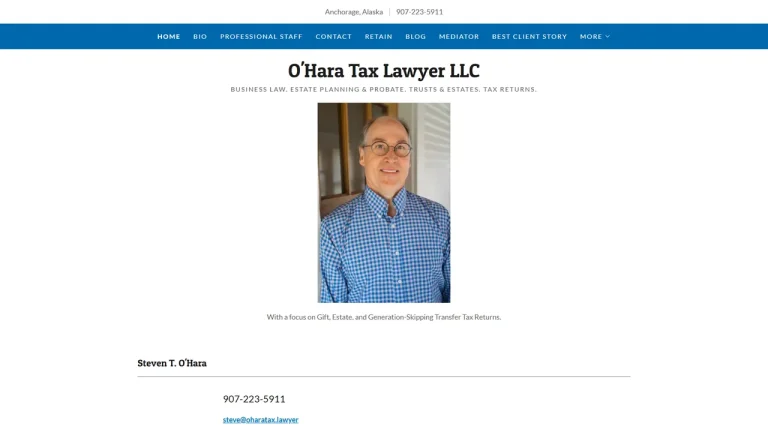
OHara Tax Lawyer LLC - Anchorage, AK
Lucas Wagner Law LLC - Anchorage, AK

Cruz Law, LLC - Anchorage, AK
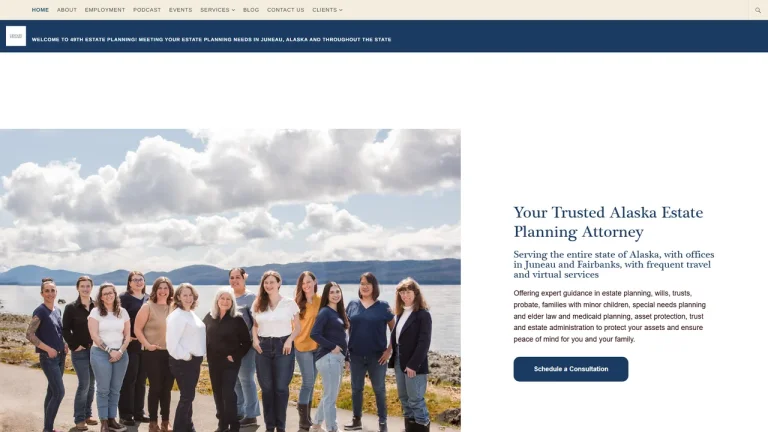
49th Estate Planning - Juneau, AK

Robert S. Spitzfaden - Juneau, AK
Kenneth C. Kirk, Attorney - Anchorage, AK
Law Office of Justin S. Eppler, LLC - Anchorage, AK
Faulkner Banfield Law P.C. - Juneau, AK

McNabb Law Office - Anchorage, AK

Amrit Kaur Khalsa - Anchorage, AK

Foley Pearson Riekkola Iverson, P.C. - Anchorage, AK

Baxter Bruce and Sullivan P.C. - Juneau, AK
Woelber & Associates, PC - Anchorage, AK

Sedor Wendlandt Evans and Filippi, LLC - Anchorage, AK
HALO AK - Anchorage, AK

The Law Office of Jennifer Messick - Anchorage, AK
Yuraq Legal Services LLC - Anchorage, AK
Alaska Legal Services Corporation Juneau Office - Juneau, AK
Shaftel Law Offices, PC - Anchorage, AK
Barnum Law Firm - Juneau, AK
Hoffman & Blasco LLC - Juneau, AK
Law Office of Zachary Field - Anchorage, AK
Barlow Anderson, LLC - Anchorage, AK

Comprehensive Estate Planning Under Alaska Law and Court Framework
Estate planning in Alaska requires a tailored approach governed by the Alaska Uniform Probate Code within Title 13 of the Alaska Statutes. Presided over by the Alaska Superior Court across the state's four judicial districts-including Anchorage, Fairbanks, Juneau, and Palmer-the court system enforces strict execution formalities. Whether safeguarding family homesteads, commercial fishing rights, or investment portfolios, working with a licensed Alaska estate planning attorney ensures that your wishes are legally protected.
Alaska presents distinctive estate considerations that require localized legal knowledge. Estate plans frequently involve unique holdings such as Alaska Native Claims Settlement Act (ANCSA) regional and village corporation shares, commercial fishing Limited Entry Permits, and mining claims. Conveyances and testamentary instruments must be coordinated precisely to avoid invalidating restrictions under federal law or Alaska statutory guidelines.
Seasoned Alaska estate planning attorneys focus on structuring documents that prevent family friction and circumvent probate altogether. Utilizing revocable living trusts, statutory power of attorney designations, and advance healthcare directives, skilled lawyers ensure your medical and financial autonomy is secured without requiring costly Superior Court guardianship or conservatorship proceedings.
Estate Planning Legal Fee Structures and Cost Estimates in Alaska
| Case Scenario | Fee Structure | Estimated Cost (USD) | Key Cost Determinants |
|---|---|---|---|
| Basic Will & Essential Directives Package | Flat Fee | $1,200 - $2,500 | Will complexity, statutory power of attorney, advance healthcare directives |
| Comprehensive Trust-Based Estate Plan | Flat Fee | $2,800 - $6,500 | Revocable living trust, pour-over will, TOD deeds, deed recording fees |
| Business Succession & Native Corp/Permit Planning | Hourly or Custom Flat ($300 - $550/hr) | $5,000 - $16,000+ | ANCSA stock wills, CFEC permit transfer restrictions, LLC operating terms |
| Special Needs & Guardianship Nomination | Flat Fee | $2,000 - $4,500 | Supplemental needs trust drafting, government benefit eligibility coordination |
Critical Legal Deadlines & Statutes in Alaska
Creating an enforceable estate plan in Alaska demands precise compliance with statutory execution requirements and default inheritance rules:
- Will Execution Formalities: A valid formal will must be in writing, signed by the testator, and witnessed by at least two individuals under Alaska Stat. § 13.12.502, or made self-proving before a notary public pursuant to Alaska Stat. § 13.12.504.
- Statutory Form Power of Attorney: Alaska provides a statutory general durable power of attorney under Alaska Stat. § 13.26.600, which remains effective despite subsequent disability or incapacity when properly executed.
- Advance Health Care Directive Act: Individuals can designate healthcare agents and express end-of-life care preferences pursuant to Alaska Stat. § 13.52.010, combining living wills and medical proxy appointments into one instrument.
- Transfer on Death Deeds for Real Estate: Under the Uniform Real Property Transfer on Death Act codified at Alaska Stat. § 13.48.010, real property can transfer directly to named beneficiaries outside of probate upon recording the deed prior to death.
- Opt-In Community Property Agreements: Spouses can establish community property ownership over designated assets by executing a written agreement satisfying the provisions of Alaska Stat. § 34.77.090.
Small Claims Limits vs. Professional Representation in Alaska
In Alaska, small claims proceedings in District Court handle minor monetary disputes up to $10,000 pursuant to Alaska Stat. § 22.15.040. Small claims courts have zero legal jurisdiction over estate planning documents, will interpretations, or guardianship appointments. All matters concerning estate instruments, protective proceedings, and fiduciary appointments fall under the exclusive jurisdiction of the Alaska Superior Court pursuant to Alaska Stat. § 22.10.020.
Using generic online templates instead of hiring a qualified estate planning lawyer often leads to severe estate complications. In Alaska, failure to comply with specific stock will requirements for ANCSA Native corporation shares can cause shares to pass under default intestate rules rather than to chosen heirs. Similarly, failing to structure real estate transfers under the Transfer on Death Act can force heirs into formal probate, causing avoidable administrative expenses that far exceed the cost of professional representation.
Vetting Alaska Estate Planning Attorneys and Recognizing Red Flags
Selecting an estate planning attorney requires thorough evaluation of local qualifications and billing practices. Keep these key indicators in mind:
- Verify Bar Standing: Confirm that the attorney holds an active license in good standing with the Alaska Bar Association, and review public records to ensure there are no disciplinary reprimands from the Alaska Bar Disciplinary Board.
- Inexperience with Unique Alaska Assets: Ensure your attorney has specific experience dealing with Alaska-specific property, including ANCSA Native corporation shares, commercial fishing permits, and remote land holdings.
- Neglecting Asset Funding: Be cautious of attorneys who draft living trusts but leave the client without written guidance or deed preparations needed to fund real estate and accounts into the trust.
- Lack of Upfront Pricing: Request a written fee agreement that specifies whether estate planning packages are handled on a flat-fee basis or billed hourly, and confirm what is included regarding future amendments.
Frequently Asked Questions
What core documents make up an estate plan in Alaska?
A comprehensive Alaska estate plan generally includes a Last Will and Testament, a Durable Power of Attorney under Alaska Stat. § 13.26.600, an Advance Health Care Directive under Alaska Stat. § 13.52.010, and, where appropriate, a Revocable Living Trust or Transfer on Death Deed.
Are holographic (handwritten) wills valid in Alaska?
Yes. Under Alaska Stat. § 13.12.502(b), a holographic will is valid in Alaska if the signature and material portions of the document are in the testator's handwriting, even if the will was not witnessed by two individuals. However, formal witnessed wills are strongly recommended to prevent probate challenges.
How are Alaska Native Corporation (ANCSA) shares passed to heirs?
ANCSA shares cannot be transferred through a standard generic will clause alone. Shareholders must execute a dedicated Stock Will adhering to corporation guidelines and federal law (43 U.S.C. § 1606(h)). If an individual dies without a valid stock will, shares are distributed according to statutory rules of descent.
What is an Alaska Transfer on Death (TOD) Deed?
Codified under Alaska Stat. § 13.48.010, a Transfer on Death Deed allows a property owner to name a beneficiary who will automatically receive the real estate title upon the owner's death, bypassing the Alaska Superior Court probate process entirely.
Can unmarried partners create an estate plan in Alaska?
Yes. Unmarried partners must create formal estate planning documents because Alaska intestacy laws under Alaska Stat. § 13.12.102 do not recognize unmarried partners as legal heirs. Without valid wills, trusts, and power of attorney designations, assets pass solely to biological or adoptive family members.