
Family Immigration Lawyers in Alaska
Working with a skilled Alaska family immigration lawyer ensures your visa and permanent residency petitions comply with strict federal requirements. Experienced counsel guides families through consular processing, adjustment of status, and interview preparation. Browse our verified directory to consult local immigration attorneys.
Shaftel Law Offices, PC - Anchorage, AK
Alaska Institute for Justice - Anchorage, AK
Alaska Immigration Law Center - Anchorage, AK
Fields Immigration Law, LLC - Anchorage, AK

Law Offices of Christy Lee, P.C. - Anchorage, AK
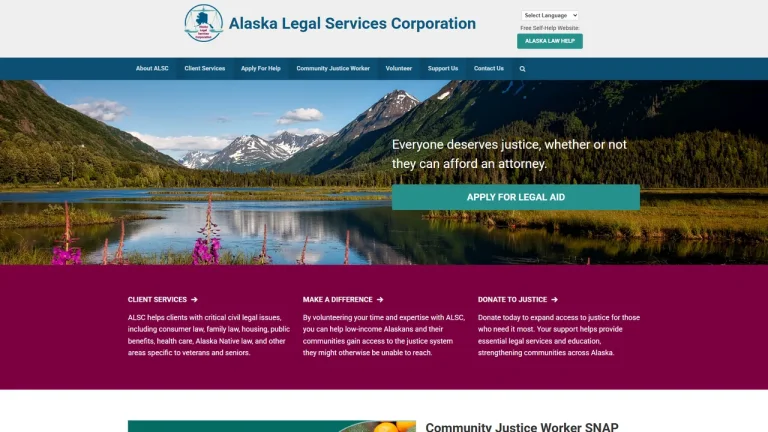
Alaska Legal Services Corporation Juneau Office - Juneau, AK

Law Offices of Rebecca L. Maxey, LLC - Anchorage, AK
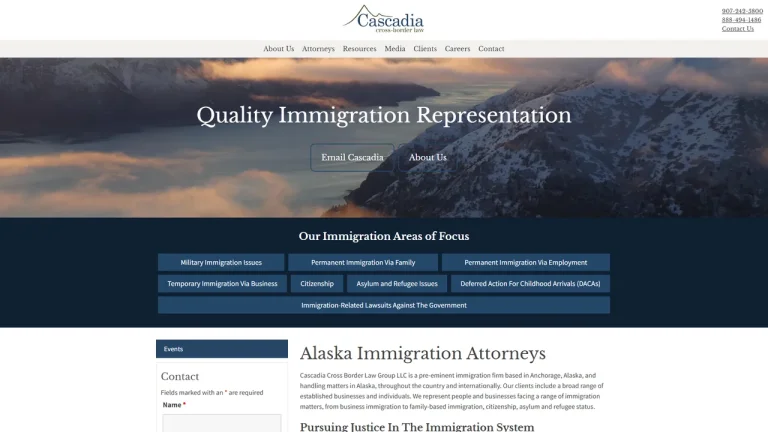
Cascadia Cross Border Law Group LLC - Anchorage, AK
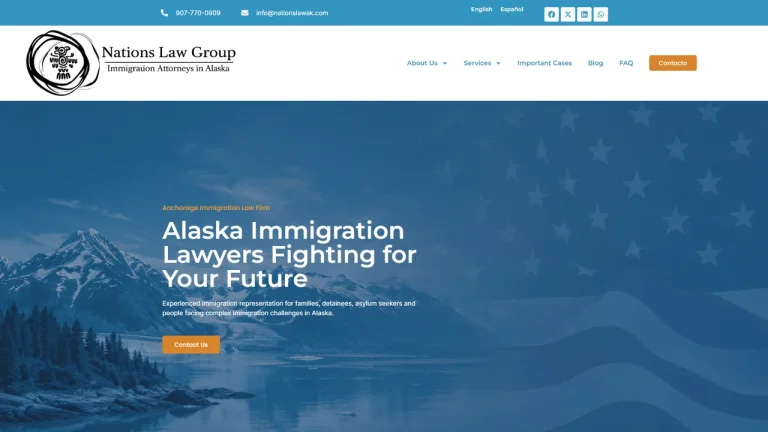
Alaska Immigration Lawyers Nations Law Group - Anchorage, AK

Family Immigration Jurisdiction & Proceedings in Alaska
Pursuing family-based immigration benefits in Alaska requires thorough knowledge of federal immigration laws and local administrative practices. Petitions for family reunification, lawful permanent residency, and spousal green cards fall under the primary authority of United States Citizenship and Immigration Services (USCIS). In-person interviews, naturalization ceremonies, and local biometric verifications are administered through the USCIS Anchorage Field Office, which serves applicants throughout the entire state, from Southcentral communities to remote North Slope and island regions.
Attorneys handling family immigration matters must maintain active admission in good standing with a state bar, such as the Alaska Bar Association, and be eligible to practice before the Department of Homeland Security and the Executive Office for Immigration Review (EOIR). Formal judicial challenges and petitions for writ of mandamus regarding unreasonable processing delays fall under the jurisdiction of the United States District Court for the District of Alaska. Appellate administrative reviews are determined by the Board of Immigration Appeals (BIA), with judicial oversight by the United States Court of Appeals for the Ninth Circuit.
Navigating the immigration system across Alaska unique geographic landscape presents distinct logistical considerations. Qualified immigration practitioners assist clients with scheduling interviews, coordinating travel logistics to Anchorage, managing complex documentation, and overcoming administrative hurdles to keep families together.
Common Alaska Family Immigration Fee Structures & Legal Costs
| Case Scenario | Fee Structure | Estimated Cost (USD) | Key Cost Determinants |
|---|---|---|---|
| Immediate Relative Petition (Form I-130) & Adjustment (Form I-485) | Flat Legal Fee | $2,500 - $6,000 | Lawful entry documentation, public charge evaluation, and interview accompaniment in Anchorage |
| Fiancé(e) Visa (Form I-129F) & Consular Processing | Flat Fee (Multi-Phase) | $2,000 - $4,500 | National Visa Center documentation, foreign embassy coordination, and travel history |
| Removal of Conditions on Green Card (Form I-751) | Flat Fee | $1,500 - $3,800 | Joint spousal filing versus good-faith marriage waiver or domestic abuse waiver |
| Inadmissibility Waivers (Form I-601 / I-601A) & Defense | Hourly Rate or Tiered Retainer | $4,500 - $10,000+ | Qualifying relative hardship documentation, medical records, and legal briefs |
Critical Legal Deadlines & Statutory Benchmarks in Family Immigration
Family-based immigration is governed by the Immigration and Nationality Act, codified in Title 8 of the United States Code. Immediate relative petitions are authorized under 8 U.S.C. § 1151, allowing spouses, minor children, and parents of adult U.S. citizens to immigrate without numerical quota restrictions. Adjustment of status to lawful permanent resident within the United States is evaluated under 8 U.S.C. § 1255, requiring proof of inspection and admission or parole.
For conditional permanent residents who obtained green cards through marriages under two years old, strict statutory timelines apply. Under 8 U.S.C. § 1186a, the joint petition to remove conditions on residence (Form I-751) must be filed within the ninety-day window immediately preceding the second anniversary of receiving conditional residency. Sponsoring family members must also satisfy the financial requirements of 8 U.S.C. § 1183a through Form I-864; sponsors in Alaska should note that federal poverty guideline thresholds for Alaska are established at significantly higher income figures than those for the contiguous forty-eight states.
Pro Se Applications vs. Retaining Licensed Immigration Counsel in Alaska
Because immigration law is governed entirely by federal statutes and administrative regulations, state small claims courts possess no jurisdiction over visa adjudications or status determinations. While applicants may file petition forms directly with USCIS without legal representation, navigating family immigration matters without counsel carries substantial risk. Minor procedural mistakes, misinterpretation of lawful entry requirements, or incomplete financial sponsorship affidavits frequently trigger extensive Requests for Evidence (RFEs) or petition denials.
Retaining an experienced family immigration lawyer protects applicants against inadvertent declarations that could trigger inadmissibility grounds under 8 U.S.C. § 1182. A knowledgeable attorney assesses prior immigration history, prepares couples for thorough marriage fraud interviews at the Anchorage Field Office, and formulates effective hardship arguments for unlawful presence waivers before consular officers make final determinations.
Red Flags to Avoid When Hiring an Alaska Immigration Lawyer
- Using Unlicensed Notarios or Form Preparers: Non-attorney consultants and notaries lack legal training, are not authorized to provide legal advice, and cannot represent you before USCIS or immigration courts.
- Promises of Expedited Processing or Guarantees: Ethical attorneys cannot guarantee USCIS processing speeds or assure green card approvals, as decisions rest solely with federal adjudicators.
- Ignoring Alaska-Specific Poverty Guidelines: Ensure your legal representative calculates financial sponsorship thresholds using the higher statutory income minimums mandated for Alaska residents.
- Unchecked Professional Standing: Verify that your immigration lawyer holds an active law license in good standing with the Alaska Bar Association or their respective state licensing authority.
Frequently Asked Questions
Where are USCIS immigration interviews conducted in Alaska?
In-person adjustment of status interviews, naturalization examinations, and asylum hearings are conducted at the USCIS Anchorage Field Office, located in downtown Anchorage, which serves applicants residing throughout the entire state.
How do Alaska poverty guidelines affect the Affidavit of Support (Form I-864)?
Under federal regulations, the Department of Health and Human Services establishes separate, higher poverty guidelines for Alaska. Petitioning sponsors residing in Alaska must demonstrate income meeting or exceeding 125% of this higher baseline under 8 U.S.C. § 1183a.
What happens if a conditional resident divorces before filing Form I-751?
If a marriage ends in divorce before the two-year conditional period expires, the conditional resident can file Form I-751 individually with a waiver under 8 U.S.C. § 1186a, demonstrating the marriage was entered into in good faith.
How can an immigration lawyer help if USCIS issues a Request for Evidence?
An immigration attorney analyzes the specific evidentiary deficiencies cited by USCIS, compiles corroborating documentation, and drafts a formal legal brief addressing statutory criteria within the strict response deadline set by the agency.
Do applicants from remote Alaska communities have to travel for biometrics?
USCIS typically schedules biometric appointments at the Application Support Center in Anchorage. In certain remote rural areas, mobile processing units or local authorized law enforcement agencies may coordinate fingerprinting services under specialized agency protocols.