
Probate Lawyers in Alaska
Retain experienced Alaska probate lawyers to navigate estate administration, resolve creditor claims, and handle formal court filings in Superior Court. An experienced probate attorney ensures timely distribution of assets under the Alaska Uniform Probate Code while minimizing estate disputes and liability. Explore our verified statewide directory below to connect with a qualified Alaska probate attorney.

Law Office of Patrice A Icardi - Anchorage, AK
Anchorage Estate Planning and Probate Services LLC - Anchorage, AK

Hoffman & Blasco LLC - Juneau, AK

Hal Gazaway, Attorney At Law - Anchorage, AK

Kasmar Law Offices, LLC - Anchorage, AK

David E. Rogers - Juneau, AK
North Star Law Group - Anchorage, AK
Clayton & Diemer, LLC - Anchorage, AK
Woelber & Associates, PC - Anchorage, AK
Vellum Legal - Anchorage, AK
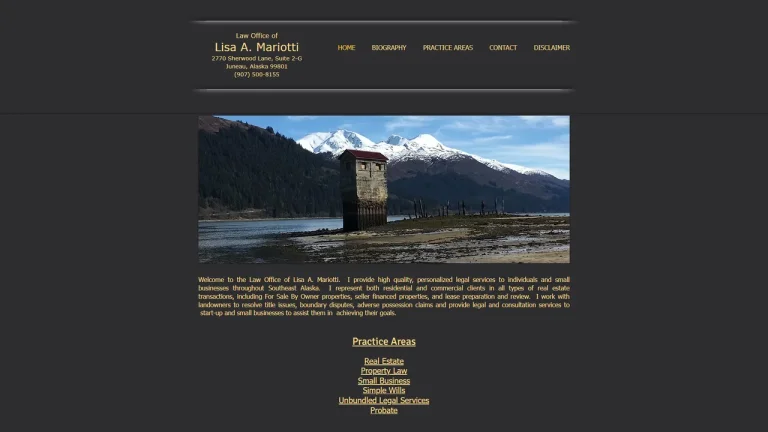
Law Office of Lisa A. Mariotti - Juneau, AK

Stephen E. Greer Law Office - Anchorage, AK

Dickerson & Gibbons Inc - Anchorage, AK
Kenneth C. Kirk, Attorney - Anchorage, AK

Foley Pearson Riekkola Iverson, P.C. - Anchorage, AK

Sundquist Law - Anchorage, AK
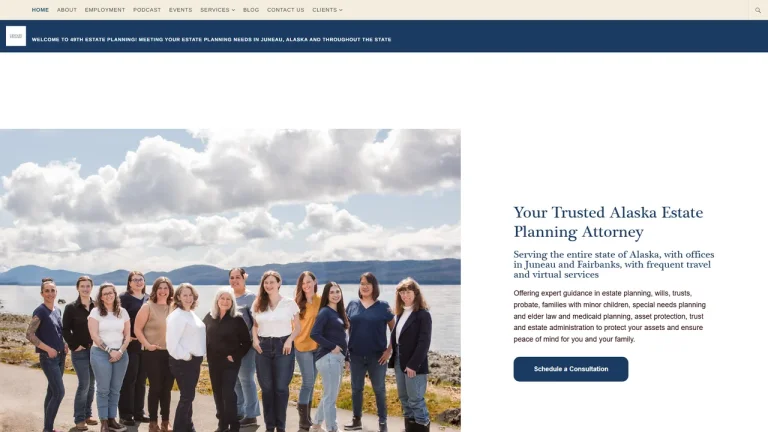
49th Estate Planning - Juneau, AK

Barlow Anderson, LLC - Anchorage, AK
Law Office of Justin S. Eppler, LLC - Anchorage, AK
Barnum Law Firm - Juneau, AK
Faulkner Banfield Law P.C. - Juneau, AK
Law Office of Curtis W. Patteson, LLC - Anchorage, AK
Amrit Kaur Khalsa - Anchorage, AK
Navigating Alaska Probate Law and Superior Court Jurisdiction
Probate and estate administration in Alaska are governed by Title 13 of the Alaska Statutes and overseen by the Alaska Superior Court. Structured across four judicial districts-anchored by courthouses in Anchorage, Fairbanks, Juneau, Palmer, and Kenai-probate proceedings ensure that a decedent's valid debts are resolved and remaining assets pass lawfully to heirs and devisees. Having seasoned probate counsel situated in Alaska is critical for navigating local court dockets and statutory filing protocols.
Alaska operates under the Uniform Probate Code, offering both informal and formal probate pathways. Informal probate is handled through the probate registrar when an original will is uncontested, allowing for expedited appointment of a personal representative under Alaska Stat. § 13.16.080. Conversely, formal probate requires hearings before an Alaska Superior Court judge when a will's validity is challenged, an original instrument cannot be located, or disputes arise regarding personal representative appointment.
Retaining experienced legal counsel protects personal representatives from personal surcharge liability. Skilled Alaska probate lawyers manage creditor notices, prepare comprehensive inventories of real and personal property, and handle distributions to beneficiaries, resolving disputes through negotiated settlement agreements before costly courtroom trials emerge.
Probate Legal Fee Structures and Cost Estimates in Alaska
| Case Scenario | Fee Structure | Estimated Cost (USD) | Key Cost Determinants |
|---|---|---|---|
| Informal Probate Administration (Uncontested) | Flat or Hourly ($275 - $450/hr) | $2,500 - $6,500 | Asset identification, creditor notice publication, probate registrar filings |
| Formal Probate & Contested Will Litigation | Hourly Retainer ($325 - $550/hr) | $7,500 - $35,000+ | Undue influence claims, testamentary capacity evaluations, deposition count |
| Small Estate Affidavit Collection (Under $50k) | Flat Fee | $750 - $1,800 | Affidavit drafting, DMV title transfers, bank asset verification |
| Intestate Estate Administration & Heir Determination | Hourly Retainer ($300 - $500/hr) | $4,500 - $15,000+ | Heir search investigations, genealogical affidavits, statutory fiduciary bonds |
Critical Legal Deadlines & Statutes in Alaska
Timely estate administration in Alaska requires strict adherence to statutory deadlines set forth in the Alaska Uniform Probate Code:
- Creditor Claim Presentation Window: Personal representatives must publish notice to creditors once a week for three successive weeks in a local newspaper. Creditors must present claims within four months after the date of first publication or claims are forever barred, pursuant to Alaska Stat. § 13.16.460. If notice is not published, creditors have three years from death.
- General Probate Limitation Period: Formal or informal probate proceedings must generally be commenced within three years after the decedent's death under Alaska Stat. § 13.16.040.
- Small Estate Affidavit Waiting Period: Successors must wait at least 30 days after the decedent's death before collecting personal property using a small estate affidavit under Alaska Stat. § 13.16.680.
- Elective Share Filing Deadline: A surviving spouse seeking to claim an elective share must file a petition in Superior Court within nine months after the decedent's death or within six months after probate proceedings open, under Alaska Stat. § 13.12.211.
- Inventory Preparation: A personal representative must prepare an inventory and appraisement of estate property within three months after appointment under Alaska Stat. § 13.16.365.
Small Claims Limits vs. Professional Representation in Alaska
In Alaska, small claims actions in District Court are restricted to civil claims seeking money damages up to $10,000 under Alaska Stat. § 22.15.040. Small claims courts have zero legal jurisdiction over probate matters, estate distributions, or issuing Letters of Administration. The Alaska Superior Court maintains exclusive subject-matter jurisdiction over all testacy and estate proceedings pursuant to Alaska Stat. § 22.10.020.
Navigating probate without professional legal counsel exposes personal representatives to significant personal liability. Under Alaska law, personal representatives are fiduciaries held to the highest standard of care. Improperly paying lower-priority debts before administrative expenses or distributing assets prior to the expiration of the four-month creditor claim window under Alaska Stat. § 13.16.460 can make the personal representative personally liable for estate shortfalls. Experienced probate attorneys ensure that fiduciaries fulfill their statutory obligations while mitigating risk.
Vetting Alaska Probate Attorneys and Recognizing Red Flags
Engaging the right probate lawyer is critical for smooth estate administration. Protect the estate by evaluating prospective counsel against these key criteria:
- Check Bar Association Standing: Verify that the attorney holds an active license in good standing with the Alaska Bar Association, and confirm that no formal disciplinary sanctions appear on the Bar Counsel public registry.
- Avoid Percentage-of-Estate Billing: Be cautious of attorneys charging a rigid percentage of total estate gross assets without accounting for actual billable hours or procedural complexity.
- Unfamiliarity with Remote Judicial Districts: In rural estates, ensure the attorney has experience managing probate filings in outlying courts such as Nome, Bethel, or Ketchikan.
- Lack of Fiduciary Guidance: Ensure your attorney provides clear, step-by-step instructions on statutory allowances, including the homestead allowance (Alaska Stat. § 13.12.401) and exempt property allowance (Alaska Stat. § 13.12.402).
Frequently Asked Questions
What is the difference between informal and formal probate in Alaska?
Informal probate is an administrative proceeding conducted before the probate registrar under Alaska Stat. § 13.16.080 when there is no dispute over the will or the personal representative. Formal probate is a judicial proceeding conducted before an Alaska Superior Court judge under Alaska Stat. § 13.16.140 to resolve contested wills or ambiguous estate terms.
What qualifies as a small estate in Alaska to avoid probate?
Under Alaska Stat. § 13.16.680, if a decedent's entire estate (less liens and encumbrances) does not exceed $50,000 in personal property plus up to $100,000 in vehicles, heirs can collect the property using an Affidavit for Collection of Personal Property without formal court administration.
How long do creditors have to file claims against an estate in Alaska?
Under Alaska Stat. § 13.16.460, creditors have four months from the date of the first published notice in a local newspaper to submit claims. If the personal representative does not publish notice, creditors have up to three years from the decedent's death to assert their claims.
How long does the probate process take in Alaska?
An uncontested informal probate generally takes between six and nine months, largely due to the mandatory four-month creditor notification window. Contested formal probate cases involving will contests or complex property sales may require a year or more to conclude in the Alaska Superior Court.
Can an executor be held personally liable for estate mistakes in Alaska?
Yes. A personal representative is a fiduciary under Alaska law. If they mismanage estate assets, fail to pay priority creditors under Alaska Stat. § 13.16.470, or distribute funds to heirs prematurely, they can be held personally liable for damages in a surcharge proceeding before the Superior Court.