
Slip & Fall Injury Lawyers in Alaska
Retaining a qualified Alaska slip and fall injury lawyer protects your claim under state premises liability statutes and preserves essential scene evidence. Experienced personal injury counsel can negotiate effectively with commercial insurers to secure fair compensation, resolving most disputes without trial. Browse our statewide directory below to connect with vetted Alaska premises liability attorneys ready to review your case.
Honeycutt Law - Anchorage, AK
Jessica Srader - Juneau, AK
Power and Power Law - Anchorage, AK

Goldberg & Loren - Anchorage, AK

Farnsworth & Vance Personal Injury Lawyers - Anchorage, AK

The Brown Law Firm, LLC - Anchorage, AK
Kelley and Canterbury - Anchorage, AK

Farnsworth and Vance Personal Injury Lawyers - Anchorage, AK

Farnsworth & Vance - Anchorage, AK
Sandberg and Pace, LLC - Anchorage, AK

Rehbock & Wilson - Anchorage, AK
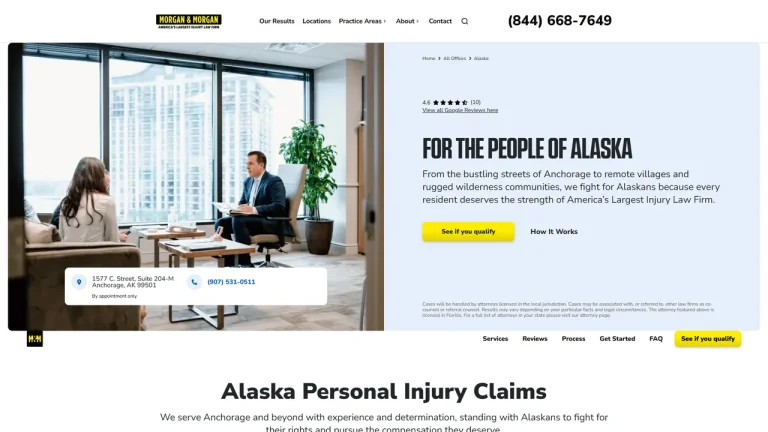
Morgan & Morgan - Anchorage, AK
Alaska Premises Liability and Judicial District Jurisdiction
Premises liability litigation across Alaska is handled in the Alaska Court System through four judicial districts, with major dockets concentrated in the Third Judicial District in Anchorage and Palmer, and the Fourth Judicial District in Fairbanks. Superior Courts possess general jurisdiction over personal injury controversies, while District Courts oversee civil disputes up to $100,000.
Alaska property owners owe a duty of reasonable care under the circumstances to keep premises safe. Because subarctic conditions present frequent snow, black ice, and freezing meltwater hazards, courts evaluate whether commercial entities, property managers, and landlords took timely, reasonable measures to manage recognized winter risks on sidewalks, parking lots, and entryways.
All pleadings and court filings are managed digitally through the Alaska TrueFiling portal. Retaining an attorney admitted to the Alaska Bar Association ensures that security surveillance footage, incident reports, municipal weather logs, and snow-removal contracts are preserved and evaluated under Alaska common law and statutory standards.
Alaska Slip & Fall Legal Fee Benchmarks
| Case Scenario | Fee Structure | Estimated Cost (USD) | Key Cost Determinants |
|---|---|---|---|
| Commercial Ice & Snow Accumulation Falls | Contingency (33.3% - 40%) | $0 Upfront Retainer | Subcontractor snow-removal terms, weather radar data, and property log maintenance. |
| Retail Store & Supermarket Floor Spills | Contingency (33.3% - 40%) | $0 Upfront Retainer | Actual or constructive notice, sweep inspection schedules, and video recordings. |
| Defective Stairs, Handrails & Walkways | Contingency (33.3% - 40%) | $0 Upfront Retainer | Municipal building code violations, architectural inspections, and expert witness reports. |
| Catastrophic Traumatic Brain & Spinal Injuries | Contingency (33.3% - 40%) | $0 Upfront Retainer | Life-care plan valuations, statutory damage cap exceptions, and jury trial demands. |
Critical Legal Deadlines & Statutes in Alaska
Personal injury lawsuits arising from slips, trips, and falls are subject to strict statutory deadlines. Under AS 09.10.070, a claimant must file their civil action within two years from the date the injury occurred. Failure to file within this limitation window bars recovery permanently.
Alaska operates under a pure comparative fault doctrine codified in AS 09.17.060. Under this rule, an injured person is not barred from recovery even if they share partial responsibility for failing to notice an obvious hazard; instead, their damages are diminished in direct proportion to their allocated percentage of fault.
Non-economic damages such as pain and suffering are subject to statutory limitations set forth in AS 09.17.010. Non-economic recoveries are capped at $400,000 or $8,000 multiplied by the claimant's life expectancy, though the limit increases to $1,000,000 or $25,000 multiplied by life expectancy in cases of severe permanent physical impairment.
When a slip and fall occurs on municipal or state-owned property, statutory notice requirements apply. Claims against public entities must follow administrative notice requirements under AS 09.50.250 before an action can be maintained in court.
Alaska Small Claims Limits vs. Superior Court Representation
The District Court in Alaska maintains a small claims docket under AS 22.15.040, which limits recovery to disputes where the amount in controversy does not exceed $10,000.
While an individual may pursue a small claims action pro se for minor property loss or modest medical bills, slip and fall incidents involving fractures, torn ligaments, or concussions routinely exceed this financial ceiling. Furthermore, defense insurers regularly argue that subarctic ice is an unavoidable natural condition, creating complex legal hurdles.
Filing a premises liability claim in Superior Court requires detailed discovery, preservation of commercial maintenance logs, and compliance with the Alaska Rules of Civil Procedure. Retaining experienced personal injury counsel protects injured parties from accepting inadequate insurance settlements while medical treatments are ongoing.
Red Flags to Avoid When Hiring an Alaska Slip & Fall Lawyer
- Upfront fee demands: Reputable personal injury attorneys work on a contingency fee basis where you pay zero attorney fees unless compensation is successfully obtained.
- Unsolicited contact: Steer clear of solicitors or marketers who reach out through direct calls or unsolicited messages immediately following an injury.
- Unfamiliarity with local weather dynamics: An attorney must understand how local courts treat seasonal freeze-thaw cycles and municipal snow removal standards.
- Lack of trial preparation: Insurers often make minimal settlement offers on fall cases; ensure your counsel possesses a proven record of litigating in Alaska Superior Courts.
Frequently Asked Questions
What is the statute of limitations for a slip and fall claim in Alaska?
Under Alaska law, you have two years from the date of the fall to file a personal injury lawsuit in court. Missing this statutory deadline eliminates your legal right to pursue compensation.
Can I recover damages if I was partially at fault for slipping on ice in Alaska?
Yes. Alaska is a pure comparative fault state under AS 09.17.060. You can still recover damages even if you were partially responsible, but your final financial award will be reduced by your percentage of fault.
Are commercial landlords responsible for snow and ice removal in Alaska?
Commercial property owners and operators must exercise reasonable care to manage unnatural accumulations or dangerous ice hazards, often determined by lease terms and municipal snow clearing ordinances.
Does Alaska cap pain and suffering damages for slip and fall injuries?
Yes. Under AS 09.17.010, non-economic damages are generally capped at $400,000 or $8,000 multiplied by life expectancy, with higher caps available for severe, permanent physical impairments.
Should I file my slip and fall case in Alaska Small Claims Court?
Alaska Small Claims Court handles disputes up to $10,000. If your medical expenses, lost wages, and pain exceed this threshold, your claim should be filed in District or Superior Court with legal representation.