
Family Immigration Lawyers in Arizona
Connect with experienced Arizona family immigration lawyers to unite your family, resolve complex status issues, and navigate USCIS procedures statewide. Engaging skilled legal counsel safeguards your petitions against procedural delays, facilitates green card processing, and secures waivers before consular interviews. Explore our verified statewide directory below to consult an attorney serving Phoenix, Tucson, Mesa, and surrounding communities.

Law Office of Roman A. Kostenko, PLC - Phoenix, AZ

Messer Law Group LLC - Mesa, AZ

GOXHAJ LAW FIRM PLLC - Immigration Attorney - Mesa, AZ

Ritchie-Reiersen Injury & Immigration Attorneys - Mesa, AZ

Milla Law Firm, PLLC - Mesa, AZ

New Frontier Immigration Law - Phoenix, AZ

Habich Law, PLC - Phoenix, AZ

Law Offices of Marina Alexandrovich - Tempe, AZ
Mendoza Immigration - Mesa, AZ

Greeves & Roethler, PLC - Mesa, AZ
Silva & Fontes, Phoenix, AZ
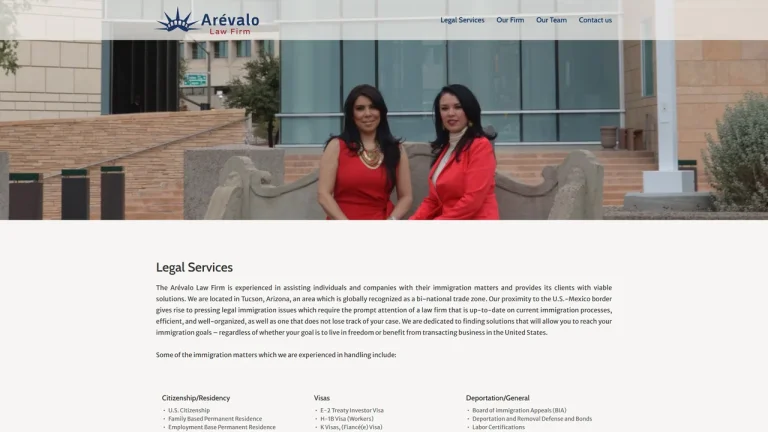
Arévalo Law Firm LLC - Tucson, AZ
Gunderson, Denton & Peterson, P.C. - Mesa, AZ

The Law Offices of Frederick S. Klein - Tucson, AZ

Essien Law Firm Phoenix, AZ

Adelayo Law Firm PLLC - Phoenix, AZ
The Americas Law Group PLLC - Mesa, AZ
Law Office Of G. Daniel Garza, PLC - Mesa, AZ

Salvador Ongaro Law Offices Phoenix, AZ
Smith, Alston, Darner & Lee, PLC - Mesa, AZ

Wheeler Law - Phoenix, AZ
Acceso Immigration Law, PLLC - Tucson, AZ
Gunderson Law Group, P.C. - Tempe, AZ
Navigating Family Immigration and USCIS Procedures in Arizona
Family immigration petitions in Arizona are governed by federal immigration law and adjudicated through regional administrative bodies. The primary agencies processing family-based green cards and citizenship filings include the United States Citizenship and Immigration Services (USCIS) Phoenix Field Office, the Tucson Field Office, and the national USCIS Phoenix Lockbox. Matters involving complex status disputes or prior removal orders fall under the jurisdiction of the Executive Office for Immigration Review (EOIR) immigration courts located in Phoenix and Tucson.
The family immigration process encompasses immigrant visa petitions for immediate relatives, fiancé visas, adjustment of status, and consular processing. Families residing throughout major metropolitan regions, including Phoenix, Tucson, Mesa, Chandler, and Scottsdale, must adhere to strict procedural documentation standards. Navigating the intersection of federal immigration statutes and state family laws requires precise filings to avoid petition rejections or extended separation.
Retaining an attorney admitted to the State Bar of Arizona or licensed to practice federal immigration law guarantees qualified representation during mandatory USCIS interviews. An experienced immigration attorney evaluates inadmissibility grounds, prepares provisional unlawful presence waivers, and assists clients in overcoming complex Requests for Evidence (RFEs).
Legal Fee Structures for Family Immigration Petitions in Arizona
Legal fees for family immigration services across Arizona are generally structured on a flat fee basis, reflecting the scope of documentation and agency appearances required.
| Case Scenario | Fee Structure | Estimated Cost (USD) | Key Cost Determinants |
|---|---|---|---|
| Immediate Relative Petition & Adjustment of Status (Concurrent Filing) | Flat Fee | $2,500 - $5,000 | Lawful entry documentation, joint marital evidence volume, co-sponsor affidavit of support requirements. |
| Consular Processing & National Visa Center (NVC) Filings | Flat Fee | $2,500 - $4,500 | Civil registry document retrieval from foreign jurisdictions, police clearance coordination, consular interview preparation. |
| Provisional Unlawful Presence Waiver (Form I-601A) | Flat / Phased Fee | $3,500 - $6,500 | Establishing extreme hardship to qualifying U.S. citizen relatives, medical and financial brief substantiation. |
| Removal of Conditions on Green Card (Form I-751) | Flat / Hourly Retainer | $2,000 - $4,500 ($275 - $450 / hr) | Filing jointly versus requesting a good-faith marriage waiver, contested divorce documentation, interview attendance. |
Critical Legal Deadlines & Statutes in Arizona
Family immigration petitions are bound by non-negotiable statutory timelines and federal immigration requirements:
- Immediate Relative Petition Authority: Petitions for spouses, children, and parents of adult citizens are filed pursuant to 8 U.S. Code § 1151 and 8 U.S. Code § 1154.
- Adjustment of Status Eligibility: Applications to register permanent residence without leaving the country proceed under 8 U.S. Code § 1255.
- Unlawful Presence Bars: Non-citizens who accrue more than 180 days of unlawful presence face a three-year re-entry bar, while unlawful presence of one year or more triggers a ten-year bar under 8 U.S. Code § 1182(a)(9)(B).
- Provisional Waiver Regulations: Spouses and children of U.S. citizens can seek provisional unlawful presence waivers prior to consular departure under 8 C.F.R. § 212.7(e).
- Removal of Conditions Window: Conditional green card holders must file Form I-751 within the 90-day window immediately preceding the two-year anniversary of residency under 8 U.S. Code § 1186a(d)(2).
- Protections Against Notario Fraud: Arizona regulates immigration consultants and strictly limits non-attorney document preparation under Ariz. Rev. Stat. § 12-2701.
Small Claims Limits vs. Professional Immigration Representation in Arizona
In Arizona, Small Claims Divisions operate within the County Justice Courts with a jurisdictional maximum of $3,500 pursuant to Ariz. Rev. Stat. § 22-503, while standard Justice Court civil actions handle claims up to $10,000 under Ariz. Rev. Stat. § 22-201. However, small claims and justice courts hold zero authority over immigration matters, visa adjudications, or green card petitions, which are exclusively governed by federal administrative agencies.
Unlicensed individuals often offer cheap document preparation services, operating as "notarios" in violation of state regulations. When a notario mishandles a family petition, the applicant may be placed in removal proceedings or trigger irreversible ten-year re-entry bars. While an injured party could theoretically file a small claims action under Ariz. Rev. Stat. § 22-503 to recover money paid to an unauthorized preparer, the justice court cannot undo a deportation order or reinstate an expired lawful status. Only a licensed immigration lawyer can provide legal analysis, enter a formal appearance on Form G-28, and represent families before USCIS.
Red Flags to Avoid When Selecting an Arizona Family Immigration Lawyer
- Reliance on Unlicensed Notarios: Individuals who advertise as "notarios publicos" claiming to handle immigration cases; in Arizona, a notary public is prohibited from providing legal counsel or interpreting immigration statutes under Ariz. Rev. Stat. § 12-2701.
- Ignoring Unlawful Presence Bars: Counsel who recommend leaving the United States for a consular interview without thoroughly analyzing whether the client will trigger a 3-year or 10-year bar under 8 U.S. Code § 1182(a)(9)(B).
- Guaranteed Interview Waivers: Any attorney or firm promising that USCIS will waive the marriage interview or guaranteeing green card approval within an unrealistic timeframe.
- Lack of Written Fee Disclosures: Attorneys who fail to supply a comprehensive written retainer agreement detailing professional fees separately from mandatory USCIS filing fee schedules.
Frequently Asked Questions
Can an undocumented spouse adjust status inside Arizona without leaving the country?
An undocumented spouse can generally adjust status inside the United States under 8 U.S. Code § 1255 if they entered the country with inspection (such as a valid tourist visa) or qualify under statutory exceptions like military Parole in Place. Those who entered without inspection typically must pursue consular processing alongside an approved provisional waiver.
What is an I-601A provisional unlawful presence waiver?
Codified under 8 C.F.R. § 212.7(e), the Form I-601A waiver allows immediate relatives of U.S. citizens to apply for a waiver of the unlawful presence bar while still inside the United States. This prevents applicants from being stranded abroad during consular processing by securing approval before departure.
When must I file Form I-751 to remove conditions on my green card?
Under 8 U.S. Code § 1186a(d)(2), you must submit Form I-751 during the 90-day window immediately prior to the expiration of your two-year conditional green card. Filing early or late without an approved waiver can lead to termination of permanent resident status and referral to immigration court.
Why should I avoid using an immigration consultant or notario in Arizona?
Under Arizona law, non-attorney notaries and consultants are strictly prohibited from providing legal advice or selecting immigration forms pursuant to Ariz. Rev. Stat. § 12-2701. Mistaken filings by unauthorized preparers can result in petition denials, severe financial loss, and the initiation of deportation proceedings.