
Business Litigation Lawyers in Phoenix
Resolving complex commercial disputes in Phoenix requires rigorous advocacy under Arizona business statutes and Maricopa County civil court procedures. Experienced business litigators protect corporate assets and frequently secure favorable outcomes through strategic negotiation and arbitration. Browse our directory below to consult verified Phoenix business litigation attorneys.
Gust Rosenfeld P.L.C. - Phoenix, AZ

Israel & Gerity, PLLC Phoenix, AZ

Law Offices of Scott M. Clark, PC - Phoenix, AZ

Gregory L. Mast - Phoenix, AZ
Zazueta Law, PLLC, Phoenix, AZ

Saal and Plaskett, PLLC - PHOENIX, AZ

Consumer Protection Law Group - Phoenix, AZ

Venjuris, P.C. - Phoenix, AZ
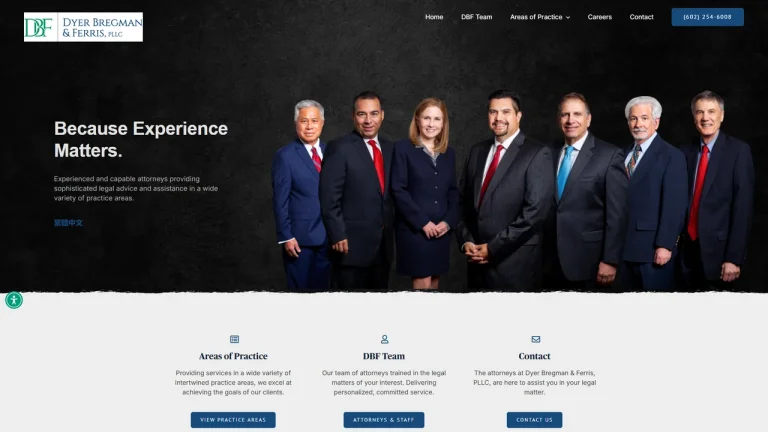
Dyer Bregman & Ferris, PLLC Phoenix, AZ

Law Office of Roman A. Kostenko, PLC - Phoenix, AZ
Merchant Law Firm - PHOENIX, AZ
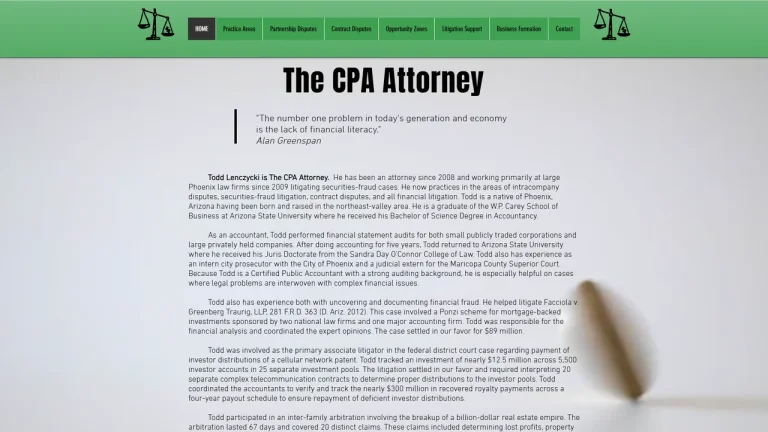
The CPA Attorney - PHOENIX, AZ
Gottlieb Law, PLC - Phoenix, AZ
Kadish Associates Law Group - Phoenix, AZ

Venditti Law Group, PLC - Attorneys at Law, Phoenix, AZ
KW Law, LLP - PHOENIX, AZ

Degnan Horne Phoenix, AZ

Resolvere Law PLLC - Phoenix, AZ
Cronus Law - Phoenix, AZ

Enara Law - Phoenix, AZ
Nova Law Group - Phoenix, AZ

Leah Martin Law - Phoenix, AZ

Withey Morris Baugh, PLC Phoenix, AZ

Commercial Litigation in Maricopa County Superior Court
Commercial litigation in Phoenix operates within a demanding procedural environment governed by the Arizona Rules of Civil Procedure and local practice rules. High-stakes corporate disputes are primarily adjudicated in the Maricopa County Superior Court, which maintains a specialized Commercial Court program housed at the Central Court Building in Downtown Phoenix to manage complex contract, entity governance, and trade secret actions.
Enterprises operating throughout the Phoenix metropolitan area-from corporate headquarters in the Camelback Corridor and Downtown Phoenix to mid-market entities in Midtown, Desert Ridge, and the Deer Valley employment centers-frequently confront commercial disputes requiring swift judicial or arbitral intervention. For disputes involving interstate commerce or federal statutory issues, actions are filed in the U.S. District Court for the District of Arizona, located at the Sandra Day O'Connor U.S. Courthouse on West Washington Street.
Retaining experienced Phoenix commercial litigation counsel provides organizations with strategic leverage during early dispute stages. Local attorneys navigate mandatory early disclosure requirements, evaluate statutory attorney fee-shifting risks, and position commercial matters for favorable pre-trial settlement conferences or private mediation before legal expenditures erode recovery margins.
Phoenix Commercial Litigation Pricing & Retainer Structures
| Case Scenario | Fee Structure | Estimated Cost (USD) | Key Cost Determinants |
|---|---|---|---|
| Breach of Commercial Contract & Collections | Hourly Retainer ($350 - $550/hr) or Hybrid | $7,500 - $25,000+ | Counterclaim exposure, debtor solvency, documentary discovery volume, and fee-shifting exposure. |
| Partnership Breakup & LLC Member Oppression | Hourly Retainer ($400 - $650/hr) | $15,000 - $60,000+ | Forensic entity accounting, business valuation discrepancies, and preliminary injunction hearings. |
| Restrictive Covenant & Trade Secret Misappropriation | Hourly Retainer ($375 - $600/hr) | $10,000 - $35,000+ | Temporary restraining order filings, emergency discovery hearings, and forensic digital auditing. |
| Commercial Arbitration Proceedings (AAA / CPR) | Hourly or Fixed Phase Billing | $12,000 - $45,000+ | Arbitrator panel selection, evidentiary deposition limits, and hearing duration. |
Critical Legal Deadlines & Statutes in Arizona
Commercial claims in Phoenix must strictly comply with Arizona statutory filing periods. Under A.R.S. § 12-548, an action for debt founded upon a written contract must be commenced within six years after the cause of action accrues. Conversely, actions on oral debt or unwritten agreements must be filed within three years pursuant to A.R.S. § 12-543.
Business torts involving intentional fraud, conversion, or breach of oral fiduciary commitments are subject to a three-year limitation period under A.R.S. § 12-543, which begins running upon the date the aggrieved party discovered or reasonably should have discovered the wrongdoing. Claims under the Arizona Uniform Limited Liability Company Act addressing manager fiduciary duties and minority owner remedies are enforced under A.R.S. § 29-3409.
A critical statutory dynamic in Arizona commercial litigation is the mandatory consideration of legal fee shifting. Under A.R.S. § 12-341.01, Arizona courts possess statutory discretion to award reasonable attorney fees to the successful party in any contested action arising out of contract, creating immense settlement pressure during early motion practice and mediation.
Justice Court Thresholds vs. Commercial Court Representation
In Maricopa County, the Small Claims Division of the Justice Courts handles simple disputes up to $3,500, while Justice Courts maintain civil jurisdiction over matters up to $10,000. However, these municipal forums lack procedural mechanisms for comprehensive electronic discovery, complex multiparty joinder, or specialized forensic accounting testimony.
More importantly, under Arizona Supreme Court Rule 31, corporations, LLCs, and formal business entities are generally prohibited from appearing in Maricopa County Superior Court without licensed legal counsel. Retaining skilled business litigators ensures strict compliance with mandatory Arizona Rule of Civil Procedure 26.1 disclosure statements, preventing fatal evidentiary exclusions or default sanctions while protecting commercial goodwill.
Red Flags to Watch for When Selecting Phoenix Business Litigators
- Litigators who promise guaranteed attorney fee awards under A.R.S. § 12-341.01 without explaining the court's broad equitable discretion under Arizona common law.
- Attorneys unfamiliar with the accelerated procedural tracks and mandatory disclosure protocols of the Maricopa County Superior Court Commercial Court.
- Firms that push immediate scorched-earth motion practice without evaluating cost-effective structured settlement conferences or alternative dispute resolution mechanisms.
- Fee agreements that fail to define staffing tiers, electronic document review charges, or rates for expert valuation witnesses.
Frequently Asked Questions
What is the Maricopa County Commercial Court?
The Maricopa County Commercial Court is an elite specialized division within the Superior Court in Downtown Phoenix designed specifically to handle complex business disputes, including governance conflicts, trade secrets, and significant contract breaches, using expedited case management rules.
Can a prevailing business recover legal fees in an Arizona breach of contract suit?
Yes. Under A.R.S. § 12-341.01, an Arizona court has the discretion to award reasonable attorney fees to the prevailing party in any civil action arising out of a contract, provided the claim is completely adjudicated or resolved on the merits.
Can a Phoenix LLC represent itself in court without an attorney?
In Maricopa County Superior Court, entities such as LLCs and corporations must be represented by a licensed attorney pursuant to Arizona Supreme Court Rule 31. Pro se representation is strictly restricted to non-corporate individuals or limited Justice Court small claims.
What is the statute of limitations for commercial fraud in Arizona?
Under A.R.S. § 12-543, a civil claim for common law fraud or business misrepresentation must be filed within three years from the date the plaintiff discovered or should have discovered the fraudulent acts through reasonable diligence.
How does Rule 26.1 impact Phoenix commercial lawsuits?
Arizona Rule of Civil Procedure 26.1 mandates prompt, early disclosure of all relevant witnesses, factual theories, and documentary evidence within forty days of filing an answer. Failure to disclose critical evidence early can lead to its exclusion at trial.