
Debt Relief Lawyers in Phoenix
Retaining an experienced Phoenix debt relief attorney empowers consumers to resolve overwhelming debt balances and defend against aggressive collection lawsuits in Maricopa County. Skilled legal advocates frequently negotiate substantial principal reductions and settle disputes outside of court while safeguarding your assets under Arizona consumer statutes. Browse our directory below to connect with qualified legal professionals in the Phoenix area.

Thomas Law Office PLC - Phoenix, AZ

Allen, Jones & Giles, PLC - Phoenix, AZ

Dodge and Vega PLC - Phoenix, AZ
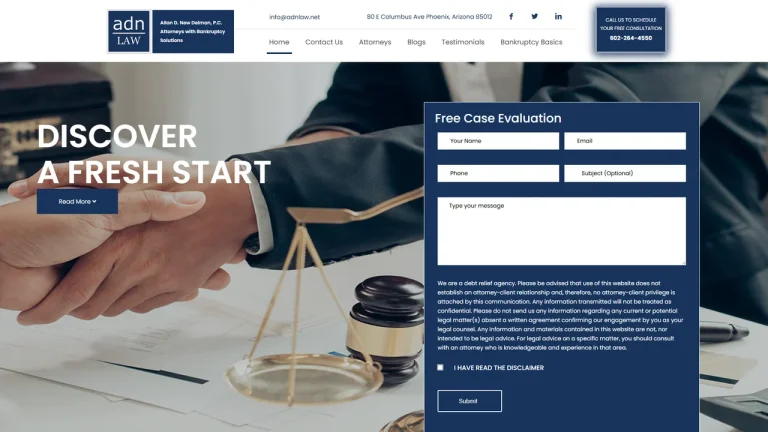
Allan D. NewDelman PC - Phoenix, AZ
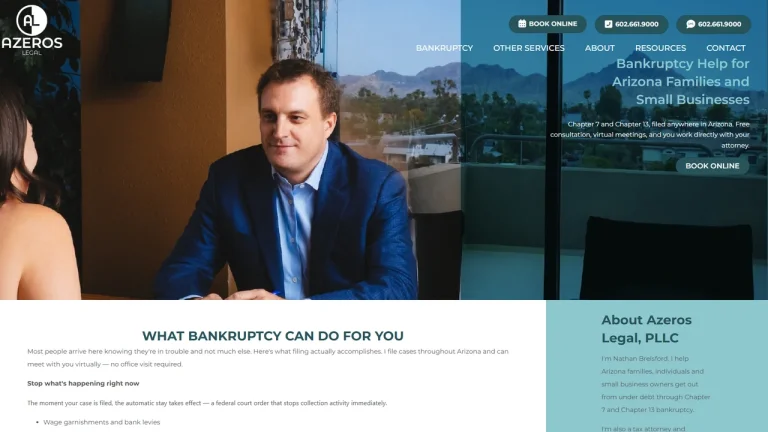
Azeros Legal, PLLC - Phoenix, AZ

Hilltop Law Firm - Phoenix, AZ

Engelman Berger PC - PHOENIX, AZ
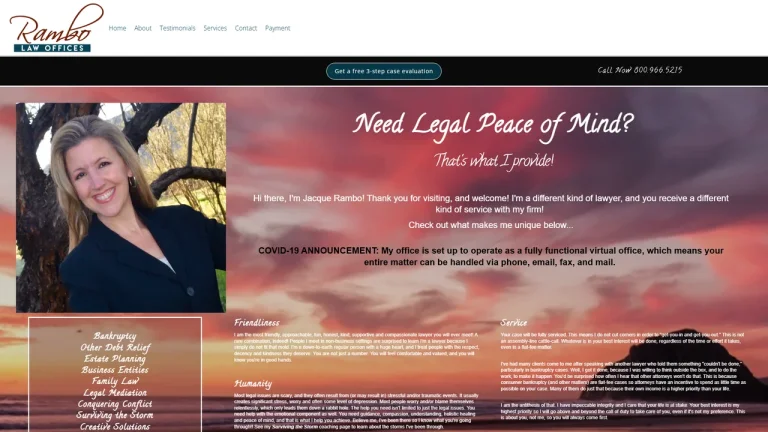
Rambo Law Offices - Phoenix, AZ

Hauf Law PLC - Phoenix, AZ

Phoenix Fresh Start Bankruptcy Attorneys - Phoenix, AZ

Lerner and Rowe Law Group - Phoenix, AZ

Resolute Tax Services - PHOENIX, AZ
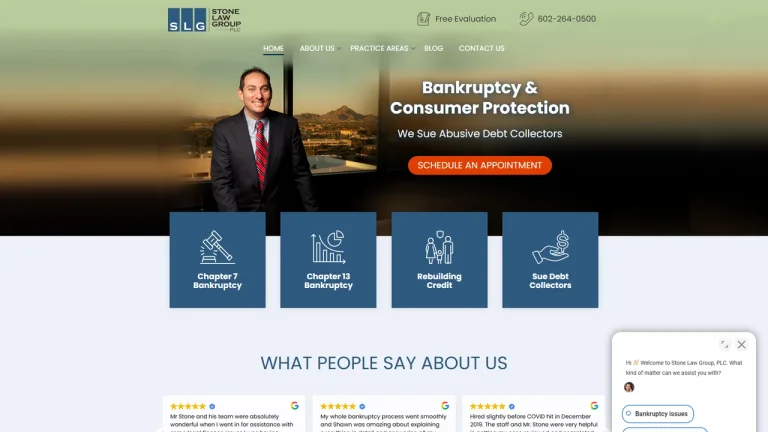
Stone Law Group - Phoenix, AZ

Simmons & Greene, P.C. - PHOENIX, AZ
J. David Tax Law - Phoenix, AZ
Leonard V. Sominsky, ESQ., PC - Phoenix, AZ

Defense Tax Partners - Phoenix, AZ
Community Legal Services - Phoenix, AZ
Hartley Markov Law, Phoenix, AZ
Oswalt Law Group, Phoenix, AZ
Wright Law Offices - Phoenix, AZ

Denny & Boulton, P.C. - Phoenix, AZ

Lawyers For Less - Phoenix, AZ

Arizona Debt Relief Defense & Maricopa County Court Practice
Navigating debt collection actions in the Phoenix metropolitan area requires a thorough command of Arizona consumer protection statutes and local Maricopa County court procedures. Collection lawsuits are routinely initiated by original lenders and third-party debt buyers across Maricopa County Justice Courts-such as Downtown Phoenix, Kyrene, Arcadia Biltmore, and West McDowell-as well as the Maricopa County Superior Court for higher-dollar disputes.
Arizona law provides robust safeguards against unlawful collection practices. The Arizona Consumer Fraud Act under A.R.S. § 44-1522 prohibits deceptive or unconscionable acts in commercial transactions, while the federal Fair Debt Collection Practices Act under 15 U.S. Code § 1692 prohibits abusive communication, unauthorized fees, and misleading legal threats. Licensed Phoenix debt relief attorneys intervene directly to ensure creditors adhere strictly to these standards.
Unlike national call-center settlement companies, local Phoenix attorneys provide formal legal representation, filing verified answers to lawsuits, examining chains of debt assignment, and negotiating enforceable settlement releases. Whether resolving credit card obligations, medical debt, or commercial personal guarantees, a local attorney provides strategic advocacy tailored to Maricopa County jurisdictions.
Phoenix Debt Relief Representation Costs & Pricing
| Case Scenario | Fee Structure | Estimated Cost (USD) | Key Cost Determinants |
|---|---|---|---|
| Out-of-Court Debt Settlement | Contingency (% of debt saved) | 15% - 25% of savings | Total enrolled debt balance, creditor settlement policies, payment lump sum |
| Collection Lawsuit Defense | Flat Fee or Hourly ($250-$400/hr) | $1,500 - $4,000 | Court jurisdiction, discovery complexity, debt assignment chain defects |
| FDCPA Consumer Protection Action | Statutory Fee-Shifting | $0 Out-of-Pocket | Documented statutory violations, collector liability, fee recovery under federal law |
| Wage & Bank Garnishment Defense | Fixed Flat Fee | $750 - $2,000 | Emergency filing deadlines, calculation of disposable earnings under state statutes |
Critical Legal Deadlines & Statutes in Arizona
Time is critical when responding to debt collection demands or court summonses in Phoenix. Under A.R.S. § 12-548, Arizona establishes a six-year statute of limitations on actions for debt arising from written contracts, including credit card agreements and revolving accounts. Once the six-year statutory window from the date of default expires, creditors are legally barred from initiating a lawsuit to enforce collection.
If a debt collector files a civil complaint in Maricopa County Superior Court or Justice Court, a defendant served within Arizona has exactly 20 days to file a formal written response under Arizona Rules of Civil Procedure. Failure to file an answer within this 20-day window triggers an automatic default judgment, enabling the creditor to pursue garnishment. Furthermore, wage garnishment protections under A.R.S. § 33-1131 limit wage withholding to a maximum of 10% to 15% of disposable weekly earnings, shielding the majority of income from creditor attachment.
Small Claims Limits vs. Professional Representation
The Small Claims Division of the Maricopa County Justice Courts has a jurisdictional limit of $3,500. These proceedings are informal, and attorneys are typically excluded unless both parties agree in writing. When an uncontested dispute falls below this monetary threshold, individuals can often present their claims or defenses directly before a hearing officer.
However, the overwhelming majority of debt collection lawsuits filed by institutional debt purchasers exceed $3,500 and are docketed in the regular Civil Division of the Justice Courts (handling matters up to $10,000) or Maricopa County Superior Court (for matters over $10,000). In these forums, strict evidentiary rules govern pleadings, discovery requests, and summary judgment motions. Without a skilled Phoenix debt defense attorney, consumers frequently lose viable defenses, allowing junk debt buyers to obtain enforceable judgments without proving ownership of the underlying debt.
Red Flags in Debt Relief & Settlement Services
- Out-of-state debt settlement firms that demand substantial upfront fees before executing an authorized settlement agreement, violating federal trade regulations.
- Companies advising debtors to stop all communication with creditors without having an attorney licensed by the State Bar of Arizona ready to enter a formal appearance.
- Guarantees of eliminating 80% to 90% of outstanding debt without reviewing individual creditor contracts, arbitration provisions, or original billing statements.
- Settlement programs that fail to use independent escrow accounts or refuse to provide transparent itemized accountings of client deposits and administrative fees.
Frequently Asked Questions
What is the statute of limitations on credit card debt in Arizona?
Under A.R.S. § 12-548, creditors have six years from the date of default to file a lawsuit on written credit card contracts. Once this period expires, the debt becomes time-barred and legal collection through court action is prohibited.
Can a Phoenix debt relief attorney stop wage garnishment in Maricopa County?
Yes. An attorney can challenge writ calculations, request an emergency hearing under A.R.S. § 33-1131 to reduce garnishment amounts, negotiate an out-of-court settlement, or pursue bankruptcy protection to halt garnishments immediately.
How does hiring a local debt attorney differ from using a settlement company?
A licensed attorney can represent you in Maricopa County courts, file formal legal answers to prevent default judgments, and invoke consumer protection laws. Out-of-state settlement companies cannot provide legal defense or appear in court on your behalf.
What happens if I ignore a summons from a Maricopa County Justice Court?
Failing to file an answer within 20 days allows the creditor to obtain a default judgment. This judgment grants them the legal authority to freeze local bank accounts, place liens on real property, and garnish wages.
Can I sue a debt collector for harassment in Phoenix?
Yes. If a collector violates the Fair Debt Collection Practices Act under 15 U.S. Code § 1692 through abusive language, unauthorized calls, or false legal threats, you may recover statutory damages of up to $1,000 plus attorney fees.