
Immigration Lawyers in Tucson
Navigating federal immigration processes in Tucson requires skilled legal counsel familiar with Southern Arizona border jurisdictions and administrative agencies. Retaining a local Tucson immigration attorney protects your family members or employees from procedural missteps, detention complications, and unnecessary petition denials. Explore our comprehensive directory below to schedule an initial consultation with experienced Pima County immigration lawyers.
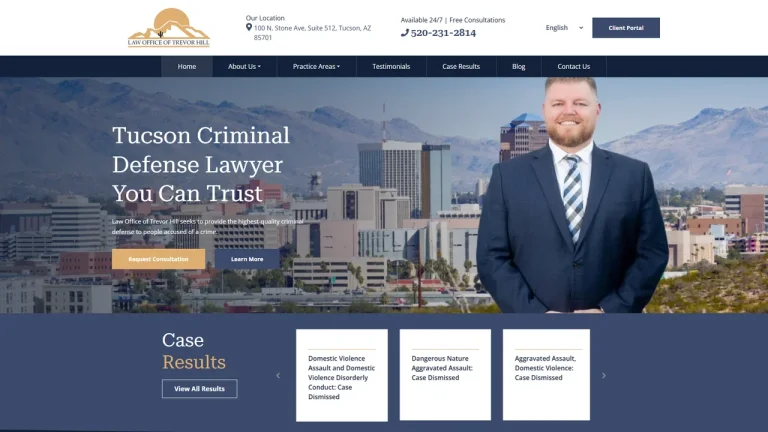
Law Office of Trevor Hill - Tucson, AZ
Green Evans-Schroeder, PLLC - Tucson, AZ
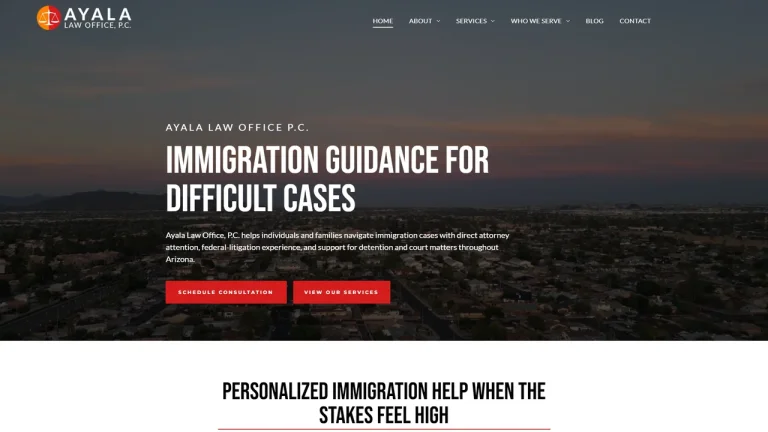
Ayala Law Office, P.C. - Tucson, AZ
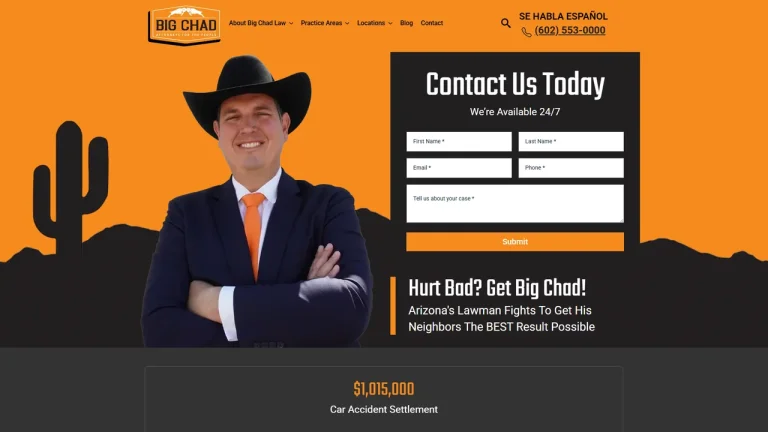
Big Chad Law Injury & Accident Lawyers - Tucson, AZ

Southern Arizona Legal Aid Inc - Tucson, AZ
Rachel Wilson Law - Tucson, AZ
US Federal Public Defender - Tucson, AZ
Ralls & Wille, PC - Tucson, AZ
Alatorre Law | Trial Attorneys - Tucson, AZ

C.R. Wannamaker Law, PLLC - Tucson, AZ

Solórzano Law Firm - Tucson, AZ
Moore Law Firm - Tucson, AZ
Patricia G. Mejía Law Offices - Tucson, AZ

The Law Offices of Frederick S. Klein - Tucson, AZ

Law Offices of Jennifer Huang, PC - Tucson, AZ

Ogletree Deakins - Tucson, AZ

Goldman & Goldman, P.C. - Tucson, AZ
Acceso Immigration Law, PLLC - Tucson, AZ

Boreale Law, PLC - Tucson, AZ
Doralina Law - Tucson, AZ
Wolf and Sultan P.C. - Tucson, AZ
Arévalo Law Firm LLC - Tucson, AZ
Immigration Jurisdiction in Tucson and Pima County
Tucson's geographic proximity to the United States-Mexico border places Pima County at the center of complex federal immigration enforcement and adjudication. Noncitizens and families residing throughout Tucson, South Tucson, Marana, and Oro Valley encounter multi-tiered federal jurisdictions, including the U.S. Border Patrol Tucson Sector and the Department of Homeland Security.
Administrative green card interviews, naturalization ceremonies, and biometric processing take place through the USCIS Tucson Field Office. When removal proceedings or bond hearings arise, matters are formally adjudicated before the Executive Office for Immigration Review (EOIR) at the Tucson Immigration Court, located on West Congress Street. Individuals detained within Southern Arizona are frequently housed at regional complexes such as the Florence Correctional Center or Eloy Detention Center in neighboring Pinal County, requiring coordinated legal representation across regional facilities.
Securing an immigration lawyer licensed by the State Bar of Arizona or admitted to practice federal immigration law ensures strict compliance with federal statutes. Local legal counsel assists noncitizens with family petitions, humanitarian asylum applications, employment authorizations, and strategic deportation defense, advocating directly against government trial counsel.
Tucson Immigration Legal Fee Framework
| Case Scenario | Fee Structure | Estimated Cost (USD) | Key Cost Determinants |
|---|---|---|---|
| Family-Based Adjustment of Status (Form I-130 / I-485) | Flat Fee | $2,500 - $5,000 | Lawful entry documentation, joint marital evidence, translation requirements, USCIS interview attendance |
| Affirmative or Defensive Asylum Application (Form I-589) | Flat Fee | $4,500 - $9,500 | Country condition documentation, expert witness declarations, individual merits hearing duration |
| Naturalization & Citizenship Petition (Form N-400) | Flat Fee | $1,200 - $2,800 | Physical presence calculation, selective service or tax compliance issues, prior criminal history |
| Detention Bond Hearing & Removal Defense (EOIR) | Flat Fee or Hourly | $3,500 - $8,500 | Detention facility location, mandatory detention challenges, cancellation of removal brief preparation |
Critical Legal Deadlines & Statutes in Arizona
Federal immigration proceedings enforce non-negotiable statutory timelines governed by the Immigration and Nationality Act. Noncitizens requesting asylum must formally submit Form I-589 within the mandatory one-year deadline of arriving in the United States pursuant to 8 U.S. Code § 1158, unless changed country conditions or extraordinary circumstances are proven.
If an adverse removal order is entered by an Immigration Judge at the Tucson Immigration Court, the respondent must ensure that a Notice of Appeal (Form EOIR-26) is physically received by the Board of Immigration Appeals (BIA) within 30 calendar days of the decision under 8 CFR § 1003.38. Postmark dates are not recognized by the BIA, making timely physical delivery critical.
Conditional permanent residents holding two-year green cards must file Form I-751 during the statutory 90-day window immediately preceding the card's expiration date pursuant to 8 CFR § 216.4. Additionally, noncitizens who accrue unlawful presence face mandatory 3-year or 10-year admissibility bars upon departing the country under 8 U.S. Code § 1182, requiring specialized provisional hardship waivers prior to travel.
Small Claims Court vs. Tucson Immigration Legal Representation
In Pima County, the Small Claims Division of the Consolidated Justice Court operates under an absolute jurisdictional monetary cap of $3,500 pursuant to A.R.S. § 22-503. Arizona Justice Courts exercise general civil jurisdiction up to $10,000 under A.R.S. § 22-201, handling localized consumer and contract disputes without complex discovery rules.
State small claims tribunals and municipal courts have zero legal jurisdiction over federal immigration matters, visa approvals, or deportation proceedings. Attempting to manage immigration applications pro se or relying on unregulated document preparers exposes applicants to severe risks, including permanent inadmissibility, unexpected detention, or in absentia deportation orders. A licensed Tucson immigration attorney provides vital procedural analysis, manages complex evidentiary burdens before USCIS, and represents respondents against Department of Homeland Security prosecutors.
Red Flags When Hiring a Tucson Immigration Lawyer
- Unlicensed individuals marketing themselves as 'notarios' or immigration consultants who promise guaranteed green cards or work permits without legal authority.
- Attorneys who guarantee specific case outcomes or unrealistic processing timelines before the USCIS Tucson Field Office or EOIR court.
- Fee agreements that fail to itemize legal representation fees separately from mandatory USCIS filing fees and translation costs.
- Law firms that refuse to visit detained clients in person at regional facilities such as the Florence or Eloy detention centers prior to bond hearings.
Frequently Asked Questions
Where are immigration hearings held for non-detained Tucson residents?
Non-detained master calendar and merits hearings for Tucson and Pima County residents are conducted at the Tucson Immigration Court located on West Congress Street in downtown Tucson. Retaining an attorney allows you to have representation at all scheduled hearings.
What is the one-year asylum filing rule in Arizona?
Under 8 U.S. Code § 1158, asylum seekers must submit their application within one year of their most recent arrival in the United States. Missing this deadline restricts available legal remedies primarily to withholding of removal or protection under the Convention Against Torture.
How can a family member be released on an immigration bond in Pima County?
If an individual is not subject to mandatory detention, an immigration lawyer can request an initial bond redetermination from ICE or file a motion for a bond hearing before an immigration judge at the Tucson Immigration Court, demonstrating community ties and low flight risk.
Can a Tucson resident apply for a green card through marriage if they entered unlawfully?
Individuals who entered without inspection generally cannot adjust status within the United States without a waiver. They typically require an approved Form I-130 followed by an unlawful presence provisional waiver (Form I-601A) before attending a consular interview abroad.
Where do Tucson residents complete naturalization and citizenship interviews?
In-person naturalization examinations, civics tests, and adjustment of status interviews are administered at the USCIS Tucson Field Office. An immigration attorney can attend these proceedings with you to clarify questions and protect your statutory rights.