
Wills, Estate Planning & Probate Lawyers in Tucson
Securing an experienced wills, estate planning, and probate attorney in Tucson protects your family's assets and streamlines asset distribution across Pima County. Local legal counsel can resolve contentious estate matters through private mediation, avoiding costly and protracted litigation in probate court. Explore our directory below to connect with verified Tucson estate planning professionals today.

Valentine & Valentine, P.C. - Tucson, AZ

Bogutz & Gordon, P.C. - Tucson, AZ

Morris Hall, PLLC - Tucson, AZ

Leonard and Felker, P.L.C. - Tucson, AZ

Law Office of Zarina N. Aguilar - Tucson, AZ

Eric E. Button, PLLC - Tucson, AZ
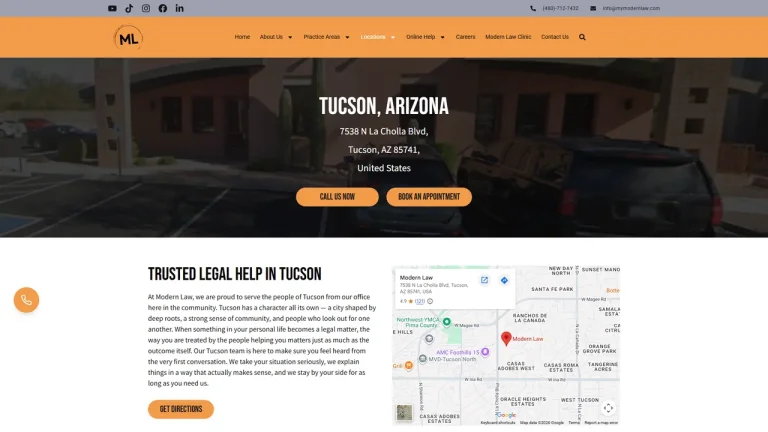
Modern Law - Tucson, AZ

Lazarow Law Firm, PLC - Tucson, AZ

St. Clair Law, P.C. - Tucson, AZ

Enara Law - Tucson, AZ

Newman & Ahlers - Tucson, AZ

Law Office of Jessica C. Graves, PLLC - Tucson, AZ
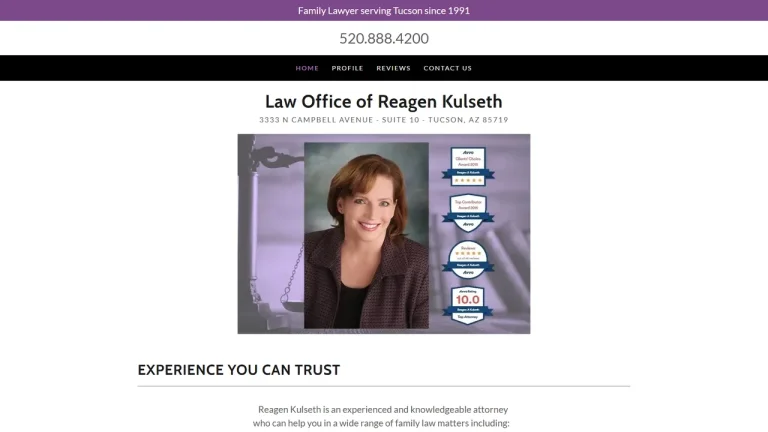
The Law Office of Reagen Kulseth - Tucson, AZ

Fletcher Struse Wagner & Derksen, PLC - Tucson, AZ
Kruchek Law, PLLC - Tucson, AZ

Law Office of Rubin Salter Jr. - Tucson, AZ

Dana Whiting Law - Tucson, AZ
Ayala Law Office, P.C. - Tucson, AZ
Robert Pearson Law PLLC - Tucson, AZ

Burris and MacOmber Attorneys At Law - Tucson, AZ

Rubin & Bernstein Law, PLLC - Tucson, AZ
King & Frisch PC - Tucson, AZ

Moore Law Firm - Tucson, AZ

Navigating Wills, Estate Planning, and Probate Across Tucson
Establishing an enforceable estate plan or administering a decedent's estate in Tucson requires deep familiarity with Arizona probate law, community property ownership rules, and local filing procedures. Whether managing residential properties in the Catalina Foothills, family land in Tanque Verde, or historic bungalows in Sam Hughes, local counsel ensures your estate documents conform to Pima County legal standards.
In Tucson, formal and informal probate administrations are supervised by the Pima County Superior Court Probate Division at the downtown courthouse on West Congress Street. Working with a local probate lawyer ensures that all filings-from initial petitions for appointment of personal representative to final accountings-adhere strictly to local judicial rules and clerk requirements.
Because Arizona operates as a community property jurisdiction, marital estates require meticulous characterization to maximize step-up basis tax treatment and avoid unintended spousal disinheritance. An experienced Pima County estate attorney guides families through revocable living trusts, beneficiary deeds, and statutory advance directives that bypass judicial intervention entirely.
Tucson Estate Planning & Probate Legal Fee Structures
| Case Scenario | Fee Structure | Estimated Cost (USD) | Key Cost Determinants |
|---|---|---|---|
| Comprehensive Revocable Living Trust Package | Flat Fee | $2,500 - $5,500 | Pima County real property deeds, pour-over wills, incapacity directives, and trust funding assistance |
| Basic Will, Financial & Healthcare Directives | Flat Fee | $1,200 - $2,200 | Beneficiary designations, statutory healthcare powers of attorney, and guardian nominations for minors |
| Informal Uncontested Probate Administration | Flat Fee or Hourly ($325 - $495/hr) | $2,800 - $6,000 | Presence of valid original will, creditor notice publications, and cooperative beneficiaries |
| Contested Estate & Will / Trust Litigation | Hourly Retainer ($350 - $575/hr) | $7,500 - $25,000+ | Undue influence claims, testamentary capacity challenges, and fiduciary accounting disputes |
Critical Legal Deadlines & Statutes in Arizona
Estate administration across Tucson operates under statutory deadlines codified in the Arizona Revised Statutes. Under A.R.S. § 14-3108, formal or informal probate proceedings must be initiated within three years of the decedent's date of death; after this window closes, heirs are restricted to specific heirship proceedings rather than direct probate administration.
Personal representatives must publish notice to creditors once a week for three consecutive weeks in a Pima County newspaper of general circulation under A.R.S. § 14-3801. Under A.R.S. § 14-3803, creditors then have four months from the date of first publication to present their claims, after which non-presented debts are permanently barred.
Trust contests are governed by A.R.S. § 14-10604, which sets a deadline of 120 days to file a challenge after the trustee sends notice and a copy of the trust instrument. For real property transfers outside probate, A.R.S. § 33-405 requires that a beneficiary deed be executed and recorded with the Pima County Recorder prior to the grantor's death. Small estate affidavits under A.R.S. § 14-3971 mandate a 30-day waiting period for personal property under $75,000 and a 6-month waiting period for real property equity under $100,000, while marital asset divisions remain governed by A.R.S. § 25-211.
Small Claims Limitations vs. Professional Estate Representation
The Pima County Consolidated Justice Court small claims division handles civil debts up to $3,500, while the regular justice court hears matters up to $10,000. However, justice courts possess no jurisdiction to open probate estates, appoint personal representatives, validate testamentary instruments, or supervise trust distributions.
All probate dockets and contested estate hearings fall under the exclusive purview of the Pima County Superior Court. Even when using small estate affidavits to claim bank accounts, title companies and financial institutions often require court-certified documentation, making legal representation vital to avoid fiduciary liabilities.
Red Flags When Selecting an Estate Planning or Probate Attorney
- Law firms that charge percentage-of-estate fees instead of reasonable hourly or flat rates, which contradicts standard Arizona probate practices.
- Attorneys who prepare revocable trusts but fail to assist with recording deeds with the Pima County Recorder, leaving real estate exposed to probate.
- Fiduciaries who fail to publish mandatory statutory notices to creditors in Pima County, creating future personal liability for heirs.
- Non-attorney document preparation services that draft boilerplate templates without advising on Arizona community property tax implications.
Frequently Asked Questions
What is the difference between formal and informal probate in Tucson?
Informal probate is an administrative filing handled through the Pima County Superior Court registrar when there are no disputes and the will is unchallenged. Formal probate involves hearings before a judge to settle contested documents, determine legal heirs, or supervise complex distributions.
Can a beneficiary deed avoid probate for my Tucson home?
Yes, an Arizona beneficiary deed allows real property in Pima County to transfer directly to designated beneficiaries upon your death without probate, provided it is recorded with the Pima County Recorder while you are living.
How long does an uncontested probate take in Pima County?
An uncontested informal probate generally takes between six and nine months. This duration accommodates the mandatory four-month creditor notice period, estate inventory preparation, and statutory asset distributions.
How does Arizona community property law affect my Tucson estate?
Assets acquired during marriage in Arizona are presumed community property, owned equally by both spouses. Structuring titles with community property rights of survivorship avoids probate and offers double step-up basis capital gains tax benefits.
When can an estate use a small estate affidavit in Arizona?
An affidavit can be used if personal property is valued at $75,000 or less (after waiting 30 days post-death) or if net equity in Arizona real property does not exceed $100,000 (after waiting 6 months post-death).