
Violent Crime Defense Lawyers in Arizona
Facing violent crime allegations in Arizona necessitates immediate representation from a battle-tested defense lawyer to preserve your liberty and reputation. Proven defense litigators assert statutory self-defense justification, challenge police investigation procedures, and contest dangerous offense allegations in court. Search our verified statewide directory to schedule a confidential strategy review with an Arizona criminal attorney.

Nava Law Firm - Phoenix, AZ

Mark J. Andersen, Attorney at law - Chandler, AZ

Belen Law Firm, PLLC - Phoenix, AZ
Service Law Group PLLC - Chandler, AZ

Law Office of Robert W. Precht - Mesa, AZ

Tobin Law Office - Chandler, AZ

Law Office of Sonia Martinez - Mesa, AZ

The Weingart Firm - Tempe, AZ
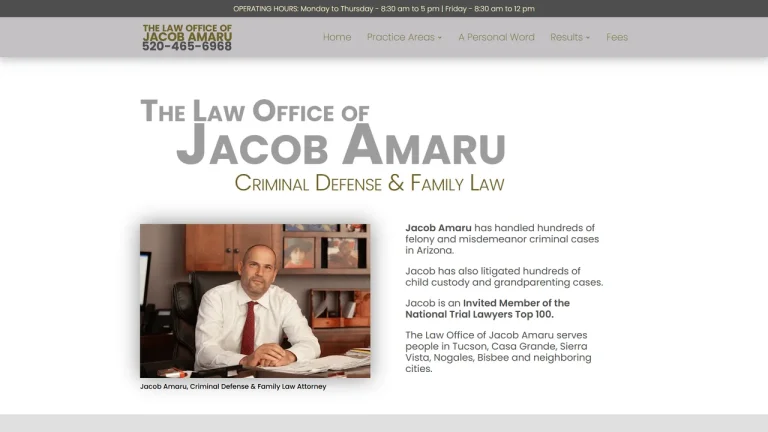
Jake Amaru, Criminal Defense Attorney - Tucson, AZ

Spargo Law DUI & Criminal Defense Lawyers Phoenix, AZ
The Harding Firm - Mesa, AZ
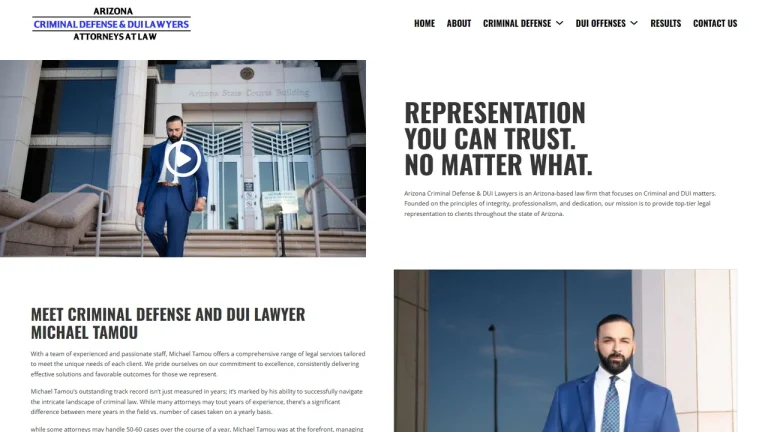
Arizona Criminal Defense and DUI Lawyers - Phoenix, AZ
Abogados A Tu Alcance | JacksonWhite - Mesa, AZ

AZ Rights Restoration - Mesa, AZ

Law Offices of David A. Black - Phoenix, AZ

Saldivar and Associates - Phoenix, AZ

Smith Garrett L - Mesa, AZ
My AZ Lawyers - Mesa, AZ
Grand Canyon Law Group - Mesa, AZ
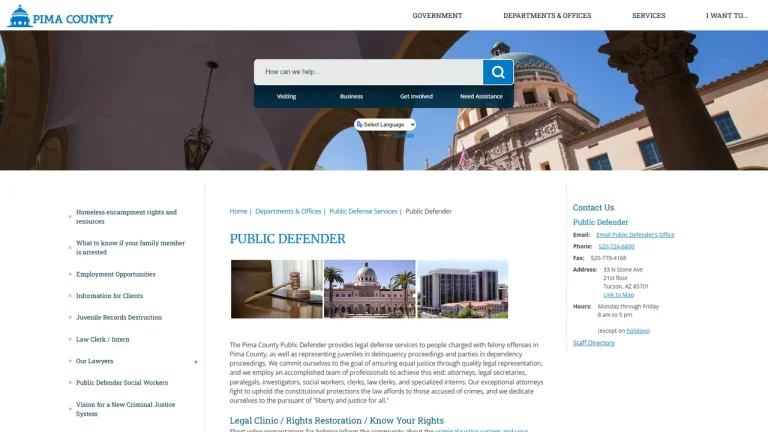
Pima County Public Defender - Tucson, AZ

Charity Clark Law - Tempe, AZ
Ciccarelli Law Offices - Chandler, AZ
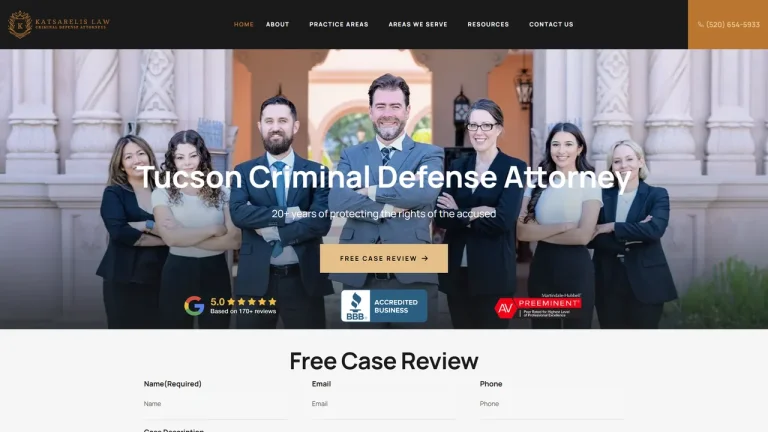
Katsarelis Law Criminal Defense Attorneys Tucson - Tucson, AZ

Arizona Violent Crime Jurisdictions and Superior Court Venues
Prosecution of violent crimes in Arizona is conducted under the strictest enforcement standards of the Arizona Criminal Code (Title 13). While minor misdemeanor altercations are heard in Municipal or Justice Courts, all felony violent offenses-including aggravated assault, armed robbery, kidnapping, manslaughter, and homicide-are tried exclusively in the Arizona Superior Courts. These courts of general jurisdiction manage high-stakes jury trials across fifteen counties.
Major violent felony dockets are centered within urban jurisdictions, including the Maricopa County Superior Court (with facilities in Downtown Phoenix and Southeast Mesa), the Pima County Superior Court in Tucson, and the Pinal County Superior Court in Florence. Pretrial motions, grand jury transcripts, and forensic ballistics filings are coordinated through the state's eFileAZ system. Appellate review of violent crime convictions is conducted through Division One (Phoenix) and Division Two (Tucson) of the Arizona Court of Appeals, with ultimate state review by the Arizona Supreme Court.
Defendants facing violent accusations encounter extensive investigations led by municipal police departments, county sheriffs, and the Arizona Department of Public Safety (DPS). A conviction for a violent felony can result in lengthy commitments to the Arizona Department of Corrections, Rehabilitation and Reentry (ADCRR). Securing defense counsel admitted to the State Bar of Arizona ensures that constitutional rights, justification defenses, and evidentiary challenges are asserted aggressively from the initial detention hearing onward.
Violent Crime Defense Legal Fee Structures and Retainer Estimates
| Case Scenario | Fee Structure | Estimated Cost (USD) | Key Cost Determinants |
|---|---|---|---|
| Misdemeanor Assault or Domestic Violence Assault | Flat Fee / Retainer | $2,500 - $6,000 | Municipal versus Justice Court, witness recantation dynamics, and domestic violence diversion options. |
| Aggravated Assault with Deadly Weapon (Dangerous Offense) | Retainer + Hourly ($300 - $600/hr) | $7,500 - $25,000+ | Statutory dangerous offense allegation, firearm forensics, justification evidence, and trial length. |
| Armed Robbery, Kidnapping, or Major Violent Felony | Retainer + Hourly ($350 - $650/hr) | $15,000 - $45,000+ | Cell phone geolocation evidence, DNA testing, multiple co-defendants, and extensive depositions. |
| Homicide, Manslaughter, or First-Degree Murder Trial | Retainer + Hourly ($375 - $700/hr) | $25,000 - $80,000+ | Forensic pathologist expert retention, crime scene reconstruction, mitigation specialists, and jury trial days. |
Critical Legal Deadlines & Statutes in Arizona Violent Offense Cases
Statutory timelines govern the initiation and defense of violent crime charges in Arizona. Under A.R.S. § 13-107(A), there is no statute of limitations for homicide offenses; first-degree murder, second-degree murder, and manslaughter may be charged at any point during a person's lifetime. For other violent felonies, the state must bring formal charges within seven years under A.R.S. § 13-107(B)(1), while misdemeanor assault charges expire after one year pursuant to A.R.S. § 13-107(B)(2).
Arizona law establishes severe mandatory sentencing provisions when an offense is charged as a "dangerous offense" under A.R.S. § 13-105(13), meaning it involved the discharge, use, or threatening exhibition of a deadly weapon or dangerous instrument. Under A.R.S. § 13-704, dangerous offenses carry mandatory prison sentences without the possibility of probation or suspended execution of sentence. Aggravated assault is prosecuted under A.R.S. § 13-1204, with penalty tiers determined by the victim's status and weapon involvement. Critically, Arizona provides broad statutory self-defense protections: physical force justification is codified at A.R.S. § 13-404, deadly physical force at A.R.S. § 13-405, and home defense under A.R.S. § 13-411. Under A.R.S. § 13-205, once a defendant presents evidence of justification, the burden is entirely on the prosecution to prove beyond a reasonable doubt that the defendant did not act with justification.
Self-Representation Risks vs. Seasoned Violent Crime Defense Counsel
Attempting self-representation against violent felony allegations in the Arizona Superior Court carries catastrophic risks. Prosecutors in county attorney offices possess immense investigative resources, forensic crime laboratories, and specialized homicide and violent crimes bureaus. In Arizona, defendants charged with dangerous offenses or non-probationable felonies face immediate detention, and navigating complex bail eligibility arguments under Arizona Constitution Article 2, Section 22 requires sophisticated constitutional advocacy.
A skilled violent crime defense attorney undertakes an exhaustive, independent investigation of the alleged incident. Defense litigators dispatch private investigators to interview eyewitnesses, subpoena surveillance footage, analyze ballistic trajectory reports, and evaluate 911 dispatch audio. By establishing statutory justification defenses under A.R.S. § 13-404 and shifting the burden of proof to the prosecution under A.R.S. § 13-205, counsel can secure pre-trial dismissals, negotiate charge reductions, or achieve full acquittals before an Arizona jury.
Red Flags When Hiring an Arizona Violent Crime Defense Attorney
- Unsubstantiated Bond Guarantees: Ethical attorneys will never promise immediate release on bail, as certain violent crimes fall under non-bailable statutory exceptions in Arizona.
- Lack of Superior Court Jury Trial Experience: Violent felony allegations require seasoned trial litigators; verify that your attorney has substantial jury trial experience in Arizona Superior Courts.
- Failure to Retain Independent Experts: Defending violent charges demands independent forensic analysis; avoid counsel unwilling to retain private investigators, medical pathologists, or ballistics experts.
- Passive Defense Strategy: Steer clear of attorneys who merely react to prosecutorial disclosures rather than proactively building an affirmative self-defense or justification case.
Frequently Asked Questions
What is the statute of limitations for violent crimes in Arizona?
Under A.R.S. § 13-107(A), there is no statute of limitations for homicide offenses, while other violent felonies carry a seven-year prosecution window under A.R.S. § 13-107(B)(1).
What constitutes a "dangerous offense" under Arizona law?
Pursuant to A.R.S. § 13-105(13), a dangerous offense involves the discharge, use, or threatening exhibition of a deadly weapon or dangerous instrument, triggering mandatory prison under A.R.S. § 13-704.
How does self-defense justification work in Arizona?
Under A.R.S. § 13-404 and A.R.S. § 13-405, you may use reasonable or deadly force to protect against unlawful force; once raised, A.R.S. § 13-205 requires the state to disprove justification beyond a reasonable doubt.
Which court tries felony violent crime charges in Arizona?
All felony violent crime prosecutions are heard exclusively in the Arizona Superior Courts in the county where the alleged offense occurred.
Can a person convicted of a dangerous violent crime receive probation in Arizona?
No, under A.R.S. § 13-704, a person convicted of an offense designated as "dangerous" is statutorily ineligible for probation or a suspended sentence and must serve prison time in the Department of Corrections.