
Child Support Lawyers in Los Angeles
Retaining an experienced Los Angeles child support lawyer ensures financial determinations are calculated accurately under California statutory guidelines. Knowledgeable attorneys routinely resolve contested earning disputes and modification requests through structured negotiation, avoiding protracted courtroom proceedings. Review our directory below to connect with vetted local family law attorneys.

Levitt & Quinn Family Law Center - Los Angeles, CA

The Law Offices Of Teresa A. Beyers - Los Angeles, CA
Charles M. Green, APLC - Los Angeles, CA
Law Office of Robert Ackermann - Los Angeles, CA
Harris Family Law Group - Los Angeles, CA

Berenji & Associates Divorce Lawyers - Los Angeles, CA

Family Law Mediation Los Angeles - Los Angeles, CA
Law Offices of Randi Susan Klein - Los Angeles, CA

The Law Office of Stephen Chen, PC - Los Angeles, CA

Duncan Family Law - Los Angeles, CA

Kim Mediation & Law Center - Los Angeles, CA
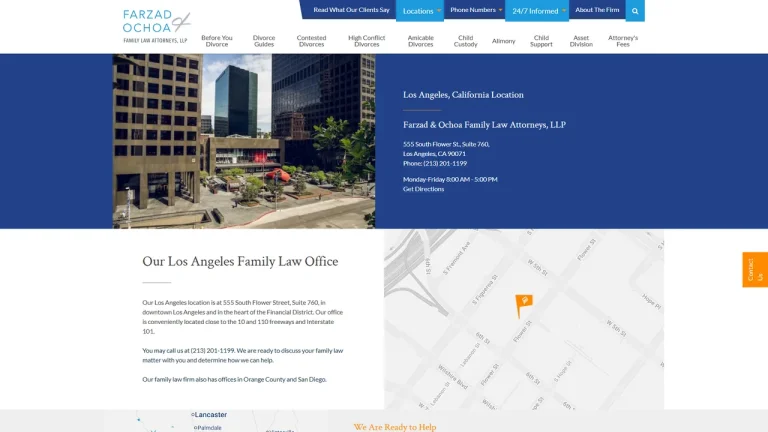
Farzad & Ochoa Family Law Attorneys, LLP - Los Angeles, CA

Castellanos & Associates, APLC - Los Angeles, CA

Wilkinson & Finkbeiner, LLP - Los Angeles, CA
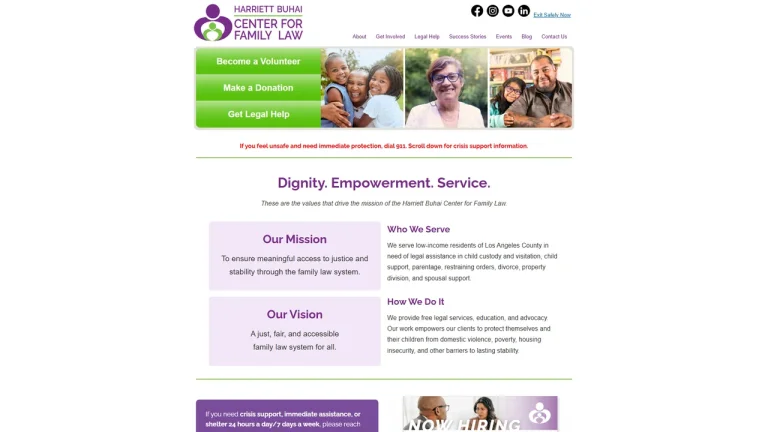
Harriett Buhai Center For Family Law - Los Angeles, CA
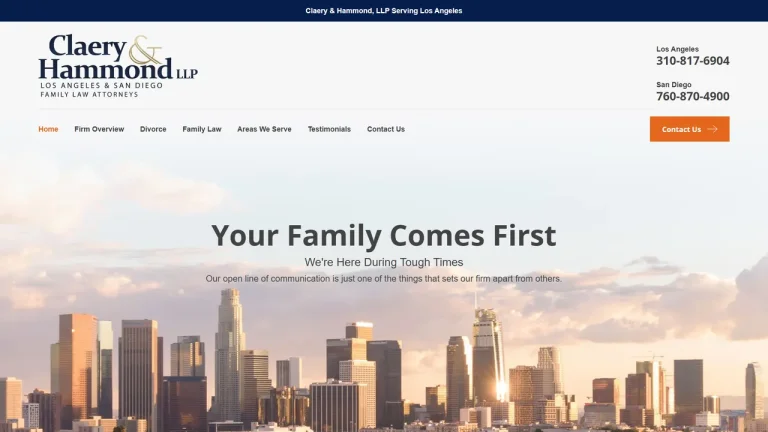
Claery & Hammond, LLP - Los Angeles, CA
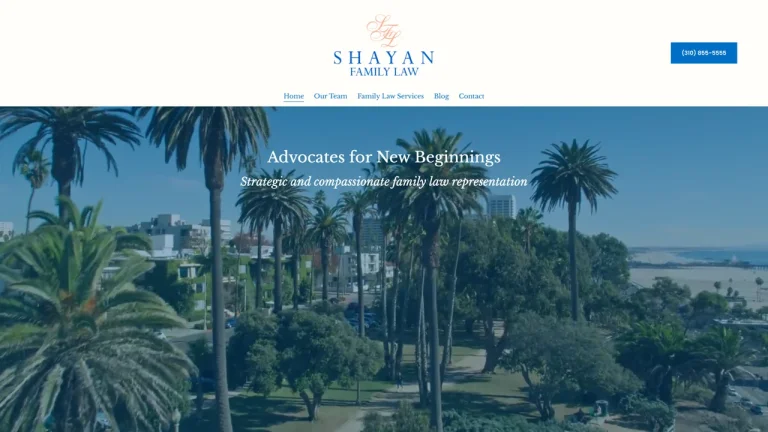
Shayan Family Law, APC - Los Angeles, CA
Jackie A. Abboud, APLC - Los Angeles, CA

MAC Services Group - Los Angeles, CA
Diaz Law Firm - Los Angeles, CA
M.C. Law, P.C. - Los Angeles, CA
Family Law Los Angeles - Los Angeles, CA
Whitmarsh Family Law, PC - Los Angeles, CA
Navigating California Child Support in Los Angeles County
Child support matters across Los Angeles County are governed by uniform statutory principles designed to ensure children receive fair financial support reflecting both parents' financial circumstances. Actions are processed through the Los Angeles County Superior Court's Family Law Division, centered at the Stanley Mosk Courthouse in Downtown Los Angeles, regional branches, and Title IV-D enforcement courtrooms coordinated with the Los Angeles County Child Support Services Department (CSSD).
California enforces a mandatory statewide uniform guideline under Cal. Fam. Code § 4055, which relies on mathematical formulas integrating each parent's net disposable income and the precise percentage of time spent with the child. Judges also allocate mandatory child support add-ons under Cal. Fam. Code § 4062, including uninsured medical expenses and employment-related childcare costs.
Disputes frequently arise when evaluating self-employment income, business distributions, or voluntary underemployment. Under Cal. Fam. Code § 4058, courts hold statutory discretion to impute income based on a parent's earning capacity. Dedicated Los Angeles child support lawyers protect clients against inaccurate guideline calculations, enforce accumulated arrears, and manage post-judgment modification proceedings.
Typical Costs & Fee Structures for Child Support Representation
| Case Scenario | Fee Structure | Estimated Cost (USD) | Key Cost Determinants |
|---|---|---|---|
| Guideline Calculation & Formal Stipulation | Flat Fee or Limited Scope | $1,500 - $4,000 | W-2 wage transparency, agreement on parenting timeshare, and health insurance documentation. |
| Post-Judgment Modification Hearing | Hourly Retainer ($350 - $600/hr) | $3,500 - $9,500 | Proving material change of circumstances, income reduction validity, and timeshare changes. |
| Complex Self-Employed or High-Earner Support | Hourly Retainer ($450 - $750/hr) | $8,500 - $25,000+ | Forensic cash-flow analysis, business tax return write-offs, and imputed income assessments. |
| Arrears Enforcement & Contempt Proceedings | Hourly Retainer | $4,000 - $12,000 | Statutory interest recalculation, bank levy filings, and proof of willful failure to pay. |
Critical Legal Deadlines & Statutes in California
Complying with California statutory timelines is essential when establishing or altering child support obligations in Los Angeles County:
Child support modifications cannot be ordered retroactively past the date the moving party filed their formal Request for Order (RFO) under Cal. Fam. Code § 3653. If a paying parent experiences job loss or income reduction, waiting to file an RFO results in accumulated guideline arrears that the court cannot legally forgive.
Parties participating in support hearings must prepare and exchange complete financial records. Under Cal. Civ. Proc. Code § 1005, moving motion papers and the mandatory Income and Expense Declaration (Form FL-150) must be served at least 16 court days prior to the hearing, along with current pay stubs and federal tax returns.
For unpaid child support, California has eliminated the traditional statute of limitations under Cal. Fam. Code § 4502. Child support judgments and accrued arrears remain fully enforceable until paid in full, continuously accruing mandatory statutory interest at 10% per annum under Cal. Civ. Proc. Code § 685.010.
Small Claims Limits vs. Professional Representation in Los Angeles
California Small Claims Courts handle disputes up to $12,500 for individual litigants pursuant to Cal. Civ. Proc. Code § 116.220. However, small claims courts are strictly barred from presiding over child support claims, arrears determinations, or parental support orders.
Lawyers are prohibited from appearing in California Small Claims proceedings under Cal. Civ. Proc. Code § 116.530. All child support actions are handled exclusively within the Family Law Division of the Los Angeles County Superior Court, where judges apply automated software calculations and complex income determinations.
Navigating support disputes without qualified representation can result in severe financial prejudice. Without legal counsel, self-employed individuals risk having legitimate business deductions improperly counted as personal income, while recipient parents may fail to uncover concealed bonuses, deferred compensation, or rental revenue, permanently depressing monthly award amounts.
Red Flags When Hiring a Los Angeles Child Support Attorney
- Charging Contingency Fees for Child Support: California State Bar ethical rules strictly prohibit contingency fee arrangements for child support establishment or modification proceedings.
- Promising Retroactive Reductions Before Filing: Be cautious of any lawyer who promises to eliminate arrears that accumulated prior to the filing date of a modification request, as state law explicitly bars retroactive relief.
- Failing to Analyze DissoMaster Software Variables: Avoid attorneys who estimate payments without using certified guideline calculation software or who fail to evaluate specific tax exemptions and wage deductions.
- Inexperience with High-Earner Guideline Deviations: Steer clear of legal representatives unfamiliar with challenging guideline support amounts when payments exceed the child's reasonable needs under Cal. Fam. Code § 4057.
Frequently Asked Questions
How is child support calculated under California law?
Child support is calculated using a statewide uniform algebraic formula codified in Cal. Fam. Code § 4055, evaluating each parent's net disposable income, tax filing status, mandatory deductions, and the percentage of time each parent cares for the child.
Can child support be modified retroactively in California?
No. Under Cal. Fam. Code § 3653, a court cannot modify child support retroactively to any date prior to the formal filing and service of the Request for Order (RFO) seeking modification.
Until what age does child support continue in Los Angeles?
Under Cal. Fam. Code § 3901, support terminates when an unmarried child turns 18, or at age 19 if the child is still a full-time high school student residing with a parent, unless the child marries, is emancipated, or dies.
What happens if a parent voluntarily quits their job or hides income?
Under Cal. Fam. Code § 4058, a court can impute income to a parent based on their earning capacity, job skills, work history, and available employment opportunities in the Los Angeles area.
What interest rate applies to unpaid child support arrears in California?
All overdue child support in California accrues statutory interest at the mandatory rate of 10% per annum under Cal. Civ. Proc. Code § 685.010, which judges cannot waive or negotiate away.