
Divorce Lawyers in Los Angeles
Partnering with a seasoned Los Angeles divorce lawyer ensures your financial interests and parental rights remain shielded under California family statutes. Experienced counsel regularly resolves complex marital property divisions and custody arrangements through mediation, mitigating emotional stress and court backlogs. Explore our vetted directory below to schedule an informative case review with local attorneys.
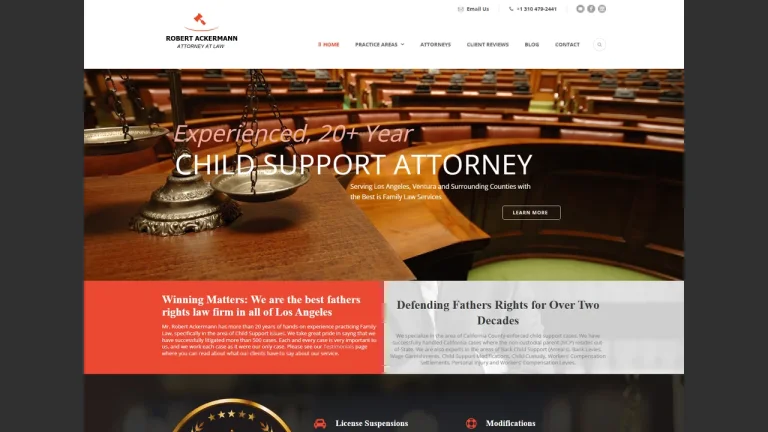
Law Office of Robert Ackermann - Los Angeles, CA

Law Offices of Jack Lopez - Los Angeles, CA

MAC Services Group - Los Angeles, CA
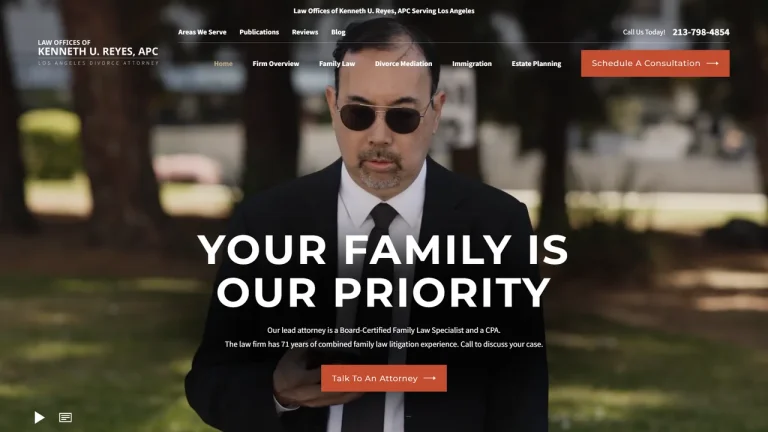
Law Offices of Kenneth U. Reyes, APC - Los Angeles, CA

Family Law Mediation Los Angeles - Los Angeles, CA
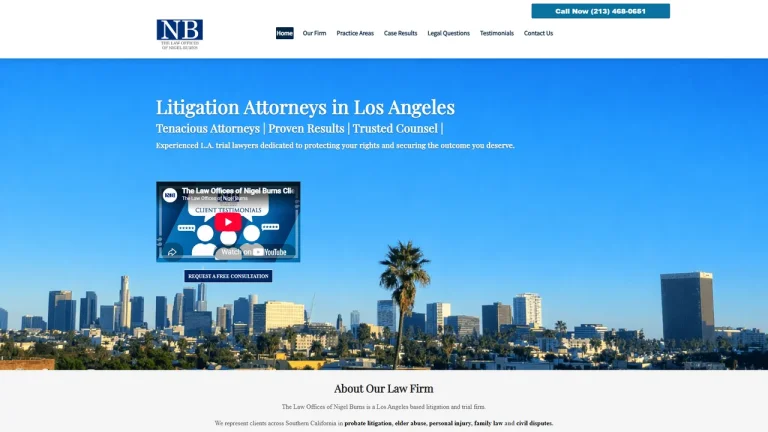
The Law Offices of Nigel Burns - Los Angeles, CA

Law Office of Donna D. Pettway - Los Angeles, CA
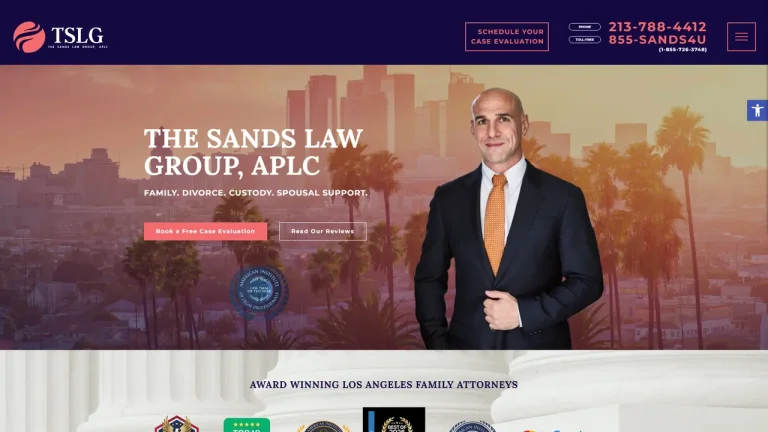
The Sands Law Group, APLC - Los Angeles, CA
Jackie A. Abboud, APLC - Los Angeles, CA
Blevans, Itzkowitz & Cantrell, LLP - Los Angeles, CA

The Law Office of Stephen Chen, PC - Los Angeles, CA

The Law Offices Of Teresa A. Beyers - Los Angeles, CA
Kim Mediation & Law Center - Los Angeles, CA
Charles M. Green, APLC - Los Angeles, CA

Wilkinson & Finkbeiner, LLP - Los Angeles, CA

Berenji & Associates Divorce Lawyers - Los Angeles, CA
Law Offices of Randi Susan Klein - Los Angeles, CA
Whitmarsh Family Law, PC - Los Angeles, CA
Fernandez Law Group - Los Angeles, CA
Family Law Los Angeles - Los Angeles, CA
Claery & Hammond, LLP - Los Angeles, CA
The Attorney Group - Los Angeles, CA
M.C. Law, P.C. - Los Angeles, CA
Navigating Marital Dissolution in Los Angeles County Superior Court
Filing for divorce in Los Angeles County requires navigating specific procedural rules and local guidelines across the Family Law Division of the Los Angeles County Superior Court. The central family law hub operates out of the Stanley Mosk Courthouse in Downtown Los Angeles, supported by regional district courthouses in Van Nuys, Pasadena, Santa Monica, Long Beach, and Torrance.
California operates as a pure no-fault divorce jurisdiction under Cal. Fam. Code § 2310, meaning neither party needs to prove marital misconduct to obtain a dissolution. However, the equitable distribution of assets in high-value estates demands rigorous legal analysis. Because California is a community property state under Cal. Fam. Code § 2550, all assets and debts acquired during the marriage are presumed to be owned equally, requiring detailed tracing of separate property contributions.
Experienced Los Angeles divorce attorneys guide clients through mandatory preliminary financial disclosures, temporary support hearings, and child custody negotiations. From complex corporate valuations in Century City and Silicon Beach to real estate divisions across Beverly Hills, Brentwood, and Pasadena, local legal counsel protects marital rights while working to minimize contentious court battles.
Typical Costs & Fee Structures for Los Angeles Divorce Representation
| Case Scenario | Fee Structure | Estimated Cost (USD) | Key Cost Determinants |
|---|---|---|---|
| Uncontested Summary Dissolution | Flat Fee or Limited Scope | $1,500 - $4,500 | Waiver of spousal support, property agreement completeness, and qualification under summary criteria. |
| Mediated / Collaborative Dissolution | Hourly Retainer Split | $5,000 - $12,000 | Number of mediation sessions, mutual agreement on custody terms, and joint neutral financial reviews. |
| Contested Custody & Support Dispute | Hourly Retainer ($400 - $650/hr) | $12,000 - $35,000+ | Child custody evaluations (Evidence Code 730), Request for Order (RFO) hearings, and trial preparation. |
| High-Net-Worth Asset & Business Division | Hourly Retainer ($500 - $850/hr) | $25,000 - $75,000+ | Forensic accounting, Moore-Marsden calculations, business appraisals, and complex discovery motions. |
Critical Legal Deadlines & Statutes in California
Divorce proceedings in California are governed by rigid statutory timelines and procedural prerequisites that parties must navigate carefully:
Before filing a divorce petition in Los Angeles, at least one spouse must meet California residency requirements under Cal. Fam. Code § 2320, which mandates living in the state for at least 6 months and in Los Angeles County for at least 3 months immediately preceding the filing.
California enforces a mandatory statutory cooling-off period under Cal. Fam. Code § 2339, which dictates that a divorce cannot be finalized and marital status cannot terminate until at least 6 months have elapsed from the date the respondent was served with the summons and petition.
Financial transparency is strictly enforced under Cal. Fam. Code § 2104, requiring both parties to serve a Preliminary Declaration of Disclosure (PDD) within 60 days of filing the petition or response. Furthermore, actions to set aside a final judgment based on fraud, perjury, or material non-disclosure of assets must generally be brought within 1 year of discovering the misconduct under Cal. Fam. Code § 2122.
Small Claims Limits vs. Professional Representation in Los Angeles
California Small Claims Courts have a statutory jurisdictional limit of $12,500 for individual claims pursuant to Cal. Civ. Proc. Code § 116.220. However, small claims courts have absolutely zero legal jurisdiction over marital dissolution, child custody, spousal support, or family law orders.
All divorce, legal separation, and child support matters must be filed exclusively in the Family Law Division of the Los Angeles County Superior Court. Attorneys cannot appear in small claims under Cal. Civ. Proc. Code § 116.530, but in Superior Court family departments, having dedicated legal counsel is crucial.
While parties are legally entitled to represent themselves (in pro per), doing so in contested matters risks permanent loss of spousal support rights, inequitable pension and 401(k) division through botched Qualified Domestic Relations Orders (QDROs), and defective custody agreements that can negatively affect children for years.
Red Flags When Hiring a Los Angeles Divorce Attorney
- Promising Guaranteed Custody or Support Outcomes: California family judges exercise broad judicial discretion under the best interests of the child standard; steer clear of lawyers who guarantee specific custody splits or support amounts.
- Encouraging Unnecessary High-Conflict Litigation: Beware of aggressive attorneys who push for contentious court battles and excessive motions solely to churn billable hours when amicable mediation remains feasible.
- Inadequate Knowledge of Complex Asset Valuation: Avoid counsel lacking experience with forensic accounting, Moore-Marsden calculations for separate-property real estate, or Pereira/Van Camp business valuation formulas.
- Unresponsiveness and Poor Case Management: Avoid firms where cases are passed down to inexperienced paralegals or associate attorneys with minimal experience appearing in local Los Angeles County courthouses.
Frequently Asked Questions
How long does it take to get a divorce finalized in Los Angeles?
Under Cal. Fam. Code § 2339, the minimum statutory waiting period is 6 months from the date the respondent is served. However, complex or contested divorces involving property disputes or custody battles in Los Angeles County often take 12 to 18 months or longer to conclude.
How is property divided during a California divorce?
California is a community property state under Cal. Fam. Code § 2550. All assets and debts acquired from the date of marriage until the date of separation are divided equally (50/50), while separate property acquired before marriage or via inheritance remains with the individual owner.
What is the difference between temporary and permanent spousal support?
Temporary support is calculated during divorce proceedings using computer guidelines to maintain the marital status quo. Permanent (post-judgment) support is determined by a judge based on the statutory factors outlined in Cal. Fam. Code § 4320, including marriage duration, earning capacity, and standard of living.
Can child custody be resolved outside of court in Los Angeles?
Yes. Parents are encouraged to develop a mutually agreed parenting plan through private mediation or court-provided Family Court Services (FCS). If parents reach an agreement, it can be submitted to the Los Angeles County Superior Court for formal judicial approval without a trial.
What happens if my spouse hides assets during the divorce?
Under Cal. Fam. Code § 2107 and Cal. Fam. Code § 1101, breaching fiduciary disclosure duties carries severe penalties. A court can award the innocent spouse up to 100% of the undisclosed asset, along with mandatory attorney fees and statutory sanctions.