
Domestic Violence Lawyers in Los Angeles
Securing a skilled Los Angeles domestic violence lawyer is crucial to protecting your safety, parental rights, and freedom during sensitive legal disputes. Experienced attorneys provide urgent advocacy in both civil restraining order hearings and criminal defense proceedings. Explore our directory below to connect with trusted local legal advocates today.

Stephen G. Rodriguez & Partners - Los Angeles, CA
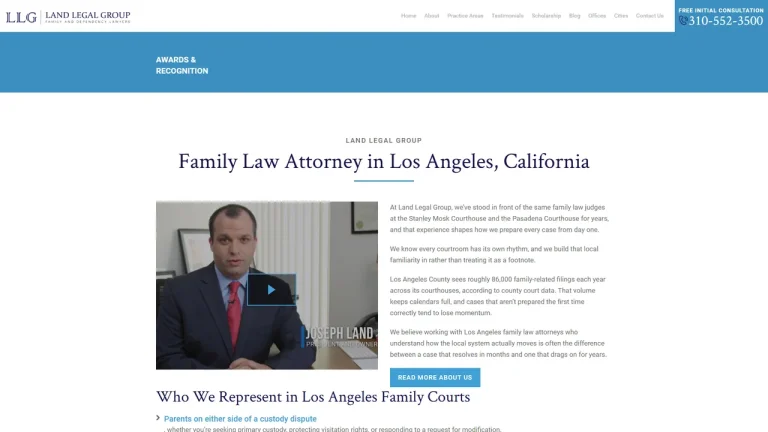
Land Legal Group: Family & Divorce Lawyers Los Angeles - Los Angeles, CA

Jackie A. Abboud, APLC - Los Angeles, CA

Kelmansky Law - Los Angeles, CA
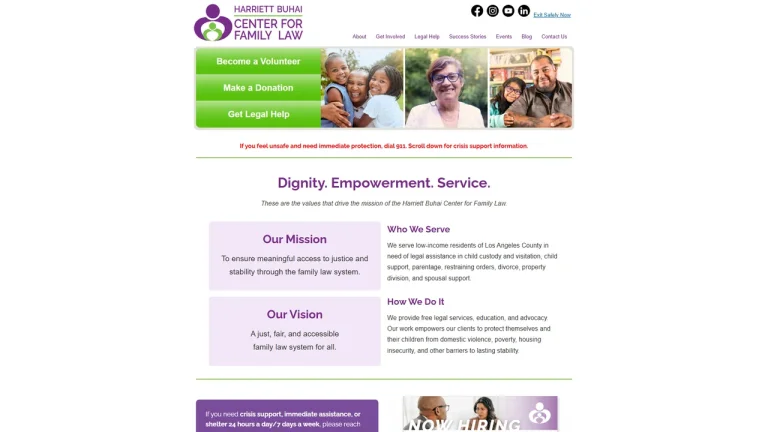
Harriett Buhai Center For Family Law - Los Angeles, CA

Esfandi Law Group Criminal Defense Attorneys - Los Angeles, CA
Shayan Family Law, APC - Los Angeles, CA
Legal Aid Foundation of Los Angeles - Los Angeles, CA
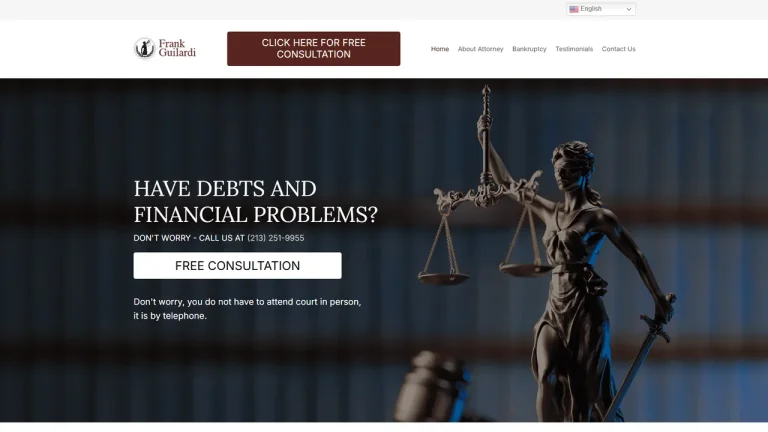
The Law Office of Attorney Frank Guilardi - Los Angeles, CA

The Law Offices Of Teresa A. Beyers - Los Angeles, CA

Grace Legal Group Inc. - Los Angeles, CA
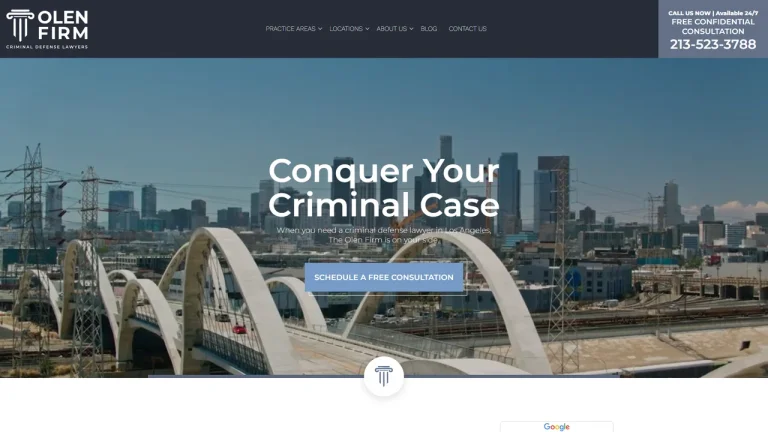
Olen Firm Criminal Defense Lawyers - Los Angeles, CA
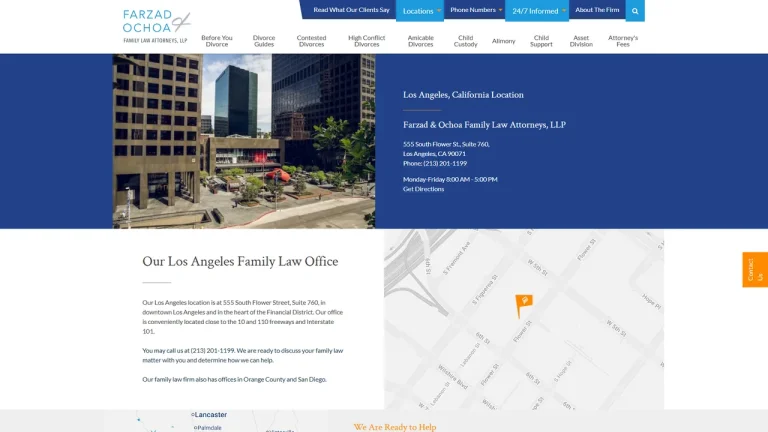
Farzad & Ochoa Family Law Attorneys, LLP - Los Angeles, CA
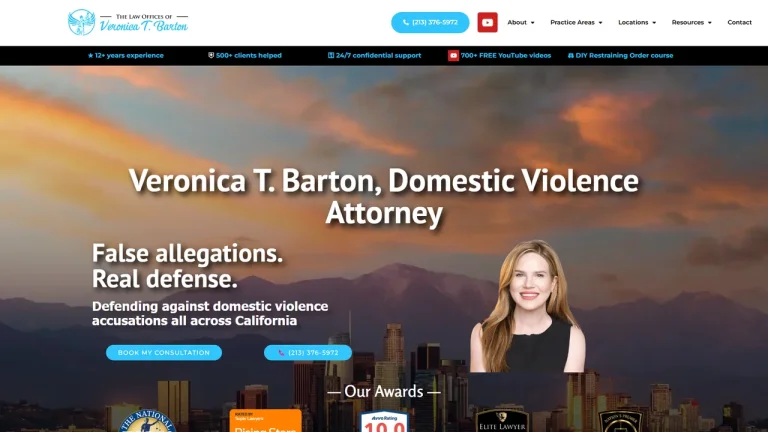
The Law Offices of Veronica T. Barton - Los Angeles, CA

The Rodriguez Law Group - Los Angeles, CA
Law Offices of Randi Susan Klein - Los Angeles, CA

Claery & Hammond, LLP - Los Angeles, CA

Levitt & Quinn Family Law Center - Los Angeles, CA
Family Law Los Angeles - Los Angeles, CA

Castellanos & Associates, APLC - Los Angeles, CA

The H Law Group - Los Angeles, CA
Law Offices of Nicholas Loncar - Los Angeles, CA
Diaz Law Firm - Los Angeles, CA
Navigating Domestic Violence Legal Proceedings in Los Angeles
Domestic violence allegations in Los Angeles County trigger immediate, multifaceted legal processes that often span both the criminal courts and the family law judiciary. Whether addressing emergency restraining order filings or defending against misdemeanor and felony charges, navigating the local Los Angeles County Superior Court system requires immediate, knowledgeable legal intervention.
Civil matters involving Domestic Violence Restraining Orders (DVRO) are heard in the Family Law Division of the Los Angeles County Superior Court, with central hearings conducted at the Stanley Mosk Courthouse in Downtown Los Angeles, as well as district branches including the Pasadena Courthouse, Van Nuys Courthouse, and Torrance Courthouse. Conversely, criminal prosecutions for domestic battery or corporal injury are prosecuted by the Los Angeles County District Attorney or the Los Angeles City Attorney at venues such as the Clara Shortridge Foltz Criminal Justice Center, the Airport Courthouse, and the Governor George Deukmejian Courthouse in Long Beach.
Arrests initiated by the Los Angeles Police Department (LAPD) or Los Angeles County Sheriff's Department (LASD) typically result in detention at regional facilities such as the Twin Towers Correctional Facility or the Century Regional Detention Facility in Lynwood. Retaining an attorney who understands both criminal defense and family law cross-over issues is essential for protecting constitutional rights, preventing firearm surrender mandates, and preserving custodial access.
Legal Fee Structures for Los Angeles Domestic Violence Matters
| Case Scenario | Fee Structure | Estimated Cost (USD) | Key Cost Determinants |
|---|---|---|---|
| Uncontested / Stipulated Civil Restraining Order | Flat Fee | $1,500 - $3,500 | Mediation participation, mutual stay-away stipulations, absence of CLETS registration. |
| Contested Domestic Violence Restraining Order (DVRO) | Hourly / Retainer | $3,500 - $8,500 | Number of evidentiary exhibits, witness subpoenas, custody intersection, hearing length. |
| Misdemeanor Domestic Battery Defense (PC 243(e)(1)) | Flat Fee / Retainer | $4,000 - $10,000 | Pre-filing intervention, 911 audio analysis, diversion eligibility, negotiation with prosecutors. |
| Felony Corporal Injury Defense (PC 273.5) & Trial | Retainer / Hourly | $10,000 - $35,000+ | Preliminary hearing at Foltz Center, medical expert testimony, jury trial duration. |
Critical Legal Deadlines & Statutes in California
Domestic violence cases in California are governed by rigorous statutory timelines across civil and criminal codes. In family court, an Emergency Protective Order (EPO) issued by law enforcement remains valid for only five to seven days pursuant to Cal. Fam. Code § 6256. When filing for a Temporary Restraining Order (TRO) under the Domestic Violence Prevention Act pursuant to Cal. Fam. Code § 6300, the court must schedule a full evidentiary hearing within 21 to 25 days under Cal. Fam. Code § 242.
A permanent DVRO issued following a hearing may remain in effect for up to five years, or permanently, under Cal. Fam. Code § 6345, and automatically requires the restrained party to surrender all firearms pursuant to Cal. Fam. Code § 6389. On the criminal side, an arrested individual must be brought before a magistrate for arraignment within 48 hours, excluding weekends and holidays, under Cal. Penal Code § 825. Speedy trial rights under Cal. Penal Code § 1382 guarantee a misdemeanor defendant the right to trial within 30 days if in custody, or 45 days if out of custody, following arraignment.
Small Claims Limits vs. Professional Representation
In California, small claims courts operate under Cal. Civ. Proc. Code § 116.220 with a financial ceiling of $12,500 for natural persons. In addition, attorneys are categorically barred from representing clients in small claims courtroom proceedings pursuant to Cal. Civ. Proc. Code § 116.530.
Small claims court has no legal authority to issue protective orders, resolve contested child custody disputes, or handle criminal charges. A domestic violence finding carries life-altering consequences, including criminal records, loss of firearm possession rights under Cal. Penal Code § 29825, mandatory 52-week batterer intervention programs, and an evidentiary presumption against receiving child custody under Cal. Fam. Code § 3044. Navigating cross-examinations, presenting evidentiary police recordings, and defeating false allegations requires professional representation in the Superior Court.
Red Flags to Avoid When Hiring a Domestic Violence Lawyer
- Lawyers who guarantee complete dismissals of criminal charges or restraining orders without inspecting the police arrest report or body-worn video.
- Practitioners unfamiliar with the dangerous intersection of family law DVROs and criminal protective orders issued under Cal. Penal Code § 136.2.
- Firms advising clients to concede to restraining orders without explaining mandatory firearm relinquishment and CLETS database registration.
- Attorneys who demand non-refundable retainers without offering detailed monthly billing statements or itemized task breakdowns.
Frequently Asked Questions
What is the difference between an EPO and a DVRO in California?
An Emergency Protective Order (EPO) is requested by police officers at the scene of an incident and lasts up to seven days under Cal. Fam. Code § 6256. A Domestic Violence Restraining Order (DVRO) is filed by a party in Los Angeles County Superior Court and can last up to five years or permanently under Cal. Fam. Code § 6345.
Can domestic violence charges be dropped if the victim refuses to testify?
No. In California, criminal charges are brought by the State through the Los Angeles District Attorney or City Attorney, not the reporting party. Prosecutors frequently proceed using 911 recordings, body camera footage, medical reports, and officer observations even if the alleged victim recants.
How does a restraining order affect child custody in Los Angeles?
Under Cal. Fam. Code § 3044, a court finding of domestic violence creates a rebuttable legal presumption that granting sole or joint physical or legal custody to the perpetrator is detrimental to the child's best interest.
What is the difference between Penal Code 273.5 and Penal Code 243(e)(1)?
Cal. Penal Code § 273.5 requires proof of a visible injury or traumatic condition and can be charged as a felony, whereas Cal. Penal Code § 243(e)(1) covers unlawful physical contact without visible injury and is prosecuted as a misdemeanor.
Does a restraining order automatically revoke gun ownership rights?
Yes. Under Cal. Fam. Code § 6389 and Cal. Penal Code § 29825, any person subject to a temporary or permanent restraining order is strictly prohibited from purchasing, receiving, or possessing firearms and ammunition.