
IRS Dispute Lawyers in Los Angeles
Retaining an experienced IRS dispute lawyer in Los Angeles protects your assets and ensures full compliance with federal and California tax procedure. Dedicated counsel can frequently resolve tax controversies through administrative appeals, penalty abatement, or negotiated settlements before matters escalate to federal court. Explore our directory below to schedule a confidential case review with trusted local tax controversy professionals.

Bull's Eye Financial Professionals - Los Angeles, CA
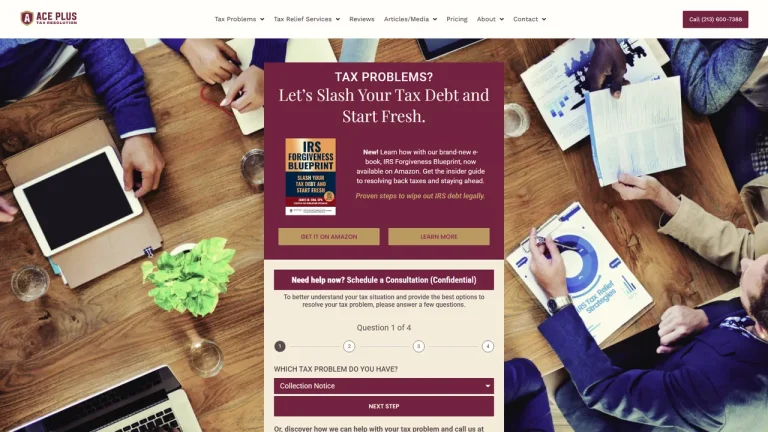
ACE Plus Tax Resolution - Los Angeles, CA

Bereliani Law Firm - Los Angeles, CA

Victory Tax Lawyers, LLP - Los Angeles, CA
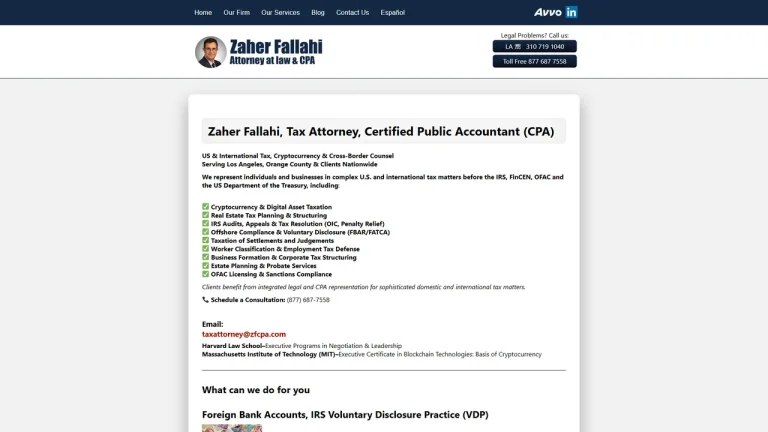
Law & CPA Offices Of Zaher Fallahi - Los Angeles, CA

Rush Tax Resolution - Los Angeles, CA

Eisner Gorin LLP - Los Angeles, CA
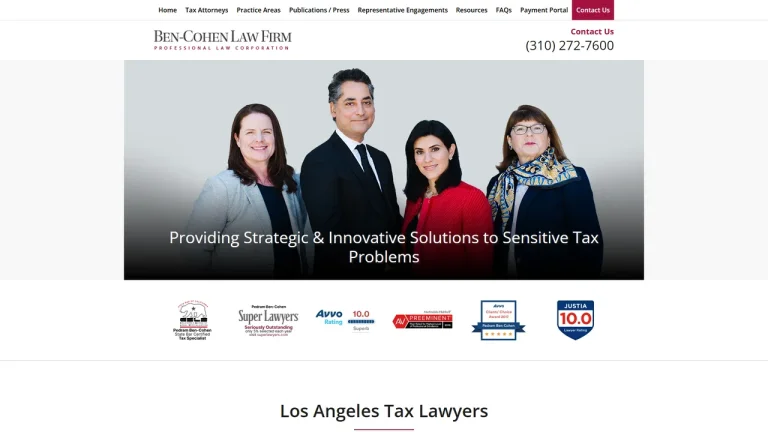
Ben-Cohen Law Firm, PLC - Los Angeles, CA
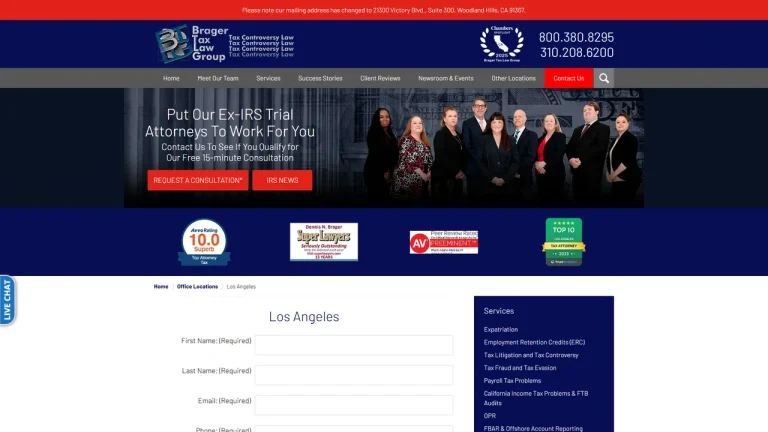
Brager Tax Law Group - Los Angeles, CA
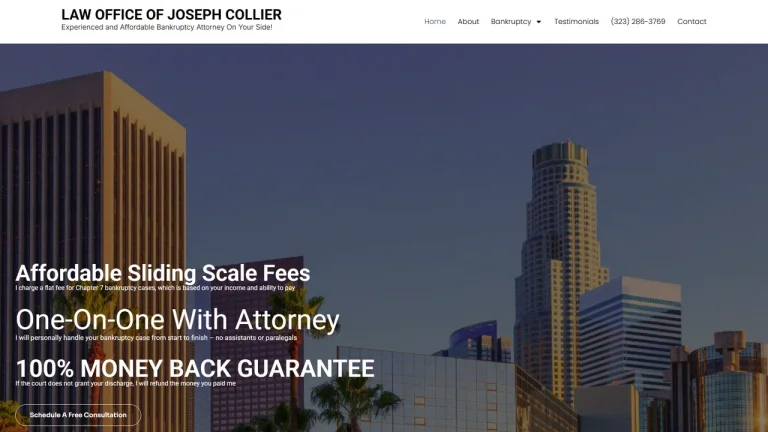
Law Office of Joseph Collier - Los Angeles, CA
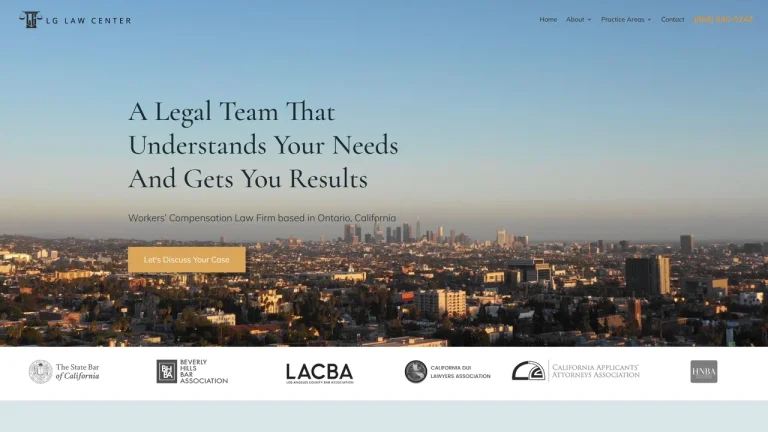
LG LAW Bankruptcy - Los Angeles, CA
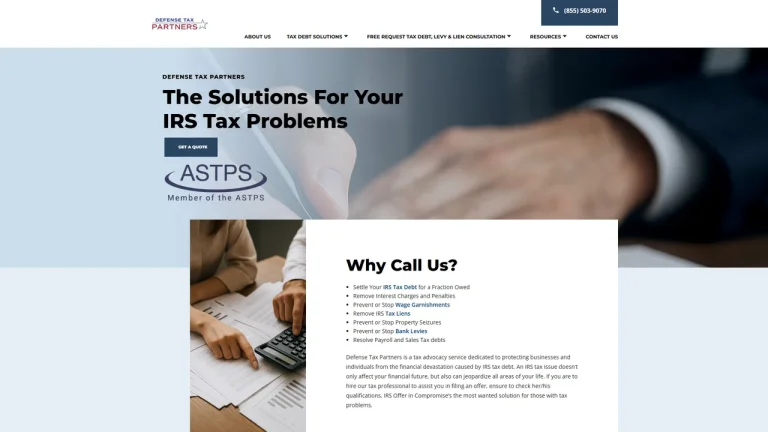
Defense Tax Partners - Los Angeles, CA

Delia Law P.C. - Los Angeles, CA
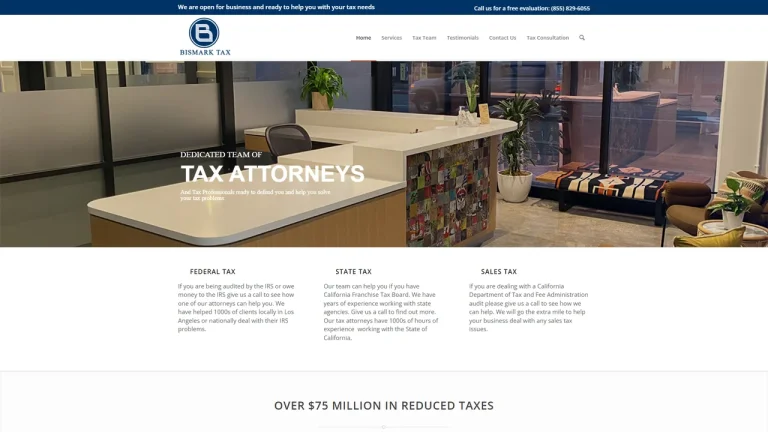
Bismark Tax, Inc. - Los Angeles, CA
Law Office of Mark J. Markus - Los Angeles, CA
Tax Lawyers Group, Law Corporation - Los Angeles, CA
Holtz, Slavett, Drabkin & Warner, APLC - Los Angeles, CA

Law Offices of Louis J. Shapiro - Los Angeles, CA

Enterprise Consultants Group - Los Angeles, CA
Leading Tax Group - Los Angeles, CA
Bankruptcy Law Firm of Jasmine Firooz - Los Angeles, CA
J. David Tax Law - Los Angeles, CA
Navigating Federal & California Tax Controversies in Los Angeles
Resolving complex tax controversies with the Internal Revenue Service requires seasoned legal advocacy and precise knowledge of regional administrative procedures. In Los Angeles County, federal tax enforcement operates through local field offices such as the IRS Los Angeles Office on North Los Angeles Street in Downtown LA. When administrative remedies are exhausted, federal tax litigation is adjudicated either before the U.S. Tax Court during trial sessions held at the Edward R. Roybal Federal Building and U.S. Courthouse, or before the U.S. District Court for the Central District of California on First Street.
Tax liabilities in Southern California frequently involve concurrent state agency actions. An adjustment by the IRS routinely triggers reciprocal audits from the California Franchise Tax Board (FTB) for personal and corporate income tax, or the California Department of Tax and Fee Administration (CDTFA) for sales and use taxes. Los Angeles tax controversy attorneys coordinate unified defense strategies for entrepreneurs, entertainment executives, high-net-worth individuals, and family enterprises across Downtown LA, Century City, Beverly Hills, Pasadena, and the San Fernando Valley.
Whether you face an unagreed audit examination, a sudden bank levy, a federal tax lien against valuable real property, or an ongoing criminal tax investigation, local counsel intervenes directly with IRS Revenue Agents and Revenue Officers. Early representation ensures administrative appeal rights are preserved under statutory guidelines before irreversible collection actions occur.
Typical Fee Structures for IRS Tax Dispute Representation
| Case Scenario | Fee Structure | Estimated Cost (USD) | Key Cost Determinants |
|---|---|---|---|
| Audit Defense & Penalty Abatement | Flat Fee or Hourly Rate | $2,500 - $7,500 | Number of tax years involved, completeness of accounting records, and complexity of business deductions. |
| Offer in Compromise (OIC) & Collections Defense | Fixed Fee + Deposit | $3,500 - $9,500 | Total liability, valuation of California real estate equity, Form 433-A disclosures, and asset liquidations. |
| IRS Appeals & CDP Hearings | Hourly Retainer | $5,000 - $14,000 | Timeliness of Form 12153 filings, active levy notices, and negotiations with regional settlement officers. |
| U.S. Tax Court Litigation & Criminal Defense | Hourly with Advance Retainer | $10,000 - $35,000+ | Formal petition drafting, discovery motions, expert witness testimony, trial duration, and civil fraud defense. |
Critical Legal Deadlines & Statutes in California
Tax procedure is governed by unforgiving statutory timelines that cannot be extended by administrative discretion. When the IRS issues a Notice of Deficiency, commonly known as a 90-day letter, taxpayers have exactly 90 days from the mailing date to file a formal petition with the U.S. Tax Court pursuant to 26 U.S. Code § 6213. Missing this jurisdictional cutoff permanently strips the taxpayer of prepayment judicial review, requiring full payment before seeking a refund.
To prevent immediate asset seizures or wage levies, a Collection Due Process hearing must be requested within 30 days of receiving a Final Notice of Intent to Levy under 26 U.S. Code § 6330. Assessment authority is restricted to three years from the return filing date pursuant to 26 U.S. Code § 6501, while enforced collection actions expire ten years after assessment under 26 U.S. Code § 6502. At the state level, taxpayers receiving a Notice of Proposed Assessment from the Franchise Tax Board must file a formal protest within 60 days under Cal. Rev. & Tax. Code § 19041.
Small Claims Limits vs. Professional Tax Court Representation
The Small Claims Division of the Los Angeles County Superior Court has a monetary jurisdiction capped at $12,500 for individual claims pursuant to Cal. Civ. Proc. Code § 116.221. However, municipal small claims courts have no subject-matter jurisdiction over federal tax assessments, IRS levies, or Franchise Tax Board determinations. You cannot petition a municipal court to release a federal lien or recalculate a deficiency.
For federal disputes involving $50,000 or less per tax year, taxpayers may petition the U.S. Tax Court under the Small Tax Case procedure pursuant to 26 U.S. Code § 7463. Although pro se appearance is permitted in S-Cases, the court's decision is final, conclusive, and cannot be appealed to the U.S. Court of Appeals. Retaining an attorney admitted to practice before the U.S. Tax Court and the State Bar of California ensures your position is supported by statutory defenses, evidentiary standards, and administrative precedent.
Red Flags When Hiring a Los Angeles Tax Attorney
- Guarantees of Immediate Settlements: Avoid telemarketing organizations that claim they can settle your tax debt for pennies on the dollar before conducting a complete analysis of your financial disclosures and IRS transcripts.
- Non-Attorney Case Handlers: Verify that you are consulting directly with a licensed California attorney admitted to the State Bar of California or the U.S. Tax Court bar, rather than an unlicensed salesperson.
- Ignoring State Tax Repercussions: Federal tax settlements almost always generate corresponding Franchise Tax Board (FTB) liabilities; steer clear of practitioners who overlook the downstream California state impact.
- Opaque Upfront Fee Arrangements: Reputable tax counsel provides clear written retainer agreements defining billing rates, specific scopes of representation, and realistic estimates for administrative appeals.
Frequently Asked Questions
Can a Los Angeles IRS dispute attorney stop an active wage garnishment or bank levy?
Yes. By filing an immediate Collection Due Process request under federal statute, submitting an emergency appeal, or negotiating an installment agreement, an attorney can halt enforced collection actions and seek a release of levy.
How does an IRS federal tax audit affect my California state taxes?
Under California law, any federal audit adjustment must be reported to the California Franchise Tax Board within six months. The FTB uses IRS findings to automatically issue state assessments for back taxes, penalties, and interest.
What is the difference between a CPA and an IRS tax dispute attorney?
While CPAs prepare returns and handle basic audits, only licensed attorneys provide comprehensive attorney-client privilege during high-stakes investigations and have the authority to litigate disputes before the U.S. Tax Court or federal district courts.
Where are federal tax court proceedings held in Los Angeles?
U.S. Tax Court trial sessions in Los Angeles are conducted at the Edward R. Roybal Federal Building and United States Courthouse, located at 255 East Temple Street in Downtown Los Angeles.
What qualifies a taxpayer for an Offer in Compromise in California?
Eligibility requires demonstrating Doubt as to Collectibility or Liability. The IRS conducts an exhaustive review of your monthly disposable income, asset equity, and local cost-of-living standards to evaluate reasonable collection potential.