
Tax Lawyers in Los Angeles
Consulting experienced Los Angeles tax lawyers ensures your assets and livelihood are protected during complex audits, payroll disputes, and collection actions. Experienced legal counsel routinely resolves high-stakes tax controversies with the IRS and California state tax authorities through structured settlements and appeals. Browse our verified directory below to retain an accomplished tax attorney in Los Angeles today.
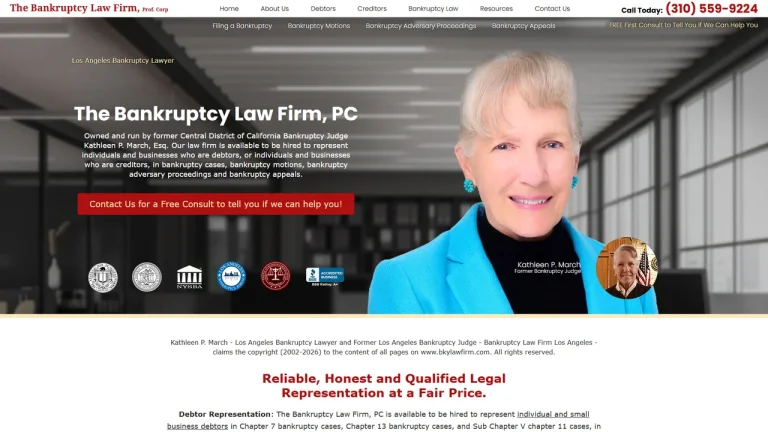
The Bankruptcy Law Firm, PC - Los Angeles, CA
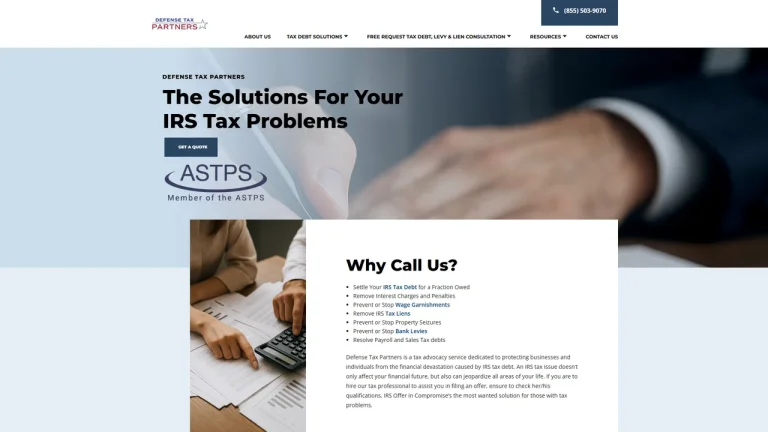
Defense Tax Partners - Los Angeles, CA

Omni Legal Group - Los Angeles, CA

Ghanooni Law Firm, APC - Los Angeles, CA
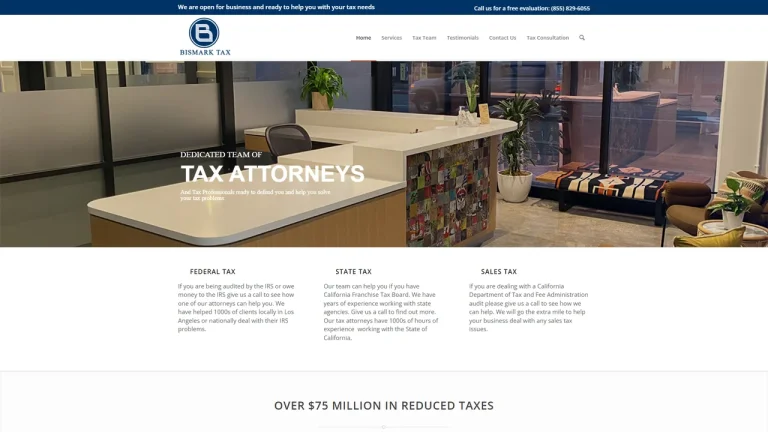
Bismark Tax, Inc. - Los Angeles, CA

Wadhwani & Shanfeld - Los Angeles Bankruptcy Lawyers - Los Angeles, CA
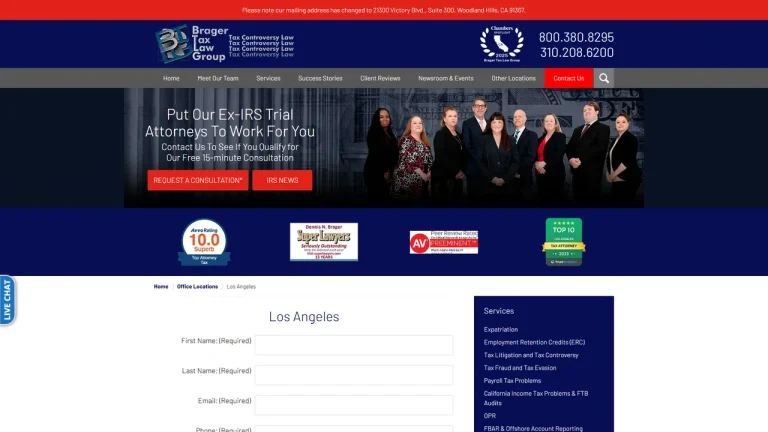
Brager Tax Law Group - Los Angeles, CA

Enterprise Consultants Group - Los Angeles, CA
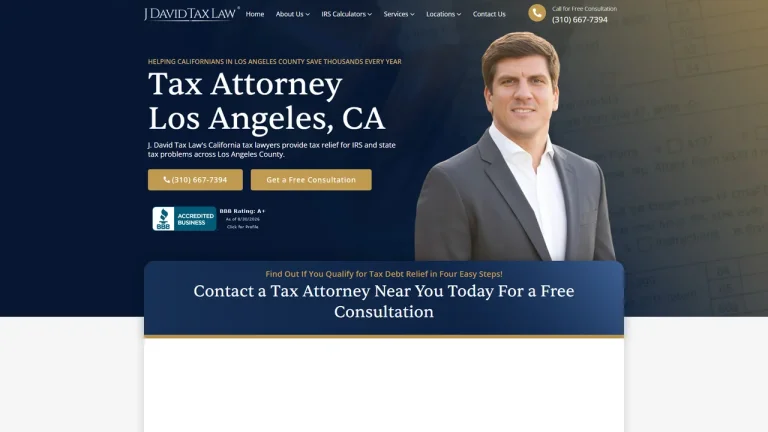
J. David Tax Law - Los Angeles, CA

Leading Tax Group - Los Angeles, CA

ACE Plus Tax Resolution - Los Angeles, CA

Rush Tax Resolution - Los Angeles, CA

Bull's Eye Financial Professionals - Los Angeles, CA

Delia Law P.C. - Los Angeles, CA

Khan Law - Los Angeles Bankruptcy Attorney - Los Angeles, CA

Ben-Cohen Law Firm, PLC - Los Angeles, CA
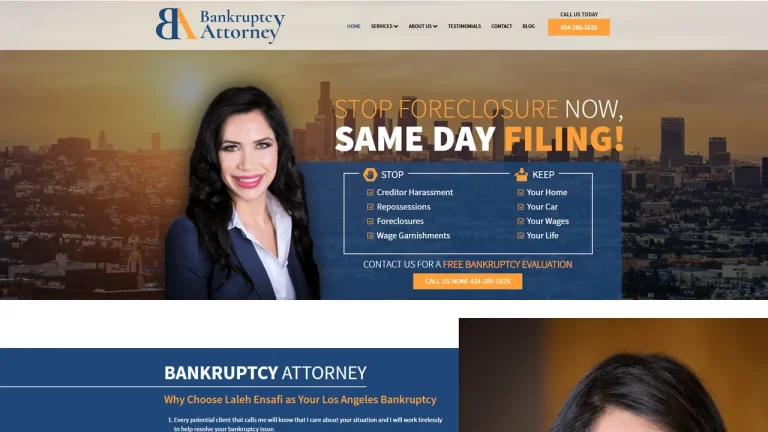
Ensafi Law, PC - Los Angeles, CA
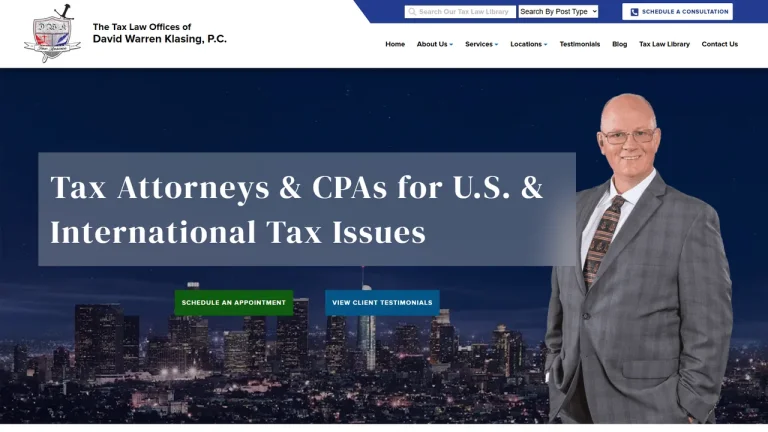
Tax Law Offices of David W. Klasing - Los Angeles, CA
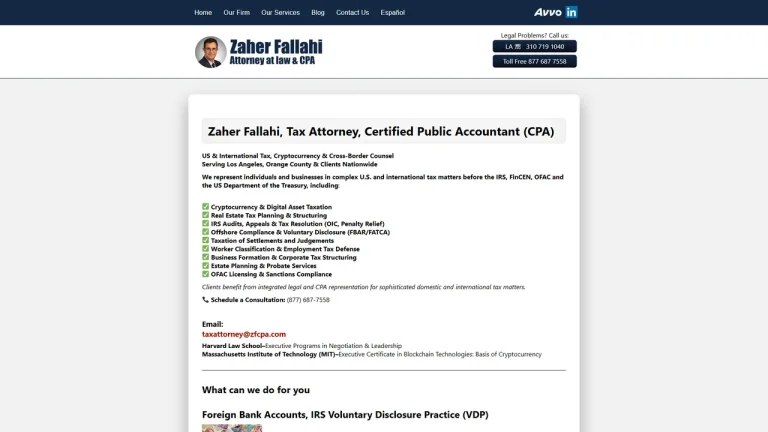
Law & CPA Offices Of Zaher Fallahi - Los Angeles, CA

Victory Tax Lawyers, LLP - Los Angeles, CA
Holtz, Slavett, Drabkin & Warner, APLC - Los Angeles, CA
Tax Lawyers Group, Law Corporation - Los Angeles, CA

Navigating Federal and California Tax Controversy in Los Angeles
Tax controversy in Los Angeles involves navigating a dual regulatory landscape governed by both federal agencies and California taxing boards. Federal matters, including tax deficiency litigation, are tried before the United States Tax Court, which regularly holds judicial trial sessions at the Edward R. Roybal Federal Building and United States Courthouse in Downtown Los Angeles. Meanwhile, administrative audits and examinations are coordinated through the IRS Los Angeles Field Office serving the greater metro area from Century City and Pasadena to Torrance.
At the state level, Los Angeles businesses and residents encounter three distinct California tax agencies: the California Franchise Tax Board (FTB) for personal and corporate income tax, the California Department of Tax and Fee Administration (CDTFA) for sales and use tax, and the California Employment Development Department (EDD) for payroll tax and independent contractor audits. Administrative tax disputes are contested before the California Office of Tax Appeals (OTA) or in local trials at the Los Angeles County Superior Court.
Retaining a Los Angeles tax attorney provides critical legal protections that non-attorney accountants cannot supply, most notably the attorney-client privilege. If an examination uncovers potential tax fraud, unfiled offshore disclosures, or aggressive business deductions, an experienced legal advocate protects your constitutional rights while negotiating installment agreements, penalty abatements, or offers in compromise.
Tax Attorney Fee Structures and Common Matters in Los Angeles
| Case Scenario | Fee Structure | Estimated Cost (USD) | Key Cost Determinants |
|---|---|---|---|
| IRS & FTB Audit Defense (Civil Examination) | Retainer plus Hourly ($350 - $650/hr) | $2,500 - $7,500 | Number of tax years under audit, substantiation records, and Schedule C business deductions. |
| U.S. Tax Court Litigation & Appeals | Retainer plus Hourly ($400 - $850/hr) | $7,500 - $25,000 | Pleading preparation, expert witness testimony, trial duration, and disputed statutory deficiency amount. |
| Offer in Compromise (IRS & FTB Settlement) | Flat Fee or Hourly | $3,000 - $7,000 | Asset valuation complexity, equity in Southern California real estate, and dual federal/state submission. |
| EDD Worker Classification & Criminal Defense | Substantial Retainer + Hourly ($500 - $950/hr) | $12,500 - $40,000 | Independent contractor audit scope, payroll penalty exposure, and criminal referral risk. |
Critical Legal Deadlines & Statutes in California
Meeting tax deadlines is an unforgiving requirement where missing a single statutory cutoff extinguishes your right to administrative or judicial review. Under federal law, if the IRS issues a Statutory Notice of Deficiency (90-day letter), you must file a petition with the U.S. Tax Court within exactly 90 calendar days under 26 U.S. Code § 6213. This jurisdictional deadline cannot be extended by judges or IRS agents for any reason.
While the federal assessment limitations period under 26 U.S. Code § 6501 is typically three years, the California Franchise Tax Board operates under an extended four-year statute of limitations to issue a Notice of Proposed Assessment under Cal. Rev. & Tax. Code § 19057. If you receive a Notice of Proposed Assessment from the FTB, you have exactly 60 days from the mailing date to file a written protest pursuant to Cal. Rev. & Tax. Code § 19041. Furthermore, if the California Employment Development Department issues an assessment regarding worker reclassification, employers have 30 days to petition for reassessment under Cal. Unemp. Ins. Code § 1222.
Small Claims Limitations vs. Tax Attorney Representation
The Small Claims division of the Los Angeles County Superior Court possesses a maximum jurisdictional ceiling of $12,500 for natural persons under Cal. Civ. Proc. Code § 116.220. Parties are strictly barred from attorney representation during small claims trials under Cal. Civ. Proc. Code § 116.530. However, small claims courts have no jurisdiction to adjudicate federal tax assessments, halt IRS levies, or review decisions issued by California taxing authorities.
Tax disputes involve specialized judicial and administrative bodies such as the United States Tax Court, the California Office of Tax Appeals (OTA), and the Federal District Court for the Central District of California. Resolving tax controversies requires knowledge of technical statutory rules, navigating complex accounting ledgers, and asserting statutory rights. Retaining a Los Angeles tax attorney protects you with the attorney-client privilege-which CPAs cannot provide during criminal tax investigations-and ensures robust advocacy against aggressive collection agents.
Red Flags When Hiring a Los Angeles Tax Attorney
- Unrealistic Settlement Guarantees: Advertisers claiming they can settle every tax debt for pennies on the dollar without reviewing your financial statements, gross income, and equity in California real estate.
- Uncredentialed Representatives: Companies that assign cases to sales reps or uncertified paralegals rather than attorneys admitted to the State Bar of California and the United States Tax Court Bar.
- Failure to Address State Tax Liabilities: Representation that focuses exclusively on federal IRS debt while ignoring parallel California Franchise Tax Board or CDTFA liabilities that can lead to vehicle registration holds or professional license suspensions.
- Promoting Frivolous Tax Avoidance Schemes: Advising clients to stop filing returns, establish sham offshore trusts, or claim frivolous constitutional exemptions that trigger severe civil fraud penalties or criminal indictment.
Frequently Asked Questions
What is the critical difference between a tax attorney and a CPA in Los Angeles?
While Certified Public Accountants (CPAs) specialize in accounting, bookkeeping, and routine tax return preparation, tax attorneys are licensed litigators who specialize in tax controversy, legal defense, and statutory interpretation. Critically, tax attorneys offer comprehensive attorney-client privilege under California and federal law, ensuring your communications remain confidential even if an audit escalates into a criminal investigation. CPAs do not enjoy privilege in criminal matters or Tax Court litigation.
What should I do if I receive a 90-day Notice of Deficiency from the IRS?
You should contact an attorney admitted to practice before the U.S. Tax Court immediately. Under 26 U.S. Code § 6213, you have exactly 90 days from the mailing date of the notice to file a formal petition. Missing this absolute deadline forfeits your legal right to contest the tax assessment prior to payment, leaving you with the burdensome alternative of paying the full disputed tax and filing a refund lawsuit later.
How aggressive is the California Franchise Tax Board compared to the IRS?
The California Franchise Tax Board (FTB) is recognized as one of the most proactive state taxing authorities in the nation. The FTB has an extended four-year statute of limitations under Cal. Rev. & Tax. Code § 19057 to propose assessments. The FTB possesses aggressive collection tools, including issuing continuous wage garnishments of up to 25%, initiating automated bank account sweeps, and suspending California driver's licenses and professional licenses through the State Top 500 Delinquent Taxpayers program.
Can a tax lawyer negotiate an Offer in Compromise with both the IRS and the FTB?
Yes. A tax lawyer can submit an Offer in Compromise (OIC) to the IRS based on doubt as to collectibility, liability, or effective tax administration. Because California maintains a separate state tax settlement program, your attorney must file a distinct application with the FTB. Resolving both liabilities requires careful financial structuring because of high housing equity and living costs across the Los Angeles metropolitan area.
How does an EDD worker classification audit impact Los Angeles businesses?
The California Employment Development Department (EDD) aggressively audits businesses to determine whether independent contractors (Form 1099) must be classified as statutory employees under the ABC test codified in California labor and unemployment statutes. If the EDD finds misclassification, it assesses substantial retroactive payroll taxes, penalties, and interest. A Los Angeles tax lawyer can challenge the assessment during the audit or appeal within 30 days under Cal. Unemp. Ins. Code § 1222.