
Bankruptcy Lawyers in Walnut Creek
Consulting a skilled Walnut Creek bankruptcy lawyer provides immediate financial relief and halts creditor actions under federal bankruptcy protection. Knowledgeable local debt relief attorneys navigate Chapter 7 liquidations and Chapter 13 reorganizations to protect your home, income, and essential assets. Explore our verified directory below to schedule a confidential debt assessment with an experienced East Bay attorney.
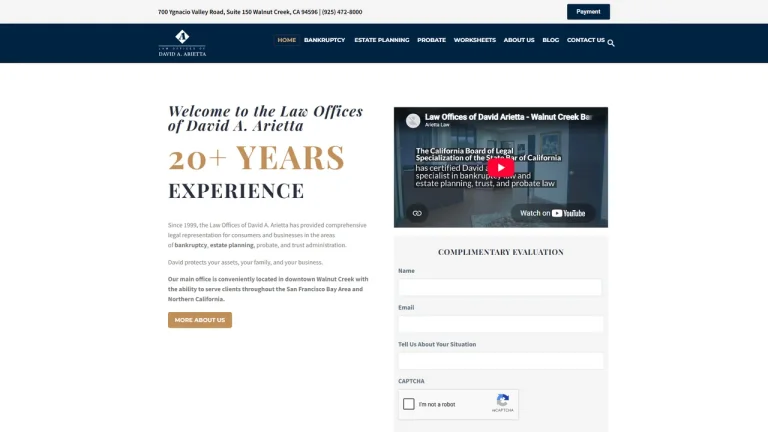
David A. Arietta Law Offices - Walnut Creek, CA
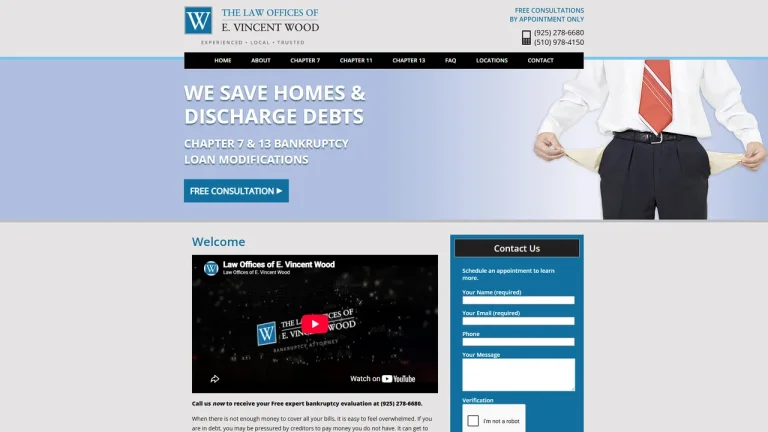
Debt Relief and Bankruptcy Practice in Contra Costa County
Financial distress can impact households and business owners across Walnut Creek due to unmanageable credit card debt, unexpected medical expenses, mortgage shortfalls, or commercial lease defaults. Federal bankruptcy law provides an established legal mechanism for honest debtors to eliminate unsecured debt, restructure liabilities, and protect critical assets while rebuilding long-term financial stability.
Bankruptcy proceedings for Walnut Creek residents and business entities fall under the exclusive jurisdiction of the United States Bankruptcy Court for the Northern District of California, Oakland Division, located at 1300 Clay Street in Oakland. Mandatory Section 341 Meetings of Creditors and confirmation hearings are presided over by federal panel trustees assigned to Contra Costa County filings. Local bankruptcy rules require precise compliance with electronic filing standards and documentation protocols.
A knowledgeable Walnut Creek bankruptcy lawyer analyzes your household earnings under the statutory Means Test to establish whether you qualify for Chapter 7 liquidation or Chapter 13 repayment. An attorney selects the most advantageous California exemption system to shield your real estate, retirement accounts, and personal property, while immediately invoking the federal automatic stay to halt debt collection efforts.
Walnut Creek Bankruptcy Filing Tiers & Estimated Costs
| Case Scenario | Fee Structure | Estimated Cost (USD) | Key Cost Determinants |
|---|---|---|---|
| Chapter 7 Liquidation (Individual Consumer) | Flat Fee | $1,500 - $3,000 | Means test complexity, total creditor volume, asset exemption analysis, court filing fee ($338). |
| Chapter 13 Wage Earner Reorganization | Court-Approved Flat Fee | $4,000 - $6,500 | Three-to-five-year plan structuring, curing mortgage arrears, priority tax debt, court filing fee ($313). |
| Emergency Foreclosure Stay Filing | Flat Fee | $2,000 - $4,000 | Expedited petition preparation, emergency automatic stay notice, accelerated schedule filings. |
| Subchapter V Small Business Reorganization | Hourly Retainer ($375-$600/hr) | $10,000 - $30,000+ | Cash collateral negotiations, corporate governance structure, debtor-in-possession reporting. |
Critical Legal Deadlines & Statutes in California
Bankruptcy administration is governed by strict federal deadlines and California statutory exemption structures. Overlooking mandatory filing windows can result in the immediate dismissal of your petition or the loss of legal protections.
Filing a bankruptcy petition immediately activates the automatic stay under 11 U.S. Code § 362, stopping repossessions, foreclosures, and wage garnishments. Chapter 7 eligibility is determined by the Means Test under 11 U.S. Code § 707(b), comparing debtor income against California median benchmarks. Because California has opted out of federal exemptions under 11 U.S. Code § 522(b), debtors must elect either California System 1 with its substantial homestead exemption under Cal. Civ. Proc. Code § 704.730 or System 2 with its versatile wildcard exemption under Cal. Civ. Proc. Code § 703.140(b). Panel trustees conduct the 341 Meeting of Creditors within twenty to forty days of filing under Fed. R. Bankr. P. 2003(a), and creditors have sixty days following this meeting to contest dischargeability under Fed. R. Bankr. P. 4004(a).
Small Claims Limits vs. Federal Bankruptcy Protection
The California Small Claims Court handles disputes up to $12,500 for individuals under Cal. Civ. Proc. Code § 116.221. While small claims courts allow individual creditors to secure local monetary judgments, they possess zero authority to restructure, modify, or discharge outstanding debts.
When an individual faces multiple collections lawsuits or wage levies in Contra Costa County, defending against each creditor individually in state court is costly and ineffective. Federal bankruptcy filings consolidate all liabilities into a single proceeding and permanently discharge qualifying unsecured debts. Attempting to file bankruptcy pro se exposes filers to procedural dismissal, missed deadlines, or the unintentional surrender of non-exempt equity due to improper exemption claims.
Red Flags When Hiring a Bankruptcy Attorney
- High-volume bankruptcy mills where clients are handed off to administrative assistants without direct attorney oversight.
- Debt settlement firms claiming they can settle debt with the same legal protections as a federal bankruptcy discharge.
- Attorneys who advise transferring assets, deeds, or funds to relatives before filing, which violates federal fraudulent transfer laws.
- Unclear fee disclosures that fail to clarify whether court filing fees, credit counseling courses, and credit report costs are covered.
Frequently Asked Questions
Where are bankruptcy hearings held for Walnut Creek residents?
Bankruptcy petitions for Walnut Creek residents are filed in the United States Bankruptcy Court for the Northern District of California, Oakland Division, located at 1300 Clay Street in Oakland.
Can filing bankruptcy stop a foreclosure sale in Walnut Creek?
Yes. Under 11 U.S. Code § 362, filing a bankruptcy petition triggers the automatic stay, which legally halts pending foreclosure sales, wage garnishments, and collection efforts immediately.
What is the difference between California System 1 and System 2 exemptions?
System 1 (Cal. Civ. Proc. Code § 704.730) offers a substantial homestead exemption for homeowners with significant home equity, whereas System 2 (Cal. Civ. Proc. Code § 703.140(b)) provides a wildcard exemption ideal for renters or individuals with varied personal property.
How does the Chapter 7 Means Test work in California?
Under 11 U.S. Code § 707(b), the Means Test calculates your average gross income over the past six months and compares it to California median income figures. If your income falls below the median, you qualify for Chapter 7 liquidation.
What debts cannot be discharged through bankruptcy?
Debts generally non-dischargeable under federal law include child support and alimony, recent tax obligations, criminal restitution, and educational loans, unless an undue hardship exception is established.