
Accident & Injury Lawyers in Colorado
Connect with premier Colorado accident and injury lawyers to protect your rights, navigate insurance claims, and recover full compensation across the state. Retaining a qualified local attorney ensures compliance with Colorado filing deadlines while resolving disputes efficiently through strategic mediation. Explore our verified statewide directory below to consult an experienced Colorado personal injury lawyer today.
The Wilhite Law Firm - Denver, CO
Wm. Andrew Wills II, P.C. - Colorado Springs, CO
Attorneys at Law Timlin & Rye, P.C. - Denver, CO

The Bussey Law Firm - Colorado Springs, CO

Knauf Law - Lakewood, CO
Smith & Weidinger, P.L.L.C. - Arvada, CO

Bachus & Schanker, Personal Injury Lawyers | Fort Collins Office - CO
Bachus & Schanker - Colorado Springs, CO

Fuicelli & Lee Injury Lawyers - Denver, CO

The Mitchell Law Firm - Fort Collins, CO

Glatstein & O'Brien LLP - Denver, CO
Colorado Springs Personal Injury Lawyers® | Pueblo Office - CO
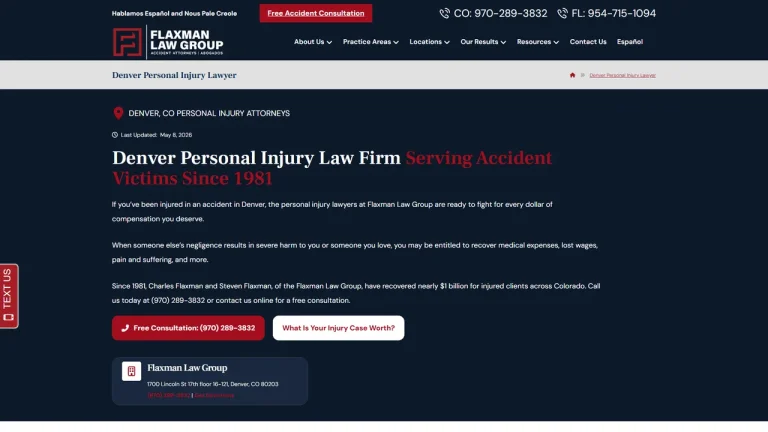
Flaxman Law Group - Denver, CO
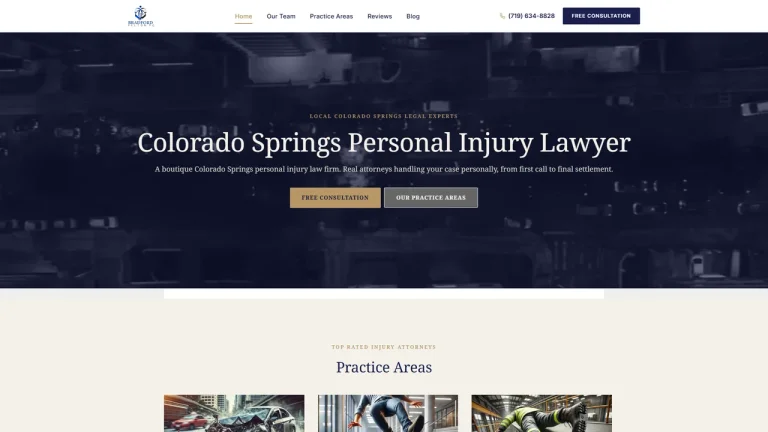
Bradford Pelton, P.C. - Colorado Springs, CO
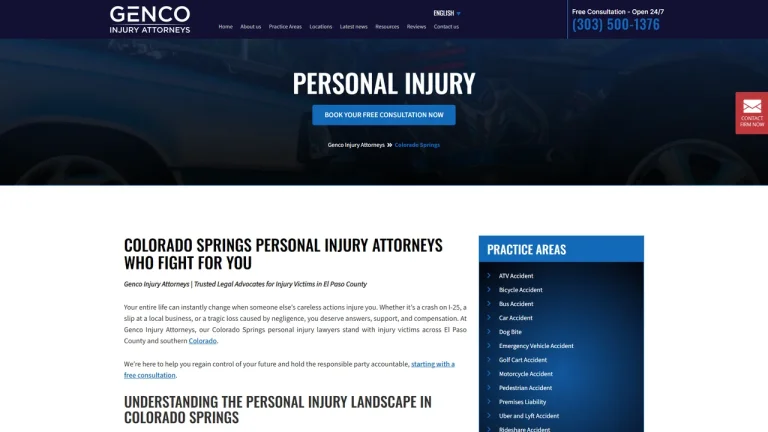
Genco Injury Attorneys - Colorado Springs - Colorado Springs, CO

Burnham Law - Westminster, CO
Petrash Law - Denver, CO
Black, Blink, & Associates LLC - Colorado Springs, CO

Jack LeProwse, P.C. - Westminster, CO

The Savela Law Firm PC - Boulder, CO
Colorado Legal Services - Denver, CO

VanMeveren Law Group - Fort Collins, CO

Pribila and Fields PC - Colorado Springs, CO

Navigating Colorado Personal Injury Law and Judicial Districts
Personal injury claims in Colorado operate under a distinctive statutory system tailored to the state's geography and court structure. Civil injury claims are adjudicated across 22 regional Judicial Districts within the Colorado State Courts, presided over by District Court judges. Major litigation hubs include the 2nd Judicial District in Denver, the 4th Judicial District serving El Paso and Teller counties (Colorado Springs), the 18th Judicial District in Arapahoe and Douglas counties, and the 1st Judicial District in Jefferson County.
Colorado personal injury claims frequently arise from diverse circumstances, including heavy commercial transport and winter weather collisions along the I-70 mountain corridor and I-25, complex ski resort liability under the Colorado Ski Safety Act codified at Colo. Rev. Stat. § 33-44-101, and property injury disputes governed exclusively by the Colorado Premises Liability Act under Colo. Rev. Stat. § 13-21-115. Pleading filings, motions, and discovery are submitted through the Colorado Courts E-Filing (CCE) system, requiring counsel well-versed in local district case management orders.
Retaining an experienced Colorado accident attorney early provides critical strategic advantages. Counsel conducts immediate accident scene investigations, manages health insurance subrogation claims, and coordinates medical liens under state statutory protections. Through court-ordered mediation and judicial settlement conferences, skilled attorneys routinely secure favorable monetary settlements without subjecting injured clients to protracted trial proceedings.
Personal Injury Legal Fee Structures and Cost Estimates in Colorado
| Case Scenario | Fee Structure | Estimated Cost (USD) | Key Cost Determinants |
|---|---|---|---|
| Motor Vehicle Collision (Pre-Suit Settlement) | Contingency Fee | 33.3% of Recovery | Medical lien resolution, insurer policy limit disclosures, wage verification |
| Disputed Liability Mountain Highway / Commercial Crash | Contingency Fee | 33.3% - 40% of Recovery | Accident reconstruction engineering, weather telemetry records, commercial log analysis |
| Premises Liability / Slip & Fall on Commercial Property | Contingency Fee | 33.3% - 40% of Recovery | Plaintiff classification under PLA (invitee vs. licensee), surveillance video preservation |
| Catastrophic Injury & Wrongful Death Litigation | Contingency Fee | 33.3% - 40% of Recovery | Life-care plan formulation, statutory non-economic damages caps, expert medical testimony |
Critical Legal Deadlines & Statutes in Colorado
Preserving your personal injury claim in Colorado requires strict compliance with statutory limitation periods and notice requirements under the Colorado Revised Statutes:
- Three-Year Motor Vehicle Accident Statute of Limitations: A tort action for bodily injury or property damage arising out of the use or operation of any motor vehicle must be commenced within three years under Colo. Rev. Stat. § 13-80-101(1)(n).
- Two-Year General Personal Injury Limitation: General tort actions, including slip and falls and premises liability claims, must be filed within two years from the date of injury pursuant to Colo. Rev. Stat. § 13-80-102(1)(a).
- Wrongful Death Deadline: A wrongful death action must be initiated within two years of the decedent's death under Colo. Rev. Stat. § 13-80-102(1)(d).
- Colorado Governmental Immunity Act (CGIA) Notice: Any claim against a state, county, or municipal government entity must be preceded by formal written notice filed within 182 days of discovering the injury under Colo. Rev. Stat. § 24-10-109.
- Modified Comparative Negligence Rule: Under Colo. Rev. Stat. § 13-21-111, an injured party can recover damages only if their negligence was less than the defendant's negligence; if the plaintiff is 50% or more at fault, recovery is completely barred.
- Non-Economic Damages Limitations: Recovery for pain, suffering, and emotional distress is subject to statutory limitations set forth in Colo. Rev. Stat. § 13-21-102.5.
Small Claims Limits vs. Professional Representation in Colorado
In Colorado, the Small Claims Division of County Court handles simplified civil actions where the amount in controversy does not exceed $7,500 pursuant to Colo. Rev. Stat. § 13-6-403, while regular County Courts have jurisdiction over controversies up to $25,000 under Colo. Rev. Stat. § 13-6-104. While an injured individual might handle a minor vehicle property damage claim in Small Claims Court without an attorney, severe injury claims belong in the Colorado District Court.
Attempting to negotiate or litigate a significant bodily injury claim without legal counsel presents major financial risks under Colorado law. Under the state's modified comparative fault statute (Colo. Rev. Stat. § 13-21-111), insurance companies aggressively attempt to attribute 50% or more of the fault to the injured person to bar any financial recovery. Furthermore, in premises liability matters, the Colorado Premises Liability Act (Colo. Rev. Stat. § 13-21-115) provides the exclusive legal remedy, imposing rigid evidentiary standards based on whether the plaintiff is classified as an invitee, licensee, or trespasser. Retaining seasoned legal counsel is essential to protect your rights, establish liability, and secure full financial recovery.
Vetting Colorado Personal Injury Lawyers and Recognizing Red Flags
Selecting an attorney to represent your injury claim requires careful vetting of professional credentials and courtroom experience. Watch for these red flags during your search:
- Confirm Active Bar Licensure: Verify that the attorney holds an active license with the Colorado Supreme Court Office of Attorney Regulation Counsel (OARC) and confirm that there are no public disciplinary records on file.
- Unrealistic Settlement Promises: Beware of lawyers who promise specific dollar outcomes or immediate insurance checks; ethical attorneys bound by the Colorado Rules of Professional Conduct cannot guarantee case results.
- Inexperience with the Colorado Premises Liability Act: If you were injured on commercial or private property, ensure your attorney has specific experience litigating claims under Colo. Rev. Stat. § 13-21-115, as common-law negligence claims are preempted.
- Vague Fee and Expense Agreements: Ensure your contingency agreement explicitly details whether litigation disbursements-such as medical expert witness retainers and court reporter fees-are deducted before or after contingency calculations.
Frequently Asked Questions
What is the statute of limitations for car accidents in Colorado?
Under Colo. Rev. Stat. § 13-80-101(1)(n), the statute of limitations for personal injury or property damage claims arising from motor vehicle collisions is three years from the date of the crash, which is longer than Colorado's standard two-year tort limitation period.
How does Colorado's comparative fault law affect my injury claim?
Colorado applies a modified comparative negligence standard under Colo. Rev. Stat. § 13-21-111. You can recover damages only if your proportion of fault is less than 50%. If you are found 50% or more at fault, you cannot recover any compensation; if you are 20% at fault, your final recovery is reduced by 20%.
What is the Colorado Premises Liability Act (PLA)?
The Colorado Premises Liability Act, codified at Colo. Rev. Stat. § 13-21-115, is the exclusive legal framework for injuries occurring on someone else's property. It establishes statutory duties owed by landowners based strictly on whether the injured person was an invitee, licensee, or trespasser.
What is the deadline for filing an injury claim against a government entity in Colorado?
Under the Colorado Governmental Immunity Act (Colo. Rev. Stat. § 24-10-109), you must deliver a formal written notice of claim to the governing body within 182 days of discovering the injury before you can file a lawsuit against a public entity or municipal employee.
Are non-economic damages capped in Colorado injury lawsuits?
Yes. Non-economic damages for pain, suffering, and physical impairment are subject to statutory caps under Colo. Rev. Stat. § 13-21-102.5. The statutory cap is periodically adjusted for inflation by the Colorado Secretary of State and can be increased only upon clear and convincing evidence of justification.