
Bankruptcy Lawyers in Colorado
Filing for bankruptcy protection in Colorado provides immediate relief from creditor harassment, wage garnishment, and foreclosure actions under federal law. Dedicated bankruptcy attorneys help you navigate Chapter 7 and Chapter 13 proceedings while maximizing Colorado statutory property exemptions. Explore our directory below to schedule a case review with trusted local professionals.

JAMLAC - Denver, CO
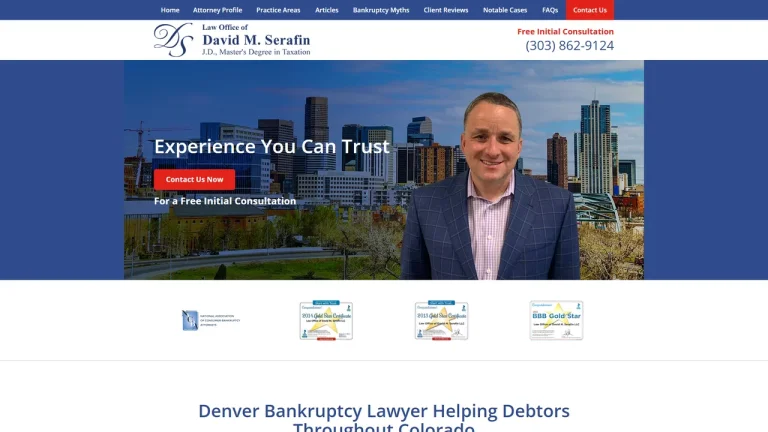
Law Office of David M. Serafin - Denver, CO

Foco Legal Services - Fort Collins, CO

Monk Law Office - Greeley, CO

Colorado Legal Services - Greeley, CO
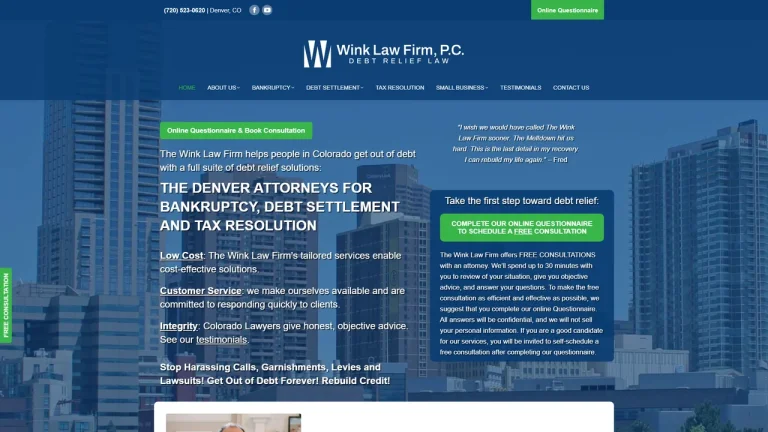
Wink Law Firm, P.C. | Debt Relief Law - Denver, CO
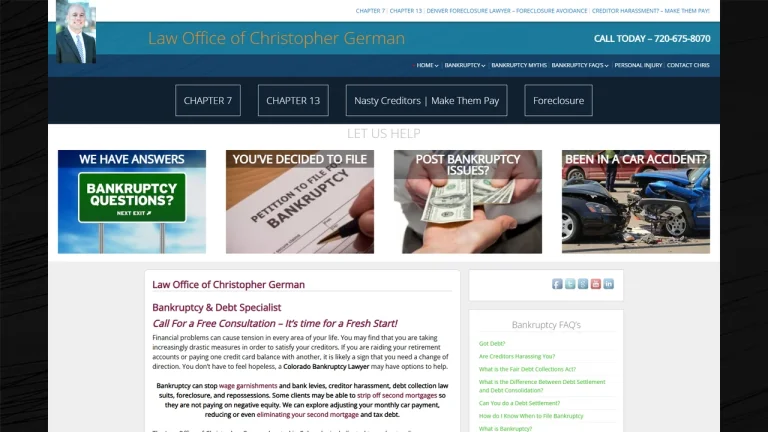
Law Office of Christopher A. German, LLC - Denver, CO

Keith Moskowitz Bankruptcy Lawyer - Boulder, CO

David Westbrook Law Offices - Boulder, CO
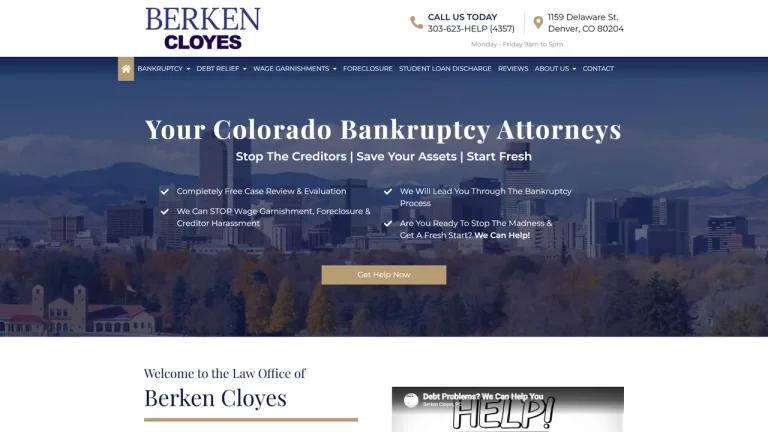
Berken Cloyes, PC - Denver, CO
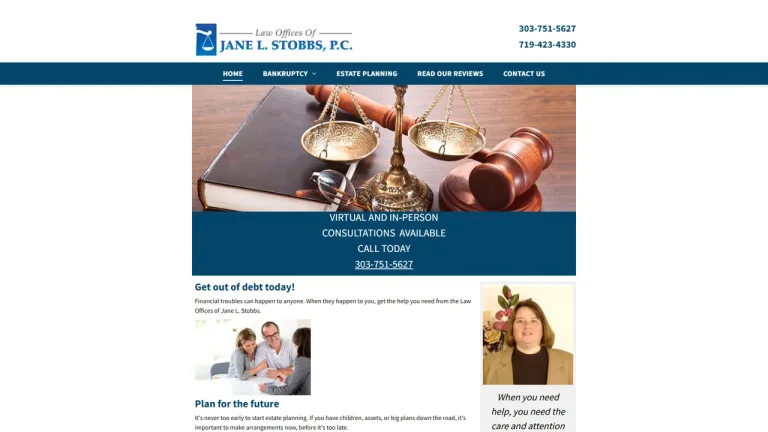
Law Offices of Jane L. Stobbs, PC - Colorado Springs, CO

Colorado Law Team - Aurora, CO

Consumer Law Pro PC - Aurora, CO
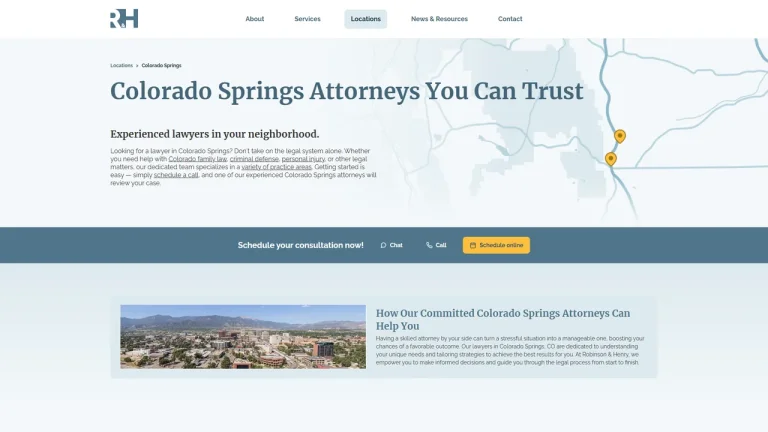
Robinson & Henry, P.C. - Colorado Springs, CO

Coan, Payton & Payne - Fort Collins, CO

Witwer, Oldenburg, Barry & Groom, LLP - Greeley, CO
Law Offices of Kimber Z Smith: Kimber Z Smith Attorney - Arvada, CO
The Salas Law Firm, LLC - Fort Collins, CO
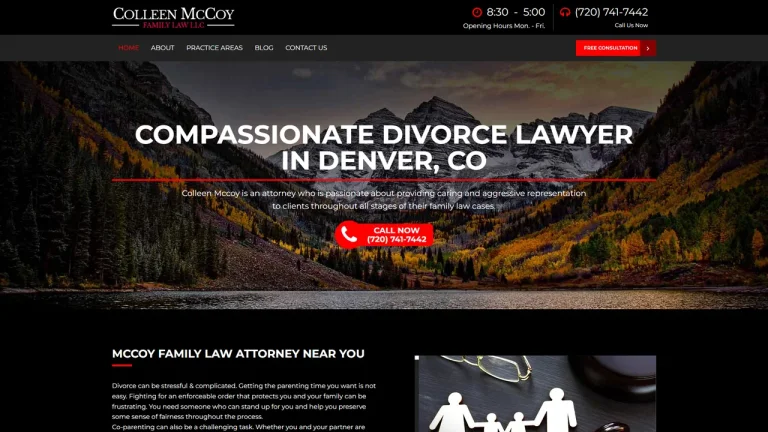
McCoy Family Law, LLC - Denver, CO
Stephen T. Craig, PC - Boulder, CO
Bill Zurinskas, Bankruptcy Attorney - Boulder, CO
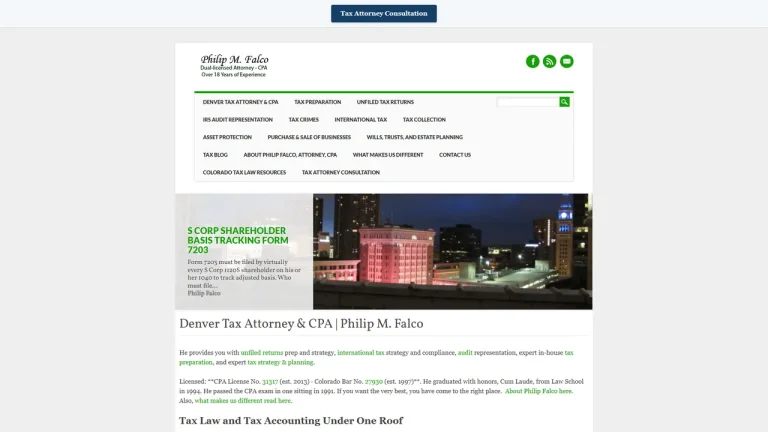
Philip M. Falco, Attorney, CPA - Denver, CO
King Law Firm - Lakewood, CO
Understanding Federal Bankruptcy Jurisdictions Across Colorado
Filing for bankruptcy in Colorado falls under federal jurisdiction, handled exclusively by the United States Bankruptcy Court for the District of Colorado. The court sits at the Byron G. Rogers U.S. Courthouse in downtown Denver, conducting Section 341 Meetings of Creditors and court hearings for filers residing across the Denver Metro area, Colorado Springs, Aurora, Fort Collins, Pueblo, and Grand Junction. Appellate matters arising from the bankruptcy court are heard either by the U.S. District Court for the District of Colorado or the Tenth Circuit Bankruptcy Appellate Panel (BAP).
Practicing before the federal bankruptcy bench requires rigorous compliance with the Colorado Supreme Court Office of Attorney Regulation Counsel (OARC) and the local rules of the District of Colorado Bankruptcy Court. Colorado bankruptcy attorneys analyze household median income under the statutory means test, evaluate the non-exempt status of personal property, and formulate viable reorganization plans that satisfy federal trustees and creditors alike.
Beyond formal courtroom litigation, experienced bankruptcy practitioners frequently negotiate pre-bankruptcy loan modifications, real property short sales, and tax workout plans. By evaluating all available legal avenues, a qualified lawyer ensures that your constitutional protections and property rights remain safeguarded throughout the bankruptcy process.
Colorado Bankruptcy Fee Structures & Representative Costs
| Case Scenario | Fee Structure | Estimated Cost (USD) | Key Cost Determinants |
|---|---|---|---|
| Chapter 7 Consumer Liquidation (Below Median) | Flat Fee | $1,200 - $2,500 | Household income below the Colorado median, standard personal exemptions, no prior bankruptcies, and absence of non-exempt equity. |
| Chapter 13 Debt Adjustment Plan | Court-Approved Presumptive Fee / Flat | $3,500 - $5,000 | Development of a 36-to-60 month repayment plan, curing home mortgage arrears, restructuring secured auto loans, and trustee negotiations. |
| Subchapter V Small Business Reorganization | Retainer plus Hourly ($300 - $550/hr) | $10,000 - $30,000 | Commercial lease restructuring, debtor-in-possession reporting, cash collateral negotiations, and plan confirmation litigation. |
| Adversary Proceeding Litigation Defense | Hourly Rate ($275 - $500/hr) | $4,000 - $15,000 | Defending against creditor claims of fraud, non-dischargeability complaints, preferential transfer clawbacks, or trustee turnover actions. |
Critical Legal Deadlines & Statutes in Colorado
Bankruptcy procedure is governed by strict timelines set by federal statutes and Colorado property codes. Immediately upon submitting a voluntary petition, the automatic stay is activated under 11 U.S. Code § 362, halting all pending foreclosures, auto repossessions, collection lawsuits, and wage garnishments statewide. To qualify for Chapter 7 relief, debtors must pass the statutory means test governed by 11 U.S. Code § 707, comparing current monthly income against Colorado median household figures.
Colorado has opted out of federal bankruptcy exemptions, requiring filers to protect their assets using Colorado state exemptions. Primary residences are protected up to statutory limits under the Colorado homestead exemption defined in Colo. Rev. Stat. § 38-41-201. Personal assets, including clothing, tools of the trade, motor vehicles, and retirement plans, are preserved under Colo. Rev. Stat. § 13-54-102. Furthermore, individual debtors must complete an approved pre-bankruptcy credit counseling course within 180 days prior to filing under 11 U.S. Code § 109 and fulfill a debtor education course within sixty days of their 341 meeting under 11 U.S. Code § 727 to obtain a discharge.
Small Claims Limitations vs. Federal Bankruptcy Relief
The Colorado Small Claims Division, authorized under Colo. Rev. Stat. § 13-6-403, is limited to disputes not exceeding $7,500. While small claims courts provide a streamlined forum for minor contractual grievances, they cannot alter debtor-creditor relationships on a systemic level, discharge balances, or enforce injunctions against out-of-state collection agencies.
When an individual or business faces multiple creditors, severe collection actions, or pending judgments in Colorado County or District Courts, the federal bankruptcy court provides comprehensive protection. Under the federal Supremacy Clause, an order entered by the U.S. Bankruptcy Court for the District of Colorado supersedes and stays all municipal, county, and district court collection proceedings across the state, ensuring an orderly discharge of unsecured debt.
Red Flags & Precautions When Retaining Bankruptcy Counsel
- High-volume bankruptcy petition mills that assign unvetted contract appearance attorneys who have never reviewed your schedules to your Section 341 Meeting of Creditors.
- Guarantees that domestic support obligations, court fines, or student loans can be discharged without the necessary adversary proceeding filings.
- Failure to perform a comprehensive exemption analysis under Colo. Rev. Stat. § 13-54-102, risking the surrender of valuable personal property or vehicle equity to the bankruptcy trustee.
- Quotes for unrealistically low fees that conceal compulsory costs for credit reports, emergency motion filings, or post-confirmation plan amendments.
Frequently Asked Questions
Where is the federal bankruptcy court located in Colorado?
The U.S. Bankruptcy Court for the District of Colorado is seated at the Byron G. Rogers U.S. Courthouse in Denver, handling cases for debtors across all Colorado counties.
Can I use federal bankruptcy exemptions instead of Colorado state exemptions?
No, Colorado is an opt-out state, meaning filers who satisfy Colorado residency requirements must utilize state exemptions established in Colo. Rev. Stat. § 13-54-102 and Colo. Rev. Stat. § 38-41-201.
How does filing bankruptcy stop a Colorado wage garnishment?
Upon filing your petition, the automatic stay under 11 U.S. Code § 362 immediately takes effect, requiring creditors and employers to halt ongoing wage deductions across Colorado.
What is the difference between Chapter 7 and Chapter 13 in Colorado?
Chapter 7 liquidates non-exempt assets to eliminate unsecured debts for qualifying debtors under 11 U.S. Code § 707, whereas Chapter 13 restructures debts into a court-supervised 3-to-5 year repayment plan to retain secured property.
Do I have to appear in person for my bankruptcy hearing in Colorado?
Most Section 341 Meetings of Creditors in the District of Colorado are conducted remotely via telephone or secure video conference, coordinated through the Office of the United States Trustee.