
IRS Dispute Lawyers in Colorado Springs
Retaining a skilled Colorado Springs IRS dispute lawyer protects your financial assets against aggressive federal tax liens, levies, and audits. Experienced tax counsel negotiates favorable offers in compromise and installment agreements to resolve controversies without prolonged litigation. Review our verified directory below to schedule a confidential case consultation today.
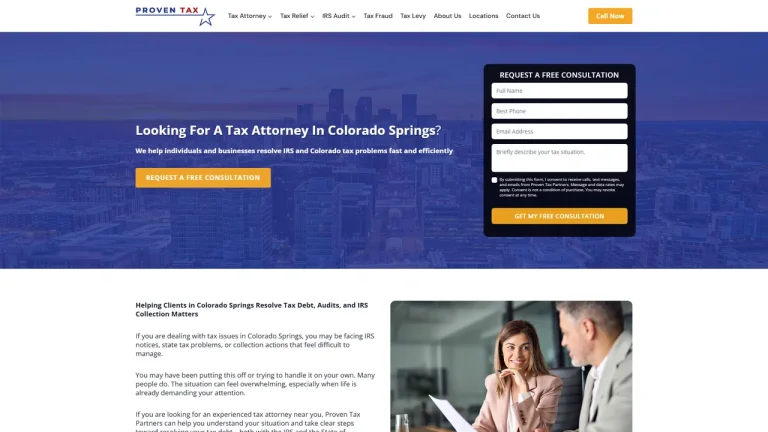
Defense Tax Partners (North) - Colorado Springs, CO

McCormick & Murphy - Personal Injury Lawyers - Colorado Springs, CO

Law Offices of Andrew F. McKenna, P.C. - Colorado Springs, CO
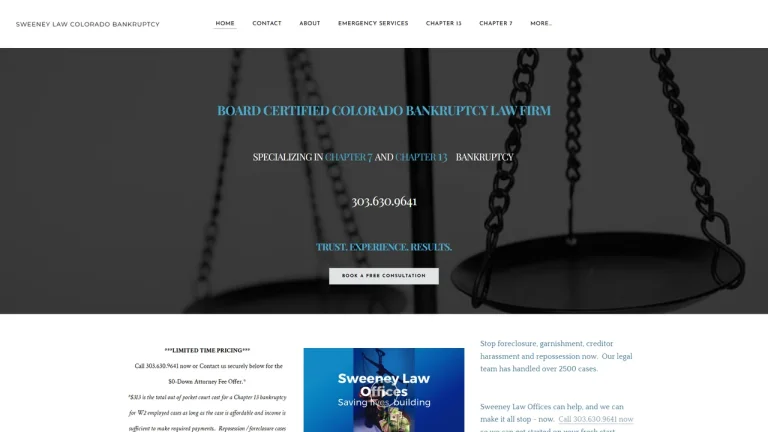
Sweeney Law Bankruptcy Attorneys - Colorado Springs, CO

The Law Office of J.C. ”Pit” Martin, P.C. - Colorado Springs, CO

Law Office of Stephen H. Swift, P.C. - Colorado Springs, CO
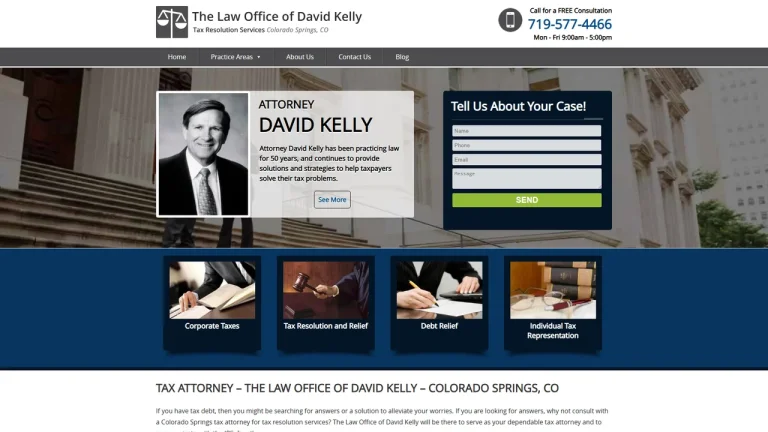
David Kelly Tax Attorney - Colorado Springs, CO
Defense Tax Partners (Downtown) - Colorado Springs, CO

Tax Controversy Resolution in Colorado Springs & El Paso County
Residents and commercial enterprises across Colorado Springs, from defense contractors supporting Peterson Space Force Base to small businesses along Downtown Tejon Street and the Powers Corridor, frequently encounter complex tax compliance challenges. When the Internal Revenue Service (IRS) or the Colorado Department of Revenue (CDOR) initiates audit examinations, issues notice of deficiency assessments, or executes bank levies, securing dedicated legal representation is vital.
Federal tax litigation originating in El Paso County is typically contested before the United States Tax Court, which conducts regular trial sessions at the federal courthouse in Denver, or in the U.S. District Court for the District of Colorado. State-level tax warrants and administrative controversies involve the Colorado Department of Revenue or the 4th Judicial District at the El Paso County Combined Courts, located at the Terry R. Harris Judicial Complex on South Tejon Street.
A qualified Colorado Springs IRS dispute lawyer understands the distinct procedural avenues available to taxpayers. Local counsel prepares Collection Due Process requests, reviews military tax exemptions and combat zone benefits, and negotiates directly with local IRS revenue officers to prevent wage garnishments and seize asset sales.
Tax Dispute Case Scenarios & Legal Representation Fees
| Case Scenario | Fee Structure | Estimated Cost (USD) | Key Cost Determinants |
|---|---|---|---|
| IRS Audit Examination (Individual / Business) | Hourly or Flat Retainer | $2,500 - $6,000 | Number of tax years audited, substantiation records, disallowance complexity |
| Offer in Compromise (OIC) Negotiation | Fixed Retainer | $3,500 - $8,500 | Real estate equity, business asset appraisals, reasonable collection potential calculations |
| Collection Due Process & Levy Release | Flat Fee | $2,000 - $4,500 | CDP deadline urgency, active bank seizures, installment agreement structuring |
| U.S. Tax Court Petition & Litigation | Staged Retainer | $7,500 - $25,000+ | Statutory notice dispute amounts, formal discovery, expert forensic accountant testimony |
Critical Legal Deadlines & Statutes in Colorado
Deadlines in tax controversy are rigid and jurisdictional. Under 26 U.S. Code § 6213(a), a taxpayer receiving a formal Notice of Deficiency (90-day letter) from the IRS has exactly 90 calendar days to file a petition with the United States Tax Court. Missing this statutory deadline by even a single day permanently forfeits pre-payment court review, requiring the taxpayer to pay the assessment in full before pursuing refund litigation.
If the IRS issues a Final Notice of Intent to Levy, the taxpayer has precisely 30 days under 26 U.S. Code § 6330 to request a Collection Due Process (CDP) hearing, which automatically halts collection actions. For administrative settlements, 26 U.S. Code § 7122 governs Offers in Compromise based on doubt as to liability or collectibility. At the state level, taxpayers protesting a Colorado Department of Revenue deficiency assessment must file a written protest within 30 days pursuant to Colo. Rev. Stat. § 39-21-103, with subsequent administrative appeals guided by Colo. Rev. Stat. § 39-21-105.
Small Claims Limitations vs. Professional Tax Representation
The Colorado small claims division, governed by Colo. Rev. Stat. § 13-6-403, is restricted to civil claims of $7,500 or less. However, small claims courts have zero jurisdiction over federal or state tax disputes. The doctrine of sovereign immunity and statutory preemption dictates that tax assessments can only be challenged within specialized federal and state administrative and judicial bodies.
Attempting to negotiate with seasoned IRS revenue officers or appeals officers without legal counsel often leads to unmanageable installment agreements or premature asset disclosures. A licensed Colorado Springs tax attorney evaluates administrative transcripts, asserts statutory taxpayer rights, and ensures compliance with procedural rules before both the IRS Office of Appeals and the U.S. Tax Court.
Red Flags When Hiring a Colorado Springs Tax Lawyer
- Promises of settling for pennies on the dollar: Non-attorney tax relief marketing companies that guarantee specific settlement percentages before evaluating financial disclosures violate ethical standards.
- Lack of U.S. Tax Court admission: Representation by unlicensed individuals who cannot file petitions or advocate before the United States Tax Court bench.
- Demanding massive upfront fees without analysis: Legal practitioners who require non-refundable fees without first pulling IRS transcripts to examine collection expiration dates.
- Ignoring the 90-day petition deadline: Counsel failing to prioritize the jurisdictional deadline under 26 U.S. Code § 6213(a) risks eliminating your primary legal defense.
Frequently Asked Questions
What is a 90-day Notice of Deficiency from the IRS?
Under 26 U.S. Code § 6213(a), a Notice of Deficiency is a formal legal notice stating proposed tax adjustments. It provides taxpayers precisely 90 days to petition the U.S. Tax Court without having to pay the contested taxes upfront.
Can a Colorado Springs tax attorney stop an active wage levy?
Yes. By filing an emergency Collection Due Process request under 26 U.S. Code § 6330, showing economic hardship, or establishing an installment agreement, an attorney can halt wage levies and bank garnishments.
How does an Offer in Compromise work under federal law?
Codified under 26 U.S. Code § 7122, an Offer in Compromise allows qualifying taxpayers to settle their tax liability for less than the full amount owed based on doubt as to collectibility, doubt as to liability, or effective tax administration.
How long do I have to protest a Colorado Department of Revenue assessment?
Under Colo. Rev. Stat. § 39-21-103, you have 30 days from the mailing date of the notice of deficiency to submit a formal written protest to the Colorado Department of Revenue.
Where are federal tax trials for Colorado Springs residents held?
United States Tax Court cases for Colorado Springs residents are heard during trial sessions conducted at the federal courthouse in Denver, Colorado.