
Bankruptcy Lawyers in Denver
Overwhelmed by debt in Denver, Colorado? Retaining an experienced bankruptcy attorney immediately triggers the federal automatic stay to halt creditor lawsuits, wage garnishments, and Denver County foreclosure sales. Dedicated local counsel protects your primary home, vehicles, and retirement assets using Colorado state exemptions while structuring an effective Chapter 7 liquidation or Chapter 13 repayment plan. Explore our directory below to connect with top-rated Denver bankruptcy lawyers for a confidential consultation.

Law Office of David M. Serafin - Denver, CO
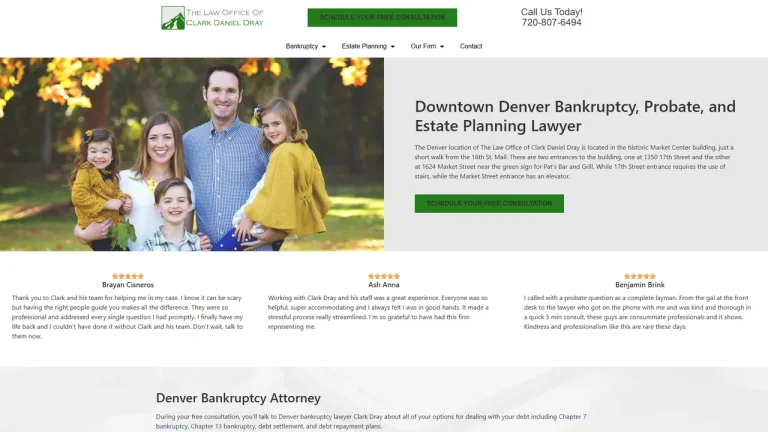
The Law Office of Clark Daniel Dray - Denver, CO

Masana Bankruptcy Law - Denver, CO
Cohen and Cohen, P.C. - Denver, CO

Colorado Bankruptcy Law Group, LLC - Denver, CO

Howard S. Goodman Bankruptcy Attorney - Denver, CO

Colorado Legal Services - Denver, CO

Salinas Law Group LLC - Denver, CO

Roberson Law, LLC - Denver, CO

Wink Law Firm, P.C. | Debt Relief Law - Denver, CO

Metro Volunteer Lawyers - Denver, CO

Kaplan Morrell Attorneys at Law - Denver, CO

Watton Law Group - Denver, CO
Philip M. Falco, Attorney, CPA - Denver, CO

Mile High Bankruptcy - The Milwid Law Firm - Denver, CO

Robinson & Henry, P.C. - Denver, CO

Berken Cloyes, PC - Denver, CO

Law Office of Christopher A. German, LLC - Denver, CO

McCoy Family Law, LLC - Denver, CO

JAMLAC - Denver, CO
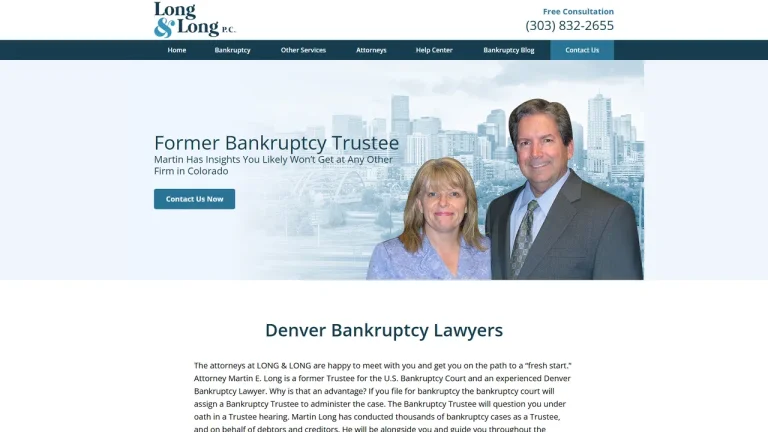
Long & Long P.C. - Denver, CO
Brian Landy, Attorney at Law - Denver, CO

Filing Bankruptcy in the City and County of Denver
Denver residents facing insurmountable debts fall under the direct jurisdiction of the United States Bankruptcy Court for the District of Colorado, located at the historic U.S. Custom House on 19th Street in downtown Denver. Meeting of Creditors hearings are supervised by the United States Trustee for Region 19, convened through remote video platforms or designated federal examination rooms in the central business district.
Colorado has formally opted out of the federal bankruptcy exemption scheme under Colo. Rev. Stat. § 13-54-107. As a result, Denver filers must utilize Colorado state statutory exemptions to protect their assets. Navigating these exemptions is vital in Denver's high-value real estate market, spanning neighborhoods such as Cherry Creek, Highlands, Washington Park, and Capitol Hill.
Creditor lawsuits, bank garnishments, and attachment orders originate in the 2nd Judicial District at the Denver City and County Building on Bannock Street. Retaining a Denver bankruptcy attorney ensures that pending state court executions and judicial liens are halted instantly upon filing the federal bankruptcy petition.
Denver Bankruptcy Legal Fees and Filing Schedules
| Case Scenario | Fee Structure | Estimated Cost (USD) | Key Cost Determinants |
|---|---|---|---|
| Chapter 7 Consumer Liquidation (Uncontested) | Flat Attorney Fee + Filing Fee | $1,250 - $2,600 (+$338 Court Fee) | Colorado Means Test qualification, volume of unsecured debt, and asset exemption analysis. |
| Chapter 13 Wage Earner Reorganization | Court-Approved Flat Fee (Staged) | $3,500 - $5,000 (+$313 Court Fee) | Curing Denver mortgage arrears, vehicle cramdown terms, and 3-to-5-year repayment plan administration. |
| Adversary Proceeding Defense (Creditor Fraud Claim) | Hourly Retainer ($300-$500/hr) | $4,500 - $15,000+ | Non-dischargeability litigation under 11 U.S.C. § 523, depositions, and trial preparation in Denver U.S. Custom House. |
| Emergency Bankruptcy Filing (Stop Garnishment / Foreclosure) | Expedited Flat Fee | $1,500 - $3,200 | Same-day petition drafting to trigger immediate automatic stay relief before Denver Sheriff sales. |
Critical Legal Deadlines & Statutes in Colorado
Filing a bankruptcy petition invokes powerful statutory protections governed by rigid procedural rules. Under 11 U.S. Code § 362, filing creates an immediate automatic stay that stops all creditor collection actions, civil lawsuits in Denver County Court, wage garnishments, and foreclosure auctions.
Because Colorado opted out of federal exemptions under Colo. Rev. Stat. § 13-54-107, debtors protect property using Colorado statutes. The Colorado homestead exemption under Colo. Rev. Stat. § 38-41-201 shields up to $250,000 of home equity (or $350,000 for homeowners who are elderly or disabled). Personal property exemptions under Colo. Rev. Stat. § 13-54-102 protect up to $15,000 in motor vehicle equity and essential tools of the trade.
Chapter 7 qualification is governed by the Means Test under 11 U.S. Code § 707, which evaluates average income over the preceding six months against Colorado median standards. Debtors must complete a credit counseling course within 180 days prior to filing and a debtor education course within 60 days following the 341 meeting to obtain a discharge under 11 U.S. Code § 727.
State Small Claims Court Limits vs. Federal Bankruptcy Counsel
Under Colo. Rev. Stat. § 13-6-403, the Colorado Small Claims Court is capped at $7,500, rendering it ineffective for addressing substantial debt loads. When debts mount, creditors file suits in Denver County or District Court, securing judgments that authorize wage garnishments of up to 20 percent of disposable earnings under Colo. Rev. Stat. § 13-54-104.
Filing pro se in federal bankruptcy court exposes debtors to severe risks, such as having their cases dismissed or losing non-exempt assets to a bankruptcy trustee. A skilled Denver bankruptcy attorney properly classifies your assets under Colorado exemption laws, protects your home and vehicles, and permanently wipes out qualifying credit card debts, medical bills, and unsecured loans under 11 U.S. Code § 524.
Red Flags When Hiring a Denver Bankruptcy Attorney
- Non-Attorney "Petition Preparers" Advertising Cheap Filings: Federal law prohibits non-attorneys from giving legal advice, advising on exemptions, or representing you at the 341 Meeting of Creditors.
- Reflexively Recommending Chapter 13 Over Chapter 7: Some high-volume mills steer clients into lengthy Chapter 13 plans to collect court-approved attorney fees when the debtor legitimately qualifies for Chapter 7.
- Advising Pre-Bankruptcy Asset Transfers: Transferring cash, vehicle titles, or deeds to relatives prior to filing can be deemed a fraudulent conveyance under bankruptcy law, resulting in asset clawbacks and denial of discharge.
- Hiding Retainer Fees and Court Costs: Demand a clear, written fee agreement that details court filing fees, electronic case management fees, and whether adversary proceedings are covered.
Frequently Asked Questions
How does the Colorado homestead exemption protect my Denver home?
Under Colo. Rev. Stat. § 38-41-201, up to $250,000 of equity in your primary residence is completely exempt from creditors and bankruptcy trustees, increasing to $350,000 if you are 60 years of age or older or disabled.
Where is the bankruptcy court located in Denver?
The United States Bankruptcy Court for the District of Colorado is housed inside the U.S. Custom House, located at 721 19th Street in downtown Denver.
Can bankruptcy stop an immediate Denver Public Trustee foreclosure?
Yes. Under 11 U.S. Code § 362, filing bankruptcy activates the automatic stay, immediately halting any scheduled foreclosure auction by the Denver County Public Trustee.
What is the difference between Chapter 7 and Chapter 13 bankruptcy?
Chapter 7 liquidates non-exempt assets to eliminate qualifying unsecured debt within roughly four months. Chapter 13 establishes a three-to-five-year repayment plan allowing you to catch up on missed mortgage or car payments without losing property.
Can student loans and taxes be discharged in bankruptcy?
Certain older income taxes that meet strict timing rules under the Bankruptcy Code can be discharged. Student loans generally require filing a separate adversary proceeding proving undue hardship under 11 U.S. Code § 523.