
Business Litigation Lawyers in Denver
Partnering with experienced Denver business litigation lawyers safeguards enterprise value and resolves complex commercial disputes under Colorado court rules. Skilled trial attorneys prioritize mediation and pre-suit resolution to minimize financial disruption. Review our verified directory below to connect with top commercial counsel in Denver.
Ragab Law Firm, P.C. - Denver, CO

The Litigation Boutique LLC - Denver, CO
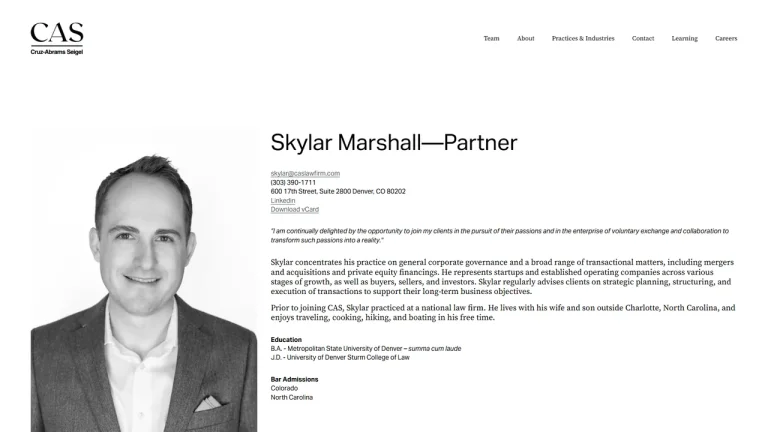
Skylar Marshall - CAS Law Firm - Denver, CO

Law Offices of Eric L. Nesbitt, P.C. - Denver, CO

Denver Business Lawyers - Denver, CO

Tenge Law Firm LLC - Denver, CO
Colorado Affordable Legal Services - Denver, CO

Merchant & Gould P.C. - Denver, CO

Tschetter Sulzer Muccio, P.C. - Denver, CO

Geraghty Law Office - Denver, CO
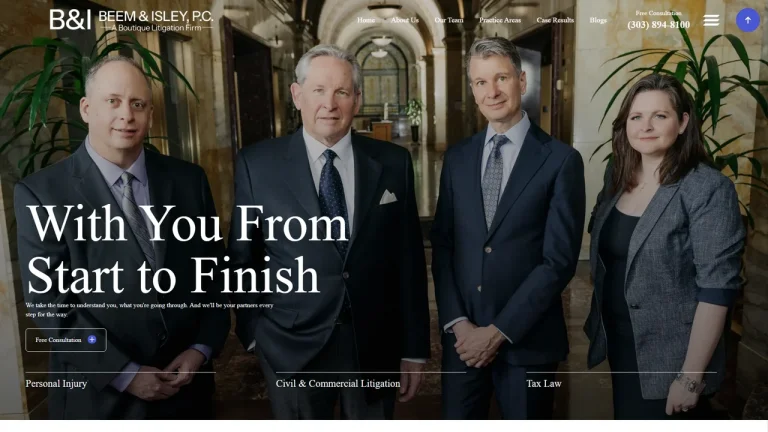
Beem and Isley, P.C. - Denver, CO

Lyda Law Firm - Denver, CO

Flaxman Law Group - Denver, CO
Johnson Law - The Law Firm of Chad W. Johnson, LLC - Denver, CO

Halligan LLC - Denver, CO
McKay Law, LLC - Denver, CO
Baker Law Group, PLLC - Denver, CO
The Contiguglia Law Firm, P.C. - Denver, CO
Ogborn Mihm, LLP - Denver, CO

Kilpatrick Townsend & Stockton LLP - Denver, CO

MW Legal Group - Denver, CO
Robinson & Henry, P.C. - Denver, CO
Kearney, McWilliams & Davis - Denver, CO
Commercial Dispute Jurisdiction in Denver Courts
Denver serves as the principal economic hub of the Rocky Mountain region, hosting prominent commercial enterprises across the Central Business District, Lower Downtown (LoDo), and the Denver Tech Center corridor. When business controversies emerge regarding shareholder oppression, partnership dissolutions, or fiduciary breaches, securing seasoned Denver business litigators ensures commercial interests are vigorously safeguarded under Colorado jurisprudence.
Commercial lawsuits within the city are adjudicated by the Second Judicial District Court, headquartered in the Denver City and County Building at 1437 Bannock Street. Complex commercial actions progress under the Colorado Rules of Civil Procedure, which mandate early disclosure procedures, rigorous case management conferences under C.R.C.P. 16, and structured alternative dispute resolution protocols before trial dates are granted.
Retaining local business litigation counsel who routinely practices before the Second Judicial District bench provides an immediate strategic advantage. Local counsel understands judicial scheduling procedures, local electronic filing standards through the Colorado Courts E-Filing system, and specific court expectations for pretrial evidentiary hearings and summary judgment arguments.
Denver Business Litigation Cost & Representation Overview
| Case Scenario | Fee Structure | Estimated Cost (USD) | Key Cost Determinants |
|---|---|---|---|
| Pre-Suit Commercial Dispute Evaluation & Demand Letters | Flat Fee / Limited Retainer | $2,500 - $6,500 | Factual record investigation, contract terms complexity, counterparty negotiation willingness. |
| Partnership Dissolution & Shareholder Dispute Litigation | Hourly Retainer ($375 - $650/hr) | $15,000 - $60,000 | Forensic accounting scope, business valuation disputes, number of equity partners involved. |
| Commercial Fraud & Breach of Fiduciary Duty Litigation | Hourly / Hybrid Retainer | $25,000 - $100,000+ | Volume of electronic discovery, expert witness depositions, extensive pretrial motion practice. |
| Emergency Injunctions & Temporary Restraining Orders (TRO) | Expedited Hourly Retainer | $10,000 - $35,000 | Urgency of injunctive relief, evidentiary preparation speed, bond determination proceedings. |
Critical Legal Deadlines & Statutes in Colorado
Colorado statutes establish precise limitations periods for commercial litigation causes of action. Claims grounded in fraud, misrepresentation, or deceit must be brought within three years from the date the injury and its cause are discovered or should have been discovered, as outlined in Colo. Rev. Stat. § 13-80-101.
Actions alleging breach of fiduciary duty or general business torts, such as intentional interference with contractual relations, generally fall under the two-year limitations framework codified in Colo. Rev. Stat. § 13-80-102. Missing this narrow two-year window eliminates the legal authority to pursue monetary damages against offending partners or officers.
For disputes involving the protection of proprietary corporate data and intellectual property, the Colorado Uniform Trade Secrets Act provides a three-year statute of limitations under Colo. Rev. Stat. § 7-74-107, which begins running when the misappropriation is discovered or through reasonable diligence should have been uncovered.
Small Claims Limitations & Mandatory Corporate Representation
While the Denver County Small Claims Court provides an avenue for disputes up to $7,500 under Colo. Rev. Stat. § 13-6-403, commercial conflicts rarely fit into this framework. When claims involve intermediate amounts between $7,500 and $25,000, jurisdiction belongs to the Denver County Court under Colo. Rev. Stat. § 13-6-104, while higher-value actions belong exclusively to the Second Judicial District Court.
A critical rule governing Denver commercial law is mandatory attorney representation. Under Colo. Rev. Stat. § 13-1-127, any closely held entity, corporation, or limited liability company participating in proceedings before a court of record (including County Court and District Court) must be represented by a licensed attorney, unless qualified under very limited statutory exceptions for small entities in county court claims under the statutory limit.
Failing to secure licensed legal counsel for an incorporated business can lead to severe consequences, including default judgments and immediate dismissal of enterprise pleadings in Denver courts.
Red Flags to Avoid When Selecting Commercial Litigators
- Refusal to Discuss Alternative Dispute Resolution: Avoid litigators who immediately push for prolonged court trials while disregarding early mediation or arbitration options that can protect corporate cash flow.
- Unclear Litigation Budgets: Steer clear of law firms that do not provide comprehensive litigation phases, estimated costs for electronic discovery, and transparent staffing structures.
- Inexperience with Denver District Judges: Do not engage attorneys unfamiliar with the practice standards, C.R.C.P. 16.1 simplified procedure thresholds, and standing orders of the Second Judicial District.
- Guaranteed Legal Verdicts: Avoid counsel promising guaranteed monetary awards or settlements, which runs counter to professional conduct standards and ignores the uncertainties of trial practice.
Frequently Asked Questions
Can a Colorado LLC represent itself in Denver District Court?
No. Under Colo. Rev. Stat. § 13-1-127, legal entities such as corporations and limited liability companies must appear through an active licensed attorney in Colorado courts of record. Pro se representation by business owners is restricted to small claims matters.
What is Colorado simplified procedure (C.R.C.P. 16.1) in commercial litigation?
Colorado Rule of Civil Procedure 16.1 provides an expedited litigation framework for civil actions involving maximum monetary claims of $100,000. It limits deposition time, shortens discovery timelines, and restricts pretrial motions to reduce litigation costs for Denver businesses.
What is the statute of limitations for corporate fraud in Denver?
Civil claims for fraud, misrepresentation, or fraudulent concealment must be filed within three years from the date of discovery under Colo. Rev. Stat. § 13-80-101. The clock starts when the injured business discovers or reasonably should have discovered the facts constituting fraud.
How does an attorney obtain emergency injunctive relief for trade secret theft?
Attorneys file a motion for a Temporary Restraining Order (TRO) and Preliminary Injunction in the Second Judicial District Court under C.R.C.P. 65, demonstrating irreparable harm, probability of success on the merits, and adherence to the Colorado Uniform Trade Secrets Act (Colo. Rev. Stat. § 7-74-101).
How are commercial litigation retainers structured in Denver?
Denver business litigators typically require an initial upfront evergreen retainer ranging from $10,000 to $25,000, with billable hourly rates between $375 and $650 per hour. Costs for e-discovery, expert witnesses, and court filings are billed against this retainer.