
Commercial Real Estate Lawyers in Denver
Retaining an experienced commercial real estate attorney in Denver protects your investments across complex zoning, leasing, and development transactions. Qualified counsel navigates municipal land use approvals and resolves title or contract disputes through proactive negotiation. Browse our directory below to connect with vetted Denver attorneys for your commercial property matters.

Milgrom Daskam & Ellis - Denver, CO

O'Brien Legal Services LLC - Denver, CO
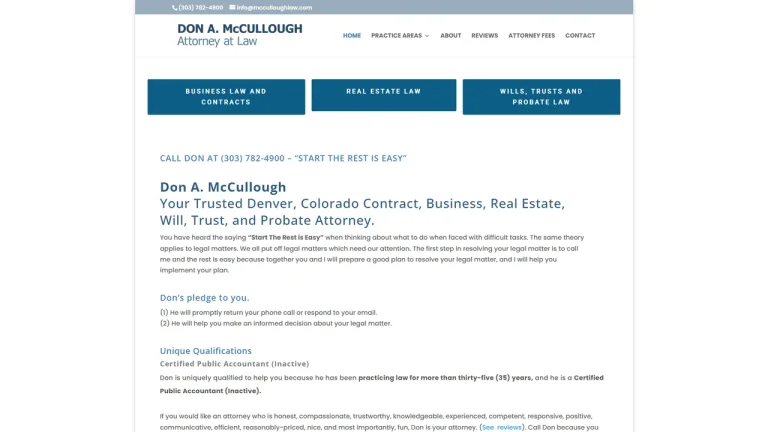
Don A. McCullough, Attorney at Law - Denver, CO
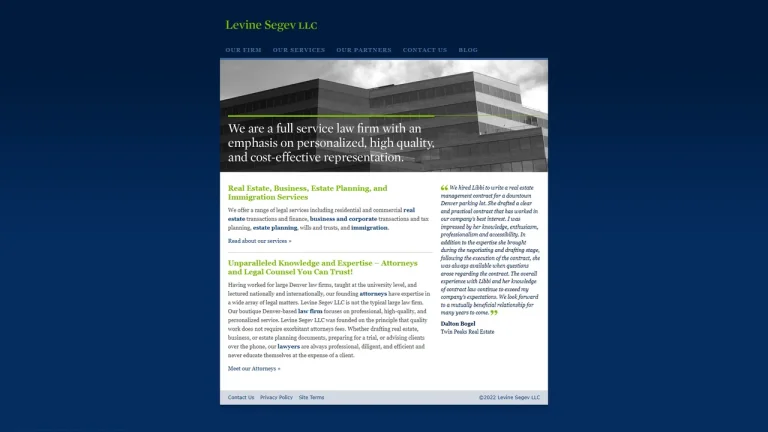
Levine Segev LLC - Denver, CO

Ragab Law Firm, P.C. - Denver, CO

Gantenbein Law Firm - Denver, CO
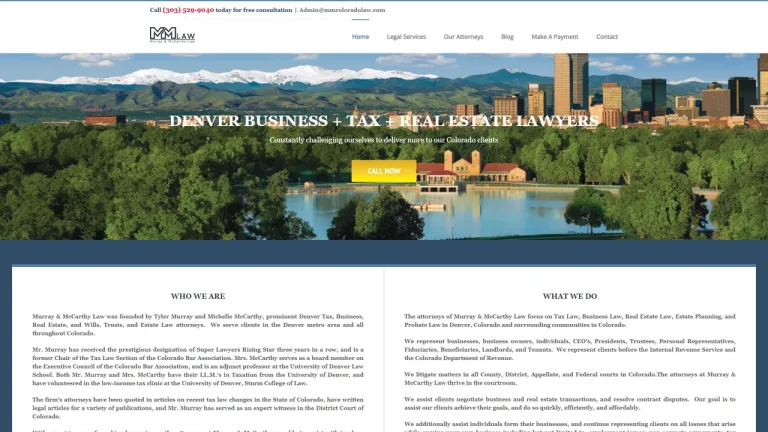
Murray & McCarthy Law - Denver, CO
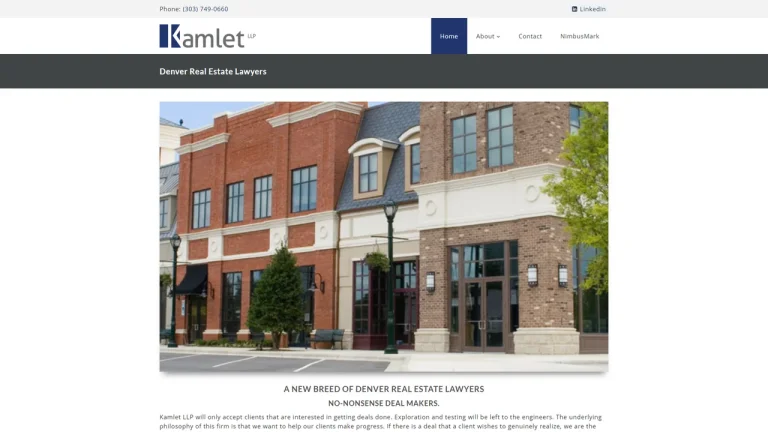
Kamlet LLP - Denver, CO

Kilpatrick Townsend & Stockton LLP - Denver, CO
Law Office of Nicholas J. Vail, PLLC - Denver, CO

Morris and Watrous - Denver, CO
Jester Gibson & Moore LLP - Denver, CO
Setter Roche Smith and Shellenberger, LLP - Denver, CO
Denver Business Lawyers - Denver, CO

Law Offices of Eric L. Nesbitt, P.C. - Denver, CO

Geraghty Law Office - Denver, CO
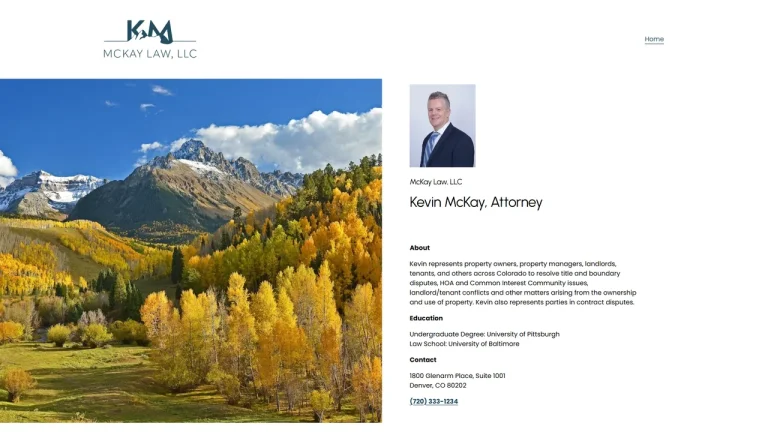
McKay Law, LLC - Denver, CO
Kearney, McWilliams & Davis - Denver, CO

Linden Law Partners - Denver, CO

Fischer & Fischer, P.C. - Denver, CO
Schlueter, Mahoney & Ross, P.C - Denver, CO
Johnson Law - The Law Firm of Chad W. Johnson, LLC - Denver, CO
Robinson & Henry, P.C. - Denver, CO

Navigating Commercial Real Estate Law in Denver, Colorado
Commercial real estate ventures in Denver operate within a dynamic regulatory landscape shaped by the Denver City Council, the Denver Department of Community Planning and Development, and local zoning codes. Whether acquiring warehouse facilities in the Central Platte Valley, structuring mixed-use developments in RiNo, or negotiating office leases in the Central Business District, parties encounter rigorous municipal oversight. Legal disputes arising from commercial acquisitions, development agreements, and title encumbrances are adjudicated in the Denver District Court, 2nd Judicial District, housed at the Denver City and County Building on Bannock Street.
Navigating commercial property transactions in the Denver metro area, extending into neighboring Arapahoe and Jefferson counties, requires strict adherence to statewide property codes. From the Colorado Common Interest Ownership Act to strict environmental due diligence under state oversight, legal issues demand precise contractual structuring. Local counsel mitigates liability prior to closing by drafting tailored contingencies, resolving encumbrances, and handling complex municipal variance hearings.
When disputes escalate to commercial tenancy defaults, breach of purchase agreements, or construction defects, legal intervention protects financial assets. Experienced attorneys leverage alternative dispute resolution or initiate formal proceedings in Denver District Court to secure injunctive relief, clear clouded titles, and enforce contractual obligations.
Denver Commercial Real Estate Legal Fees & Service Structures
| Case Scenario | Fee Structure | Estimated Cost (USD) | Key Cost Determinants |
|---|---|---|---|
| Commercial Lease Review & Drafting | Flat Fee / Hourly Rate | $1,500 - $4,500 | Square footage, lease term complexity, CAM calculations, and tenant improvement work letter negotiations. |
| Commercial Property Acquisition & Due Diligence | Hourly Rate / Staged Flat Fee | $3,500 - $12,000 | Title examination complexity, environmental phase reviews, zoning verification, and municipal entitlement status. |
| Zoning Variances & Municipal Entitlements | Hourly Retainer | $5,000 - $18,000+ | Denver Board of Adjustment hearings, community engagement, landmark preservation approvals, and traffic impact studies. |
| Contested Commercial Real Estate Litigation | Hourly Retainer ($350 - $650/hr) | $15,000 - $60,000+ | Breach of contract claims, partition actions, specific performance lawsuits, and trial duration in Denver District Court. |
Critical Legal Deadlines & Statutes in Colorado
Commercial property transactions and disputes in Colorado are governed by strict statutory time limits that require prompt legal action to preserve claims:
- Breach of Written Commercial Contracts: Under C.R.S. § 13-80-101(1)(a), actions for breach of written contract must be commenced within 3 years from the date the cause of action accrues.
- Mechanic's Lien Verification & Filing: Contractors and material suppliers must serve a Notice of Intent to File a Lien at least 10 days before recording the lien statement, and record the lien with the Denver County Clerk and Recorder within 4 months after the last day of work pursuant to C.R.S. § 38-22-109.
- Mechanic's Lien Foreclosure: A civil action to enforce and foreclose on a recorded mechanic's lien must be initiated within 6 months after the completion of the building or project under C.R.S. § 38-22-110.
- Commercial Evictions (FED Actions): Commercial landlords must deliver a written demand specifying the breach and providing the tenant 3 days to cure or quit before filing an unlawful detainer action pursuant to C.R.S. § 13-40-104(1)(d).
- Colorado Common Interest Ownership Act Claims: Actions alleging violations of the Colorado Common Interest Ownership Act are governed by C.R.S. § 38-33.3-123, requiring timely enforcement of covenant and assessment disputes.
Denver Small Claims Limits vs. District Court Representation
The Denver County Small Claims Court, established pursuant to C.R.S. § 13-6-403, holds a jurisdictional limit capped at $7,500. While small claims procedures offer an expedited forum for minor monetary recovery, Colorado statutory rules under C.R.S. § 13-6-407 strictly prohibit attorneys from representing parties in small claims court, unless the attorney is an active partner, officer, or sole proprietor representing their own commercial entity.
Commercial real estate disputes rarely fit within the financial boundaries of small claims court. Disputes involving commercial earnest money deposits, complex lease covenants, mechanic's liens, or title reformation regularly exceed $25,000, placing them under the general jurisdiction of the Denver District Court. Furthermore, small claims divisions cannot award equitable remedies such as specific performance, partition, or quiet title. Retaining a dedicated commercial real estate lawyer ensures your interests are safeguarded in the appropriate judicial forum with full discovery and appellate protections.
Red Flags When Hiring a Denver Commercial Real Estate Lawyer
- Unfamiliarity with Denver Municipal Zoning: Avoid attorneys who lack hands-on experience navigating the Denver Zoning Code or presenting cases before the Denver Board of Adjustment and City Council.
- Overreliance on Residential Templates: Commercial transactions involve triple-net (NNN) terms, environmental indemnifications, and subordinations; attorneys using standardized residential boilerplate forms leave clients vulnerable to severe liabilities.
- Lack of Local Title and Due Diligence Resources: Be cautious of firms without established relationships with Colorado commercial title underwriters, environmental engineers, and local commercial surveyors.
- Vague Fee Estimates for Due Diligence: Reputable commercial attorneys provide transparent fee arrangements detailing hourly rates, closing support costs, and title examination scopes prior to commencing work.
Frequently Asked Questions
What is the difference between Denver County Court and District Court for property disputes?
Denver County Court hears civil cases where disputed amounts do not exceed $25,000. For commercial disputes exceeding $25,000, actions seeking equitable relief such as quiet title or injunctions, and foreclosure of commercial liens, the 2nd Judicial District Court of Denver possesses exclusive jurisdiction.
Do commercial leases in Colorado require attorney review?
While not legally mandated by state statute, commercial leases in Denver are legally binding contracts with substantial financial commitments. Having an attorney review terms such as default remedies, assignment and subletting clauses, CAM audits, and personal guaranty provisions prevents costly post-signing litigation.
How does Colorado law handle commercial tenant evictions?
Commercial evictions in Colorado proceed under the Forcible Entry and Detainer statutes governed by C.R.S. § 13-40-101 et seq. Landlords must provide proper written notice demanding compliance or possession before initiating eviction proceedings in court, and self-help evictions are prohibited.
What due diligence should an attorney perform before a commercial purchase in Denver?
Counsel reviews title commitments, existing encumbrances, ALTA surveys, Phase I environmental site assessments, municipal zoning compliance, certificate of occupancy records, and CCIOA declarations if the property is part of a common interest community.
How are commercial earnest money disputes resolved in Colorado?
If a commercial transaction falls through, earnest money disputes are resolved according to the terms of the purchase contract. If parties cannot reach an accord, funds held in escrow are interpleaded into the Denver District Court registry under Colorado procedural rules for judicial determination.