
Workers' Compensation Lawyers in Colorado
Securing workers' compensation benefits in Colorado requires navigating strict administrative filing deadlines and disputed medical impairment ratings. Experienced local attorneys help injured workers resolve insurance denials through settlement conferences and administrative hearings, minimizing financial stress. Explore our directory below to schedule a case review with trusted local professionals.
Cliff Enten Law - Denver, CO

Zinda Law Group - Fort Collins, CO

Frank Azar Car & Truck Accident Lawyers - Greeley, Colorado

El Defensor del Herido - Lakewood, CO
Wick & Trautwein, LLC - Fort Collins, CO

Jeffrey M. Flynn Pc Attorney At Law - Boulder, CO

McCormick Law Firm - Denver, CO

The Spear Firm - Greeley, CO
Daniels & Scriven Injury and Accident Lawyers - Boulder - CO
Frank Azar Car & Truck Accident Lawyers - Fort Collins, Colorado

Brylak Law - Pueblo, CO

The Frickey Law Firm - Lakewood, CO

Bell & Pollock, P.C. Injury and Accident Attorneys - Denver, CO
Hoggatt Law Office P.C. - Greeley, CO
Hoggatt Law Office P.C. | Fort Collins Personal Injury Lawyers - CO
Frederick W Newall Law Office - Colorado Springs, CO

Bachus & Schanker, Personal Injury Lawyers | Fort Collins Office - CO
The Wilhite Law Firm - Denver, CO
Levine Law LLC - Colorado Springs, CO
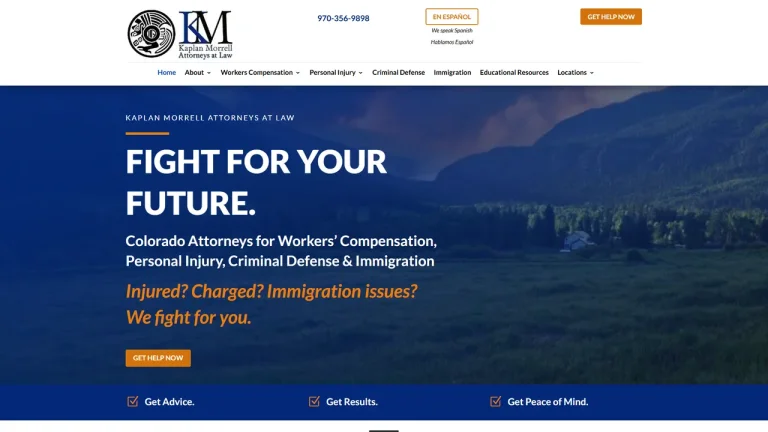
Kaplan Morrell Attorneys at Law - Denver, CO
Silvern & Bulger P.C. - Lakewood, CO
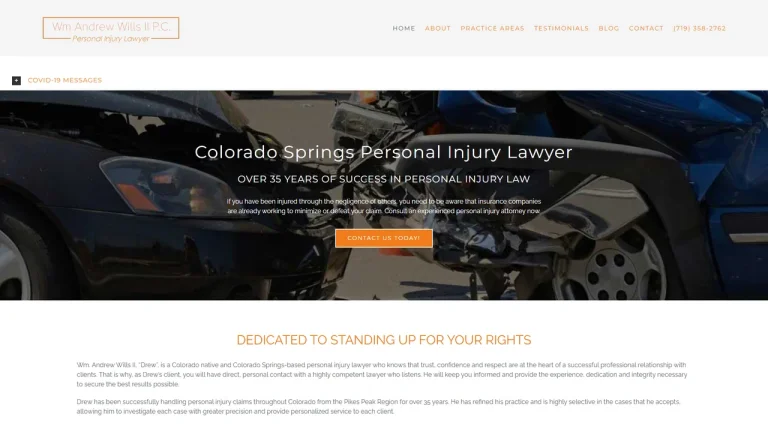
Wm. Andrew Wills II, P.C. - Colorado Springs, CO
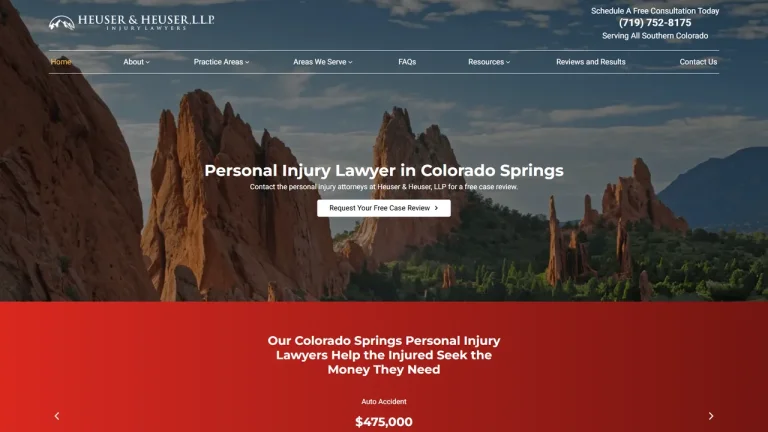
Heuser & Heuser LLP - Colorado Springs, CO
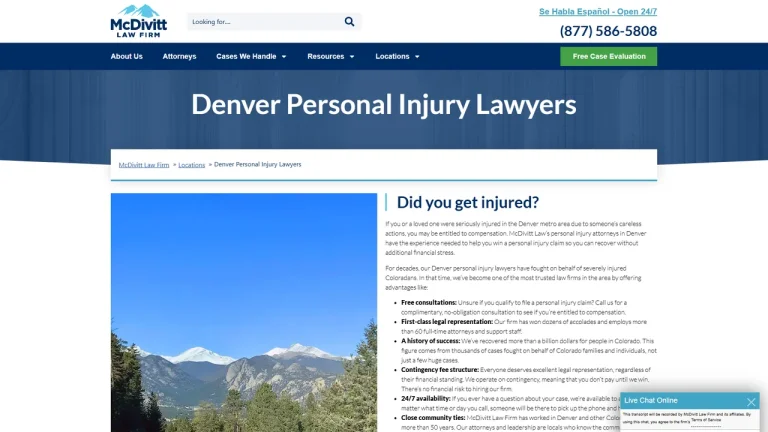
Navigating the Colorado Workers' Compensation System
Experiencing an on-the-job injury in Colorado initiates an administrative claims process governed by the Colorado Department of Labor and Employment (CDLE) through the Division of Workers' Compensation (DOWC). Unlike general personal injury claims litigated in state district courts, workplace injury disputes are adjudicated through administrative hearings conducted by the Colorado Office of Administrative Courts (OAC). The OAC holds formal proceedings primarily in Denver, Colorado Springs, and Grand Junction, serving injured workers across the Front Range, Northern Colorado, and the Western Slope.
Representation by a licensed Colorado attorney who is regulated by the Colorado Supreme Court Office of Attorney Regulation Counsel (OARC) ensures that statutory rights are preserved against workers' compensation insurance carriers. Legal counsel oversees physician designations from employer-provided lists, challenges premature discharges from medical care, and audits calculations for Temporary Total Disability (TTD) or Permanent Partial Disability (PPD) benefits. If a final administrative order requires appellate review, counsel prepares formal petitions before the Industrial Claim Appeals Office (ICAO) and the Colorado Court of Appeals.
Retaining local legal counsel early allows injured employees to resolve conflicts through structured mediation and pre-hearing settlement conferences. Strategic negotiation frequently overcomes improper benefit terminations and resolves disputed permanent impairment ratings before an administrative trial becomes necessary.
Colorado Workers' Compensation Attorney Fees & Case Estimates
| Case Scenario | Fee Structure | Estimated Cost (USD) | Key Cost Determinants |
|---|---|---|---|
| Routine Accepted Claim & Wage Audit | Contingency Fee (Statutory 20%) | $0 Out-of-Pocket (20% of Disputed Benefits) | Review of average weekly wage calculations, authorized medical treatment compliance, and undisputed temporary disability monitoring. |
| Contested Liability & Denied Claim Hearing | Contingency Fee (Statutory 20%) | $0 Out-of-Pocket (20% of Disputed Recovery) | Formal hearing before an OAC Administrative Law Judge, vocational witness testimony, medical deposition fees, and documentary proof of causation. |
| Division Independent Medical Examination (DIME) | Contingency Fee / Case Expense Advance | $0 Out-of-Pocket (Plus statutory DIME filing fees) | Challenging an authorized treating physician's impairment rating, striking physicians from the state panel, and overcoming the clear and convincing evidence standard. |
| Permanent Total Disability (PTD) / Full Settlement | Contingency Fee (Statutory 20%) | $0 Out-of-Pocket (20% of Lump Sum Award) | Lifetime wage loss projections, structured annuity negotiations, future medical allocation reserves, and formal approval by DOWC or an OAC judge. |
Critical Legal Deadlines & Statutes in Colorado
The Workers' Compensation Act of Colorado, codified under Colo. Rev. Stat. § 8-40-101, imposes strict procedural requirements on injured employees. Under Colo. Rev. Stat. § 8-43-102, an injured worker must notify their employer in writing within ten days of the occurrence of the injury. Failure to provide timely written notification can result in statutory monetary penalties, deducting one day's compensation for each day of unjustified delay.
To protect the right to ongoing benefits if an employer or carrier disputes coverage, the injured worker must file a formal Worker's Claim for Compensation with the DOWC within two years of the injury date pursuant to Colo. Rev. Stat. § 8-43-103. This limitation period may be extended to three years only if reasonable excuse for the delay is demonstrated to the satisfaction of the administrative law judge. Furthermore, when an insurer files a Final Admission of Liability (FAL) to conclude or restrict benefits, the worker has strictly thirty calendar days to file a formal objection and request a Division Independent Medical Examination (DIME) under Colo. Rev. Stat. § 8-43-203. Failing to object within this thirty-day window permanently closes the claim. All attorney fee agreements are strictly capped at twenty percent of the contested benefits secured, requiring administrative approval under Colo. Rev. Stat. § 8-43-403.
Small Claims Limitations vs. Administrative Legal Counsel
Under Colo. Rev. Stat. § 13-6-403, the jurisdiction of the Colorado Small Claims Division is capped at $7,500. However, small claims courts possess zero jurisdiction over work-related injury disputes due to the exclusive remedy doctrine set forth in Colo. Rev. Stat. § 8-41-102, which mandates that all employee claims against insured employers for work injuries must proceed exclusively through the DOWC and OAC.
While an unrepresented claimant may easily monitor uncontested medical checkups, navigating contested impairment ratings, medical utilization disputes, or vocational retraining independently carries substantial risk. Insurance carriers rely on experienced defense attorneys to limit payouts. Retaining a Colorado workers' compensation lawyer levels the playing field during mandatory DIME proceedings, discovery motions, and OAC evidentiary hearings, protecting the claimant's long-term financial security.
Red Flags & Precautions in Workers' Compensation Representation
- Attorneys demanding upfront retainers or hourly fees for standard workers' compensation claims, which violates Colorado statutory fee regulations capping legal compensation at twenty percent on a contingency basis.
- Practitioners failing to enforce the strict thirty-day objection window following the receipt of an insurer's Final Admission of Liability (FAL).
- Firms lacking active trial and hearing experience before Administrative Law Judges at the Colorado Office of Administrative Courts.
- Pressure to accept a premature settlement before reaching Maximum Medical Improvement (MMI) or before obtaining a comprehensive functional capacity evaluation.
Frequently Asked Questions
What is the time limit for reporting a work injury in Colorado?
Under Colo. Rev. Stat. § 8-43-102, you must report your workplace injury to your employer in writing within ten days of the incident to prevent statutory wage penalties.
How are workers' compensation lawyer fees regulated in Colorado?
Pursuant to Colo. Rev. Stat. § 8-43-403, attorney fees in Colorado workers' compensation cases are capped at 20% of the contested benefits secured on behalf of the injured worker.
Can I select my own treating physician after a workplace accident?
Under Colorado law, the employer or their workers' compensation insurance carrier provides a designated list of authorized medical providers from which the employee must choose their primary treating doctor.
What recourse do I have if I disagree with my assigned impairment rating?
You must file a notice of objection and application for a Division Independent Medical Examination (DIME) under Colo. Rev. Stat. § 8-43-203 within thirty calendar days of the insurer's Final Admission of Liability.
Where are Colorado workers' compensation hearings held?
Contested hearings are conducted by Administrative Law Judges at the Colorado Office of Administrative Courts, with primary hearing locations in Denver, Colorado Springs, and Grand Junction.