
Wrongful Death Lawyers in Colorado
Pursuing a wrongful death claim in Colorado provides essential financial protection for surviving family members following a fatal accident. Dedicated local attorneys manage complex statutory filing requirements, probate coordination, and insurance negotiations to secure fair restitution. Explore our directory below to schedule a case review with trusted local professionals.

Hutchinson Black & Cook, LLC - Boulder, CO

Smith & Weidinger, P.L.L.C. - Boulder, CO
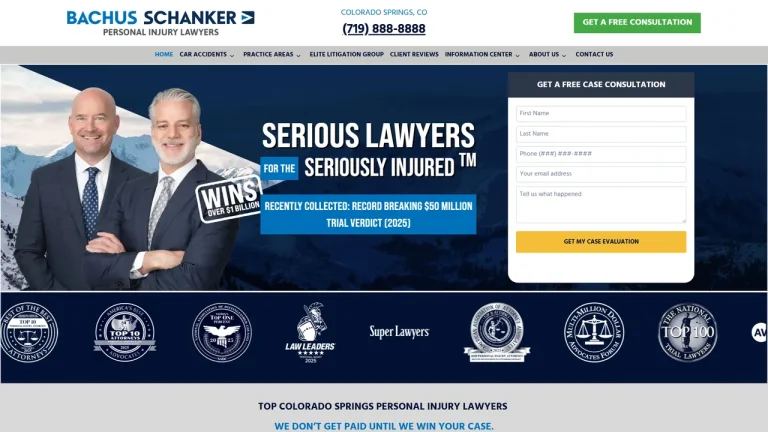
Bachus & Schanker - Colorado Springs, CO

David Westbrook Law Offices - Boulder, CO

Gaddis, Herd, Craw & Adams, P.C. - Colorado Springs, CO

McCormick Law Firm - Denver, CO

Purvis Thomson, LLP - Boulder, CO
Robert J Potrykus - Lakewood, CO

Fiedler Trial Lawyers - Denver, CO

Smith & Weidinger, P.L.L.C. - Fort Collins, CO

VanMeveren Law Group - Fort Collins, CO
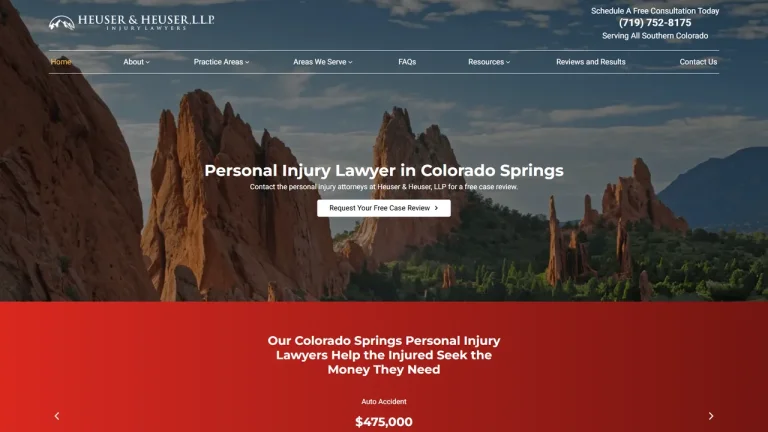
Heuser & Heuser LLP - Colorado Springs, CO
Frank Azar Car & Truck Accident Lawyers - Greeley, Colorado

Frank Azar Car & Truck Accident Lawyers - Aurora, CO
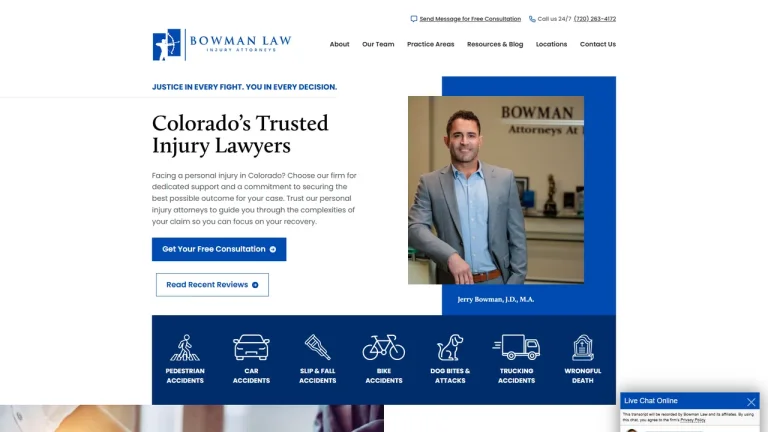
Bowman Law, LLC - Denver, CO
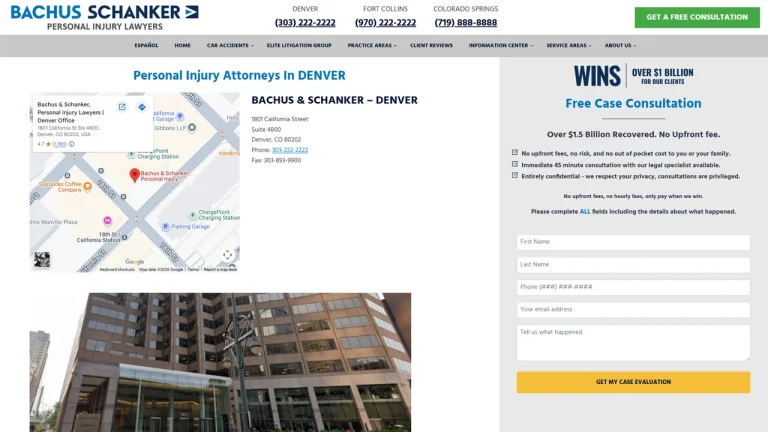
Bachus & Schanker - Denver, CO
Gradisar Trechter Ripperger & Roth - Pueblo, CO

Jeffress Law, PC - Boulder, CO

The Law Offices of Mitchel S. Drantch - Lakewood, CO

Brad Freedberg Attorney at Law - Denver, CO

The Longo Firm, LLC - Colorado Springs, CO
The Law Office of Adam J. Schultz LLC - Pueblo, CO
Tenge Law Firm - Fort Collins, CO
The Framework of Colorado Wrongful Death Jurisprudence
Filing a wrongful death action in Colorado involves distinct statutory mechanisms created to compensate surviving family members for catastrophic losses caused by negligence, recklessness, or intentional acts. Wrongful death civil claims are filed across Colorado District Courts, such as the 2nd Judicial District in Denver, the 4th Judicial District serving El Paso and Teller counties, the 18th Judicial District in Arapahoe and Douglas counties, and the 1st Judicial District in Jefferson County. In matters involving diversity of citizenship or federal questions, litigation proceeds through the U.S. District Court for the District of Colorado in Denver.
Civil litigation in fatal accident matters is governed by the Colorado Supreme Court Office of Attorney Regulation Counsel (OARC) professional conduct rules and local court directives. Qualified trial lawyers coordinate the appointment of a personal representative in county probate court, preserve electronic and physical evidence, reconstruct vehicular or industrial fatalities, and direct comprehensive financial life-care analysis to capture projected lifetime earnings.
Before entering trial, skilled wrongful death attorneys resolve substantial disputes through settlement negotiations and alternative dispute resolution. Engaging experienced litigators allows families to pursue appropriate policy limit settlements from commercial carriers while honoring statutory apportionment mandates among eligible heirs.
Colorado Wrongful Death Legal Fees & Litigation Scenarios
| Case Scenario | Fee Structure | Estimated Cost (USD) | Key Cost Determinants |
|---|---|---|---|
| Motor Vehicle Fatality (Commercial or Auto Policy) | Contingency Fee | 33.3% - 40% of Gross Recovery | Accident reconstruction reports, commercial fleet insurance policy limits, toxicology evidence, and witness deposition costs. |
| Premises Liability or Industrial Accident Fatality | Contingency Fee | 33.3% - 40% of Gross Recovery | Proof of property control under state premises liability standards, OSHA investigation reports, and third-party contractor liability. |
| Medical Malpractice Resulting in Fatal Complications | Contingency Fee | 33.3% - 40% of Gross Recovery | Colorado statutory certificate of review compliance, medical expert review panels, hospital protocol analysis, and statutory damages cap litigation. |
| Coordinated Survival Action & Probate Administration | Blended Contingency / Estate Hourly | 33.3% - 40% (Estate hourly $250 - $450/hr) | Establishing estate administration, recovering pre-death medical expenses and lost wages, and multi-party heir distribution agreements. |
Critical Legal Deadlines & Statutes in Colorado
Wrongful death actions are strictly structured by the Colorado Wrongful Death Act under Colo. Rev. Stat. § 13-21-201 and Colo. Rev. Stat. § 13-21-202. The law establishes a distinct two-year priority system specifying which parties may initiate litigation. During the first year following the date of death, the action may be brought exclusively by the surviving spouse, unless the spouse grants written permission allowing surviving children to join or file the action. In the second year, the surviving spouse, surviving children, or both jointly may bring the claim. If the decedent was an unmarried minor or adult without a surviving spouse or children, the surviving parents maintain the right to file.
The statute of limitations for general wrongful death claims in Colorado is two years from the date of death pursuant to Colo. Rev. Stat. § 13-80-102. However, if the death arose from an incident involving the operation of a motor vehicle, the statute of limitations is extended to three years under Colo. Rev. Stat. § 13-80-101. In tandem with wrongful death, an estate representative may bring a survival claim under Colo. Rev. Stat. § 13-20-101 to recover actual expenses incurred prior to death. Furthermore, noneconomic damages are restricted by statutory caps under Colo. Rev. Stat. § 13-21-203, unless the death resulted from an intentional felonious killing.
Small Claims Inapplicability vs. District Court Representation
The Colorado Small Claims Division, governed by Colo. Rev. Stat. § 13-6-403, restricts monetary claims to a maximum limit of $7,500. Small claims courts cannot evaluate complex multi-million dollar economic losses, appoint personal representatives, or try wrongful death lawsuits.
Fatal negligence claims require litigation in Colorado District Courts, demanding formal discovery, accident reconstruction experts, and complex financial analysis. Insurance carriers employ dedicated defense counsel to minimize payout liability or raise comparative fault defenses. Retaining experienced wrongful death attorneys ensures proper filing, rigorous preservation of evidence, and adherence to statutory heir apportionment rules.
Red Flags & Precautions in Fatal Injury Legal Representation
- Direct, unsolicited communication from legal representatives immediately following a catastrophic incident, which violates ethical rules enforced by the Colorado Bar.
- Attorneys unfamiliar with Colorado's rigid two-year statutory priority framework between surviving spouses and eligible heirs.
- Firms lacking the financial capital and resources necessary to advance substantial expert witness, forensic accounting, and accident investigation costs.
- Guarantees regarding financial recovery values before completing a thorough liability review and analyzing statutory damages caps.
Frequently Asked Questions
Who is legally allowed to file a wrongful death lawsuit during the first year in Colorado?
Under Colo. Rev. Stat. § 13-21-201, only the surviving spouse has the legal right to file during the first year, unless they grant written permission joining the surviving children.
What is the Colorado statute of limitations for a fatal car accident?
Under Colo. Rev. Stat. § 13-80-101, wrongful death claims arising from the operation of a motor vehicle carry a three-year statute of limitations from the date of the incident.
Are noneconomic damages capped in Colorado wrongful death cases?
Yes, noneconomic damages such as grief and sorrow are subject to statutory limits under Colo. Rev. Stat. § 13-21-203, though these caps do not apply in cases of felonious killings.
What is the difference between a wrongful death action and a survival action in Colorado?
A wrongful death action compensates surviving family members for their personal losses, while a survival action under Colo. Rev. Stat. § 13-20-101 recovers medical expenses and lost wages incurred by the decedent prior to death.
Can parents file a wrongful death lawsuit in Colorado?
Surviving parents may file a wrongful death lawsuit under Colorado law only if the deceased person was unmarried and left no surviving children.