
Accident & Injury Lawyers in Connecticut
Securing fair financial recovery after an accident in Connecticut requires seasoned legal counsel familiar with state negligence statutes and court procedures. A dedicated Connecticut injury attorney investigates liable parties, manages insurance negotiations, and advocates for your rights. Browse our directory below to connect with qualified legal professionals near you.

Law Offices of Leonard M. Crone - Waterbury, CT
Law Offices of Andrew J. Cates, LLC - Hartford, CT
Gerace & Associates - Hartford, CT

Gould Injury Lawyers - Waterbury, CT
Sexton and Sexton LLC - Hartford, CT

Rubenstein Sendy LLC - Hartford, CT

Vincent Noce Jr. Law - Bridgeport, CT
Matthew J Broder - Bridgeport, CT
Abate & Abate, LLC - Attorneys at Law - Stamford, CT
Gouveia Bill L - Bridgeport, CT

Black's Law Group, PLLC - Danbury, CT
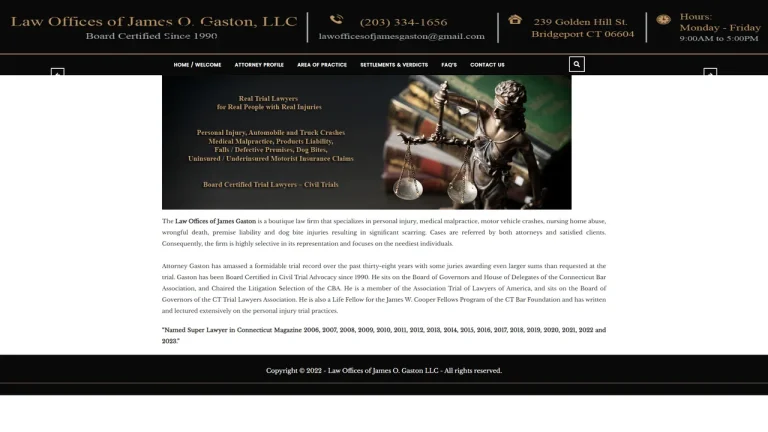
James O Gaston Law Offices - Bridgeport, CT
Berman Mickelson Dembo & Jacobs LLC - Hartford, CT
Ment Law Group - Hartford, CT

Brown Paindiris & Scott, LLP - Hartford, CT

McDowell Law Firm - Hartford, CT

Law Offices of James A. Welcome - Bridgeport, CT

The Haymond Law Firm - Car & Motorcycle Accident Attorneys - Hartford, CT

Law Offices of Stephen J. Carriero, LLC - Stamford, CT
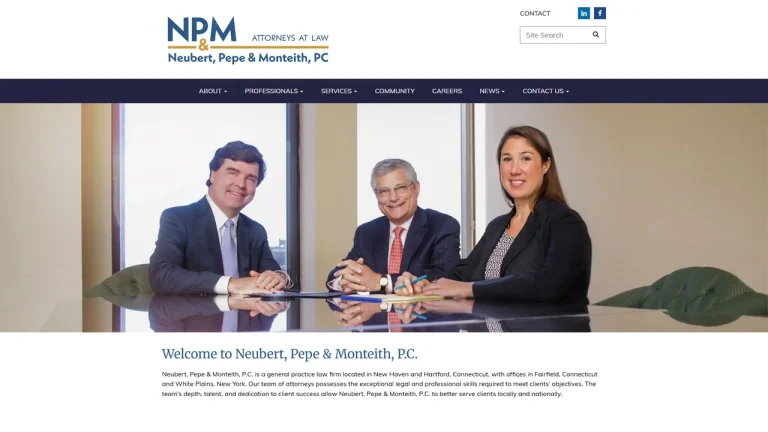
Neubert, Pepe & Monteith, P.C. - Hartford, CT
Mark D. Phillips, Attorney at Law - Stamford, CT
CT Dog Bite Lawyer - Hartford, CT

Halloran Sage LLP - Hartford, CT
Connecticut Personal Injury Jurisdictions and Tort Principles
Recovering damages for accidental injuries in Connecticut requires a clear understanding of the state's judicial system and negligence doctrines. Civil injury litigation is organized across regional Judicial Districts within the Connecticut Superior Court system, including major courthouses in Hartford, New Haven, Fairfield at Bridgeport, Stamford-Norwalk, and Waterbury. Whether resolving an auto collision along the Interstate 95 corridor, a commercial vehicle wreck on Interstate 84, or a hazardous premises incident in Danbury, injury claims must follow the local court management protocols established by the Connecticut Judicial Branch.
Connecticut civil litigation features early case management conferences and structured pre-trial resolution mechanisms. Superior Court judges frequently refer contested personal injury matters to Attorney Trial Referees (ATRs) or private mediation to encourage out-of-court settlements before trial dates are scheduled. Having an attorney admitted by the Connecticut Bar Examining Committee and regulated by the Statewide Grievance Committee ensures that procedural discovery rules and court filing deadlines are rigorously satisfied.
Personal injury recovery in Connecticut also requires addressing medical provider encumbrances and statutory health insurance subrogation rights. Under Conn. Gen. Stat. § 49-73, hospitals maintain statutory liens on personal injury settlements and verdicts for unpaid emergency care. Experienced Connecticut accident attorneys calculate these liens and negotiate directly with medical lienholders to ensure the injured party retains a meaningful portion of their financial recovery.
Connecticut Personal Injury Legal Representation Fee Guide
| Case Scenario | Fee Structure | Estimated Cost (USD) | Key Cost Determinants |
|---|---|---|---|
| Uncontested Motor Vehicle Insurance Settlement | Contingency Fee (Statutory Cap) | $0 Upfront ($10,000 - $60,000 Recovery) | Clear liability, available auto insurance policy limits, and documented medical treatment. |
| Contested Premises Liability & Slip-and-Fall | Contingency Fee (Statutory Cap) | $0 Upfront ($40,000 - $250,000 Recovery) | Proving property owner notice of defect, surveillance preservation, and injury permanence. |
| Catastrophic Commercial Trucking Litigation | Tiered Contingency (Statutory Scale) | $0 Upfront ($250,000 - $2,000,000+ Recovery) | Federal motor carrier safety violations, multi-layer commercial coverage, and life care plans. |
| Pre-Trial Discovery & Deposition Expenses | Advanced Case Costs | $1,500 - $15,000 (Reimbursed from Recovery) | Court reporter transcript fees, treating physician narrative reports, and filing charges. |
Critical Legal Deadlines & Statutes in Connecticut
Timely action is critical under Connecticut law to avoid forfeiture of your personal injury claim. Pursuant to Conn. Gen. Stat. § 52-584, actions for personal injuries caused by negligence or reckless misconduct must be brought within two years from the date the injury was sustained or discovered. For fatal incidents, Conn. Gen. Stat. § 52-555 establishes a two-year statute of limitations from the date of death for wrongful death actions.
Connecticut follows a modified comparative negligence system under Conn. Gen. Stat. § 52-572h. An injured person can recover damages only if their proportionate negligence is not greater than the combined negligence of the defendants (the 51 percent bar). If the claimant's negligence is 51 percent or more, recovery is barred; if 50 percent or less, damages are reduced proportionally. Additionally, if an injury involves a defective municipal road or sidewalk, Conn. Gen. Stat. § 13a-149 mandates serving formal written notice of the claim to the municipal clerk within 90 days of the occurrence.
Small Claims Limits vs. Superior Court Litigation in Connecticut
Under Conn. Gen. Stat. § 51-15, the Connecticut Superior Court Small Claims Session is limited to civil disputes where the monetary demand does not exceed $5,000. Small claims proceedings offer informal dispute resolution without formal pleadings, but they are inadequate for personal injury claims involving medical treatments, diagnostic testing, or lost wages that easily exceed the $5,000 cap.
Accident claims involving bodily injury belong in the Civil Division of the Connecticut Superior Court. Insurance carriers routinely assign experienced trial defense lawyers to mitigate liability. Attempting to negotiate with insurance adjusters pro se frequently results in discounted payouts or compromised legal rights. Retaining legal counsel ensures compliance with the Connecticut Practice Book and provides access to formal discovery tools, including written interrogatories and subpoena powers.
Red Flags When Selecting a Connecticut Injury Attorney
- Direct In-Person or Unsolicited Digital Solicitation: The Connecticut Rules of Professional Conduct prohibit lawyers from directly soliciting accident victims in hospitals or via targeted high-pressure communications immediately following an accident.
- Guaranteed Settlement Amounts: Ethical lawyers will not promise specific settlement figures prior to reviewing all medical records, diagnostic imaging, and insurance coverage limits.
- Demanding Upfront Hourly Fees for Personal Injury Matters: Standard personal injury representation in Connecticut is conducted on a contingency basis, governed by fee limitations under Conn. Gen. Stat. § 52-512c.
- Inability to Demonstrate Trial Experience in Local Judicial Districts: Insurance companies track which attorneys settle quickly and which take cases to a verdict; select counsel with experience trying cases in the relevant Superior Court district.
Frequently Asked Questions
How does the 51 percent comparative fault rule work in Connecticut?
Under Connecticut law, you can recover damages as long as you are 50 percent or less at fault for the accident. If you are determined to be 51 percent or more responsible, you are barred from receiving any compensation.
What is the deadline to file a claim against a Connecticut town for a defective sidewalk?
Under Connecticut's municipal highway defect statute, you must deliver formal written notice to the municipal clerk within 90 days of the injury, specifying the time, place, cause, and nature of the incident.
Are contingency fees capped by law in Connecticut personal injury cases?
Yes. Connecticut law limits contingency fees using a sliding scale, starting at 33.3 percent of the first $300,000 recovered, unless the client signs an informed statutory fee agreement waiver.
Can a hospital place a lien on my personal injury settlement in Connecticut?
Yes. Under Connecticut statutory law, licensed hospitals can file medical liens on personal injury settlements and judgments to recover the reasonable cost of emergency medical care provided to the injured person.
Will my personal injury case have to go to a full courtroom trial?
The majority of Connecticut personal injury claims resolve through structured negotiations, judicial pre-trials, or private mediation before reaching a courtroom jury trial.