
Financial & IP Lawyers in Connecticut
Connect with top Connecticut financial and IP lawyers to protect your intellectual property, corporate assets, and commercial transactions statewide. Seasoned attorneys structure sophisticated financial transactions, patent portfolios, and trademark filings while resolving disputes efficiently. Explore our comprehensive directory below to schedule an initial consultation with a trusted Connecticut attorney.

Mc Cormack & Mc Cormack - Waterbury, CT

Cohen and Wolf, P.C. - Danbury, CT
Day Pitney LLP - Stamford, CT

Kons Law - Hartford, CT

Law Offices of Richard Salvaggio - Bridgeport, CT
JT Hoffman, Attorneys at Law - Stamford, CT

Greater Hartford Legal Aid - Hartford, CT

Matthew P Vaccarelli Law Office, LLC - Waterbury, CT

Kennedy IP - Hartford, CT

The Law Office of Russell Gary Small, P.C. - Bridgeport, CT

Ohlandt Greeley & Perle, LLP - Stamford, CT
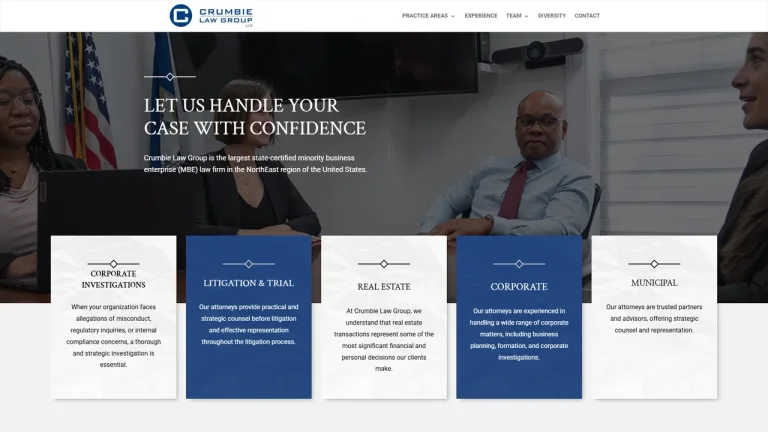
Crumbie Law Group, LLC - Hartford, CT

Ford & Paulekas, LLP - Hartford, CT

The Law Offices of Neil Crane LLC - Waterbury, CT
Romanello Law Firm - Danbury, CT
Rubin & Jacobson, LLC - Stamford, CT
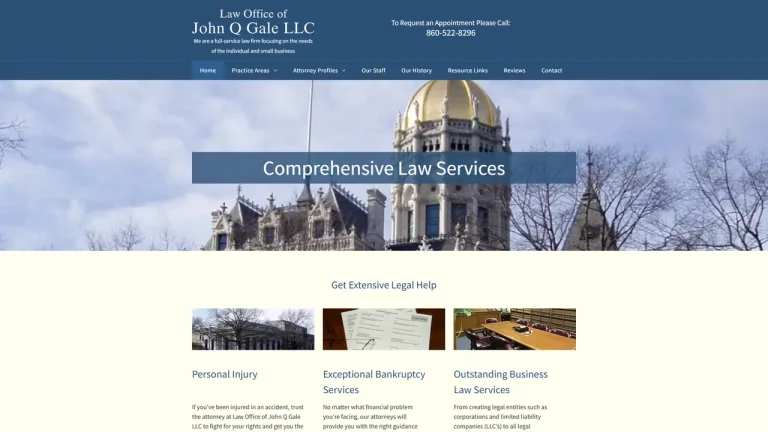
Law Office of John Q Gale LLC - Hartford, CT
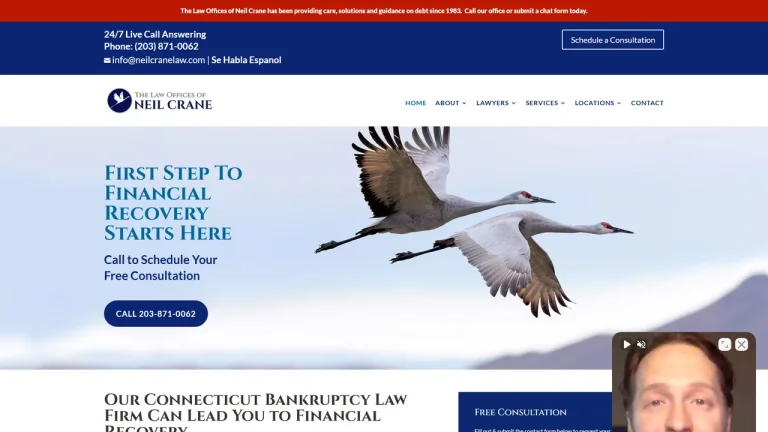
The Law Offices of Neil Crane LLC - Bridgeport, CT

Zeisler & Zeisler PC - Bridgeport, CT
Law Offices of Neil Crane, LLC - Hartford, CT

Willcutts & Habib LLC - Hartford, CT
Lisa Gustafson, Bankruptcy Attorney - Norwalk, CT
The Law Offices of Raymond J. Antonacci, LLC - Waterbury, CT
Protecting Financial Assets and Intellectual Property in Connecticut
Connecticut serves as a premier commercial center for investment management, insurance headquarters, bioscience research, and advanced manufacturing. Businesses operating across Fairfield County's hedge fund corridor in Greenwich and Stamford, insurance enterprises in Hartford, and biotech innovators in New Haven require robust financial restructuring and intellectual property safeguards.
Corporate financial litigation and commercial disputes are adjudicated in the Connecticut Superior Court Complex Litigation Dockets (CLD) in Stamford, Hartford, or Waterbury. Federal patent and trademark litigation, trade secret misappropriation, and securities enforcement proceed before the United States District Court for the District of Connecticut or the United States Bankruptcy Court for the District of Connecticut in Hartford, New Haven, and Bridgeport.
Engaging an attorney licensed by the Connecticut Judicial Branch and admitted to practice before the United States Patent and Trademark Office (USPTO) provides vital strategic protection. Counsel guides organizations through securities compliance, trade secret safeguarding, patent prosecution, and complex commercial breach of contract actions.
Fee Structures for Connecticut Financial and IP Legal Counsel
| Case Scenario | Fee Structure | Estimated Cost (USD) | Key Cost Determinants |
|---|---|---|---|
| USPTO Trademark Registration & Clearance Search | Flat Fee Per Class | $1,200 - $3,000 | Number of international classes, search breadth, likelihood of confusion assessment |
| Patent Application Drafting (Utility / Provisional) | Flat Fee or Staged Retainer | $6,000 - $14,000 | Technical complexity, prior art volume, drafting of comprehensive patent claims |
| CUTSA Trade Secret Misappropriation Litigation | Hourly Billing Retainer | $450 - $850 per hour | Preliminary injunction motions, forensic digital analysis, trade secret specificity |
| Corporate Financing & Venture Capital Structuring | Hourly or Fixed Transactional Fee | $5,000 - $20,000 | Deal size, regulatory securities filings (SEC Regulation D), debt-equity structuring |
Critical Deadlines & Statutory Protections in Connecticut
Enforcing proprietary commercial rights and corporate agreements requires adherence to strict statutory timelines. Under the Connecticut Uniform Trade Secrets Act (CUTSA), codified at Conn. Gen. Stat. § 35-56, an action for trade secret misappropriation must be initiated within three years after the misappropriation is discovered or should have been discovered through reasonable diligence.
Commercial disputes involving unfair trade practices are governed by the Connecticut Unfair Trade Practices Act (CUTPA), codified at Conn. Gen. Stat. § 42-110g, which enforces an absolute three-year statute of limitations from the date of the violation. For contract disputes, breach of an oral agreement carries a three-year limitations period under Conn. Gen. Stat. § 52-581, while written commercial contracts are governed by a six-year limitations period under Conn. Gen. Stat. § 52-576.
Federal intellectual property litigation follows dedicated statutory limits. Patent infringement damages are limited to acts occurring within six years prior to filing under 35 U.S. Code § 286. Civil copyright infringement claims must be commenced within three years of accrual pursuant to 17 U.S. Code § 507. For federal trademark claims under the Lanham Act, codified at 15 U.S. Code § 1117, courts apply equitable laches guided by analogous state limitations periods.
Small Claims Court vs. Complex Commercial & IP Counsel
Under Conn. Gen. Stat. § 51-15, the jurisdiction of the Small Claims Session of the Connecticut Superior Court is strictly restricted to monetary claims of $5,000 or less. Small claims sessions provide no mechanism for equitable relief, intellectual property assignment, or injunctive orders.
Financial restructuring, commercial lending disputes, patent litigation, and trade secret actions routinely involve millions of dollars in asset valuations and high-stakes market exclusivity. Federal patent and trademark infringement actions reside in exclusive federal jurisdiction under 28 U.S. Code § 1338, completely outside state small claims authority. Retaining sophisticated commercial and IP counsel to litigate in the Connecticut Superior Court Complex Litigation Docket or federal district court ensures asset protection via emergency preliminary injunctions and comprehensive discovery.
Red Flags When Hiring a Financial and IP Attorney
- Non-registered practitioners offering patent prosecution services who are not licensed patent attorneys or agents admitted before the USPTO.
- Attorneys offering generic contract templates that fail to incorporate mandatory Connecticut-specific non-disclosure and trade secret protections under CUTSA.
- Firms lacking experience in the Connecticut Superior Court Complex Litigation Docket (CLD) or federal courts for high-stakes business valuation disputes.
- Unclear fee structures for patent maintenance fees, trademark renewals, or expert accounting witnesses in financial breach of contract litigation.
Frequently Asked Questions
What constitutes a protectable trade secret under Connecticut law?
Under Conn. Gen. Stat. § 35-51, a trade secret includes formulas, patterns, compilations, programs, devices, methods, techniques, or processes that derive independent economic value from not being generally known and are subject to reasonable efforts to maintain secrecy.
Can I recover punitive damages for unfair trade practices in Connecticut?
Yes. Under the Connecticut Unfair Trade Practices Act (Conn. Gen. Stat. § 42-110g), courts may award punitive damages and reasonable attorney fees in addition to actual damages if the defendant engaged in reckless indifference, intentional misconduct, or deceptive business practices.
What is the difference between a patent and a trademark?
A patent protects new, non-obvious technical inventions, designs, and mechanical processes, giving the owner the exclusive right to make, use, or sell the invention. A trademark protects brand identifiers, such as logos, names, slogans, and trade dress that distinguish goods or services in the marketplace.
Which Connecticut court handles complex corporate finance disputes?
High-stakes commercial and corporate financial litigation in Connecticut is typically referred to the Complex Litigation Docket (CLD) of the Connecticut Superior Court, with sessions located in Stamford, Hartford, and Waterbury, designed to handle multi-party, high-value corporate disputes.
Can non-disclosure agreements be enforced in Connecticut?
Yes. Non-disclosure agreements (NDAs) protecting trade secrets and proprietary financial data are enforceable in Connecticut courts, provided they protect legitimate business interests, are clearly defined, and do not violate statutory public policy restrictions.