
Car Accident Lawyers in Hartford
Securing fair compensation after a motor vehicle collision in Hartford requires aggressive advocacy against stubborn insurance carriers under Connecticut law. An experienced local car accident lawyer can substantiate liability, document catastrophic damages, and negotiate favorable settlements before trial. Explore our verified directory below to consult with top-rated Hartford injury attorneys.
Appleton & Appleton LLC - Hartford, CT

The Haymond Law Firm - Car & Motorcycle Accident Attorneys - Hartford, CT
Jonathan Perkins Injury Lawyers - Hartford, CT
Spinella & Associates PC - Hartford, CT

Butler Norris & Gold - Hartford, CT
Chaffin Luhana LLP Injury Lawyers - Hartford, CT

The Law Office of Ken Namnoum - Hartford, CT
Berman Mickelson Dembo & Jacobs LLC - Hartford, CT
Law Offices of Mark E. Salomone & Morelli - Hartford, CT
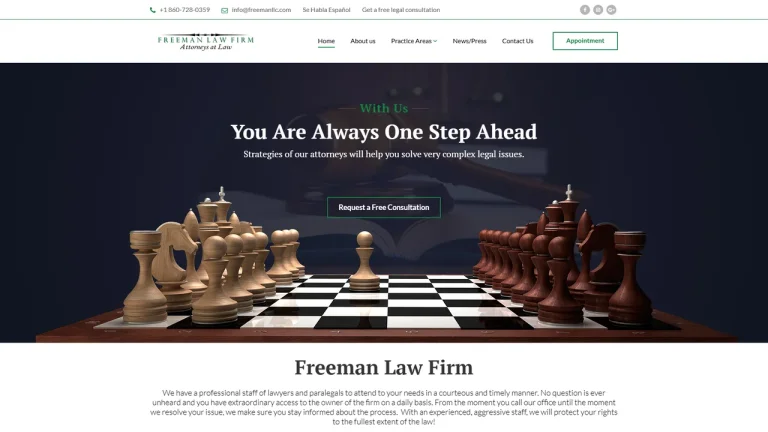
Freeman Law Firm, LLC - Hartford, CT
Polinsky Law Group, LLC - Hartford, CT
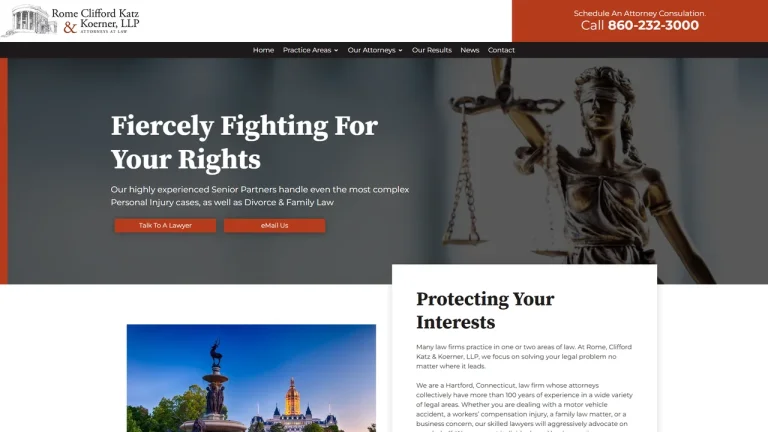
Rome Clifford Katz & Koerner LLP - Hartford, CT

The Doctor Lawyer Team - Hartford, CT
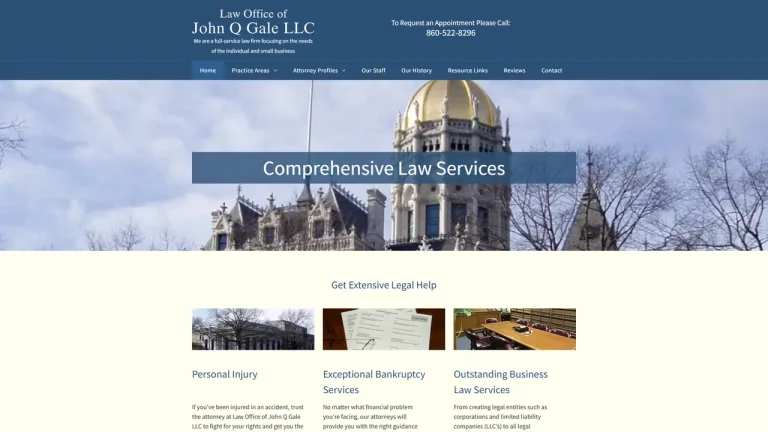
Law Office of John Q Gale LLC - Hartford, CT
Attorney Eric W. Schoenberg - Hartford, CT

Gould Injury Lawyers - Hartford, CT

Rubenstein Sendy LLC - Hartford, CT
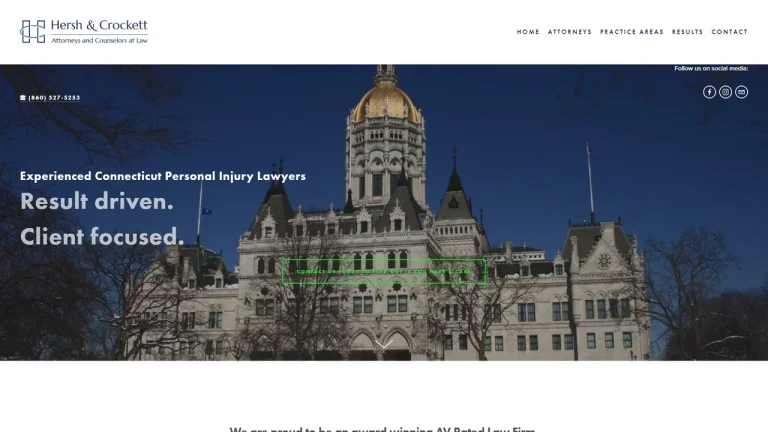
Hersh & Crockett - Hartford, CT

Lynch, Traub, Keefe, & Errante, P.C. - Hartford, CT
McDowell Law Firm - Hartford, CT

Melick & Porter, LLP - Hartford, CT

Buckley Wynne & Parese - Hartford, CT

Brignole, Bush & Lewis - Hartford, CT
Silver Golub & Teitell LLP - Hartford, CT
Navigating Car Accident Litigation in Hartford County
Motor vehicle collisions throughout Hartford County present complicated legal and medical challenges. Hartford serves as the major transit junction of central Connecticut, where heavily traveled expressways such as Interstate 84, Interstate 91, and Route 2 intersect. Congestion across the Bulkeley Bridge, Founders Bridge, and the elevated Hartford Viaduct frequently leads to severe multi-car pileups, rear-end collisions, and high-speed lane-change crashes.
When an automobile collision results in severe physical injuries or substantial economic loss, personal injury lawsuits are adjudicated in the Hartford Judicial District at the Hartford Superior Court, located at 95 Washington Street. This courthouse maintains jurisdiction over civil litigation originating across Hartford as well as surrounding communities such as West Hartford, East Hartford, Manchester, Glastonbury, Wethersfield, Windsor, and Bloomfield. Local judges expect strict compliance with Connecticut civil procedure and evidentiary rules.
Hiring an experienced Hartford car accident attorney immediately levels the playing field against insurance defense teams. Local counsel acts swiftly to obtain crash incident reports from the Hartford Police Department or Connecticut State Police Troop H, subpoena red-light camera and business surveillance footage, and interview eyewitnesses before critical evidence disappears.
Typical Fee Structures and Car Accident Claim Values in Hartford
Personal injury lawyers handling automobile crash claims in Hartford operate on a contingency fee model, meaning clients pay no upfront legal fees unless money is successfully recovered.
| Case Scenario | Fee Structure | Estimated Cost (USD) | Key Cost Determinants |
|---|---|---|---|
| Moderate Soft-Tissue Whiplash Claim | Contingency Fee (No Upfront Cost) | 33.33% of gross recovery | Duration of physical therapy, chiropractic treatments, policy limits under state minimums |
| Severe Fractures and Surgical Intervention | Contingency Fee (No Upfront Cost) | 33.33% - 40% (if formal suit filed) | Hartford Hospital inpatient care, surgical hardware, permanent functional impairment ratings |
| Uninsured / Underinsured Motorist (UIM) Dispute | Contingency Fee (No Upfront Cost) | 33.33% of recovered amount | Exhaustion of primary policy, interpretation of policy language, binding arbitration hearings |
| Catastrophic Injury / Traumatic Brain Injury | Sliding Scale Contingency | Statutory rates under state law | Accident reconstruction expert costs, life care planner reports, vocational wage loss projections |
Critical Legal Deadlines & Statutes in Connecticut
Connecticut enforces a rigid deadline for pursuing civil remedies after a collision. Under Conn. Gen. Stat. § 52-584, injured victims have exactly two years from the date of the motor vehicle accident to file a personal injury lawsuit in the Superior Court. If this statutory deadline lapses, the court will dismiss your case with prejudice, extinguishing your legal right to compensation permanently.
In wrongful death actions arising from fatal collisions, the claim must be filed within two years of the date of death pursuant to Conn. Gen. Stat. § 52-555, with an absolute repose limit of five years from the underlying negligent act. Furthermore, Connecticut adheres to a modified comparative negligence rule codified in Conn. Gen. Stat. § 52-572h. Under this 51% bar rule, an injured driver can recover damages only if their fault does not exceed 50%. If a Hartford jury finds you 51% or more responsible for the collision, you receive nothing.
Legal fees in personal injury matters are subject to statutory oversight under Conn. Gen. Stat. § 52-251c, which provides a sliding contingency scale to ensure client recovery is protected unless an informed written waiver is executed.
Small Claims Court Limitations vs. Retaining Legal Counsel
The Small Claims session of the Hartford Superior Court handles disputes capped strictly at $5,000 under Conn. Gen. Stat. § 51-15. Small claims court provides a streamlined avenue for recovering minor vehicular property damage or towing bills when no physical bodily injury is involved.
However, when an accident results in spinal injuries, torn ligaments, or concussions requiring treatment at Saint Francis Hospital or Hartford Hospital, medical costs rapidly exceed the small claims cap. Insurance adjusters routinely attempt to resolve claims quickly with unrepresented claimants by offering small settlement checks before the full extent of injury is discovered. Retaining dedicated counsel ensures hospital statutory liens are negotiated and all economic damages-including lost wages, future rehabilitation, and physical pain-are aggressively pursued.
Red Flags When Hiring a Hartford Car Accident Lawyer
- Unsolicited direct solicitation: Avoid individuals or agencies who contact you uninvited in hospital waiting rooms, by text, or at home immediately following an accident, as direct solicitation violates legal ethics rules.
- Unconditional settlement guarantees: Beware of attorneys who promise specific financial recoveries before acquiring your medical records, diagnostic imaging, and insurance coverage declarations.
- Communication hand-offs: Steer clear of law firms where you never meet your licensed attorney and all correspondence is delegated indefinitely to paralegals or remote case managers.
- Upfront retainer fee requests: Reputable auto accident lawyers handle personal injury claims strictly on a contingency fee basis and should not demand upfront legal fees to start your representation.
Frequently Asked Questions
What is Connecticut's comparative negligence law in car accidents?
Under Conn. Gen. Stat. § 52-572h, Connecticut applies a modified comparative fault rule. You can recover damages as long as you are 50% or less at fault, but your total payout is reduced by your fault percentage. If you are found 51% or more at fault, you cannot recover any compensation.
What are the minimum auto insurance requirements in Connecticut?
Pursuant to Conn. Gen. Stat. § 14-112, Connecticut drivers must maintain minimum liability coverage of $25,000 for bodily injury per person, $50,000 for bodily injury per accident, and $25,000 for property damage.
Where are car accident lawsuits filed in Hartford?
Car accident lawsuits for collisions occurring in Hartford and surrounding towns are filed in the Civil Division of the Hartford Superior Court, located at 95 Washington Street in downtown Hartford.
What happens if the at-fault driver has no auto insurance?
Under Conn. Gen. Stat. § 38a-336, Connecticut requires all motor vehicle liability policies to include uninsured and underinsured motorist (UM/UIM) coverage, allowing you to seek compensation directly from your own insurance policy.
How long do I have to file a car accident lawsuit in Connecticut?
Under Conn. Gen. Stat. § 52-584, you have two years from the date of the crash to commence a personal injury action in court. Failure to file before this deadline forfeits your legal claim.