
Child Support Lawyers in Hartford
Resolve financial obligations with skilled child support lawyers in Hartford, CT. Local attorneys navigate state support guidelines and protect your finances under Connecticut law. Experienced counsel frequently settles support calculations and arrearages through out-of-court negotiation and mediation, avoiding enforcement penalties. Browse our verified Hartford directory to schedule a confidential case evaluation.

Mancini & Associates, LLC - Hartford, CT

Gerace & Associates - Hartford, CT

Dumont Law LLC - Hartford, CT

Rome Clifford Katz & Koerner LLP - Hartford, CT

Cordell & Cordell - Hartford, CT

Sexton and Sexton LLC - Hartford, CT

Klemonski & Rose Law Offices - Hartford, CT

Meghan Freed - Hartford, CT

Hume Law Firm LLC - Hartford, CT

Budlong & Scelfo, LLC - Hartford, CT

Freed Marcroft LLC - Hartford, CT
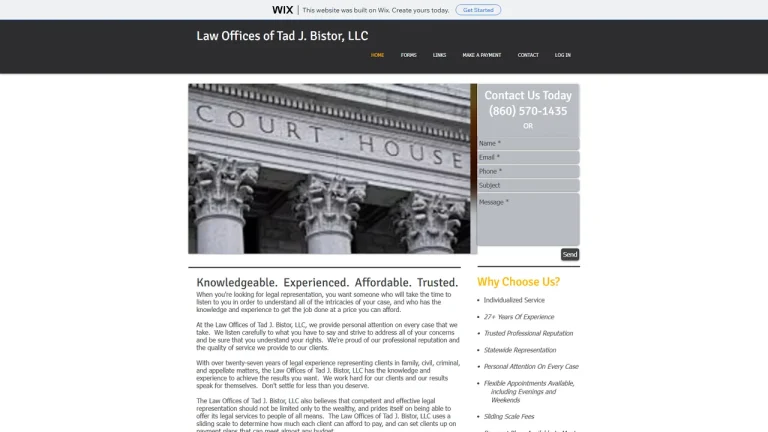
Law Offices Of Tad J. Bistor, LLC - Hartford, CT

Greater Hartford Legal Aid - Hartford, CT

Dorman Law Firm LLC - Hartford, CT

Ollennu & Associates, LLC - Hartford, CT

Szilagyi & Daly - Hartford, CT
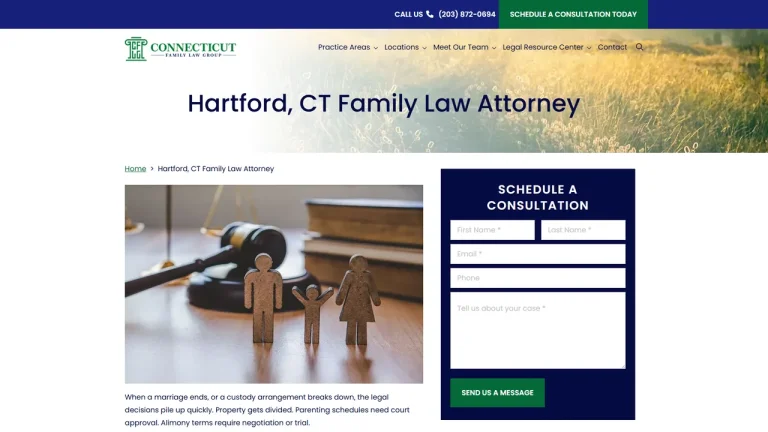
McConnell Family Law Group - Hartford, CT

Louden, Katz, McGrath & Bryan, LLC - Hartford, CT

Mester Law Group, LLC - Hartford, CT

The O'Neil Law Firm, P.C. - Hartford, CT

Killian & Donohue LLC - Hartford, CT

Brown Paindiris & Scott, LLP - Hartford, CT

Butler Norris & Gold - Hartford, CT

The Children's Law Center of Connecticut, Inc. - Hartford, CT
Navigating Child Support Calculations & Enforcement in Hartford
Establishing, modifying, or enforcing child support obligations requires strict adherence to mathematical schedules and procedural regulations. In Hartford, child support matters are adjudicated at the Hartford Superior Court Family Division, situated at 90 Washington Street. This courthouse hosts both Family Support Magistrates, who preside over initial support calculations, paternity acknowledgments, and enforcement actions, and Superior Court judges who review support terms embedded within marital dissolution and custody matters.
Securing legal representation from an experienced Hartford child support lawyer ensures your net income is calculated accurately under the law. Connecticut child support is based on combined net weekly income rather than gross earnings. Local counsel understands how to address complex income scenarios-such as executive bonuses, corporate distributions, self-employment deductions, and undisclosed cash revenue-ensuring support figures reflect true financial realities. Attorneys also interact directly with Support Enforcement Services (SES) and the Bureau of Child Support Services (BCSS) within the Department of Social Services.
Disputes over child support obligations can frequently be resolved without bitter courtroom contention. Knowledgeable attorneys routinely negotiate deviations from the presumptive child support amount based on statutory criteria, structure post-majority college educational support plans, and negotiate manageable repayment schedules for outstanding arrearages through mediation and structured settlement conferences.
Hartford Child Support Legal Representation & Fee Structures
| Case Scenario | Fee Structure | Estimated Cost (USD) | Key Cost Determinants |
|---|---|---|---|
| Initial Child Support Calculation / Uncontested | Flat Fee or Hourly | $1,500 - $3,500 | W-2 wage transparency, standard guideline schedule calculations, undisputed health insurance costs. |
| High-Income Child Support / Deviation Arguments | Hourly Retainer | $350 - $600/hr ($5,000 - $15,000+ retainer) | Combined income exceeding guideline schedule, corporate distributions, business expense audits. |
| Post-Judgment Support Modification (15% Rule) | Hourly Retainer | $300 - $550/hr ($2,500 - $6,000 retainer) | Documenting job loss or substantial wage increase, changed physical custody time-shares. |
| Arrearage Defense / SES Contempt Proceedings | Hourly Retainer | $300 - $500/hr ($2,500 - $5,000 retainer) | Accrued interest calculations, license suspension defense, purge amount negotiations. |
Critical Legal Deadlines & Statutes in Connecticut
Child support calculations in Hartford are governed by the Connecticut Child Support and Arrearage Guidelines established under Conn. Gen. Stat. § 46b-215a. Both parents share a mutual legal duty to provide support based on their proportional share of combined net weekly earnings pursuant to Conn. Gen. Stat. § 46b-84.
Support orders do not remain static when financial circumstances shift. Under Conn. Gen. Stat. § 46b-86, a party can petition for a child support modification upon demonstrating a substantial change in circumstances or showing that the current order deviates by fifteen percent or more from the presumptive guideline amount. However, modifications cannot be applied retroactively beyond the service date of the motion to modify.
Connecticut provides statutory authority for post-majority educational support. Under Conn. Gen. Stat. § 46b-56c, the court may enter an Educational Support Order requiring parents to contribute toward higher education or vocational training expenses until the child reaches age twenty-three, provided the petition is filed before the dissolution judgment is entered.
For unpaid obligations, Support Enforcement Services utilizes enforcement mechanisms authorized under Conn. Gen. Stat. § 52-362, including automatic wage executions and bank account levies. Wilful non-payment can trigger civil contempt hearings under Conn. Gen. Stat. § 46b-215, which carry penalties such as driver's license suspension and incarceration.
Small Claims Incompatibility vs. Superior Court Support Proceedings
Connecticut Small Claims Court, codified at Conn. Gen. Stat. § 51-15 with a $5,000 ceiling, possesses zero jurisdiction over child support orders, guideline deviations, or arrearage enforcement. Small Claims cannot enter support judgments or issue wage garnishments for domestic obligations.
Child support matters must be adjudicated exclusively within the Hartford Superior Court Family Division at 90 Washington Street. Calculating support correctly requires applying statutory formulas for mandatory tax deductions, health insurance premiums, and work-related childcare costs. Relying on informal agreements without formal court approval leaves obligor parents vulnerable to unexpected retroactive claims and enforcement penalties, making experienced legal counsel essential.
Red Flags to Avoid When Hiring a Hartford Child Support Lawyer
- Attorneys who fail to audit self-employment income, cash flow, and tax returns for allowable guideline deductions.
- Lawyers who promise deviation from state guidelines without presenting clear statutory criteria under Connecticut regulations.
- Practitioners unfamiliar with Support Enforcement Services (SES) procedures and Family Support Magistrate dockets at 90 Washington Street.
- Overlooking post-majority educational support orders under Conn. Gen. Stat. § 46b-56c until after a child graduates from high school.
Frequently Asked Questions
How is child support calculated in Hartford under Connecticut guidelines?
Child support is calculated using the Income Shares Model codified under Conn. Gen. Stat. § 46b-215a. The court determines both parents' net weekly income after allowable deductions, finds the basic child support obligation on the guideline grid, and divides that obligation between the parents proportionally.
When can a child support order be modified in Connecticut?
Under Conn. Gen. Stat. § 46b-86, an order can be modified if there is a substantial change in the financial circumstances of either parent or if the current order differs by at least 15% from the guideline amount. Changes cannot be applied retroactively prior to service of the motion.
Can child support continue after a child turns 18 in Connecticut?
Support continues until age 19 if the child is an unmarried full-time high school student residing with a parent under Conn. Gen. Stat. § 46b-84. Additionally, college educational support orders can extend until age 23 pursuant to Conn. Gen. Stat. § 46b-56c.
What happens if a parent refuses to pay court-ordered child support in Hartford?
The court can initiate civil contempt proceedings under Conn. Gen. Stat. § 46b-215. Remedies include mandatory wage garnishment under Conn. Gen. Stat. § 52-362, state and federal tax refund intercepts, suspension of driver's or professional licenses, and incarceration.
Can parents deviate from the presumptive child support guideline amount?
Yes, but deviations are only permitted if the magistrate or judge enters specific written findings that following the guidelines would be inequitable, based on recognized deviation criteria like extraordinary medical expenses or shared physical custody arrangements.