
Defective Product Injury Lawyers in Hartford
Retaining a Hartford defective product lawyer protects your rights under the Connecticut Product Liability Act after sustaining harm from dangerous goods. Dedicated local attorneys preserve technical evidence, challenge corporate manufacturers, and negotiate firmly to secure substantial out-of-court settlements without unnecessary stress. Explore our verified Hartford directory below to connect with an experienced product liability attorney for a comprehensive case evaluation.
Silver Golub & Teitell LLP - Hartford, CT

Morrison Mahoney LLP - Hartford, CT

Attorney Eric W. Schoenberg - Hartford, CT

DanaherLagnese, PC - Hartford, CT
Ventura Law - Hartford, CT

Freeman Law Firm, LLC - Hartford, CT

Brown Paindiris & Scott, LLP - Hartford, CT

Levin, Rojas, Camassar, and Reck, LLC - Hartford, CT

Boyle | Shaughnessy Law - Hartford, CT

Melick & Porter, LLP - Hartford, CT

Hassett | Donnelly - Hartford, CT

Zayas Law Firm - Hartford, CT

Walsh Woodard LLC - Hartford, CT
Chaffin Luhana LLP Injury Lawyers - Hartford, CT
Kenny, O'Keefe & Usseglio, P.C. - Hartford, CT
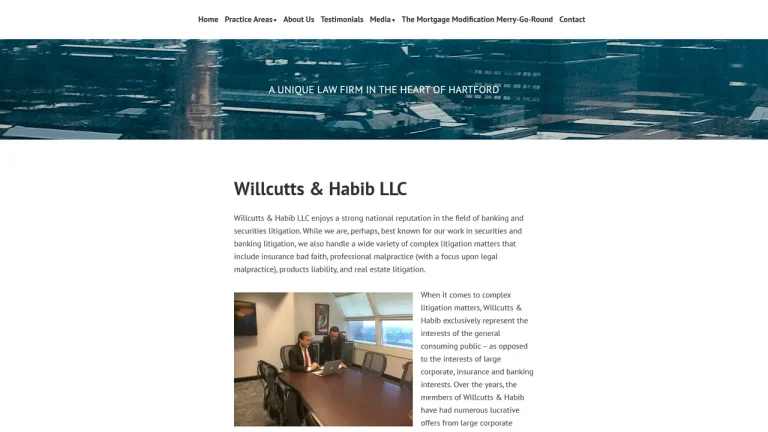
Willcutts & Habib LLC - Hartford, CT
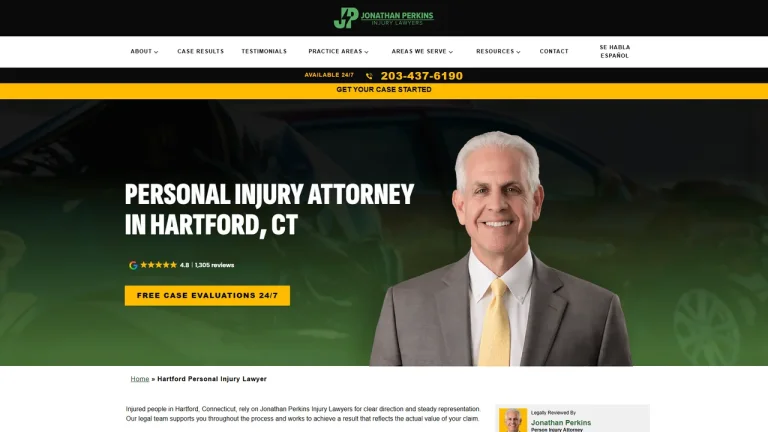
Jonathan Perkins Injury Lawyers - Hartford, CT

Law Offices of Andrew J. Cates, LLC - Hartford, CT
Trantolo & Trantolo - Hartford, CT

Howard Kohn Sprague & Fitzgerald, LLP - Hartford, CT

Rubenstein Sendy LLC - Hartford, CT

Connecticut Injury Firm LLC - Hartford, CT
Rob Levine Law–Personal Injury Lawyers - Hartford, CT
Dressler Law - Hartford, CT
Hartford Product Liability Jurisdiction & Regional Court Practice
Experiencing severe harm from a defective consumer device, industrial machine, faulty motor vehicle part, or toxic substance requires decisive legal representation under Connecticut law. In Hartford-a regional nexus of commercial commerce, healthcare institutions, and logistics facilities along the Interstate 91 and Interstate 84 corridors-dangerous product claims are governed exclusively by the Connecticut Product Liability Act (CPLA) under Conn. Gen. Stat. § 52-572m.
High-stakes product liability lawsuits originating in Hartford and surrounding towns-such as East Hartford, West Hartford, Manchester, Glastonbury, and Bloomfield-are litigated in the Hartford Judicial District Superior Court at 95 Washington Street or removed to the U.S. District Court for the District of Connecticut at 450 Main Street. Navigating complex state e-filing systems and capital district case management orders demands seasoned local courtroom counsel.
A local Hartford product liability lawyer ensures that the damaged item is immediately secured under a strict legal chain of custody. Local litigators collaborate with mechanical engineers, metallurgists, and medical specialists to prove design defects, manufacturing failures, or inadequate product warnings, forcing multi-billion-dollar manufacturers and regional distributors to account for catastrophic consumer harm.
Hartford Product Liability Litigation Costs & Fee Structures
| Case Scenario | Fee Structure | Estimated Cost (USD) | Key Cost Determinants |
|---|---|---|---|
| Defective Consumer Household Product Injury | Contingency Fee | 33.33% of gross settlement recovery | Evidentiary preservation of the item, clear design or manufacturing flaw, and documented medical bills. |
| Industrial Machinery or Construction Equipment Failure | Contingency Fee (Statutory Scale) | 33.33% up to $300k, scaled per statute | OSHA incident investigations, machine guard engineering analyses, and employer third-party cross-claims. |
| Defective Medical Implant or Pharmaceutical Injury | Contingency Recovery | Standard statutory contingency percentages | Biomedical expert evaluations, FDA recall histories, and long-term revision surgery projections. |
| Complex Superior Court Jury Trial (Design Defect) | Contingency Fee | 33.33% to 40% (Subject to statutory fee waiver) | Extensive deposition practice, CAD blueprint analysis, expert witness trial fees, and Hartford jury exhibits. |
Critical Legal Deadlines & Statutes in Connecticut
Product defect lawsuits in Hartford are strictly bounded by statutory filing deadlines. Under Conn. Gen. Stat. § 52-577a, a product liability action under the CPLA must be commenced within three (3) years from the date the injury or damage is discovered or, in the exercise of reasonable care, should have been discovered.
Additionally, Conn. Gen. Stat. § 52-577a enforces a ten (10) year statute of repose, barring lawsuits brought more than ten years after the manufacturer or commercial seller parted with possession or control of the product, with narrow statutory exceptions for intentional fraud, latent diseases, or express warranty extensions.
Under Conn. Gen. Stat. § 52-572o, Connecticut applies comparative responsibility principles in product liability litigation. An award of damages is diminished in proportion to the degree of product misuse or contributory responsibility attributable to the claimant, making prompt, specialized technical investigation essential to counter manufacturer defenses.
Small Claims Limits vs. Superior Court Product Defect Litigation
The Small Claims Session of the Connecticut Superior Court handles monetary actions up to $5,000 under Conn. Gen. Stat. § 51-15 with a statutory entry fee of $95. If a defective home appliance causes minor, isolated property loss under $5,000 without bodily harm, small claims court offers an accessible self-representation option.
However, serious injuries caused by hazardous products-such as third-degree electrical burns, bone fractures, crush trauma, or chemical toxicity-incur tens of thousands of dollars in medical costs and long-term earnings losses. Retaining certified engineering experts and deposing corporate safety directors routinely costs thousands of dollars. Pursuing fair compensation requires formal litigation in the Hartford Judicial District Superior Court, where an attorney can aggressively enforce the provisions of the Connecticut Product Liability Act.
Red Flags When Hiring a Hartford Product Defect Lawyer
- Instructing you to surrender or return the malfunctioning product to the manufacturer or insurance adjuster before independent inspection.
- Unwillingness or financial inability to front substantial forensic engineering, testing, and deposition costs necessary to prove defect.
- Attempting to plead old common-law negligence or breach of warranty counts separately instead of utilizing the unified CPLA framework under Conn. Gen. Stat. § 52-572m.
- Demanding upfront cash retainers for personal injury representation instead of working on a contingency fee basis under Conn. Gen. Stat. § 52-512d.
Frequently Asked Questions
What is the legal standard for a defective product claim in Connecticut?
Under the Connecticut Product Liability Act, Conn. Gen. Stat. § 52-572m, a claimant must prove that the product was defective and unreasonably dangerous due to design defect, manufacturing flaw, or inadequate warnings, that the defect caused the injury, and that the product was substantially unaltered.
How long do I have to file a product liability lawsuit in Hartford?
Under Conn. Gen. Stat. § 52-577a, you must bring the lawsuit within three (3) years of discovering the injury, subject to an ultimate ten (10) year statute of repose from when the product left the manufacturer's control.
What should I do with the defective item after an injury?
Retain the product exactly as it was when the failure occurred. Do not attempt to repair, clean, or discard it. Store the item, its packaging, operating manuals, and proof of purchase in a secure location to preserve the evidentiary chain of custody.
Can a local Hartford retailer be sued for selling a defective product?
Yes. Under Conn. Gen. Stat. § 52-572n, commercial sellers and distributors can be named as defendants under the CPLA, though innocent seller provisions under Conn. Gen. Stat. § 52-572p may allow dismissal if the solvent manufacturer is within court jurisdiction.
How are legal fees structured for product injury cases in Connecticut?
Product liability claims are handled on contingency pursuant to Conn. Gen. Stat. § 52-512d. Clients pay no hourly fees or upfront retainers; legal fees are deducted as a percentage of the financial recovery obtained through settlement or verdict.