
Workers' Compensation Lawyers in Hartford
Retaining an experienced Hartford workers' compensation lawyer ensures your medical benefits, lost wage payments, and disability rights are fully protected under Connecticut law. Knowledgeable advocates routinely resolve disputed claims and secure comprehensive settlements through informal hearings and commissioner conciliation. Explore our directory below to connect with trusted Hartford workers' compensation attorneys.
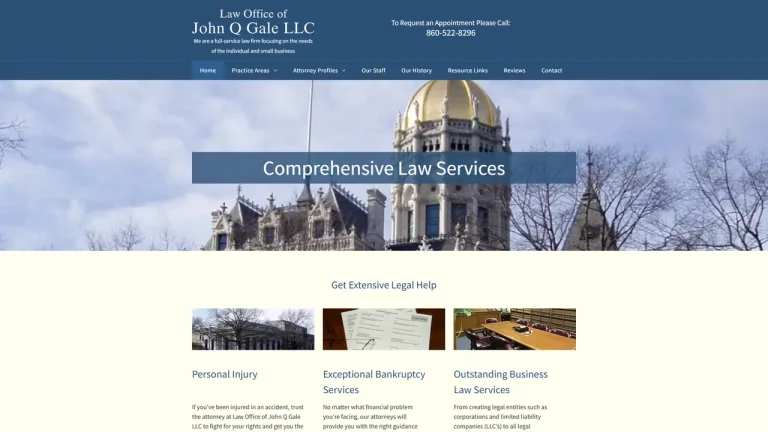
Law Office of John Q Gale LLC - Hartford, CT
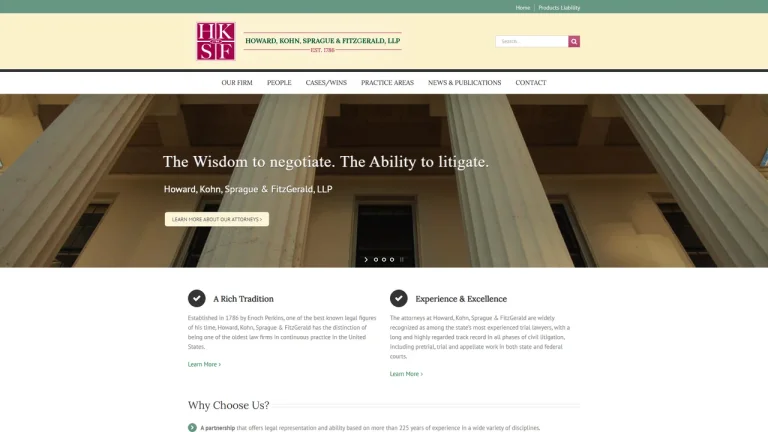
Howard Kohn Sprague & Fitzgerald, LLP - Hartford, CT

Law Offices of Andrew J. Cates, LLC - Hartford, CT

Boyle | Shaughnessy Law - Hartford, CT
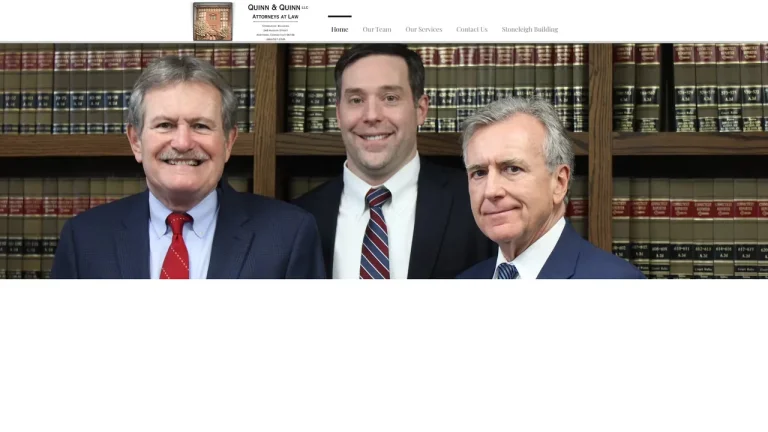
Quinn & Quinn, LLC - Hartford, CT
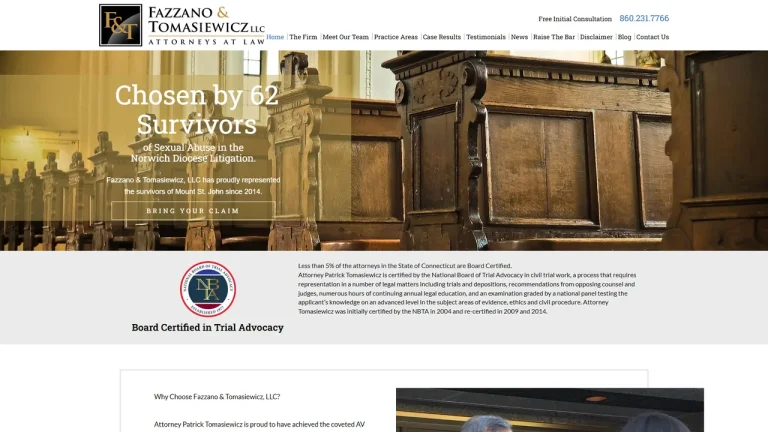
Fazzano & Tomasiewicz, LLC - Hartford, CT
Carter Mario Injury Lawyers - Hartford, CT
Rob Levine Law–Personal Injury Lawyers - Hartford, CT

Gould Injury Lawyers - Hartford, CT

Appleton & Appleton LLC - Hartford, CT

Anziano & Bertucio, LLC - Hartford, CT

Hassett | Donnelly - Hartford, CT

Melick & Porter, LLP - Hartford, CT
Killian & Donohue LLC - Hartford, CT
Rome Clifford Katz & Koerner LLP - Hartford, CT

Lynch, Traub, Keefe, & Errante, P.C. - Hartford, CT
Law Offices of Bruce E. Bergman - Hartford, CT

Sexton and Sexton LLC - Hartford, CT

Schulman & Associates - Hartford, CT

Brignole, Bush & Lewis - Hartford, CT

Szilagyi & Daly - Hartford, CT
Freeman Law Firm, LLC - Hartford, CT

McEleney & McGrail, LLC - Hartford, CT

Brandon J. Broderick, Attorney at Law - Hartford, CT
Workers' Compensation Administration and Advocacy in Hartford
Hartford supports a substantial workforce across healthcare systems, construction projects, government administration, utility networks, and distribution facilities. Workplace injuries, whether resulting from catastrophic construction accidents, acute trauma, repetitive stress, or toxic occupational exposure, can instantly jeopardize an employee's financial security. Navigating the administrative complexities of Connecticut workers' compensation requires knowledgeable representation from advocates grounded in local district operations.
Disputed workers' compensation cases in Hartford are handled by the State of Connecticut Workers' Compensation Commission. The First District Office, serving the Hartford area, is situated at 90 Washington Street, directly adjacent to the Hartford Superior Court. Administrative Law Judges at this district office preside over informal conferences, pre-formal hearings, and formal trials to resolve disputed benefit denials, medical treatment approvals, and permanent impairment ratings.
Hartford workers' compensation lawyers represent employees across Hartford County and neighboring communities, including East Hartford, West Hartford, New Britain, Windsor, Bloomfield, Manchester, and Wethersfield. Local legal counsel works closely with treating physicians, independent medical examiners, and vocational experts to ensure injured workers receive their full wage-replacement benefits and medical coverage without unnecessary insurance delays.
Workers' Compensation Legal Fees and Case Scenarios
| Case Scenario | Fee Structure | Estimated Cost (USD) | Key Cost Determinants |
|---|---|---|---|
| Initial Claim Filing (Form 30C) & Benefit Oversight | Contingency Fee | Statutory maximum 20% of benefits | Timely filing, response to Form 43 notice to contest, and designation of the authorized treating physician. |
| Contested Claim & Informal Commissioner Hearing | Contingency Fee | 20% of disputed weekly compensation secured | Insurer causation defenses, Independent Medical Examination reports, and commissioner recommendations. |
| Full and Final Stipulation Settlement | Contingency Fee | 20% of gross lump-sum settlement | Permanent partial disability ratings, projected future surgical costs, and Medicare Set-Aside requirements. |
| Form 36 Benefit Discontinuation Defense | Contingency Fee | 20% of benefits preserved | Disputes regarding maximum medical improvement, light-duty job availability, and functional capacity exams. |
Critical Legal Deadlines & Statutes in Connecticut
The Connecticut Workers' Compensation Act establishes mandatory filing deadlines that must be strictly observed. Under Conn. Gen. Stat. § 31-294c, an injured worker must provide formal written notice of claim (Form 30C) within one year from the date of an accidental injury, or within three years from the first manifestation of a symptom of an occupational disease.
Employers and insurance carriers face reciprocal statutory requirements under Conn. Gen. Stat. § 31-294c. Once an employer receives a formal Form 30C, it must either file a Form 43 Notice of Intent to Contest the claim or commence benefit payments within 28 calendar days. Failure to take action within this strict 28-day window creates a conclusive statutory presumption that the injury is compensable, barring the insurer from raising most defenses.
Insurers seeking to stop or reduce ongoing temporary total or temporary partial disability benefits must file a Form 36 under Conn. Gen. Stat. § 31-296, giving 15 days written notice to the injured worker and the commission. Injured employees have only 15 days to file an objection and request an informal hearing. Legal fees for workers' compensation attorneys are strictly regulated under Conn. Gen. Stat. § 31-327 and Commission guidelines, which cap contingency fees at 20% of the recovered benefits. Connecticut's exclusive remedy rule, codified at Conn. Gen. Stat. § 31-284, generally prevents employees from suing their direct employers in civil tort court for work-related injuries.
Commission Authority vs. Small Claims Jurisdiction
The Small Claims session in Hartford, capped at $5,000 under Conn. Gen. Stat. § 51-15, has zero jurisdictional authority over workplace injury claims. Under Conn. Gen. Stat. § 31-284, the Connecticut Workers' Compensation Commission holds exclusive subject-matter jurisdiction to resolve disputes regarding workplace injuries, wage-replacement rates, medical authorizations, and permanent disability awards.
Workers attempting to navigate the system without legal representation often find their weekly benefit rates improperly calculated by insurance adjusters who omit overtime, secondary employment income, or contractual bonuses. Furthermore, managing the response to an insurance company Form 36 discontinuation or selecting an authorized surgeon from the approved provider network requires formal advocacy. Retaining a dedicated Hartford workers' compensation lawyer protects your weekly indemnity checks and guarantees seasoned representation at 90 Washington Street.
Red Flags When Hiring a Hartford Workers' Comp Lawyer
- Charging legal fees exceeding the mandatory 20% statutory limit established by the Connecticut Workers' Compensation Commission.
- Failing to file an official Form 30C immediately, which prevents invoking the conclusive presumption rule against slow-responding insurers.
- Advising an injured employee to accept a lump-sum full and final stipulation before reaching Maximum Medical Improvement (MMI).
- Lacking ongoing hearing experience before Administrative Law Judges at the First District Office in Hartford.
Frequently Asked Questions
What is Form 30C and why is it important in Connecticut?
Form 30C is the official notice of claim for compensation under Connecticut law. Filing it preserves your legal rights and triggers the employer's strict 28-day statutory deadline to accept or contest liability.
Where are workers' compensation hearings held in Hartford?
Hearings for Hartford-area workers take place at the State of Connecticut Workers' Compensation Commission First District Office, located at 90 Washington Street in Hartford.
Can I choose my own doctor for a work injury in Connecticut?
If your employer maintains an approved medical care plan, you must select your initial treating doctor from that network. If no approved plan exists, you have the right to select any licensed physician within Connecticut.
What is the maximum fee a workers' compensation attorney can charge?
Under Connecticut law and Workers' Compensation Commission guidelines, attorney fees are strictly capped at 20% of the benefits or settlement secured on behalf of the injured employee.
What should I do if the insurance company files a Form 36?
A Form 36 notifies you of the insurer's intent to stop or reduce benefits. You have only 15 days to file an objection and request an emergency informal hearing before an Administrative Law Judge to contest the reduction.