
Business Litigation Lawyers in Delaware
Retain top Delaware business litigation lawyers to defend corporate rights and resolve high-stakes shareholder, fiduciary, and commercial disputes statewide. Experienced trial counsel safeguards enterprise value through expedited Chancery Court proceedings and complex commercial litigation before Delaware judges. Explore our verified directory below to consult an accomplished Delaware business litigation attorney.

DiBianca Law - Wilmington, DE

Bayard, P.A. - Wilmington, DE

Richard A. Levine - Wilmington, DE
Joseph H. Huston, Jr. - Wilmington, DE

Burr & Forman - Wilmington, DE
Law Office of Daniel C. Herr LLC - Wilmington, DE

Melanie K. Sharp - Wilmington, DE
Law Offices of Joyce - Wilmington, DE

Conaway-Legal LLC - Wilmington, DE
Christensen & Dougherty LLP - Wilmington, DE

David L. Finger - Wilmington, DE

Buchanan Ingersoll & Rooney PC - Wilmington, DE

Faegre Drinker Biddle & Reath LLP - Wilmington, DE

Maron Marvel Bradley Anderson & Tardy LLC - Wilmington, DE
Jennifer M. Kinkus - Wilmington, DE

Heckler & Frabizzio, P.A. - Wilmington, DE

Eckert Seamans - Wilmington, DE
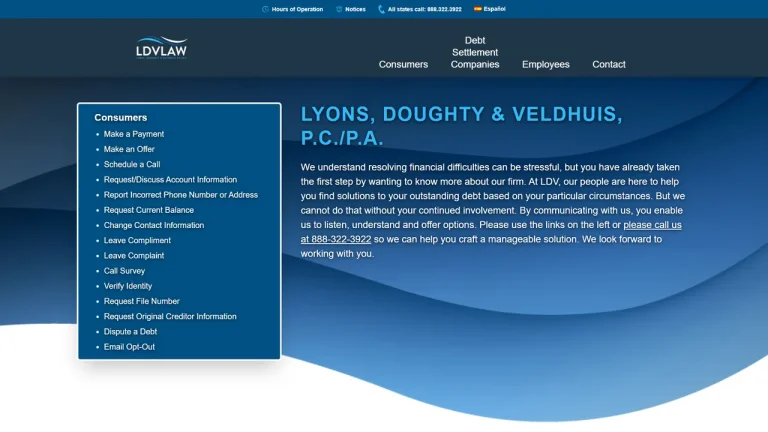
Lyons & Doughty PC - Lyons, Doughty & Veldhuis, P.A. - Wilmington, DE
William D. Johnston - Wilmington, DE

Saul Ewing LLP - Wilmington, DE

Cole Schotz P.C. - Wilmington, DE

MG+M The Law Firm - Wilmington, DE

Rhodunda Williams & Kondraschow - Wilmington, DE
Resolving High-Stakes Commercial Disputes in Delaware Courts
Delaware is the recognized benchmark for corporate and commercial litigation, handling disputes that define corporate governance, merger transactions, and shareholder rights nationwide. Whether a dispute arises among local enterprises in Wilmington, Dover, Newark, or corporate entities incorporated under Delaware law, proceedings demand mastery of Delaware procedural and statutory rules.
Delaware maintains a specialized court system for resolving business conflicts. Equity disputes-including breach of fiduciary duty claims, shareholder derivative suits, and requests for temporary restraining orders-are heard by the renowned Delaware Court of Chancery pursuant to 10 Del. C. § 341. Major legal claims seeking monetary recovery exceeding one million dollars are adjudicated in the Delaware Superior Court Complex Commercial Litigation Division, with final appellate review conducted by the Supreme Court of Delaware in Dover.
Engaging seasoned Delaware business litigation counsel ensures that companies and fiduciaries navigate rapid discovery timelines, expedited injunction hearings, and electronic filings through File & ServeXpress. Proven local attorneys evaluate the business judgment rule, protect board decisions, and defend commercial investments.
Legal Fee Structures for Delaware Business Litigation
| Case Scenario | Fee Structure | Estimated Cost (USD) | Key Cost Determinants |
|---|---|---|---|
| Section 220 Books and Records Demand & Response | Flat or Hourly ($450 - $850/hr) | $5,000 - $25,000 | Scope of inspection demand, proper purpose evidence, pre-trial confidentiality negotiations |
| Emergency Injunction & Temporary Restraining Order | Hourly ($500 - $950/hr) | $25,000 - $80,000+ | Expedited discovery schedule, preliminary injunction brief complexity, evidentiary hearing speed |
| Fiduciary Duty & Shareholder Derivative Litigation | Hourly or Contingency/Hybrid | $50,000 - $250,000+ | Special litigation committee evaluations, director exculpation defense, expert valuation testimony |
| Superior Court CCLD Complex Commercial Trial | Hourly ($500 - $900/hr) | $75,000 - $350,000+ | Electronic discovery volume, multi-party depositions, financial damages modeling, trial length |
Critical Legal Deadlines & Statutes in Delaware
Corporate litigation in Delaware requires strict compliance with statutory inspection rules and limitation calendars. Under 8 Del. C. § 220(c), a corporation has five business days after receiving a stockholder verified demand to inspect corporate books and records to respond. If the corporation fails or refuses to respond within five business days, the stockholder may file an action in the Delaware Court of Chancery to compel inspection.
While monetary damages claims are subject to the three-year statute of limitations under 10 Del. C. § 8106, the Court of Chancery applies this three-year period by analogy to equitable claims under the doctrine of laches, barring delayed claims unless extraordinary circumstances exist. In merger appraisal actions, stockholders must deliver a written demand prior to the stockholder vote and file a petition in Chancery within one hundred twenty days following the effective date of the merger under 8 Del. C. § 262.
Fiduciary duty defense frequently hinges on exculpatory protections. Under 8 Del. C. § 102(b)(7), corporate directors and senior officers are insulated from personal monetary damages for gross negligence, focusing litigation on claims involving bad faith, disloyalty, or unapproved self-dealing.
Justice of the Peace Limits vs. Court of Chancery & CCLD
The Delaware Justice of the Peace Court handles civil debt disputes up to $25,000 pursuant to 10 Del. C. § 9301. While small claims and basic account collection matters can be brought in the Justice of the Peace Court, it possesses no subject-matter jurisdiction over internal corporate governance, shareholder disputes, or breach of fiduciary duty actions.
Corporate litigation in Delaware demands the equitable jurisdiction of the Court of Chancery or the specialized docket of the Delaware Superior Court Complex Commercial Litigation Division. The Court of Chancery does not utilize juries; cases are decided entirely by the Chancellor and Vice Chancellors, who provide detailed written opinions interpreting the Delaware General Corporation Law.
Attempting to resolve high-stakes commercial disputes without experienced Delaware trial lawyers exposes businesses to swift injunctive remedies and adverse rulings. Dedicated litigators manage complex forensic electronic discovery, formulate motion practice under Chancery Court Rules, and advocate vigorously at trial.
Red Flags When Vetting Delaware Business Litigators
Litigating in Delaware requires top-tier courtroom capability. Identify these red flags when consulting commercial trial attorneys:
- Attorneys lacking extensive courtroom experience appearing before the Chancellors of the Delaware Court of Chancery or Superior Court CCLD judges.
- Failing to anticipate expedited scheduling orders, which are commonplace in Court of Chancery preliminary injunction and Section 220 proceedings.
- Guaranteeing specific trial outcomes or settlement figures, which violates professional conduct rules enforced by the Supreme Court of Delaware.
- Inability to manage large-scale electronic discovery production under Delaware court guidelines and File & ServeXpress standards.
Frequently Asked Questions
What is a Section 220 books and records demand in Delaware?
Under 8 Del. C. § 220, a stockholder with a proper purpose has the statutory right to inspect a Delaware corporation books and records, and may sue in Chancery Court if the company fails to respond within five business days.
Does the Delaware Court of Chancery have juries?
No, the Delaware Court of Chancery is an equity court where all proceedings are presided over and decided exclusively by the Chancellor and Vice Chancellors without a jury.
What is the Delaware Superior Court CCLD?
The Complex Commercial Litigation Division is a specialized track within the Delaware Superior Court designed to resolve non-equitable business disputes involving damages of one million dollars or more with expedited case management.
How does the business judgment rule protect Delaware directors?
The business judgment rule establishes a legal presumption that in making a business decision, directors acted on an informed basis, in good faith, and in the honest belief that the action was in the best interests of the corporation.
What is the deadline to file a stockholder appraisal action in Delaware?
Under 8 Del. C. § 262, a stockholder must demand appraisal prior to the merger vote and file an appraisal petition in the Delaware Court of Chancery within one hundred twenty days after the effective date of the merger.