
Child Custody Lawyers in Delaware
Facing a child custody dispute in Delaware? Dedicated family attorneys protect your parental rights and prioritize your child's welfare under state custody laws. Experienced Delaware custody lawyers assist parents with joint decision-making agreements, parenting schedules, and court mediation to avoid protracted litigation. Browse our verified statewide directory to connect with a top-rated Delaware child custody lawyer today.

The Law Office of James Tobia LLC - Wilmington, DE

Law Offices of Dana L. Reynolds, LLC - Wilmington, DE

Zachary George - George and Vyas, LLC - Dover, DE

Leslie B. Spoltore - Wilmington, DE

Laura E. Brooks, Esq. - Brooks Law LLC - Wilmington, DE

Law Offices of Amanda L. H. Brinton LLC - Wilmington, DE

Gary R. Spritz, Esq. - Wilmington, DE

Law Office of Ronald D. Phillips - Dover, DE

Horner Law LLC - Wilmington, DE

Susan C. Over, P.C., Attorney at Law - Wilmington, DE

Poole, Mensinger, Cutrona & Ellsworth-Aults - Wilmington, DE

Wahl Family Law - Wilmington, DE

Sharon M. Eppes - Family Law Advice Center, P.A. - Wilmington, DE

Boudart & Mensinger LLP - Wilmington, DE

Longobardi & Boyle LLC - Wilmington, DE

Law Office of Thomas D. Shellenberger, LLC - Wilmington, DE
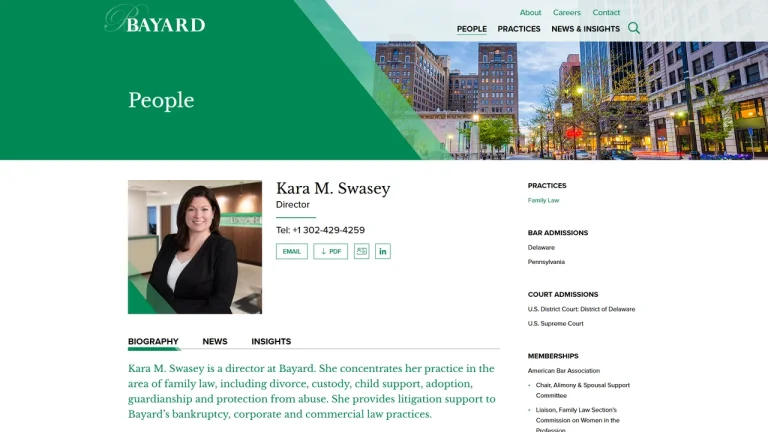
Kara M. Swasey - Wilmington, DE

Delaware Volunteer Legal Services - Wilmington, DE
Law Offices Kenneth F Carmine - Wilmington, DE

Copeland Taylor, LLC - Wilmington, DE

Law Office of Laura A. Yiengst, LLC - Dover, DE

Law Office of Mary Higgins - Dover, DE
The Law Office of Shauna T. Hagan, LLC - Wilmington, DE

Protecting Parental Rights in the Delaware Family Court
Child custody and visitation matters in Delaware are adjudicated exclusively by the Family Court of the State of Delaware. With centralized courthouses situated in Wilmington (New Castle County), Dover (Kent County), and Georgetown (Sussex County), the Family Court maintains uniform statewide procedures governing parental rights and child welfare. Case pleadings, custody petitions, and emergency motions are filed electronically through the File & ServeXpress system.
Delaware law fundamentally distinguishes between legal custody-the authority to make major medical, educational, and religious decisions-and physical placement or visitation schedules. The court strongly promotes joint legal custody, encouraging both parents to participate actively in child-rearing. However, when parental substance abuse, domestic conflict, or relocation plans arise, the Family Court intervenes to establish binding parenting schedules based strictly on the child's best interests.
Retaining counsel licensed by the Delaware Supreme Court and regulated by the Office of Disciplinary Counsel guarantees that your case is prepared with precision. Skilled child custody lawyers navigate court-ordered parent education programs, represent parents in mandatory mediation sessions, and present compelling evidence during contested evidentiary hearings.
Delaware Child Custody Fee Structures & Hearing Types
| Case Scenario | Fee Structure | Estimated Cost (USD) | Key Cost Determinants |
|---|---|---|---|
| Uncontested Parenting Plan & Consent Order | Flat Fee | $1,500 - $3,500 | Joint parental agreement, standard holiday schedule drafting, Family Court approval. |
| Contested Custody & Placement Litigation | Hourly Retainer ($325 - $550/hr) | $5,000 - $18,000+ | Evidentiary hearings, court custody evaluations, dispute over legal decision-making authority. |
| Interstate Relocation Dispute & Custody Trial | Hourly Retainer ($350 - $600/hr) | $8,000 - $25,000+ | Economic necessity evaluations, UCCJEA jurisdiction hearings, school district analyses, expert testimony. |
| Post-Decree Custody Modification & Enforcement | Hourly or Flat Fee | $2,500 - $7,500 | Two-year statutory modification bar exceptions, substantial change in circumstances, rule to show cause filings. |
Critical Legal Deadlines & Statutes in Delaware
Custody actions in Delaware are governed by detailed statutory mandates to safeguard the child's long-term stability. Under 13 Del. C. § 722, Delaware Family Court judges must evaluate eight specific statutory factors, including parental wishes, the child's wishes, family interactions, domestic violence history, and each parent's compliance with parental responsibilities.
Under 13 Del. C. § 727, the court presumes joint legal custody is in the child's best interests unless evidence demonstrates that joint decision-making would be harmful to the child. To prevent unstable custody churning, 13 Del. C. § 729 mandates that an existing custody order cannot be modified within two years of entry unless the court finds that continuing the current arrangement would endanger the child's physical health or significantly impair emotional development.
Jurisdiction over interstate custody matters is governed by the Uniform Child Custody Jurisdiction and Enforcement Act under 13 Del. C. § 1920, requiring Delaware to be the child's home state for at least six consecutive months before filing. In addition, financial support is calculated using the Delaware Melson Formula codified under 13 Del. C. § 514, aligning parental obligations with net incomes and residential custody percentages.
Justice of the Peace Court Limitations vs. Family Court Representation
Under 10 Del. C. § 9301, the Delaware Justice of the Peace Court exercises jurisdiction over small debt, landlord-tenant, and property disputes up to $25,000. However, the Justice of the Peace Court possesses zero jurisdiction over child custody, visitation, guardianship, or domestic relations.
All child custody and parental disputes fall within the exclusive jurisdiction of the Family Court of the State of Delaware under 10 Del. C. § 921. Attempting to represent yourself in a contested custody proceeding carries profound risks. Mistakes in introducing evidence, misunderstanding hearsay exceptions, or failing to satisfy the rigorous two-year modification threshold can permanently limit your custodial access. Retaining dedicated counsel ensures that evidence, psychological evaluations, and school records are effectively presented.
Red Flags & Precautions When Hiring Custody Counsel
- Guarantees of sole custody outcomes: Any lawyer who promises sole legal custody; Delaware public policy strongly favors joint legal custody under state statutes unless severe abuse or neglect is proven.
- Disregard for the two-year modification rule: Counsel who files for custody changes within two years of a prior decree without establishing the required statutory proof of physical or emotional endangerment.
- Aggressive tactics that harm mediation: Attorneys who discourage cooperative settlement conferences or inflate hostility during mandatory court mediation, increasing legal expenses without benefit to the child.
- Lack of familiarity with the Delaware Melson Formula: Lawyers who cannot accurately project how changes in overnight residential schedules will directly impact child support obligations under state guidelines.
Frequently Asked Questions
What is the difference between legal custody and physical placement in Delaware?
Legal custody refers to the right and responsibility to make major life decisions regarding a child's education, healthcare, and religious upbringing. Physical placement refers to where the child resides on a daily basis and the specific residential schedule between parents.
How do Delaware courts determine child custody?
Under Delaware law, courts determine custody based strictly on the best interests of the child. Judges must evaluate eight statutory factors, including parental wishes, child preferences, family relationships, domestic history, and each parent's ability to facilitate a relationship with the other parent.
Can a child choose which parent to live with in Delaware?
No. A child cannot simply choose where to live. While the judge may consider the child's wishes as one of several statutory best interest factors-depending on the child's maturity and age-the final decision rests solely with the Family Court judge.
Can an existing custody order be changed within two years in Delaware?
Under Delaware statutes, modifying a custody order within two years of entry requires proving that the current arrangement endangers the child's physical health or significantly impairs emotional development. After two years, modification requires showing a substantial change in circumstances.
What is mandatory mediation in Delaware custody cases?
Before a contested custody case proceeds to a judicial trial, the Delaware Family Court orders both parents to attend a mandatory mediation conference with a court mediator to attempt to reach an amicable parenting agreement.