
Trademark Lawyers in Delaware
Connect with experienced Delaware trademark lawyers to register commercial brands, protect proprietary logos, and resolve trademark disputes statewide. Qualified legal counsel safeguards business goodwill through comprehensive clearance searches and negotiates trademark co-existence agreements to avoid protracted courtroom battles. Explore our detailed directory below to consult a reputable Delaware trademark attorney for your business.

Benesch - Wilmington, DE
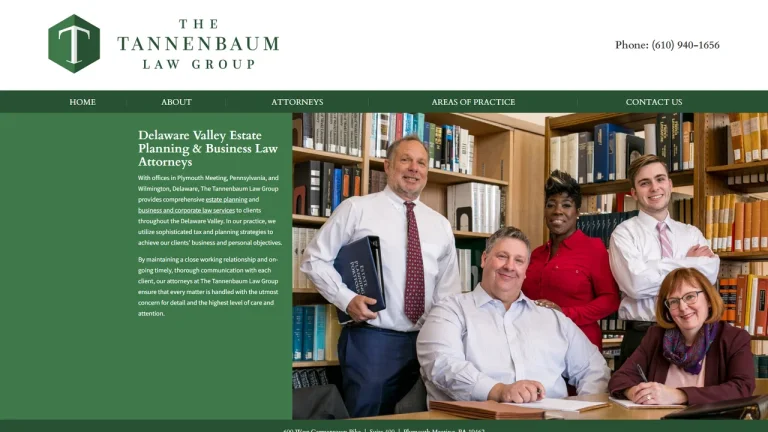
The Tannenbaum Law Group, LLC - Wilmington, DE

Melanie K. Sharp - Wilmington, DE
Shaw Keller LLP - Wilmington, DE

K&L Gates LLP - Wilmington, DE
Stamoulis & Weinblatt - Wilmington, DE
DLA Piper - Wilmington, DE
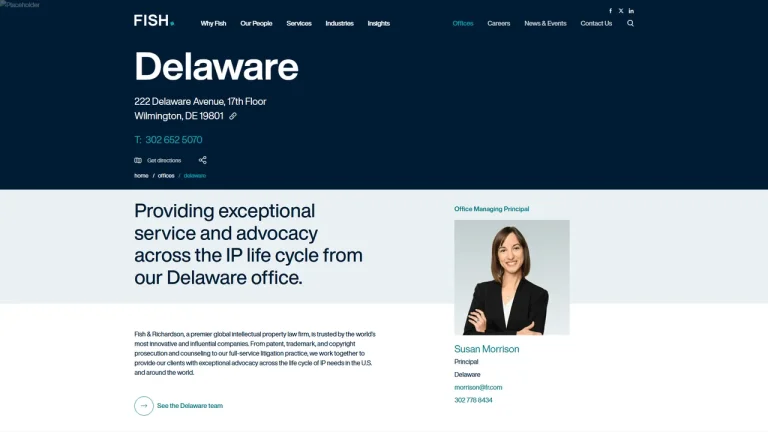
Fish & Richardson P.C. - Wilmington, DE
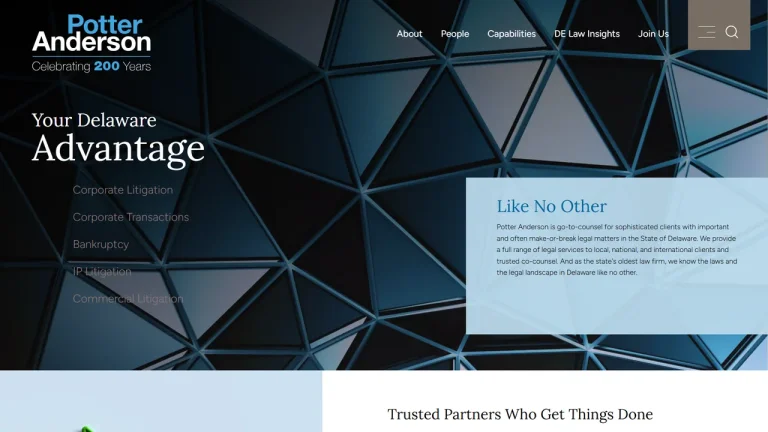
Potter Anderson & Corroon LLP - Wilmington, DE

Wilson Sonsini Goodrich & Rosati - Wilmington, DE

Richards, Layton & Finger, PA - Wilmington, DE
Blank Rome LLP - Wilmington, DE

McCarter & English, LLP - Wilmington, DE
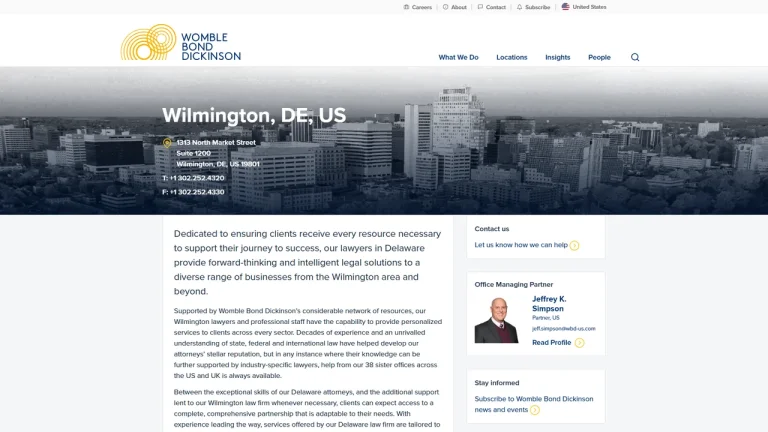
Womble Bond Dickinson (US) LLP - Wilmington, DE

Barnes & Thornburg LLP - Wilmington, DE
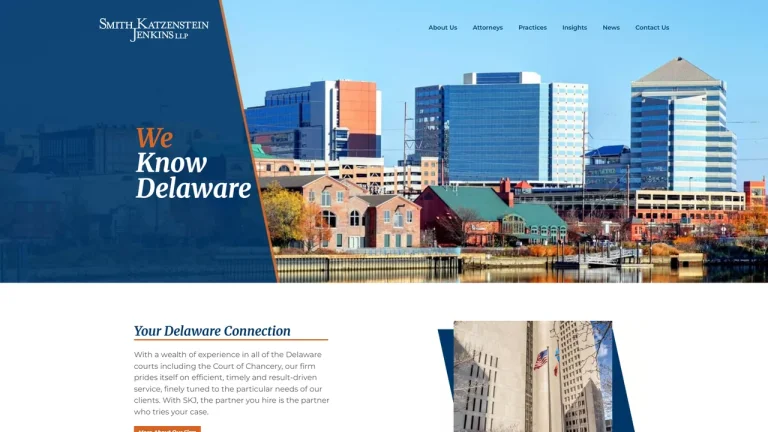
Neal C. Belgam - Wilmington, DE
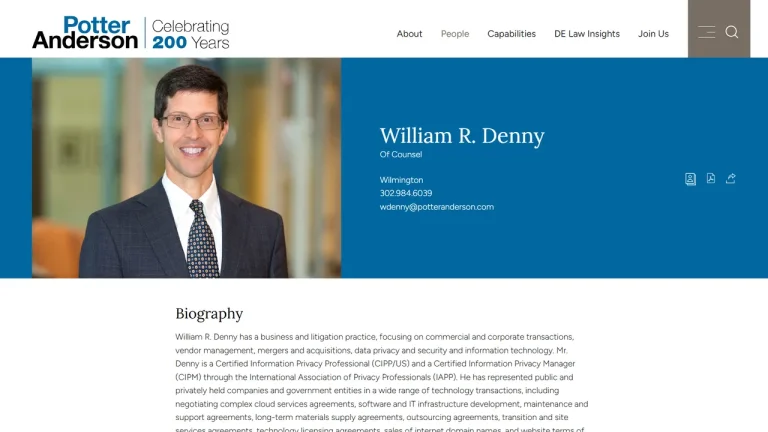
William R. Denny (Potter Anderson & Corroon LLP) - Wilmington, DE
O'Kelly & O'Rourke, LLC - Wilmington, DE
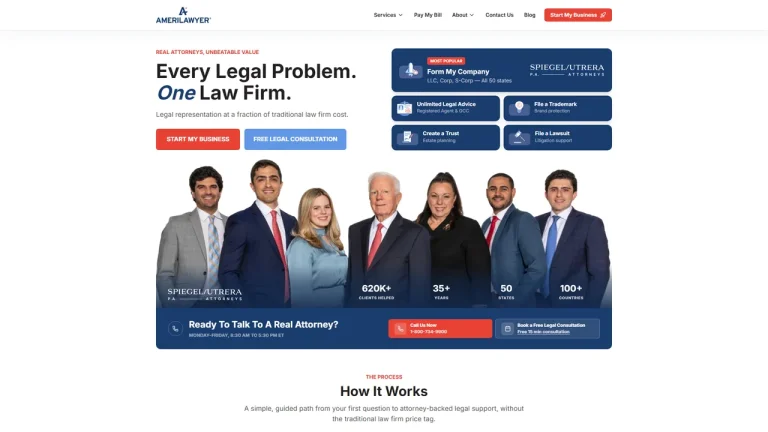
Spiegel & Utrera, P.A. - Dover, DE
Ballard Spahr - Wilmington, DE
Shlansky Law Group - Wilmington, DE
Flaster Greenberg PC - Wilmington, DE
Morris, Nichols, Arsht & Tunnell LLP - Wilmington, DE

Protecting Brand Identity and Trademarks in Delaware
Delaware serves as the premier corporate jurisdiction for businesses worldwide, making brand protection and trademark management vital for enterprise value. From emerging technology enterprises in Wilmington and financial institutions in Newark to local businesses in Dover and Sussex County, securing distinctive marks is critical for maintaining commercial goodwill and customer trust.
Brand enforcement in Delaware operates across administrative and judicial venues. Federal trademark applications and oppositions proceed before the United States Patent and Trademark Office (USPTO) and the Trademark Trial and Appeal Board (TTAB), while state marks are registered through the Delaware Division of Corporations. Infringement actions are litigated in the United States District Court for the District of Delaware or the Delaware Court of Chancery when equitable trade name relief is required.
Retaining an attorney admitted to the Delaware State Bar Association ensures your commercial identifiers are thoroughly defended. Counsel conducts comprehensive trademark clearance, drafts enforceable licensing agreements, and pursues injunctive remedies to halt brand counterfeiting and consumer confusion.
Fee Structures for Delaware Trademark Legal Services
| Case Scenario | Fee Structure | Estimated Cost (USD) | Key Cost Determinants |
|---|---|---|---|
| USPTO Clearance Search & Registration Filing | Flat Fee Per Class | $1,200 - $2,800 | Number of international classes, search scope, likelihood of confusion risk analysis |
| TTAB Opposition or Cancellation Proceeding | Flat Fee / Hourly Stages | $4,500 - $12,000 | Evidentiary discovery volume, cross-examination depositions, trial briefing length |
| Federal Trademark Infringement Lawsuit | Hourly Retainer | $375 - $700 per hour | Preliminary injunction motions, electronic discovery, consumer survey expert testimony |
| Trademark Licensing & Co-Existence Agreements | Hourly or Fixed Project Rate | $2,000 - $6,500 | Territorial licensing scope, quality control provisions, royalty compensation frameworks |
Critical Deadlines & Trademark Statutes in Delaware
Securing and maintaining trademark protections requires adherence to rigorous administrative and statutory schedules. Under the Lanham Act codified at 15 U.S. Code § 1051, federal trademark applicants filing under an Intent-to-Use basis must submit a verified Statement of Use within six months of receiving a Notice of Allowance under 15 U.S. Code § 1051(d), unless formal extensions are secured.
Registered trademarks must be maintained between the fifth and sixth year following registration by filing a Section 8 Declaration of Continued Use pursuant to 15 U.S. Code § 1058. In contested matters before the Trademark Trial and Appeal Board (TTAB), third parties have exactly 30 calendar days from the date a mark is published in the USPTO Official Gazette to file a Notice of Opposition under 15 U.S. Code § 1063.
At the state level, marks may be protected under the Delaware Trademark Act codified at Del. Code tit. 6, § 3301. For deceptive practices and unfair competition, the Delaware Uniform Deceptive Trade Practices Act, codified at Del. Code tit. 6, § 2532, applies a three-year limitations period governed by Del. Code tit. 10, § 8106.
Small Claims Court vs. Retaining a Trademark Attorney
Delaware Justice of the Peace Courts exercise authority over civil matters up to $25,000 under Del. Code tit. 10, § 9301. However, small claims courts have zero legal authority to cancel trademark registrations, order brand rebranding, or issue nationwide injunctions.
Trademark disputes involve nationwide market presence, brand dilution, and profits disgorgement under 15 U.S. Code § 1117. The Delaware Court of Chancery and the United States District Court for the District of Delaware serve as the proper forums to seek temporary restraining orders and preliminary injunctions. Attempting to defend or prosecute trademark rights without legal counsel risks irreparable loss of trademark exclusivity, brand genericicide, and exposure to statutory fee awards.
Red Flags When Hiring a Delaware Trademark Lawyer
- Filing services that promise guaranteed trademark approval without performing comprehensive clearance searches across federal, state, and common-law registries.
- Low upfront flat fees that omit mandatory USPTO government class fees or add exorbitant surcharges for handling standard procedural Office Actions.
- Misleading solicitation notices from non-governmental entities demanding registration fees for private trademark directories.
- Attorneys who lack practical trial experience in the United States District Court for the District of Delaware or before the TTAB.
Frequently Asked Questions
What is the difference between a Delaware state and a federal trademark?
A Delaware state trademark registration under Del. Code tit. 6, § 3301 protects a mark only within the geographic borders of Delaware, while a federal USPTO registration provides nationwide constructive use and legal protection across all fifty states.
How long does the USPTO trademark registration process take?
The federal trademark registration process generally takes between 10 and 18 months, depending on USPTO examining attorney backlogs, the issuance of procedural or substantive Office Actions, and third-party oppositions during the 30-day publication period.
What constitutes trademark infringement under Delaware and federal law?
Infringement occurs when an unauthorized party uses a mark that is identical or confusingly similar to a protected mark in connection with goods or services, creating a likelihood of consumer confusion regarding the source or affiliation under 15 U.S. Code § 1114.
Can a trademark owner recover attorney fees in Delaware federal court?
Yes. Under the Lanham Act codified at 15 U.S. Code § 1117(a), federal courts in the District of Delaware may award reasonable attorney fees to the prevailing party in exceptional cases involving willful infringement, bad faith, or fraud.
What is a TTAB opposition proceeding?
An opposition proceeding before the Trademark Trial and Appeal Board is an administrative trial where an opposing party seeks to prevent a pending federal trademark application from issuing registration, asserting that the mark causes dilution, confusion, or deception.