
Copyright Lawyers in Wilmington
Retaining an experienced copyright lawyer in Wilmington protects your original creative works, software code, and digital assets under strict federal statutory standards. Skilled intellectual property attorneys effectively stop infringement through formal DMCA actions, license negotiations, and alternative dispute resolution. Review our verified directory below to schedule an informative case assessment with trusted Wilmington copyright counsel.
Shaw Keller LLP - Wilmington, DE

Wilson Sonsini Goodrich & Rosati - Wilmington, DE
Rigrodsky Law, P.A. - Wilmington, DE
Smith, Katzenstein & Jenkins LLP - Wilmington, DE
Dunlap Bennett & Ludwig PLLC - Wilmington, DE

Polsinelli - Wilmington, DE
O'Kelly & O'Rourke, LLC - Wilmington, DE
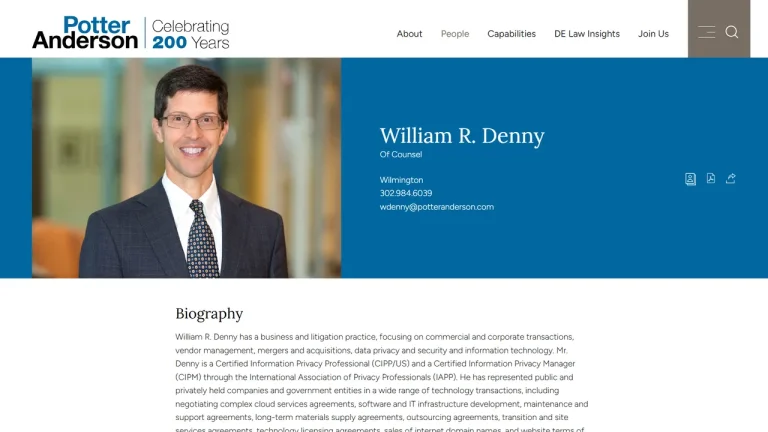
William R. Denny (Potter Anderson & Corroon LLP) - Wilmington, DE
Neal C. Belgam - Wilmington, DE
Stamoulis & Weinblatt - Wilmington, DE
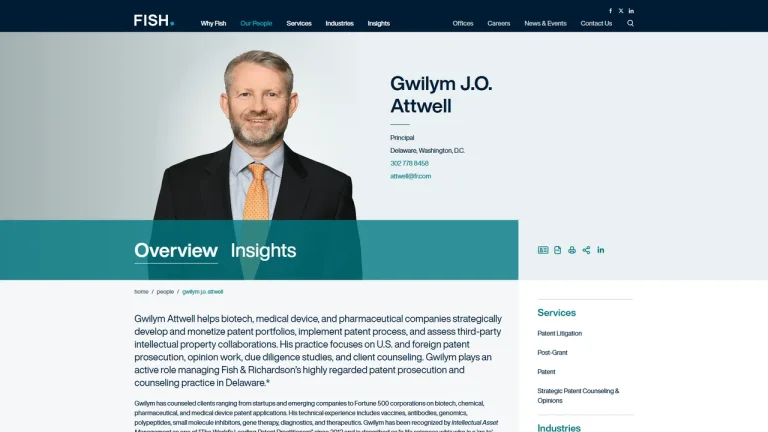
Gwilym Attwell (Fish & Richardson) - Wilmington, DE
Protecting Creative Property & Digital Assets in Wilmington
Wilmington represents a vibrant center for corporate innovation, digital technologies, creative media, and commercial software development. Across New Castle County, including creative clusters throughout Downtown Wilmington, the Riverfront Arts District, and commercial research corridors near Newark and Pike Creek, creators and technology firms generate substantial proprietary intellectual property. Establishing robust copyright protection ensures that original authorship is safeguarded against unauthorized reproduction, piracy, and unlawful commercial distribution.
Under federal jurisprudence, copyright infringement claims are governed exclusively by federal law and fall within the sole original jurisdiction of the federal courts pursuant to 28 U.S.C. § 1338(a). In Wilmington, copyright litigation is adjudicated before the U.S. District Court for the District of Delaware, located on North King Street. Furthermore, ancillary disputes involving copyright ownership assignments, breach of software licensing agreements, and trade secret claims are regularly heard in the Delaware Court of Chancery and New Castle County Superior Court at the Leonard L. Williams Justice Center.
Working with a dedicated Wilmington copyright attorney provides creators and enterprises with decisive procedural advantages. From structuring comprehensive licensing frameworks to handling complex pre-trial discovery, local counsel defends client rights efficiently while frequently negotiating favorable settlements that protect long-term intellectual property valuation without protracted courtroom trials.
Cost Overview for Wilmington Copyright Representation
| Case Scenario | Fee Structure | Estimated Cost (USD) | Key Cost Determinants |
|---|---|---|---|
| U.S. Copyright Office Registration | Flat Fee | $400 - $1,250 | Number of works, group registration eligibility, software deposit redactions for trade secrets |
| Cease-and-Desist & DMCA Enforcement | Flat / Hourly | $750 - $2,500 | Infringement scope, number of online host notices, pre-litigation settlement negotiations |
| Copyright Claims Board (CCB) Proceeding | Hourly / Flat Fee | $3,000 - $8,500 | Voluntary opt-out responses, document disclosure scope, written legal argument requirements |
| Federal Copyright Infringement Litigation | Hourly / Retainer | $25,000 - $125,000+ | Preliminary injunction demands, statutory damages eligibility, trial complexity in District of Delaware |
Critical Legal Deadlines & Statutes in Delaware
Timely compliance with statutory filing requirements is paramount to preserving full remedies under the U.S. Copyright Act. Under 17 U.S.C. § 507(b), civil copyright infringement actions must be commenced within three years after the claim accrued. In the Third Circuit, the discovery rule applies, meaning the statutory clock begins when the copyright holder discovered or reasonably should have discovered the infringement.
Securing statutory damages and attorney fees requires strict adherence to registration timing. Pursuant to 17 U.S.C. § 412, a work must be registered with the U.S. Copyright Office prior to the commencement of infringement, or within three months following the work's initial publication. Under the Digital Millennium Copyright Act, an online service provider receiving a valid counter-notification must restore removed content within ten to fourteen business days under 17 U.S.C. § 512(g) unless the copyright owner initiates a court action. For breach of underlying copyright licensing contracts, Delaware enforces a three-year limitation period under 10 Del. C. § 8106.
Small Claims Limits vs. Professional Representation
In Delaware, the Justice of the Peace Court maintains civil jurisdiction capped at $25,000 under 10 Del. C. § 9301. However, state courts cannot adjudicate copyright infringement claims because the federal judiciary exercises exclusive jurisdiction over copyright subject matter pursuant to 28 U.S.C. § 1338(a).
For smaller copyright claims up to $30,000, creators may utilize the Copyright Claims Board (CCB), an alternative administrative tribunal established under the CASE Act pursuant to 17 U.S.C. § 1504. While the CCB provides an expedited, lower-cost alternative to federal court, respondents may opt out within sixty days, forcing the matter into the U.S. District Court for the District of Delaware. Professional representation ensures proper selection between CCB administrative tracks and federal litigation, guaranteeing that claims for injunctive relief and statutory damages are asserted effectively.
Red Flags When Hiring a Wilmington Copyright Lawyer
- Promising recovery of statutory damages and legal fees without verifying registration timing under Section 412: Statutory damages require timely registration before infringement began.
- Filing copyright infringement lawsuits in Delaware state courts: State courts lack subject-matter jurisdiction to decide copyright infringement actions under federal preemption rules.
- Lack of experience with CM/ECF federal filing in the District of Delaware: Litigating copyright cases requires deep familiarity with local federal rules and specialized discovery practices.
- Failing to analyze work-made-for-hire provisions: Attorneys must carefully evaluate independent contractor agreements to verify that copyright ownership truly vested in the client.
Frequently Asked Questions
Do I need a federal copyright registration before filing an infringement lawsuit?
Yes. Under federal law, the U.S. Supreme Court requires that a copyright owner possess an issued registration certificate or formal refusal from the U.S. Copyright Office before initiating a civil copyright infringement lawsuit in federal district court.
What is the Copyright Claims Board (CCB)?
The CCB is an administrative tribunal within the U.S. Copyright Office that resolves copyright disputes with total damages capped at $30,000. It offers an efficient alternative to federal court, though either party retains the statutory right to opt out within sixty days.
What damages can I recover in a copyright infringement action?
Depending on registration timing, you may seek actual damages plus the infringer's profits, or statutory damages ranging from $750 up to $30,000 per infringed work, which can increase to $150,000 for willful infringement, alongside potential attorney fee recovery.
How does Delaware contract law interact with federal copyright ownership?
While federal law determines copyright validity and infringement, Delaware contract law governs the interpretation and enforcement of licensing contracts, non-disclosure agreements, and intellectual property assignment provisions in employment disputes.