
Divorce & Family Law Lawyers in Wilmington
Retaining an experienced Wilmington divorce and family law lawyer protects your assets, parental rights, and financial security under Delaware domestic statutes. Skilled family law advocates frequently resolve property division, alimony, and custody disputes through court mediation and structured settlements before trial. Explore our directory below to consult with top-rated family attorneys serving New Castle County.

Phillips Goldman & Spence Pa - Wilmington, DE

The Law Office of Shauna T. Hagan, LLC - Wilmington, DE

Laura E. Brooks, Esq. - Brooks Law LLC - Wilmington, DE

Wahl Family Law - Wilmington, DE
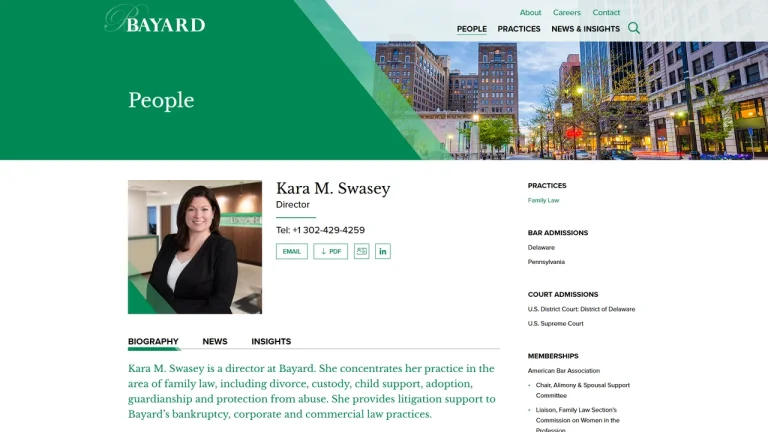
Kara M. Swasey - Wilmington, DE

Connolly Gallagher LLP - Wilmington, DE

Longobardi & Boyle LLC - Wilmington, DE
R. Joseph Hrubiec, Esquire - Wilmington, DE

Horner Law LLC - Wilmington, DE
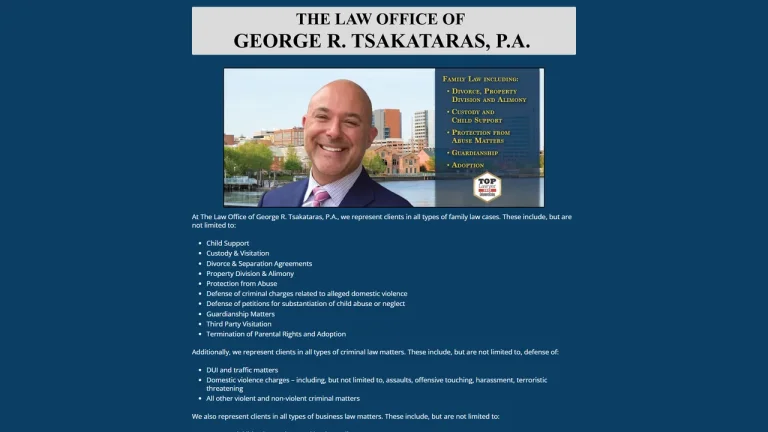
The Law Office of George R. Tsakataras, P.A. - Wilmington, DE

Thomas A. Foley, Attorney At Law - Wilmington, DE

Poole, Mensinger, Cutrona & Ellsworth-Aults - Wilmington, DE

Sharon M. Eppes - Family Law Advice Center, P.A. - Wilmington, DE
Law Offices of Dana L. Reynolds, LLC - Wilmington, DE

Gawthrop Greenwood, PC - Wilmington, DE
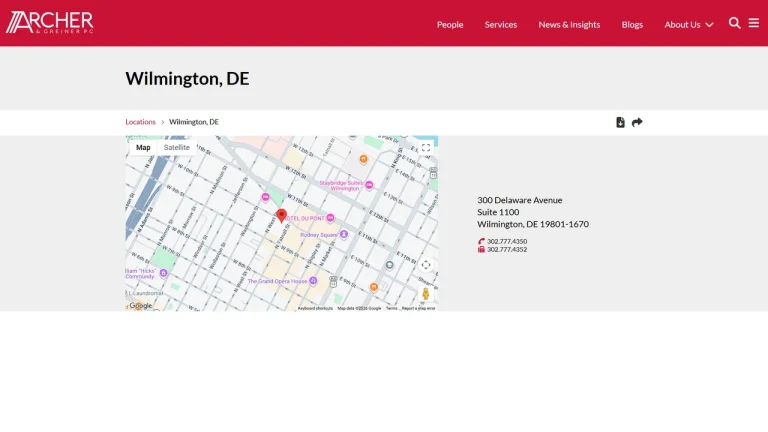
Archer & Greiner, P.C. - Wilmington, DE

Gary R. Spritz, Esq. - Wilmington, DE

Delaware Volunteer Legal Services - Wilmington, DE

Leslie B. Spoltore - Wilmington, DE

Doroshow, Pasquale, Krawitz and Bhaya - Wilmington, DE
Law Offices Kenneth F Carmine - Wilmington, DE

Bayard, P.A. - Wilmington, DE

Law Office of John A. Barber - Wilmington, DE

Navigating Family Law and Matrimonial Practice in Wilmington
Family law proceedings in Wilmington encompass diverse domestic challenges, from complex, high-net-worth asset divisions involving corporate executives and business owners in Greenville and Trolley Square to child custody and support disputes across New Castle County. Resolving these delicate matters requires thorough mastery of Delaware's specialized Family Court rules, statutory equitable distribution principles, and financial disclosure mandates.
All family law cases originating in Wilmington-including divorce, property division, alimony, child custody, visitation, child support, and Protection From Abuse (PFA) petitions-are adjudicated exclusively at the Family Court of the State of Delaware, located inside the Leonard L. Williams Justice Center at 500 North King Street in Downtown Wilmington. Delaware law separates the legal dissolution of marriage from ancillary matters. Local family lawyers guide clients through court-ordered mediation, case management conferences, and ancillary hearings before Family Court commissioners and judges.
Matrimonial attorneys in Wilmington represent individuals and parents across New Castle County, including Newark, New Castle, Greenville, Hockessin, Middletown, and Bear. Experienced local counsel provides essential guidance on business asset valuations, pension splits, and parenting plans designed to protect long-term family stability.
Family Law Legal Fees and Representation Models
| Case Scenario | Fee Structure | Estimated Cost (USD) | Key Cost Determinants |
|---|---|---|---|
| Uncontested Divorce (No Ancillary Matters) | Flat Fee | $1,500 - $3,500 + filing fee | Mutual consent, separation requirement completion, and waiver of ancillary jurisdiction. |
| Contested Custody & Parenting Time Dispute | Hourly Retainer | $3,500 - $8,500 initial retainer ($325 - $550/hr) | Custody mediation outcomes, psychological custody evaluations, and evidentiary hearing duration. |
| High-Net-Worth Property Division & Alimony | Hourly Retainer | $8,500 - $25,000 initial retainer | Business valuations, stock option and RSU tracing, deferred compensation, and QDRO drafting. |
| Child Support Determination (Melson Formula) | Hourly / Flat Rate | $1,500 - $4,500 | Variable self-employment earnings, private school tuition allocation, and medical expense shares. |
Critical Legal Deadlines & Statutes in Delaware
Divorce and domestic relations in Delaware are subject to strict statutory procedural rules. Under Del. Code tit. 13, § 1504, the Family Court cannot exercise jurisdiction over a divorce petition unless at least one spouse has resided continuously in Delaware for at least six months immediately preceding the filing.
Delaware is a no-fault divorce jurisdiction governed by Del. Code tit. 13, § 1505, which requires proof of irretrievable breakdown. For divorces based on incompatibility, the spouses must live separate and apart for at least six months before the court will grant a final decree, although spouses may live under the same roof if they occupy separate bedrooms and do not engage in marital relations. Delaware divides property equitably pursuant to Del. Code tit. 13, § 1513, evaluating factors including the duration of the marriage, value of marital assets, and economic circumstances without considering marital fault.
Spousal support duration is strictly regulated under Del. Code tit. 13, § 1512: for marriages lasting less than twenty years, alimony cannot exceed 50% of the duration of the marriage. Child custody decisions are governed by Del. Code tit. 13, § 722, which sets forth eight statutory best interest factors. Child support is calculated pursuant to Del. Code tit. 13, § 514 using Delaware's Melson Formula, which calculates parental obligations based on primary support needs and a standard of living adjustment.
JP Court Limits vs. Family Court Legal Representation
The Delaware Justice of the Peace Court operates under Del. Code tit. 10, § 9301 with a $25,000 ceiling, but JP Courts possess ZERO authority over divorce, custody, child support, or marital property divisions. These matters are under the exclusive jurisdiction of the Family Court of the State of Delaware.
Under Delaware procedural law, failing to retain ancillary jurisdiction under Del. Code tit. 13, § 1518 before a divorce decree is entered permanently forfeits your legal right to divide marital real estate, split retirement accounts, or obtain alimony. Retaining a dedicated Wilmington family law attorney prevents fatal procedural defaults, ensures accurate calculations under the Melson Formula, and protects parental rights during mediation and trial at 500 North King Street.
Red Flags When Hiring a Wilmington Family Lawyer
- Failing to formally petition for the retention of ancillary jurisdiction under Section 1518, resulting in the permanent loss of property and alimony claims.
- Promising guaranteed 50/50 division of marital assets without reviewing complete financial disclosures, as Delaware judges apply broad equitable discretion.
- Attorneys unfamiliar with the unique Melson Formula child support calculations used exclusively by Delaware Family Court.
- Encouraging hostile parental alienation tactics that violate court standing orders and damage credibility under the Section 722 best interests analysis.
Frequently Asked Questions
How long do I have to live in Delaware before filing for divorce in Wilmington?
Under Delaware law, at least one spouse must have resided continuously within the state for at least six months immediately prior to filing the divorce petition in Family Court.
What is the Delaware Melson Formula for child support?
The Melson Formula is a mathematical calculation used by Delaware Family Court that accounts for each parent's basic support needs, the child's primary support needs, and a standard of living adjustment based on available parental income.
How does the court determine child custody in New Castle County?
Judges determine legal and physical custody based on the best interests of the child, evaluating eight statutory factors including parental wishes, child preferences, emotional adjustment to home and school, and past caregiving roles.
How long does spousal alimony last under Delaware law?
For marriages lasting less than twenty years, alimony duration is capped by statute at no more than 50% of the length of the marriage. Only marriages of twenty years or longer are eligible for alimony without a time restriction.
Why is retaining ancillary jurisdiction critical in a Delaware divorce?
Ancillary jurisdiction refers to the court power to resolve property division, alimony, and attorney fees. You must explicitly petition the court to retain ancillary jurisdiction before the divorce decree is granted, or those rights are permanently forfeited.