
Financial & IP Lawyers in Wilmington
Retaining an experienced financial and intellectual property lawyer in Wilmington protects proprietary technologies and secures complex commercial transactions. Local counsel provides critical representation before Wilmington federal tribunals and corporate chancery courts. Explore our directory below to connect with qualified Wilmington commercial attorneys.

McDermott Will & Schulte - Wilmington, DE
Kennedys - Wilmington, DE

Joseph M. Barry - Wilmington, DE
Ballard Spahr - Wilmington, DE
Morris, Nichols, Arsht & Tunnell LLP - Wilmington, DE

Conaway-Legal LLC - Wilmington, DE
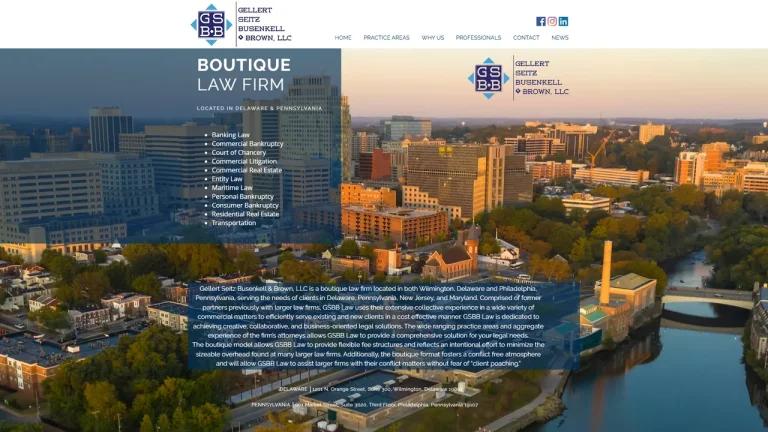
Gellert Scali Busenkell & Brown, LLC - Wilmington, DE
Cooper Levenson, Attorneys at Law - Wilmington, DE
Venable LLP - Wilmington, DE
Morris James LLP - Wilmington, DE

Cole Schotz P.C. - Wilmington, DE
James L. Patton, Jr. (Young Conaway Stargatt & Taylor) - Wilmington, DE
Labaton Keller Sucharow LLP - Wilmington, DE
Bernstein Litowitz Berger & Grossmann LLP - Wilmington, DE
Neal C. Belgam - Wilmington, DE

Evans George E - Wilmington, DE

Polsinelli - Wilmington, DE
Blank Rome LLP - Wilmington, DE
Gordon Rees Scully Mansukhani, LLP - Wilmington, DE
Fish & Richardson P.C. - Wilmington, DE
Ceccotti & Masten - Wilmington, DE

Subranni Zauber LLC - Wilmington, DE

Wolfe & Associates - Wilmington, DE

Financial and IP Jurisdictional Authority in Wilmington, Delaware
Wilmington serves as an internationally recognized focal point for corporate governance, debt structuring, and patent litigation. Commercial entities and inventors operate within a legal framework anchored by the Delaware Court of Chancery at the Leonard L. Williams Justice Center on North King Street and the U.S. District Court for the District of Delaware at the J. Caleb Boggs Federal Building. Local Wilmington legal counsel possesses specialized fluency in managing complex balance-sheet restructurings and intellectual property disputes.
Financial transactions conducted in Wilmington frequently require drafting credit facilities, securing collateral pledges under commercial statutory codes, and providing authoritative Delaware legal opinions. When patent infringement, trademark misappropriation, or trade secret breaches occur, Wilmington attorneys navigate both federal bench trials and specialized chancery proceedings to secure injunctive relief and monetary damages.
From Rodney Square and the downtown commercial corridor to Riverfront corporate centers, financial and intellectual property lawyers in Wilmington provide vital guidance to tech startups, financial institutions, and corporate boards. Local representation ensures precise adherence to specialized court rules and established judicial precedents unique to Delaware.
Legal Fee Benchmarks for Wilmington Financial & IP Practice
Legal billing for corporate finance and intellectual property in Wilmington primarily utilizes structured hourly rates, alongside flat-fee arrangements for registered patent or trademark filings. The table below details customary commercial billing benchmarks across the city:
| Case Scenario | Fee Structure | Estimated Cost (USD) | Key Cost Determinants |
|---|---|---|---|
| Federal Trademark Registration & Clearance Search | Flat Fee | $1,500 - $3,500 | Search report depth, multi-class applications, office action response difficulty. |
| Utility Patent Application (USPTO Drafting & Filing) | Flat or Staged Fee | $6,000 - $14,000 | Technical complexity, volume of independent and dependent claims, prior art density. |
| Commercial Lending Documentation & Secured Filings | Hourly ($375 - $650/hr) | $4,000 - $12,500 | Collateral complexity, intercreditor agreements, statutory financing statements. |
| Federal Patent Infringement Litigation (D. Del.) | Hourly Retainer ($600 - $1,150/hr) | $60,000 - $350,000+ | Markman claim construction hearings, electronic discovery scale, expert witness analysis. |
Critical Legal Deadlines & Statutes in Delaware Financial & IP Law
Strict statutory periods govern commercial contracts and IP enforcement actions within Delaware. Under the Delaware Uniform Trade Secrets Act, actions for misappropriation must be commenced within three years after the misappropriation is discovered or should have been discovered through reasonable diligence pursuant to Del. Code tit. 6 § 2006. Similarly, actions based on contractual debt or commercial accounts are subject to a three-year statute of limitations under Del. Code tit. 10 § 8106.
In patent litigation brought under 35 U.S. Code § 271, no recovery of damages may be had for any infringement committed more than six years prior to the filing of the complaint pursuant to 35 U.S. Code § 286. Secured transactions in Wilmington require the timely filing of UCC financing statements, which remain effective for five years and require continuation statements filed strictly within the final six-month window before expiration pursuant to Del. Code tit. 6 § 9-515.
Small Claims Limitations vs. Commercial Court Representation
Delaware Justice of the Peace Courts adjudicate civil disputes involving damages up to $25,000 pursuant to Del. Code tit. 10 § 9301. While unrepresented business owners can pursue minor vendor debt defaults in Justice of the Peace Court 10 or Court 12 in New Castle County, federal patent matters are strictly reserved for federal courts under 28 U.S. Code § 1338.
Furthermore, under Delaware Supreme Court Rule 57, business entities appearing in appellate courts, the Court of Chancery, or the Delaware Superior Court Complex Commercial Litigation Division (CCLD) must be represented by licensed legal counsel. Retaining experienced corporate and IP lawyers ensures compliance with local rules, effective protective order management for proprietary data, and rigorous financial advocacy.
Red Flags in Wilmington Financial and IP Legal Representation
Securing elite commercial and patent representation demands careful scrutiny. Avoid firms displaying the following vulnerabilities:
- Unregistered Patent Agents Practicing Federal Litigation: Only registered patent attorneys admitted to the Delaware bar or working with admitted Delaware local counsel can litigate infringement in federal court.
- Absence of Conflict Checking Protocols: Financial and IP litigation involves extensive corporate networks; never work with a practice that fails to perform formal, written conflict-of-interest clearance checks.
- Unclear Electronic Discovery Surcharges: Complex litigation incurs significant data hosting costs. Retainer agreements must clearly delineate vendor discovery expenses from actual attorney hourly rates.
- Lack of Delaware Local Counsel Experience: Out-of-state entities must hire counsel intimately familiar with local rules and standing orders of the U.S. District Court for the District of Delaware.
Frequently Asked Questions
Why is Wilmington a central hub for U.S. patent litigation?
Because many major corporations are incorporated in Delaware, the U.S. District Court for the District of Delaware in Wilmington possesses statutory venue for patent disputes, providing judges with unmatched technical expertise.
What is the function of Delaware local counsel in federal IP cases?
Delaware local counsel sponsors out-of-state lead attorneys pro hac vice, ensures compliance with local court rules and chamber procedures, attends hearings, and actively shapes litigation strategy.
How does the Delaware Court of Chancery resolve commercial financial disputes?
The Court of Chancery is a court of equity without juries, where chancellors with deep corporate expertise swiftly issue preliminary injunctions, resolve fiduciary challenges, and enforce commercial agreements.
What protection does a UCC-1 financing statement provide Delaware lenders?
Filing a UCC-1 statement with the Delaware Department of State perfects a lender security interest in commercial collateral under Uniform Commercial Code Article 9, granting statutory priority over unsecured creditors.
Can non-disclosure agreements (NDAs) be enforced in Wilmington courts?
Yes, Delaware courts enforce confidentiality agreements and can grant immediate temporary restraining orders under trade secret laws to stop unauthorized disclosure of proprietary commercial data.