
Trademark Lawyers in Wilmington
Retaining an experienced trademark lawyer in Wilmington ensures your enterprise brand and intellectual property are rigorously safeguarded under federal and state statutory frameworks. Knowledgeable counsel routinely handles USPTO office actions, trademark opposition filings, and brand conflicts out of court through strategic licensing and dispute settlement. Explore our curated directory below to schedule an initial consultation with reputable New Castle County trademark practitioners.
Morris, Nichols, Arsht & Tunnell LLP - Wilmington, DE
The Tannenbaum Law Group, LLC - Wilmington, DE

Reed Smith LLP - Wilmington, DE

Barnes & Thornburg LLP - Wilmington, DE

Dunlap Bennett & Ludwig PLLC - Wilmington, DE

Melanie K. Sharp - Wilmington, DE
Shlansky Law Group - Wilmington, DE
Neal C. Belgam - Wilmington, DE
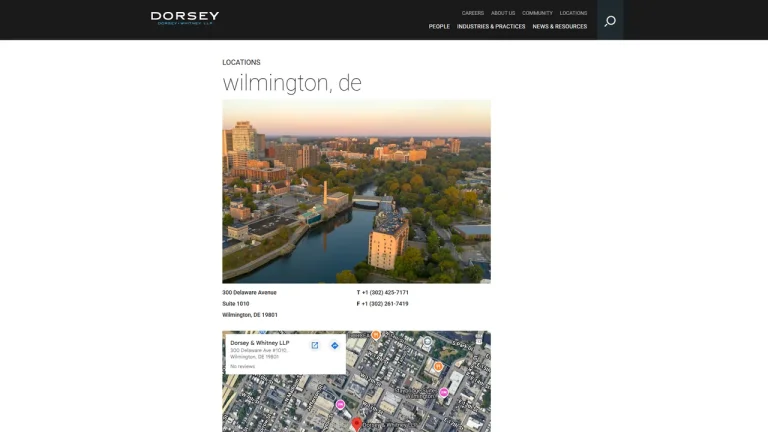
Dorsey & Whitney LLP - Wilmington, DE
Flaster Greenberg PC - Wilmington, DE
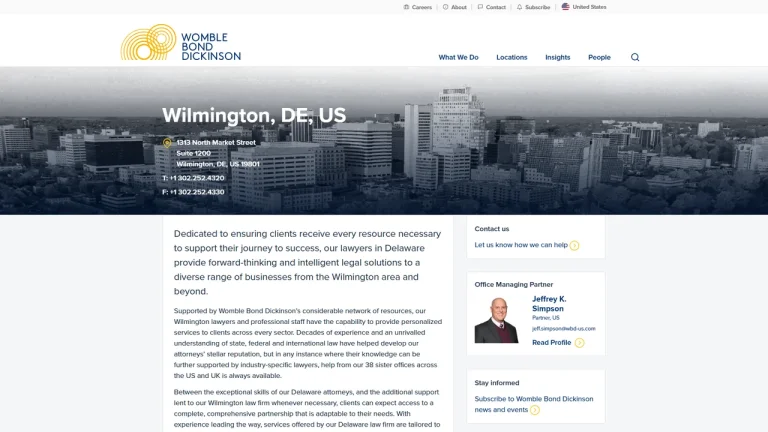
Womble Bond Dickinson (US) LLP - Wilmington, DE
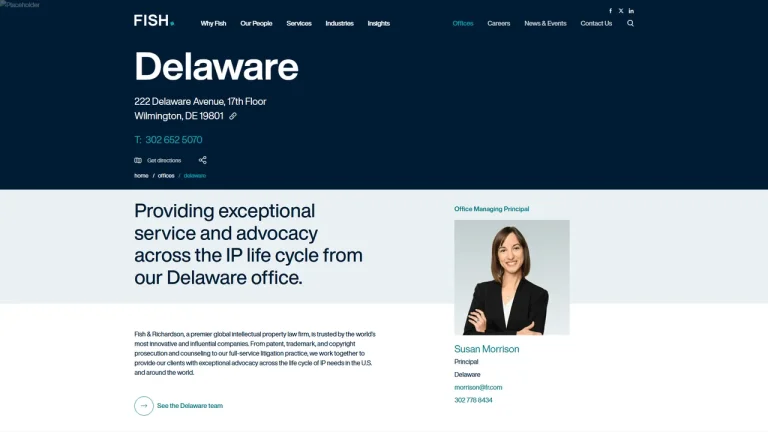
Fish & Richardson P.C. - Wilmington, DE

Richards, Layton & Finger, PA - Wilmington, DE

Polsinelli - Wilmington, DE
Ballard Spahr - Wilmington, DE

Karen L. Pascale - Wilmington, DE

K&L Gates LLP - Wilmington, DE
Wilson Sonsini Goodrich & Rosati - Wilmington, DE

Troutman Pepper Locke - Wilmington, DE
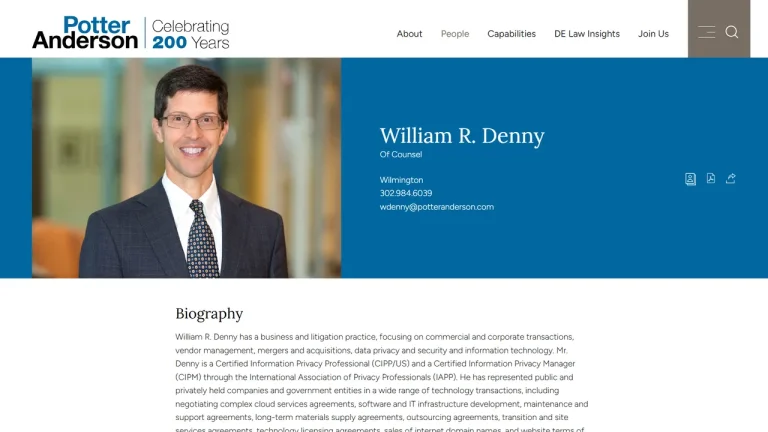
William R. Denny (Potter Anderson & Corroon LLP) - Wilmington, DE
Stamoulis & Weinblatt - Wilmington, DE
DLA Piper - Wilmington, DE
Shaw Keller LLP - Wilmington, DE

Strategic Trademark Counsel and Brand Enforcement in Wilmington
Wilmington serves as a pivotal national nexus for commercial formation, corporate governance, and brand management. Operating within New Castle County, enterprises located from Downtown Wilmington and the Christina Riverfront to suburban hubs like Greenville, Pike Creek, and Newark face intense commercial competition. Establishing exclusive trademark protection prevents unauthorized commercial infringement, unfair trade practices, and brand dilution across local, national, and digital commerce channels.
Trademark disputes and federal registration matters arising in Wilmington routinely fall under the jurisdiction of the U.S. District Court for the District of Delaware, situated at the J. Caleb Boggs Federal Building on North King Street. This federal court maintains one of the most prominent intellectual property trial dockets in the United States. Concurrently, state-level trademark registrations, trade name recordations, and deceptive trade claims involve the Delaware Division of Corporations and the renowned Delaware Court of Chancery, where corporate equity and trade identity disputes are efficiently resolved.
Enlisting a local Wilmington trademark attorney gives businesses a tangible advantage in managing complex proceedings before the Trademark Trial and Appeal Board (TTAB) and state commercial courts. Local counsel understands regional business practices, handles direct negotiations with opposing corporate counsel, and crafts ironclad coexistence agreements that safeguard client equity while avoiding protracted litigation.
Legal Fee Structures for Wilmington Trademark Matters
| Case Scenario | Fee Structure | Estimated Cost (USD) | Key Cost Determinants |
|---|---|---|---|
| Comprehensive Search & USPTO Application | Flat Fee | $850 - $2,500 | Number of international classes, search scope (federal, state, common law), USPTO filing tier |
| Substantive Office Action Refusal Response | Hourly / Flat Fee | $1,200 - $4,000 | Complexity of refusal (e.g., Section 2(d) Likelihood of Confusion vs. descriptiveness), evidentiary brief length |
| TTAB Opposition or Cancellation Proceeding | Hourly Rate | $6,000 - $35,000+ | Discovery phase volume, written depositions, expert witness engagement, settlement posture |
| Federal Trademark Infringement Litigation | Hourly / Retainer | $30,000 - $150,000+ | Preliminary injunction emergency hearings, discovery disputes, trial duration in District of Delaware |
Critical Legal Deadlines & Statutes in Delaware
Securing and maintaining trademark protections requires compliance with strict administrative and statutory timelines. Under federal trademark law, trademark registrants must file a Section 8 Declaration of Continued Use under 15 U.S.C. § 1058 between the fifth and sixth anniversary of the initial registration. A combined Section 8 and Section 9 renewal application must subsequently be filed every ten years pursuant to 15 U.S.C. § 1059.
When an adverse trademark is published in the USPTO Official Gazette, third parties possess a strict deadline of thirty calendar days under 15 U.S.C. § 1063 to file a Notice of Opposition or request a timely extension. For state-level statutory actions concerning deceptive trade practices and business brand dilution, Delaware imposes a three-year statute of limitations under 10 Del. C. § 8106, which applies to actions filed under the Delaware Uniform Deceptive Trade Practices Act pursuant to 6 Del. C. § 2532 and the Delaware Trademark Act governed by 6 Del. C. § 3311.
Small Claims Limits vs. Professional Representation
In Delaware, the Justice of the Peace Court handles small claims and minor debt actions with a jurisdictional monetary limit of $25,000 pursuant to 10 Del. C. § 9301. While an entrepreneur might consider filing a pro se action in Justice of the Peace Court for a minor unpaid branding invoice, that court completely lacks statutory jurisdiction to issue nationwide injunctive relief, award statutory trademark damages, or cancel competing registrations.
Substantive trademark infringement, federal Lanham Act claims, and unfair competition disputes require specialized representation before the U.S. District Court for the District of Delaware or the Delaware Court of Chancery. Retaining qualified trademark counsel ensures proper e-filing through federal CM/ECF platforms, precise evidence preservation, and effective motions for temporary restraining orders to immediately cease unlawful mark utilization.
Red Flags When Hiring a Wilmington Trademark Lawyer
- Guarantees of 100% registration approval: Ethical attorneys cannot guarantee USPTO approval, as examining attorneys maintain discretionary authority regarding distinctiveness and confusion.
- Reliance solely on basic USPTO database checks: Competent practitioners perform thorough clearance encompassing state business registers, domain records, and common-law marketplace usage.
- Absence of admission to the U.S. District Court for the District of Delaware: Local trademark disputes often escalate to federal court, requiring admission and practical trial familiarity with local court rules.
- Non-attorney filing services posing as legal firms: Online forms processing platforms cannot provide substantive legal defense when facing complex USPTO office action refusals.
Frequently Asked Questions
What is the difference between a Delaware state trademark and a federal USPTO registration?
A Delaware state trademark registration filed with the Delaware Secretary of State protects your commercial mark strictly within state borders under state statutes. A federal registration with the USPTO provides legal presumptions of ownership, nationwide priority across all fifty states, and the legal basis to bring infringement lawsuits in federal court.
Can a trademark dispute be resolved without filing a lawsuit in court?
Yes. Many brand conflicts are successfully resolved outside the courtroom through formal cease-and-desist communications, structured settlement negotiations, trademark coexistence agreements, or negotiated territory licensing, all of which save clients substantial time and legal expense.
Why are so many federal trademark lawsuits filed in Wilmington?
Wilmington hosts the U.S. District Court for the District of Delaware. Because a vast majority of Fortune 500 corporations and commercial entities are organized under Delaware corporate law, Wilmington serves as a primary federal venue possessing subject-matter and personal jurisdiction over major commercial trademark litigants.
What is a substantive USPTO Office Action?
A substantive Office Action is a formal refusal issued by a USPTO examining attorney, commonly citing Section 2(d) Likelihood of Confusion or Section 2(e) Mere Descriptiveness. Responding requires comprehensive legal arguments, case law citations, and evidentiary exhibits compiled by an attorney within statutory response deadlines.