
Business & Real Estate Lawyers in District Of Columbia
Connect with premier District of Columbia business and real estate lawyers to negotiate commercial leases, close property acquisitions, and resolve disputes. Skilled corporate and property attorneys assist with regulatory compliance, partnership formation, and contract enforcement while resolving impasses through out-of-court negotiation. Explore our curated directory below to consult an experienced District of Columbia attorney today.
Brown Rudnick LLP - Washington, DC

J. David Tax Law - Washington, DC
American Law and Tax Counsel PLLC - Washington, DC
Norris Law Group - Washington, DC

RISM LLC - Washington, DC

Law Office of Deborah D. Boddie - Washington, DC
Federal Attorney Rammy Barbari - Washington, DC
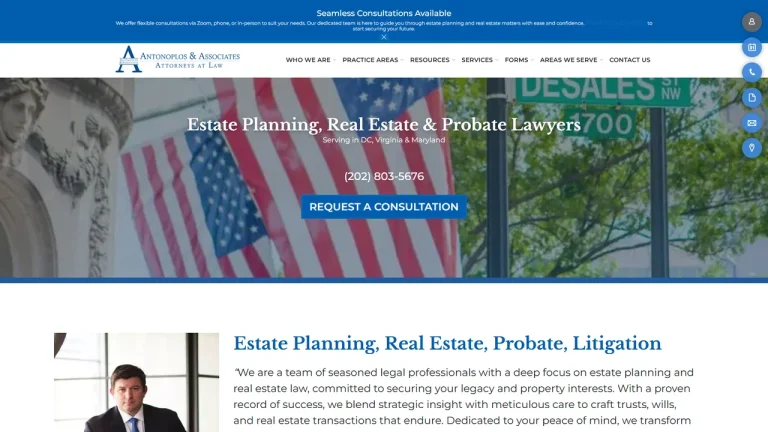
Antonoplos & Associates, Attorneys at Law - Washington, DC
Silverpine Law PLLC - Washington, DC

Vanessa Carpenter Lourie, P.C. - Washington, DC

Apex Legal Services, PLLC - Washington, DC

Law Office Of Jerry Joseph, PLC. - Washington, DC

Legal Counsel for the Elderly - Washington, DC
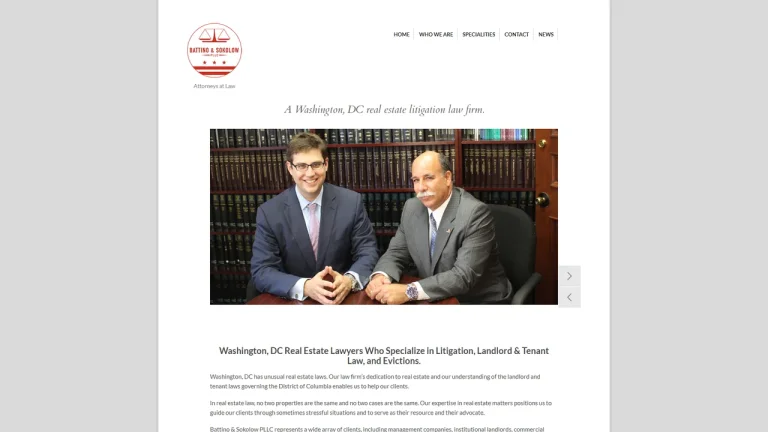
Battino & Sokolow PLLC - Washington, DC

Jessica T. Ornsby, Esq. - Washington, DC

Law Office James Patrick Barrett PA - Washington, DC

International Business Law Firm PC - Washington, DC

Law Office of Alfredo Vasquez - Washington, DC
Sterne, Kessler, Goldstein & Fox - Washington, DC

TILLIT LAW PLLC - Washington, DC
RJB Law - Washington, DC
Legal Aid DC - Washington, DC
Lee Legal - Washington, DC

Navigating Business Law and Real Estate Across the District of Columbia
The District of Columbia features a dynamic commercial and real estate landscape, spanning downtown corporate corridors, commercial revitalization in NoMa and the Navy Yard, mixed-use developments along the Wharf, and historic commercial properties in Georgetown. Operating an enterprise or purchasing real property in the District demands comprehensive adherence to specialized municipal statutes.
Business litigation and property disputes fall under the jurisdiction of the Superior Court of the District of Columbia, with specialized branches including the Civil Actions Branch and the Landlord and Tenant Branch at the H. Carl Moultrie Courthouse. Real estate conveyances, commercial mortgages, and deed filings are officially recorded through the District of Columbia Recorder of Deeds. Regulatory compliance, commercial licensing, and building permits are governed by the Department of Licensing and Consumer Protection (DLCP) and the Department of Buildings (DOB).
Retaining an attorney admitted to the District of Columbia Bar provides vital guidance through municipal zoning laws, commercial lease negotiations, partnership agreements, and regulatory approvals. Dedicated counsel safeguards commercial investments, mitigates transactional risk, and manages civil litigation across District courts.
Fee Structures for District of Columbia Business & Real Estate Representation
| Case Scenario | Fee Structure | Estimated Cost (USD) | Key Cost Determinants |
|---|---|---|---|
| Entity Formation & Operating Agreement Drafting | Flat Fee | $1,500 - $4,000 | Ownership structure complexity, multi-tier corporate governance, DLCP filings |
| Commercial Lease Negotiation & Review | Flat Fee or Hourly | $2,000 - $6,000 | Square footage, tenant improvement provisions, CAM operating expense pass-throughs |
| Commercial Real Estate Acquisition & Due Diligence | Hourly or Transactional Staged Fee | $5,000 - $18,000 | Property valuation, title abstract review, environmental assessments, zoning clearances |
| TOPA Compliance & Multi-Family Residential Purchase | Hourly Retainer | $375 - $650 per hour | Number of rental units, tenant association negotiations, right-of-first-refusal compliance |
Critical Legal Deadlines & Statutes in the District of Columbia
Real estate transactions and business operations in the District are governed by specific statutory deadlines. The Tenant Opportunity to Purchase Act (TOPA), codified at D.C. Code § 42-3404.02, requires owners of residential rental properties to provide tenants with statutory notice and opportunity to purchase before selling or transferring the property, with rigid timelines for tenant responses and negotiations.
Breach of written contract actions in the District carry a three-year statute of limitations under D.C. Code § 12-301(7), whereas contracts executed under seal benefit from a twelve-year limitations period under D.C. Code § 12-301(6). Corporate governance, LLC formations, and corporate filings are governed by the District of Columbia Uniform Business Organizations Code codified at D.C. Code § 29-101.01.
For construction matters, mechanic's liens must be recorded with the D.C. Recorder of Deeds within 90 days of work completion under D.C. Code § 40-301.02, and an enforcement lawsuit must be filed within one year pursuant to D.C. Code § 40-303.01. Actions regarding real property titles and quiet title claims are governed under D.C. Code § 16-3301.
Small Claims Court vs. Retaining Business and Real Estate Counsel
Under D.C. Code § 11-1321, the Small Claims and Conciliation Branch of the D.C. Superior Court has jurisdiction over monetary disputes not exceeding $10,000. Under court rules, a corporation or partnership acting as a plaintiff must be represented by an active member of the District of Columbia Bar, whereas individual litigants may appear pro se.
Commercial lease breaches, TOPA compliance disputes, boundary encroachments, and real property title defects routinely involve property valuations and damages vastly exceeding the $10,000 small claims limit. Furthermore, small claims tribunals cannot award equitable relief, specific performance, or lis pendens notices on real property. Enlisting experienced business and real estate counsel ensures proper title risk mitigation, negotiation of complex lease agreements, and assertive courtroom advocacy in the D.C. Superior Court Civil Division or federal court.
Red Flags When Hiring a District of Columbia Business & Real Estate Lawyer
- Failure to demonstrate detailed knowledge of Tenant Opportunity to Purchase Act (TOPA) statutory exemptions and tenant notice deadlines when handling multi-family properties.
- Using generic commercial contract templates that overlook District of Columbia Clean Energy DC building mandates, local zoning overlays, or DLCP registration rules.
- Lack of familiarity with title searches and deed recording procedures at the District of Columbia Recorder of Deeds.
- Fee quotes that fail to itemize municipal recording fees, title insurance premiums, survey expenses, and corporate filing surcharges.
Frequently Asked Questions
What is the Tenant Opportunity to Purchase Act (TOPA) in the District of Columbia?
Codified at D.C. Code § 42-3404.02, TOPA grants residential tenants the legal right to purchase their rental accommodation before the owner may sell or transfer it to a third party, requiring strict adherence to statutory offer notices and negotiation timetables.
Where are deeds and real estate documents recorded in the District of Columbia?
All deeds, deeds of trust, commercial mortgages, easements, and real estate encumbrances are recorded with the District of Columbia Recorder of Deeds, operated under the Office of Tax and Revenue in Southwest Washington, DC.
What is the statute of limitations for commercial contract disputes in DC?
Under D.C. Code § 12-301(7), an action for breach of contract must be commenced within three years. However, if the contract was executed under seal, a twelve-year limitation period applies under D.C. Code § 12-301(6).
Can a business entity represent itself in District of Columbia courts?
In the D.C. Superior Court Civil Actions Branch, business entities (corporations, LLCs, partnerships) must be represented by an active member of the D.C. Bar. In the Small Claims Branch, a corporate plaintiff must also appear through counsel, though corporate defendants may appear through an authorized officer.
What is the difference between an instrument under seal and a standard contract in DC?
In the District of Columbia, an instrument executed under seal (bearing formal seal recitals or notary acknowledgments) extends the actionable statute of limitations from the standard three-year term to twelve years under D.C. Code § 12-301(6), which is commonly utilized in commercial real estate deeds and financing notes.