
Debt Relief Lawyers in District Of Columbia
Consult seasoned District of Columbia debt relief lawyers to challenge predatory collections, negotiate settlements, and defend against lawsuits in local courts. Retaining qualified legal counsel protects your income from unlawful garnishment and forces collection agencies to verify disputed balances. Explore our verified directory below to schedule an initial debt resolution consultation with a trusted local attorney.

Palisade Legal Group - Washington, DC
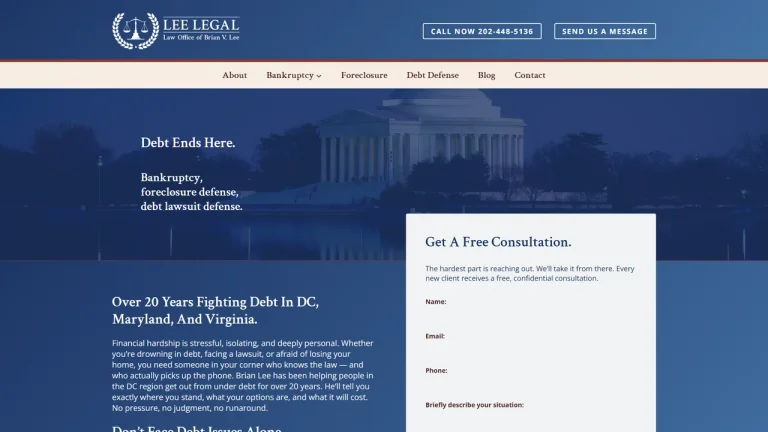
Lee Legal - Washington, DC

Law Offices of Sherrie A Smith, Pllc - Washington, DC
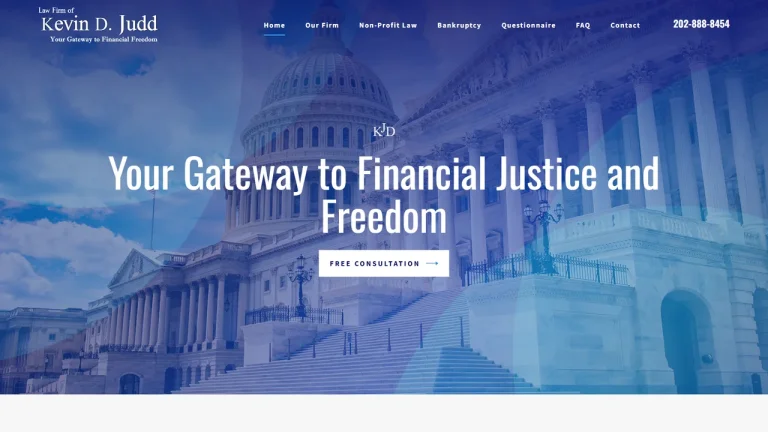
Law Firm of Kevin D. Judd - Washington, DC

Capital Justice Attorneys, LLP - Washington, DC
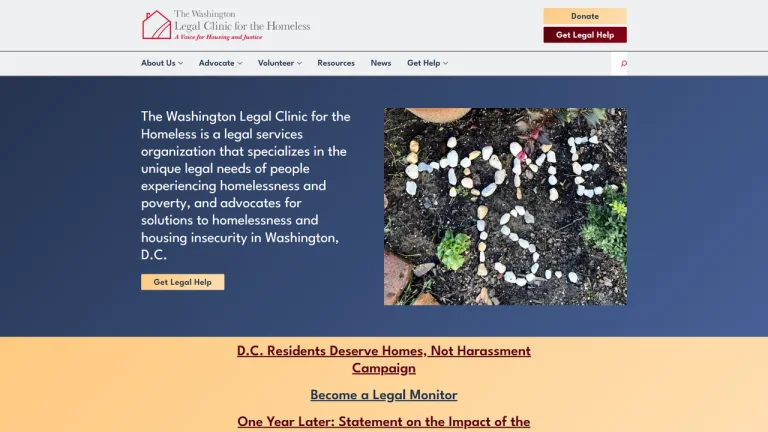
Washington Legal Clinic for the Homeless - Washington, DC

Donahoe Kearney, PLLC - Washington, DC

Law Offices of Vanessa Pacheco Bell - Washington, DC

Tax Relief Counsel - Tax Attorney - Washington, DC

Legal Counsel for the Elderly - Washington, DC

Law Offices of Harris S. Ammerman - Washington, DC
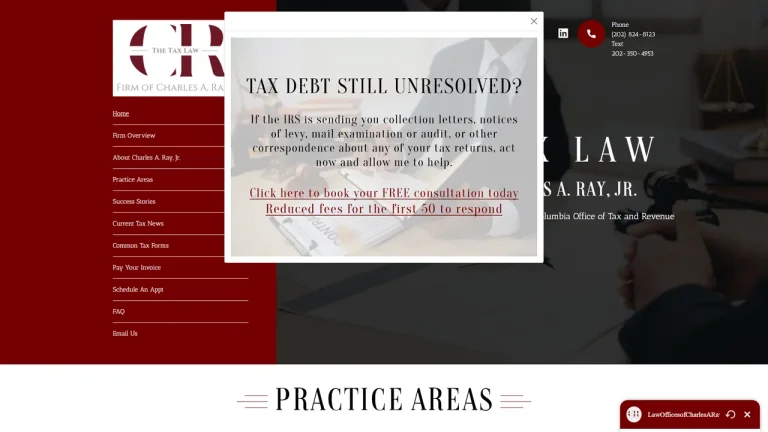
Law Firm of Charles A. Ray, P.C. - Washington, DC

Consumer Debt Protection in the District of Columbia
Facing overwhelming consumer obligations in the District of Columbia requires a clear understanding of municipal debt collection safeguards and civil litigation procedures. Residents dealing with credit card balances, medical debts, or third-party collection agencies benefit from strong statutory protections against abusive collection practices.
Debt collection lawsuits initiated by original creditors or debt purchasers are litigated in the Civil Division and the Small Claims and Conciliation Branch of the District of Columbia Superior Court, housed in the H. Carl Moultrie Courthouse on Indiana Avenue Northwest. Substantive statutory violations are subject to scrutiny by local judges and may be appealed to the District of Columbia Court of Appeals.
Retaining a dedicated District of Columbia debt relief lawyer provides an assertive defense against aggressive debt buyers. Experienced counsel audits collection correspondence, challenges questionable assignments of debt, negotiates structured out-of-court settlements, and asserts counterclaims when collection tactics breach statutory standards.
Legal Fee Structures for District of Columbia Debt Relief
| Case Scenario | Fee Structure | Estimated Cost (USD) | Key Cost Determinants |
|---|---|---|---|
| Debt Buyer Lawsuit Defense in D.C. Superior Court | Flat or Hourly ($300 - $550/hr) | $1,500 - $4,500 | Chain of title documentation, statute of limitations defense, trial preparation |
| Comprehensive Creditor Settlement & Workout | Hourly or Percentage of Debt Saved (15% - 25%) | $2,000 - $7,000 | Total debt balance, creditor negotiation willingness, lump-sum settlement funds |
| FDCPA & D.C. Debt Collection Law Enforcement | Contingency (Statutory Fee-Shifting) | $0 Upfront ($2,500 - $10,000+ fee from collector) | Severity of statutory violations, abusive call logs, improper communication records |
| Judgment Lien Clearance & Attachment Defense | Hourly ($325 - $575/hr) | $1,800 - $5,000 | Exempt wage calculations, motion to quash attachment, priority of judgment liens |
Critical Legal Deadlines & Statutes in District of Columbia
Defending against collection actions requires strict adherence to statutory deadlines. Under D.C. Code § 12-301(7), the statute of limitations for actions on simple contracts, open accounts, and debt collection lawsuits is three years from the date of default. Once the three-year window expires, the debt is legally time-barred, and suing upon it or threatening litigation violates consumer protection statutes.
District consumers enjoy robust safeguards under the District of Columbia Debt Collection Law, codified at D.C. Code § 28-3814. This statute prohibits debt collectors from engaging in harassment, using deceptive representations, or contacting consumers outside permitted hours. Debt buyers are explicitly required to provide verified documentation demonstrating chain of title and account ownership before filing suit.
Wage garnishments in the District are restricted under D.C. Code § 16-572, which limits garnishment amounts to protect essential household income. Additionally, consumers seeking statutory damages for unlawful harassment under the federal Fair Debt Collection Practices Act must initiate litigation within one year from the violation date pursuant to 15 U.S. Code § 1692k(d).
Small Claims Court vs. Legal Counsel in D.C. Debt Defense
The Small Claims and Conciliation Branch of the District of Columbia Superior Court adjudicates claims up to $10,000 under D.C. Code § 11-1321. Debt buying entities frequently flood this branch with lawsuits, relying on unrepresented consumers failing to appear so they can obtain default judgments.
When consumers represent themselves, they often overlook crucial evidentiary defects in the collector case. Debt buyers frequently lack original contracts, accurate balance histories, or valid assignments demonstrating ownership of the debt. Attempting to navigate evidentiary standards without counsel often leads to unmerited judgments that result in frozen bank accounts.
Retaining a skilled debt defense attorney alters the litigation dynamic. Counsel files formal answers, demands account verifications under D.C. Code § 28-3814, and motions for dismissal when collectors fail to produce admissible documentation, often leading to case dismissals or favorable settlements.
Red Flags When Vetting District of Columbia Debt Relief Counsel
Selecting reliable debt assistance requires thorough diligence. Protect your finances by identifying these warning signs:
- Out-of-state debt settlement telemarketing companies that charge advance fees before settling any debts, violating federal telemarketing rules under 16 C.F.R. § 310.4.
- Companies that guarantee specific settlement percentages without examining individual creditor policies or the risk of immediate legal action.
- Advising consumers to cease all communication with creditors without an attorney filing a formal notice of representation to block collection contact.
- Representatives who are not licensed attorneys with the District of Columbia Bar and cannot defend collection lawsuits in D.C. Superior Court.
Frequently Asked Questions
What is the statute of limitations on consumer debt in the District of Columbia?
Under D.C. Code § 12-301(7), the statute of limitations for collecting consumer debt arising from contracts and open accounts is three years from the date of the breach or last payment.
What protections does the D.C. Debt Collection Law provide?
Codified at D.C. Code § 28-3814, the law prohibits harassment, false statements, and requires debt collectors to produce verified documentation proving account ownership before initiating a lawsuit.
What should I do if I am sued by a debt buyer in D.C. Superior Court?
You should consult a debt defense attorney immediately to file an answer. Debt buyers must prove chain of title, and failure to present valid documentation often results in a dismissal of the lawsuit.
How much of my paycheck can be garnished in the District of Columbia?
Pursuant to D.C. Code § 16-572, wage garnishments are strictly capped to protect a debtor's disposable earnings, ensuring sufficient income remains for essential family living expenses.
Can a debt collector contact me after I hire an attorney?
Under both 15 U.S. Code § 1692c(a)(2) and D.C. Code § 28-3814, once a debt collector is notified that you are represented by an attorney, they are legally barred from contacting you directly.