
DUI/DWI Defense Lawyers in District Of Columbia
Connect with top District of Columbia DUI/DWI defense lawyers to protect your license, avoid mandatory jail time, and challenge breathalyzer evidence. Experienced local counsel navigates both criminal court proceedings and administrative DMV hearings, frequently securing reduced charges or diversion. Explore our comprehensive directory below to schedule an authoritative case review today.
The Law Offices of David Stein - Washington, DC

The Rollins and Chan Law Firm - Washington, DC
EPW Law PLLC - Washington, DC
The Abraham Law Firm - Washington, DC
David Benowitz Criminal Lawyer - Washington, DC
Wagner, PLLC - Washington, DC

Hannah Akintoye Law, PLLC - Washington, DC
Jay P. Mykytiuk, Trial Attorney - Washington, DC
Monument Legal - Washington, DC
Ervin Kibria Law - Washington, DC

Matthew Wilson Attorney at Law - Washington, DC
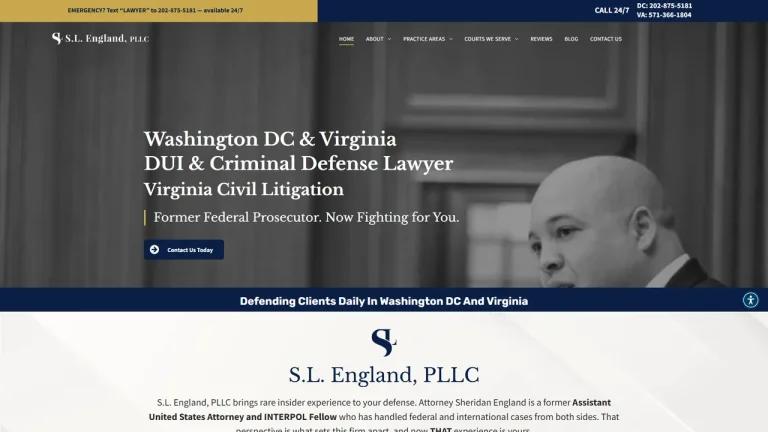
S.L. England, PLLC - Washington, DC
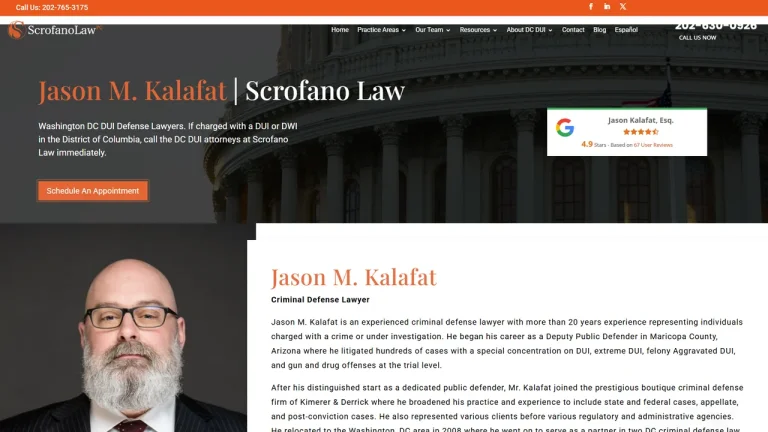
Jason Kalafat, Esq. - Washington, DC
Christopher J. Mutimer - Washington, DC
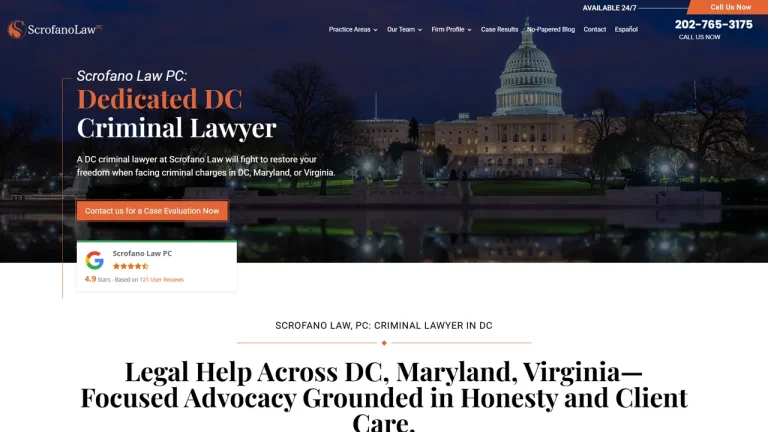
Scrofano Law PC - Washington, DC
Lotze Mosley PLLC - Washington, DC
Navigating DUI and DWI Defense in the District of Columbia
Driving under the influence (DUI) and operating while impaired (OWI) allegations in the District of Columbia carry severe statutory penalties, including mandatory minimum jail terms, extensive license revocations, and permanent criminal records. Arrests occur frequently across congested transit hubs, from Downtown DC and Georgetown nightlife corridors to Dupont Circle, the Wharf, and interstate highway connectors.
In the District of Columbia, criminal DUI offenses are prosecuted primarily by the Office of the Attorney General (OAG) for the District of Columbia at the Superior Court of the District of Columbia, located at the H. Carl Moultrie Courthouse on Indiana Avenue NW. Concurrently, administrative driver's license revocation actions are adjudicated separately before the District of Columbia Department of Motor Vehicles (DMV) Adjudication Services on Brentwood Road NE.
Retaining an attorney admitted to the District of Columbia Bar ensures immediate, coordinated intervention across both criminal courtrooms and administrative DMV hearings. Experienced defense counsel analyzes breathalyzer calibration records, challenges the lawfulness of Metropolitan Police Department (MPD) traffic stops, and seeks charge reductions or pretrial diversion through proactive negotiation.
Typical Fee Structures for District of Columbia DUI/DWI Defense
| Case Scenario | Fee Structure | Estimated Cost (USD) | Key Cost Determinants |
|---|---|---|---|
| First-Offense DUI & DMV Hearing Representation | Flat Legal Fee | $2,000 - $4,500 | Blood alcohol concentration (BAC) level, inclusion of DMV hearing, qualification for OAG diversion programs |
| Second or Subsequent DUI Offense Defense | Flat Fee or Staged Retainer | $4,000 - $8,500 | Prior conviction lookback timeframe, mandatory minimum jail exposure, ignition interlock requirements |
| Full Bench or Jury Trial (D.C. Superior Court) | Flat Trial Fee or Hourly Retainer | $5,000 - $12,000 | Toxicology expert witness retention, motion to suppress chemical evidence, multi-day courtroom trial |
| High-BAC (Aggravated) or DUI Involving Accident | Hourly Retainer or Staged Fee | $350 - $650 per hour | Felony enhancement exposure, accident reconstruction analysis, property damage restitution negotiations |
Critical Legal Deadlines & DUI Statutes in the District of Columbia
DUI and DWI matters in the District of Columbia proceed under rigorous statutory frameworks and tight procedural deadlines. Under D.C. Code § 50-2206.11, operating a vehicle with a blood alcohol concentration (BAC) of 0.08 grams or higher per 100 milliliters of blood constitutes per se driving under the influence.
Statutory penalties codified under D.C. Code § 50-2206.13 and D.C. Code § 50-2206.14 establish mandatory minimum jail sentences that escalate sharply based on elevated BAC tiers, such as 0.14% or 0.20%, even for first-time offenders. Refusal to submit to chemical testing triggers a mandatory one-year administrative driver's license revocation pursuant to the District's implied consent statute under D.C. Code § 50-2206.52.
Crucially, motorists face an immediate administrative deadline: under D.C. Code § 50-1403.01 and D.C. Municipal Regulations, a driver has strictly 10 calendar days (or 15 calendar days for non-residents) from the issuance of the Notice of Proposed Revocation to request an administrative hearing with the D.C. DMV Adjudication Services. Missing this deadline results in automatic license revocation before the criminal case is even heard in court.
Small Claims Limitations vs. Dedicated Criminal Defense Representation
The Small Claims and Conciliation Branch of the Superior Court of the District of Columbia exercises authority over civil actions capped at $10,000 under D.C. Code § 11-1321. Small claims courts have zero legal jurisdiction over criminal prosecutions, motor vehicle offenses, or administrative driver's license revocations.
Criminal DUI charges threaten personal liberty, driving privileges, professional security clearances, and employment prospects across the District. Navigating criminal court proceedings requires formal constitutional defense under the Sixth Amendment, including filing evidentiary suppression motions, cross-examining arresting officers, and challenging the scientific validity of chemical testing equipment. Dedicated DUI defense counsel provides essential courtroom representation that cannot be substituted through self-representation.
Red Flags When Hiring a District of Columbia DUI Lawyer
- Attorneys who guarantee that DUI charges will be dismissed or reduced without first examining body-worn camera footage or breath test logs.
- Failing to advise the client about the strict 10-day deadline to request a hearing with the D.C. DMV Adjudication Services to protect driving privileges.
- Attorneys who do not inspect calibration and maintenance records for the Intoximeter EC/IR II breath-testing machines used by the Metropolitan Police Department.
- Lawyers who immediately advise entering a guilty plea at the initial arraignment without assessing eligibility for diversion or challenging the initial traffic stop.
Frequently Asked Questions
What is the legal blood alcohol limit for DUI in the District of Columbia?
Under D.C. Code § 50-2206.11, the legal limit for adult non-commercial drivers is a blood alcohol concentration (BAC) of 0.08 grams per 100 milliliters of blood. For commercial drivers, the limit is 0.04%, while drivers under age 21 are subject to a strict zero-tolerance standard.
How long do I have to contest my driver's license suspension in DC?
Under D.C. Code § 50-1403.01, District residents have exactly 10 calendar days from receiving the Notice of Proposed Revocation to request an administrative hearing with the D.C. DMV Adjudication Services. Non-residents have 15 calendar days to submit this request.
What happens if I refuse a chemical test in the District of Columbia?
Under the District's implied consent law codified at D.C. Code § 50-2206.52, refusing a breath, blood, or urine test results in an automatic one-year administrative revocation of your driver's license, and evidence of refusal can be introduced by prosecutors at trial.
Are there diversion programs available for first-time DUI offenders in DC?
Yes. The Office of the Attorney General (OAG) offers deferred sentencing and diversion programs for eligible first-time offenders who meet statutory criteria, which may involve alcohol education, community service, and negative alcohol screenings leading to potential charge dismissal.
Can a DUI conviction impact my federal employment or security clearance?
Yes. A DUI conviction in the District of Columbia creates a permanent criminal record that must be disclosed on federal security clearance questionnaires (Standard Form 86) and may impact government employment, military commissions, or contracting suitability.