
Family Immigration Lawyers in District Of Columbia
Retaining an experienced District of Columbia family immigration lawyer protects your loved ones while navigating complex federal visa and green card petitions. Skilled legal counsel can resolve procedural roadblocks, prepare meticulous adjustment of status filings, and help avoid unnecessary administrative delays. Browse our directory below to consult a trusted family immigration attorney in Washington, D.C. for a comprehensive petition review.
Haynes Novick Kohn Immigration - Washington, DC

Motion Law - Washington, DC

Immigration Law Group PC - Washington, DC

Benach Pitney Reilly LLP - Washington, DC

Altius Immigration Law PLLC - Washington, DC
Capital Immigration Lawyers - Washington, DC
The Mendoza Law Firm - Washington, DC
Beach-Oswald Immigration Law Associates, P.C. - Washington, DC
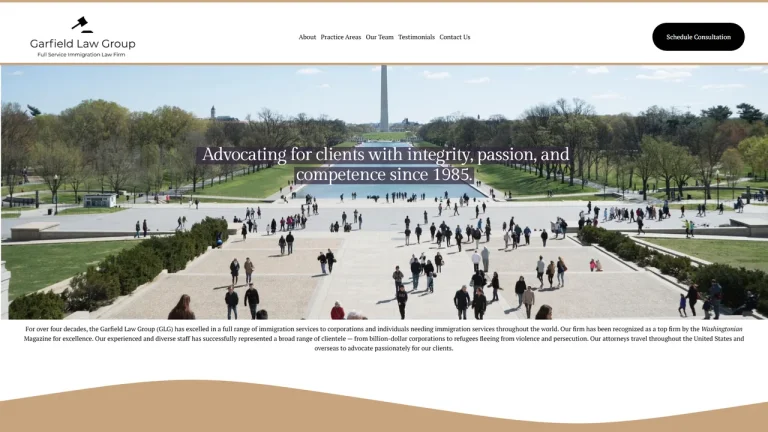
Garfield Law Group, PC - Washington, DC

International Business Law Firm PC - Washington, DC
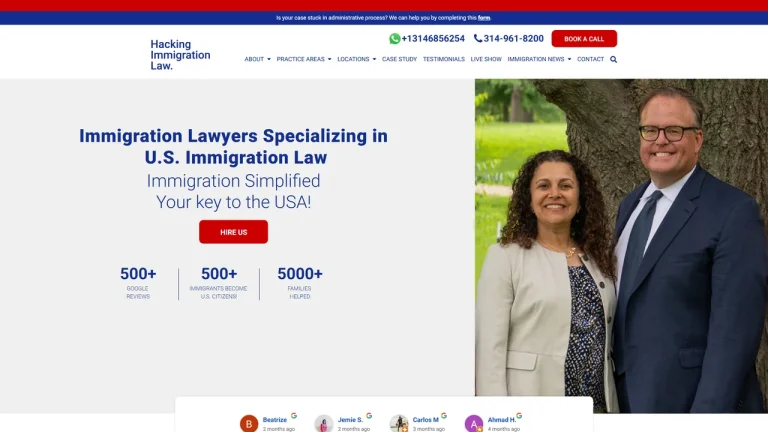
Hacking Immigration Law LLC - Washington, DC

Morris H. Deutsch, Immigration Attorney and Adviser - Washington, DC

Global Immigration Partners PLLC - Washington, DC
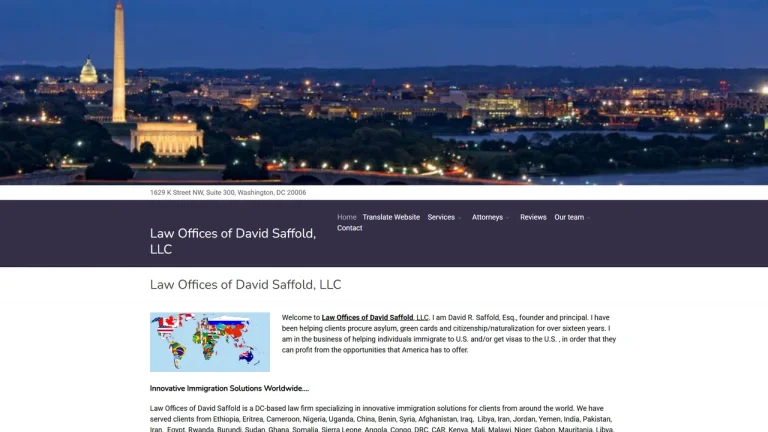
Law Offices of David Saffold, LLC - Washington, DC
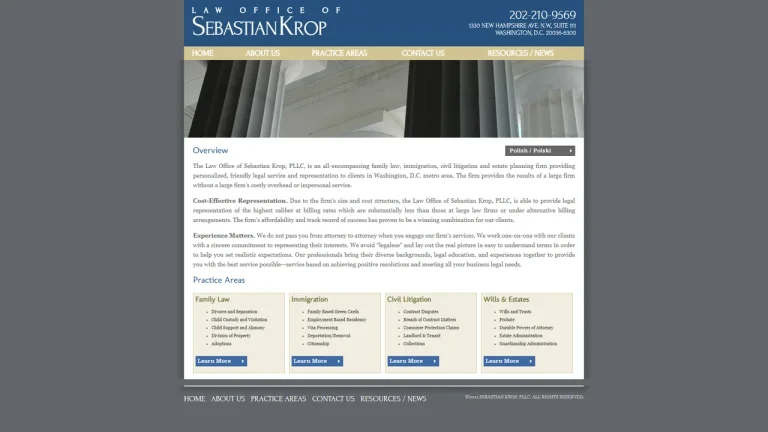
Law Office of Sebastian Krop, PLLC - Washington, DC
Federal Immigration Framework & District of Columbia Jurisdictions
Family-based immigration in the District of Columbia is governed by federal immigration statutes administered through federal agencies headquartered directly in the nation's capital. Petitions for immediate relatives, family preference categories, and lawful permanent residency are adjudicated primarily through the U.S. Citizenship and Immigration Services (USCIS) Washington Field Office, alongside national service centers. Complex federal appeals escalate through the Executive Office for Immigration Review (EOIR) and the U.S. District Court for the District of Columbia, located at the E. Barrett Prettyman U.S. Courthouse.
Local family immigration practice frequently intersects with municipal family jurisprudence. In matters involving vulnerable or undocumented youth seeking Special Immigrant Juvenile Status (SIJS), predicate custody and dependency determinations are adjudicated directly within the Family Court of the Superior Court of the District of Columbia at the Moultrie Courthouse. Family immigration attorneys admitted to the District of Columbia Bar possess nuanced knowledge of local domestic relations statutes and federal immigration standards.
Engaging dedicated family immigration counsel prevents catastrophic filing errors, unexpected delays, and evidentiary rejections. Seasoned lawyers assist families with initial petition drafting, consular processing navigation through the U.S. Department of State, and interview preparation, resolving issues before administrative adjudicators to ensure family unification proceeds smoothly.
District of Columbia Family Immigration Legal Fees & Service Costs
| Case Scenario | Fee Structure | Estimated Cost (USD) | Key Cost Determinants |
|---|---|---|---|
| Immediate Relative Adjustment of Status (Forms I-130 & I-485) | Flat Fee | $2,500 - $5,500 | Lawful entry documentation, joint financial sponsorship, and USCIS interview representation. |
| Consular Processing & National Visa Center (NVC) Filings | Flat Fee or Staged | $2,500 - $6,000 | Embassy packet compliance, civil document acquisition, and foreign consular interview prep. |
| Provisional Unlawful Presence Waiver (Form I-601A) | Flat Fee or Retainer | $4,500 - $9,000 | Proof of extreme hardship to qualifying U.S. citizen spouse or parent, and immigration history. |
| Special Immigrant Juvenile Status (SIJS) Representation | Staged Retainer | $4,000 - $8,500 | D.C. Superior Court Family Court evidentiary hearings, predicate findings, and Form I-360 filings. |
Critical Legal Deadlines & Statutes in the District of Columbia
Navigating family-based immigration requires rigorous compliance with federal statutory timeframes and jurisdictional deadlines under the Immigration and Nationality Act. Under 8 U.S. Code § 1151 and 8 U.S. Code § 1154, petitions for family-sponsored preference categories are strictly subject to annual worldwide visa allocation caps, making the priority date established upon USCIS receipt legally decisive for determining visa availability.
For conditional permanent residents granted green cards through marriage of less than two years, the couple must jointly file Form I-751 to remove conditions within the exact ninety-day window preceding the two-year anniversary of residency under 8 U.S. Code § 1186a; failing to meet this deadline leads to automatic termination of status and removal proceedings. In humanitarian youth cases, predicate custody or guardianship orders necessary for Special Immigrant Juvenile Status must be finalized in the D.C. Superior Court Family Court pursuant to D.C. Code § 16-2301 and D.C. Code § 16-914 before the child reaches twenty-one years of age. Additionally, responses to USCIS Requests for Evidence (RFE) or Notices of Intent to Deny (NOID) must be filed within strict non-negotiable windows, typically between thirty and eighty-seven calendar days.
Small Claims Limitations vs. Retaining Licensed Immigration Counsel
The Small Claims and Conciliation Branch of the Superior Court of the District of Columbia exercises civil jurisdiction over monetary disputes up to $10,000 pursuant to D.C. Code § 11-1321. However, small claims courts possess zero subject-matter jurisdiction over immigration matters. Immigration benefits and status adjustments are strictly federal administrative proceedings under Title 8 of the United States Code.
While individuals with spotless immigration histories can occasionally submit basic self-service filings, such as routine permanent resident card renewals (Form I-90), navigating family immigration without legal counsel involves substantial risks. Any previous unlawful presence, technical visa overstay, or prior citation under the D.C. Official Code can trigger grounds of inadmissibility under 8 U.S. Code § 1182. A licensed immigration attorney evaluates potential grounds of inadmissibility, drafts comprehensive extreme hardship waiver petitions, and represents petitioners during formal USCIS adjustment interviews, safeguarding the family's right to remain united.
Red Flags to Watch for When Hiring a D.C. Family Immigration Lawyer
- Non-Attorney Notarios and Document Preparers: Beware of unauthorized consultants or notaries claiming authorization to handle immigration forms; only licensed attorneys admitted to a bar such as the District of Columbia Bar can provide legal advice.
- Guarantees of Approval or Expedited Timelines: Ethical immigration lawyers will never guarantee that a petition will be approved or promise expedited processing outside statutory USCIS procedures.
- Refusal to Enter a Formal Form G-28: Ensure your attorney submits an official Notice of Entry of Appearance as Attorney (Form G-28) with USCIS, formalizing their legal accountability for your petition.
- Vague Retainer and Expense Terms: Insist on a written fee agreement that explicitly distinguishes between legal representation fees and official USCIS or Department of State filing fees.
Frequently Asked Questions
What is the role of the D.C. Superior Court in Special Immigrant Juvenile Status?
Before an undocumented juvenile can apply for federal SIJS classification with USCIS, they must obtain a predicate order from a local state or municipal court. In Washington, D.C., the Family Court of the Superior Court of the District of Columbia has jurisdiction under D.C. Code § 16-2301 to determine that reunification with one or both parents is not viable due to abuse, neglect, or abandonment, and that returning to the country of origin is contrary to the child's best interests.
What is the difference between adjustment of status and consular processing?
Adjustment of status, codified under 8 U.S. Code § 1255, allows an eligible individual who is physically present in the United States to transition to lawful permanent resident status without departing the country. Consular processing applies when the beneficiary is abroad, requiring them to process their immigrant visa through a U.S. embassy or consulate overseas before entering the United States.
When must a conditional green card holder apply to remove conditions?
Pursuant to 8 U.S. Code § 1186a, a conditional permanent resident who gained status through a marriage of less than two years must file Form I-751 during the ninety-day window immediately preceding the second anniversary of receiving their conditional card. Failing to file within this window results in the automatic termination of permanent resident status.
What constitutes extreme hardship for an I-601A unlawful presence waiver?
To waive the three- or ten-year unlawful presence bar under 8 U.S. Code § 1182(a)(9)(B), an applicant must establish that their refusal of admission would result in extreme hardship to a qualifying U.S. citizen or permanent resident spouse or parent. Extreme hardship involves substantial medical, financial, psychological, or educational detriments beyond the common consequences of family separation.
How can I verify if an immigration attorney is licensed in the District of Columbia?
You can verify an attorney's license and good standing through the public member directory of the District of Columbia Bar. Additionally, you can check with the D.C. Office of Disciplinary Counsel to confirm that the practitioner has no public disciplinary actions or sanctions on record.