
Business & Work Visa Lawyers in Washington, D.C.
Securing business and employment visas in Washington, D.C. requires navigating complex federal regulations and strict petition deadlines. Retaining an experienced corporate immigration attorney safeguards your enterprise or career while streamlining administrative filings through regulatory agencies. Explore our directory below to schedule an initial consultation with vetted legal counsel in the District.
Motion Law - Washington, DC

Morris H. Deutsch, Immigration Attorney and Adviser - Washington, DC
Beach-Oswald Immigration Law Associates, P.C. - Washington, DC
Global Immigration Partners PLLC - Washington, DC
Garfield Law Group, PC - Washington, DC
Law Office of Sebastian Krop, PLLC - Washington, DC
Haynes Novick Kohn Immigration - Washington, DC
Tully Rinckey PLLC - Washington, DC
Hacking Immigration Law LLC - Washington, DC
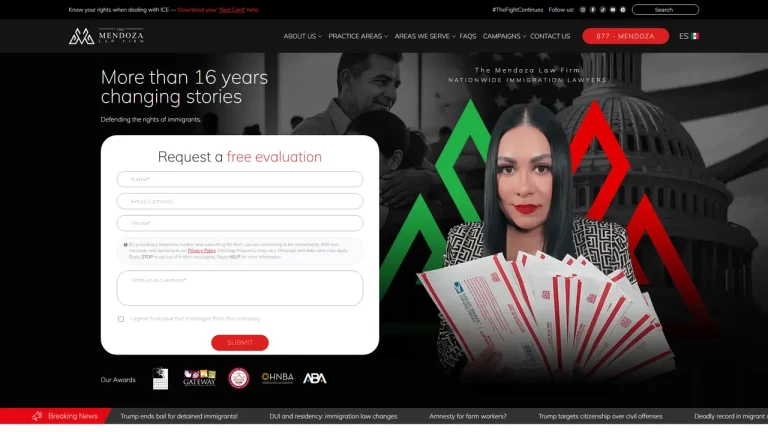
The Mendoza Law Firm - Washington, DC
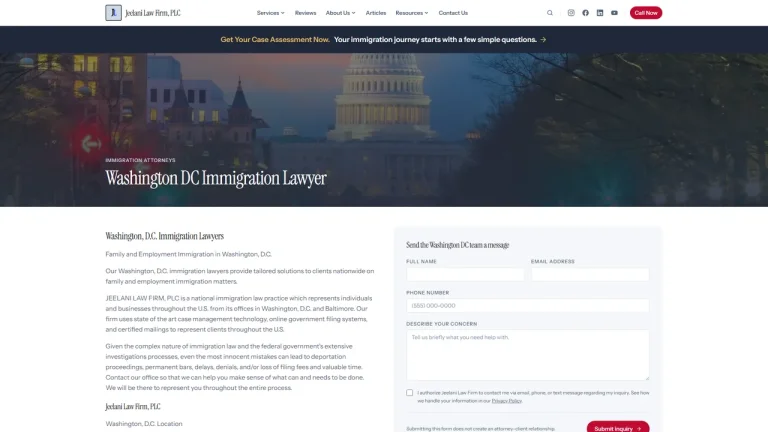
JEELANI LAW FIRM, PLC - Washington, DC
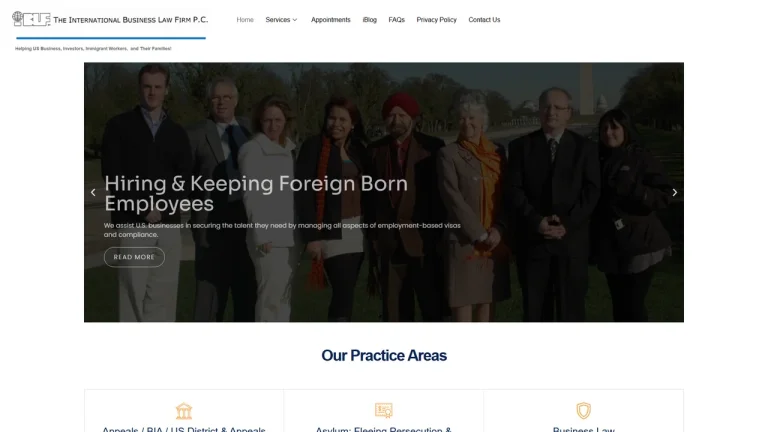
International Business Law Firm PC - Washington, DC
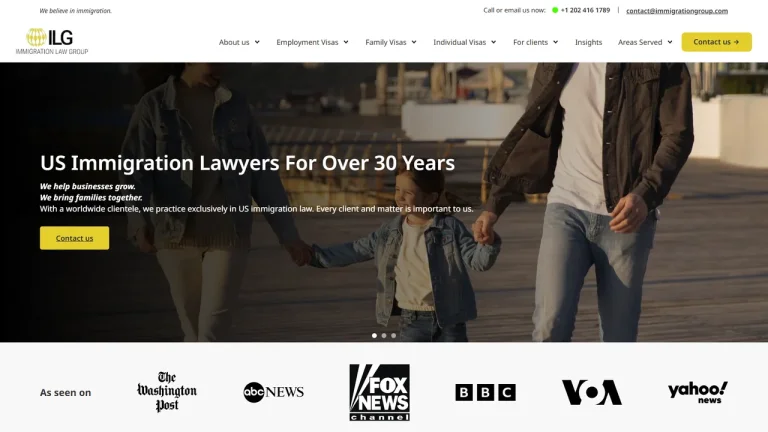
Immigration Law Group PC - Washington, DC
Benach Pitney Reilly LLP - Washington, DC
Altius Immigration Law PLLC - Washington, DC
Navigating Business & Work Visas in the District of Columbia
Washington, D.C. represents the nerve center of international commerce, public policy, and specialized professional services. Navigating the regulatory landscape of U.S. employment-based immigration demands rigorous alignment with federal directives and administrative protocols. Corporate entities, multinational organizations, and high-skilled foreign professionals throughout the District must coordinate with federal agencies headquartered directly in the nation's capital.
Legal practitioners situated within the K Street business corridor, Downtown D.C., and Capitol Hill provide essential guidance for petitions submitted to the U.S. Department of Labor and U.S. Citizenship and Immigration Services. Counsel licensed through the District of Columbia Bar routinely interfaces with the USCIS Washington Field Office and monitors rapidly evolving federal guidelines governing nonimmigrant classifications and permanent residency.
Retaining local immigration counsel provides immediate operational advantages for enterprises operating in Foggy Bottom, NoMa, and the broader metropolitan market. Whether managing labor certification audits or filing administrative appeals before the Administrative Appeals Office, knowledgeable legal advisors help companies avoid regulatory interruptions and secure critical global talent.
Business & Employment Visa Legal Fee Structures
| Case Scenario | Fee Structure | Estimated Cost (USD) | Key Cost Determinants |
|---|---|---|---|
| H-1B Specialty Occupation Petitions | Flat Legal Fee | $2,500 - $5,000 | Degree specialization match, wage level categorization, USCIS Request for Evidence (RFE) response complexity. |
| L-1 Intracompany Transfers & O-1 Extraordinary Ability | Flat Legal Fee | $4,500 - $9,500 | Corporate entity relationship documentation, organizational charts, peer review evidence, extensive portfolio curation. |
| PERM Labor Certification & EB-2/EB-3 Immigrant Petitions | Phased Flat Fee | $6,000 - $12,000 | Prevailing wage determination timelines, mandatory recruitment tracking, Department of Labor audit defense. |
| Federal Administrative Delays & Mandamus Litigation | Hourly / Staged Retainer | $5,000 - $11,000 | Length of unreasonable agency delay, motion practice in the U.S. District Court for the District of Columbia. |
Critical Legal Deadlines & Statutes in Washington, D.C.
Compliance with federal statutory timelines is critical for maintaining valid lawful nonimmigrant status and preserving employment authorization in the District of Columbia. Employment-based classifications are governed under Title 8 of the United States Code, where missing a single filing window can result in petition revocation or unauthorized employment penalties under federal law.
Annual quota limitations for specialty occupation professionals are codified under 8 U.S. Code § 1184(g), requiring employers to participate in the electronic registration lottery during a compressed multi-week window each March. When USCIS issues a Request for Evidence regarding specialty qualifications or employer-employee relationships under 8 C.F.R. § 103.2(b)(8), petitioners face an inflexible statutory response window of exactly 87 days, with no administrative extensions permitted.
Permanent labor certification applications administered through the Department of Labor follow rigid chronological benchmarks pursuant to 20 C.F.R. § 656.17. Employers must file their Form ETA-9089 within 180 days of initiating mandatory recruitment campaigns, while observing a mandatory 30-day quiet period prior to submission. Additionally, nonimmigrant extensions filed pursuant to 8 C.F.R. § 214.2(h) must reach immigration authorities prior to the expiration of the foreign national's current Form I-94 to maintain continuous authorized stay.
Small Claims Limitations vs. Strategic Corporate Immigration Counsel
The Small Claims and Conciliation Branch of the Superior Court of the District of Columbia operates under D.C. Code § 11-1321 with a jurisdictional claim ceiling of $10,000. This tribunal provides an expedited venue solely for minor municipal civil claims, unpaid vendor disputes, and limited contract disagreements arising within the District.
Small claims courts hold zero legal authority over employment visa petitions, visa classifications, or federal agency determinations. Employment authorization petitions belong exclusively to federal administrative oversight under 8 U.S. Code § 1153(b). Pursuing employment immigration filings without qualified counsel exposes business entities to severe operational interruptions, catastrophic workforce turnover, and substantial financial sanctions.
A licensed corporate immigration attorney evaluates Department of Labor compliance, constructs robust legal briefs establishing regulatory eligibility, and structures employer compliance files to withstand federal audits. Engaging qualified legal professionals ensures organizational resilience and safeguards foreign national personnel from inadvertent status forfeiture.
Red Flags & Hiring Safeguards for Business Visa Petitioners
- Promises of guaranteed petition approval or claims of special internal connections within federal immigration offices located in Washington.
- Failure to present an itemized fee breakdown separating legal fees from statutory filing fees imposed by the federal government.
- Refusal to provide a transparent written retainer agreement delineating scope of work, including handling Requests for Evidence (RFEs).
- Unlicensed visa consultants or non-attorney preparers providing immigration legal advice without active admission to the District of Columbia Bar.
Frequently Asked Questions
What is the difference between an H-1B and an L-1 visa for D.C. employers?
The H-1B visa is designed for foreign professionals in specialty occupations requiring a minimum of a bachelor degree or equivalent, and it is subject to an annual statutory lottery cap under 8 U.S. Code § 1184(g). The L-1 intracompany transfer visa is uncapped and permits multinational companies to transfer qualifying managers, executives, or specialized knowledge employees from an international affiliate to a qualifying office within the District of Columbia or broader domestic footprint.
Can an employer pay lower than the prevailing wage in the District of Columbia?
No. Federal regulations enforced by the Department of Labor mandate that employers must pay foreign workers at or above the prevailing wage determined for the specific occupational code and metropolitan statistical area pursuant to 20 C.F.R. § 656.40. Failing to adhere to certified prevailing wage obligations can trigger Department of Labor investigations, back-wage liabilities, and civil debarment from federal petition programs.
What happens if USCIS issues a Request for Evidence on a work visa?
A Request for Evidence (RFE) indicates that the adjudicating officer requires additional supporting documentation to establish statutory eligibility under 8 C.F.R. § 103.2(b)(8). Petitioners are granted a strict statutory window, typically 87 days, to submit a comprehensive legal response and corroborating evidence. Working with an experienced immigration attorney ensures that all targeted evidentiary deficiencies are thoroughly addressed before the deadline expires.
Can an employee begin working as soon as a transfer petition is filed?
Under the statutory portability provisions of 8 U.S. Code § 1184(n), an H-1B nonimmigrant may begin working for a new qualifying employer as soon as USCIS acknowledges receipt of a non-frivolous change of employer petition, prior to formal adjudication. However, L-1, O-1, and TN classifications generally do not enjoy broad statutory portability and require approval before initiating employment duties with a new sponsoring entity.
How can an attorney help resolve severe administrative processing delays in D.C.?
When an employment visa application or green card petition languishes beyond reasonable regulatory timeframes, counsel can submit formal inquiries through federal agency liaison channels, engage the USCIS Ombudsman, or initiate a complaint in the U.S. District Court for the District of Columbia under the Administrative Procedure Act and Mandamus Act to compel lawful agency action.