
Commercial Real Estate Lawyers in Washington, D.C.
Retaining a skilled commercial real estate lawyer in Washington, D.C. protects your investments, commercial leases, and development projects under District law. Seasoned attorneys structure advantageous agreements, manage regulatory approvals, and resolve landlord-tenant disputes through pre-trial negotiation. Explore our verified directory below to consult with premier commercial real estate attorneys in the District.
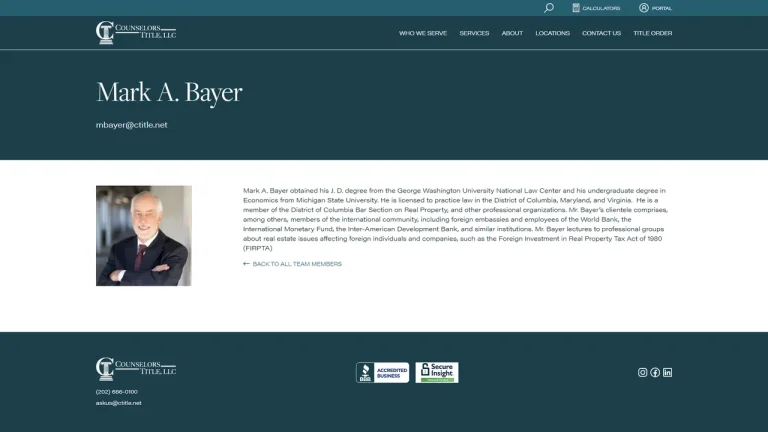
Bayer & Kaufman LLP - Washington, DC

Vanessa Carpenter Lourie, P.C. - Washington, DC
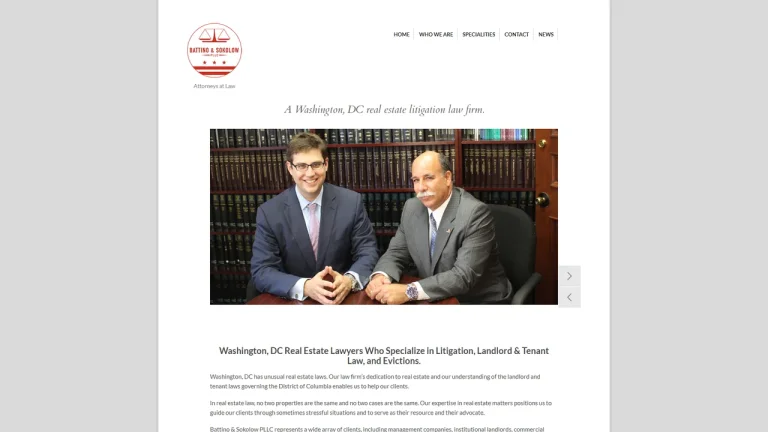
Battino & Sokolow PLLC - Washington, DC

Kasowitz Benson Torres LLP - Washington, DC
Zaharevich Law Office: Daniel Zaharevich, Esq. - Washington, DC

RJB Law - Washington, DC
Enara Law - Washington, DC
The Mistry Law Firm, PLLC - Washington, DC

Woodland Estate and Title LLC - Washington, DC
Antonoplos & Associates, Attorneys at Law - Washington, DC

RISM LLC - Washington, DC
Commercial Real Estate Legal Practice in Washington, D.C.
Commercial real estate in Washington, D.C. operates within a specialized framework of municipal zoning, Historic Preservation Review Board (HPRB) regulations, and federal height restrictions under the Height of Buildings Act. Developers, investors, and commercial tenants across the Central Business District, NoMa, Southwest Waterfront, and Union Market rely on commercial real estate attorneys to negotiate acquisitions, ground leases, and financing arrangements.
When transaction conflicts or lease defaults occur, cases are litigated in the Civil Division of the Superior Court of the District of Columbia at the H. Carl Moultrie Courthouse, located at 500 Indiana Avenue NW. Commercial summary possession matters proceed through the specialized Landlord and Tenant Branch of the DC Superior Court.
Local counsel assists clients in securing zoning variances with the District of Columbia Board of Zoning Adjustment (BZA) and the Zoning Commission, ensuring full compliance with Department of Buildings (DOB) permitting requirements and environmental mandates.
Legal Fee Structures for D.C. Commercial Real Estate
| Case Scenario | Fee Structure | Estimated Cost (USD) | Key Cost Determinants |
|---|---|---|---|
| Commercial Lease Negotiation & Structuring | Flat Fee / Hourly | $2,500 - $7,500 | Lease square footage, tenant improvement allowances, operating expense terms |
| Commercial Acquisition Due Diligence & Closing | Flat Fee / Blended | $6,000 - $25,000+ | Title examination complexity, phase I environmental review, debt financing structure |
| Zoning Variances & Land Use Approvals (BZA / HPRB) | Hourly Rate ($450 - $850/hr) | $8,500 - $35,000+ | Public hearing schedule, historic preservation guidelines, Advisory Neighborhood Commission input |
| Commercial Eviction & Lease Default Litigation | Hourly Rate ($400 - $750/hr) | $5,000 - $28,000+ | Rent acceleration enforcement, contested possession defense, mechanics lien litigation |
Critical Legal Deadlines & Statutes in the District of Columbia
Contractors and developers must navigate mechanic's lien deadlines under D.C. Code § 40-301.02, which mandates filing a notice of intention to hold a lien with the D.C. Recorder of Deeds within 90 days following work completion. Under D.C. Code § 40-303.01, an enforcement lawsuit must be filed in the DC Superior Court within 180 days of that recordation.
Commercial lease disputes are governed by D.C. Code § 12-301(7), establishing a 3-year statute of limitations for actions on written contracts. Property transfers and long-term ground leases exceeding 30 years trigger statutory recordation and transfer taxes under D.C. Code § 42-1103 and D.C. Code § 47-903. Appeals of Board of Zoning Adjustment decisions are governed by the District of Columbia Administrative Procedure Act under D.C. Code § 2-510, requiring petitions for review to be filed with the District of Columbia Court of Appeals within 60 days.
Small Claims Limitations vs. Professional Counsel
The Small Claims and Conciliation Branch of the DC Superior Court operates under D.C. Code § 11-1321 with a recovery maximum capped at $10,000. While small vendors may pursue minor overdue invoices in this division, it is functionally inapplicable to commercial real estate matters.
Under District of Columbia court rules, corporate entities, limited liability companies, and partnerships must be represented by licensed legal counsel in civil proceedings. Because commercial real estate is typically titled in single-purpose LLCs or joint ventures, pro se appearances are prohibited. Furthermore, commercial repossession, tenant defaults, mechanics lien foreclosures, and zoning disputes must be resolved in the Landlord and Tenant Branch or Civil Division of DC Superior Court, requiring skilled legal counsel to safeguard major capital investments.
Red Flags to Avoid When Selecting Counsel
- Inexperience with D.C. Land Use Agencies: Avoid attorneys who lack regular practice before the Board of Zoning Adjustment (BZA) and the Historic Preservation Review Board (HPRB).
- Overlooking Long-Term Lease Tax Triggers: Ensure counsel understands that leases over 30 years incur significant District recordation and transfer taxes under D.C. Code § 42-1103.
- Defective Notice Procedures: Steer clear of litigators who fail to follow statutory notice requirements for commercial lease defaults, risking dismissed possession actions.
- Opaque Retainer Agreements: Decline representation without written fee schedules defining hourly billing, out-of-pocket costs, and municipal filing fee responsibilities.
Frequently Asked Questions
What role does an attorney serve during D.C. commercial lease negotiations?
Counsel structures key terms including operating expense pass-throughs, assignment and subletting rights, tenant improvement covenants, and default remedies to prevent future litigation.
What is the deadline to file a commercial mechanic's lien in D.C.?
Under D.C. Code § 40-301.02, a notice of intention must be recorded with the D.C. Recorder of Deeds within 90 days of completion, followed by a lawsuit within 180 days under D.C. Code § 40-303.01.
Do commercial leases trigger D.C. recordation and transfer taxes?
Pursuant to D.C. Code § 42-1103, commercial leases with terms of 30 years or more (including renewals) are taxable transfers subject to District recordation and transfer taxes.
Can a corporate commercial landlord initiate eviction proceedings without a lawyer?
No. Under District of Columbia court rules, corporate entities and LLCs must be represented by a licensed attorney to file and prosecute possession actions in the Landlord and Tenant Branch.
Which municipal boards regulate land use and zoning in Washington, D.C.?
The Zoning Commission sets planning regulations, the Board of Zoning Adjustment (BZA) hears variance and special exception appeals, and the HPRB oversees designated historic districts.