
Financial & IP Lawyers in Washington, D.C.
Securing skilled financial and intellectual property counsel in Washington, D.C. safeguards your commercial assets and regulatory compliance. Experienced attorneys manage regulatory oversight, patent disputes, and corporate structuring while mitigating risk through proactive negotiations. Explore our verified directory below to consult an attorney practicing in the District.

Edison Law Group, PLLC. - Washington, DC

Mooney IP - Washington, DC
David Benowitz Criminal Lawyer - Washington, DC

Darden Betts Strategic Intellectual Property Counselors - Washington, DC

Law Offices of Harris S. Ammerman - Washington, DC

Tax Relief Counsel - Tax Attorney - Washington, DC

Volta Law Group, LLC - Washington, DC

Sterne, Kessler, Goldstein & Fox - Washington, DC
The Iwashko Law Firm, PLLC - Washington, DC
Law Firm of Kevin D. Judd - Washington, DC
Greenberg & Lieberman, LLC - Washington, DC
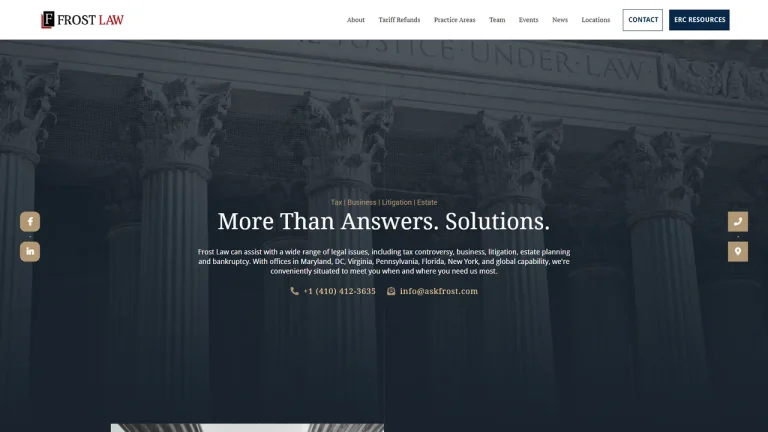
Frost Law - Washington, DC

NSIP Law - Washington, DC

Pontius Tax Law, PLLC - Washington, DC
Ellyn Tanenberg, Attorney & CPA - Washington, DC
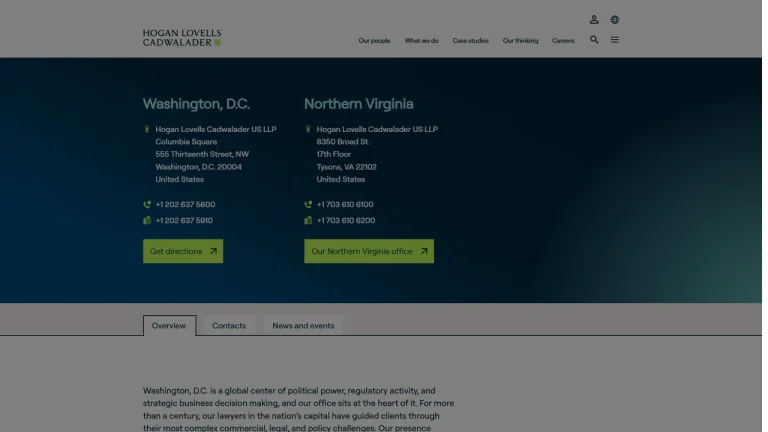
Hogan Lovells - Washington, DC

GOLDMAN LAW GROUP - Washington, DC
Law Offices of Vanessa Pacheco Bell - Washington, DC

Washington Legal Clinic for the Homeless - Washington, DC

NovoTech Patent Firm - Washington, DC
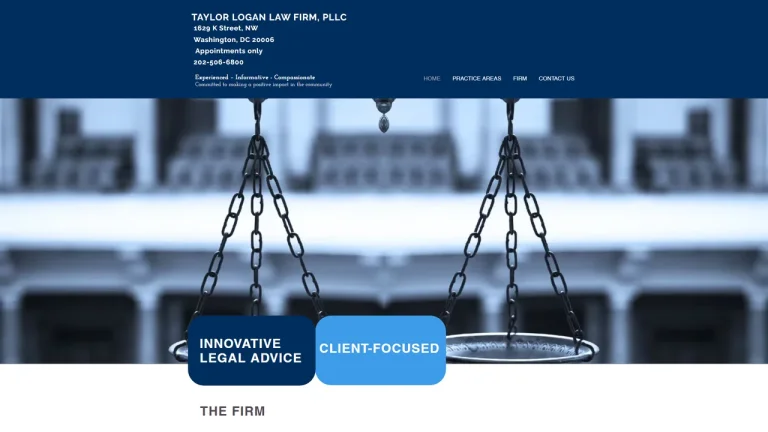
Taylor Logan Law Firm, PLLC - Washington, DC

Legal Aid DC - Washington, DC
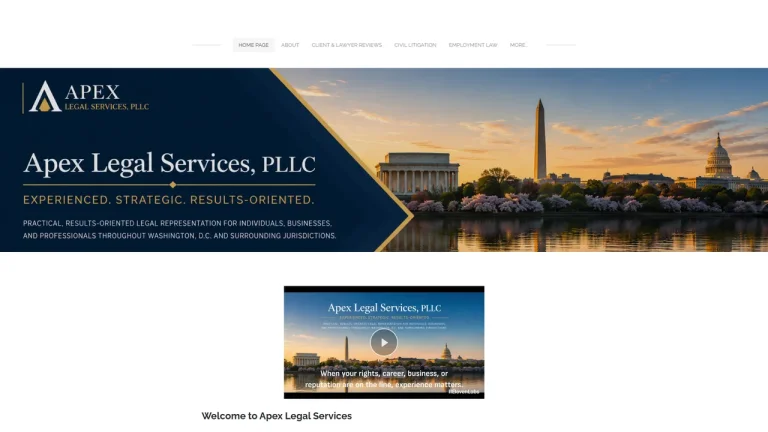
Apex Legal Services, PLLC - Washington, DC
Financial and Intellectual Property Practice in Washington, D.C.
Washington, D.C. represents the nation's premier crossroads for federal financial regulation, commercial capital, and intellectual property governance. The District hosts central regulatory authorities including the Securities and Exchange Commission (SEC), the Commodity Futures Trading Commission (CFTC), the Consumer Financial Protection Bureau (CFPB), and the Federal Reserve. Simultaneously, the District commands international prominence in intellectual property, housing the U.S. International Trade Commission (ITC) and the United States Court of Appeals for the Federal Circuit. Companies operating within the District require counsel capable of harmonizing municipal compliance with federal enforcement.
Litigation and regulatory enforcement in the financial and IP sectors unfold across distinct D.C. tribunals. High-stakes patent disputes, trademark infringements, and trade secret actions are filed before the U.S. District Court for the District of Columbia on Constitution Avenue NW or through Section 337 investigations at the ITC on E Street SW. Local commercial agreements, municipal lending claims, and intra-business partnership conflicts are adjudicated in the Civil Division of the Superior Court of the District of Columbia at the H. Carl Moultrie Courthouse. State-level regulatory oversight, including banking charters and securities dealer registrations, is administered by the D.C. Department of Insurance, Securities and Banking (DISB).
Retaining an attorney based in Washington, D.C. gives businesses an indispensable advantage in safeguarding intangible property and navigating enforcement actions. Law firms clustered around K Street, the Golden Triangle, Penn Quarter, and Downtown DC bring direct experience in dealing with federal agency examiners, drafting complex licensing instruments, and mounting vigorous courtroom defenses against competitor infringements or administrative sanctions.
Financial & IP Legal Fee Benchmarks in Washington, D.C.
| Case Scenario | Fee Structure | Estimated Cost (USD) | Key Cost Determinants |
|---|---|---|---|
| Trademark Clearance & USPTO Filing | Flat Fee | $1,500 - $4,000 | Number of commercial classes, clearance search depth, substantive office action defense. |
| Commercial Financing & Debt Structuring | Hourly / Project Retainer | $5,000 - $25,000 | Transaction capital scale, cross-collateralization instruments, multi-lender syndication. |
| Regulatory Defense (SEC / CFTC / DISB) | Hourly Retainer | $450 - $1,100/hr ($15,000 - $50,000 retainer) | Subpoena volume, forensic accounting requirements, Wells Notice response complexity. |
| Federal IP & Trade Secret Litigation | Hourly / Blended Retainer | $25,000 - $100,000+ | ITC Section 337 velocity, emergency preliminary injunction motions, expert technical witness fees. |
Critical Financial and IP Deadlines in the District of Columbia
Navigating financial and intellectual property disputes in the District demands rigorous calendar management governed by local and federal statutes. Under the District of Columbia Uniform Trade Secrets Act, a misappropriation lawsuit must be commenced within three years after the misappropriation is discovered or should have been discovered through the exercise of reasonable diligence, as codified in D.C. Code § 36-406.
For patent infringement actions brought under federal law, damages are strictly limited to infringements committed no more than six years prior to filing the complaint pursuant to 35 U.S. Code § 286. Civil copyright infringement claims must be commenced within three years after the claim accrued under 17 U.S. Code § 507. In securities transactions governed by District law, actions under the District of Columbia Securities Act must be brought within the statutory periods specified in D.C. Code § 31-5606.05. Contractual debt recovery and commercial financing default claims are subject to the District's standard three-year statute of limitations under D.C. Code § 12-301.
Small Claims Jurisdiction vs. Complex Financial and IP Representation
The Small Claims and Conciliation Branch of the Superior Court of the District of Columbia is restricted to civil claims with an amount in dispute of $10,000 or less. Small business owners may utilize this branch without an attorney to collect straightforward, undisputed accounts receivable or commercial supply balances that fall within this jurisdictional monetary limit.
However, intellectual property claims and sophisticated financial matters are categorically unsuited for small claims adjudication. Under federal statutory doctrine, federal courts hold exclusive subject matter jurisdiction over patents and copyrights pursuant to 28 U.S. Code § 1338, meaning the D.C. Small Claims Branch lacks authority to hear infringement claims. Furthermore, small claims judges cannot issue emergency injunctions or cease-and-desist orders. Retaining experienced IP and financial counsel is vital to prevent catastrophic loss of proprietary rights, enforce nondisclosure agreements, and defend against regulatory enforcement actions.
Red Flags to Avoid When Hiring Financial & IP Counsel
- Attorneys offering guaranteed patent or trademark approvals, which violate professional ethics and misrepresent USPTO examination processes.
- Practitioners offering patent prosecution services who are not officially registered to practice before the USPTO under 37 C.F.R. § 11.6.
- Vague retainer structures that fail to separate legal professional fees from substantial regulatory filing fees, search vendor expenses, or deposition costs.
- Advisors lacking direct experience dealing with District agencies like the D.C. Department of Insurance, Securities and Banking (DISB) or federal oversight bodies.
Frequently Asked Questions
Can an intellectual property lawsuit be filed in D.C. Superior Court?
Federal courts have exclusive jurisdiction over patents and copyrights under 28 U.S. Code § 1338, requiring these lawsuits to be filed in federal court. However, state-law claims such as trade secret misappropriation under D.C. Code or breach of an IP licensing contract can be brought in D.C. Superior Court.
What is the statute of limitations for trade secret claims in Washington, D.C.?
Under the D.C. Uniform Trade Secrets Act (D.C. Code § 36-406), you have three years from the date the misappropriation was discovered or reasonably should have been discovered to initiate legal action.
Does my patent attorney need specific credentials to represent me?
Yes. To prepare, file, and prosecute patent applications before the United States Patent and Trademark Office (USPTO), an attorney must be formally admitted to the USPTO Patent Bar under 37 C.F.R. § 11.6 in addition to holding a state or District bar license.
What local agency oversees securities and financial institutions in D.C.?
The District of Columbia Department of Insurance, Securities and Banking (DISB) regulates financial institutions, securities broker-dealers, and investment advisors operating locally within the District.
What is an ITC Section 337 investigation in Washington, D.C.?
Conducted by the U.S. International Trade Commission headquartered in Washington, D.C., a Section 337 investigation adjudicates claims of unfair competition and intellectual property infringement involving imported goods, potentially leading to exclusion orders blocking imports into the country.