
Immigration Lawyers in Washington, D.C.
Navigating complex federal immigration pathways in Washington, D.C. requires strategic, licensed counsel familiar with District-based administrative headquarters. Qualified attorneys help prevent filing delays, resolve consular or status issues, and represent clients before local federal tribunals. Review our curated directory below to find an experienced immigration lawyer for your matter.

Benach Pitney Reilly LLP - Washington, DC

The Nawash Law Office - Washington, DC
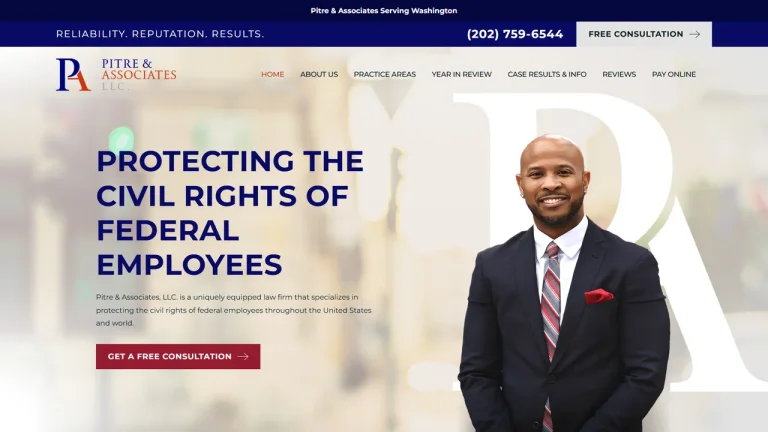
Pitre & Associates - Washington, DC

Global Immigration Partners PLLC - Washington, DC

Remus Enterprises Law Group - Washington, DC
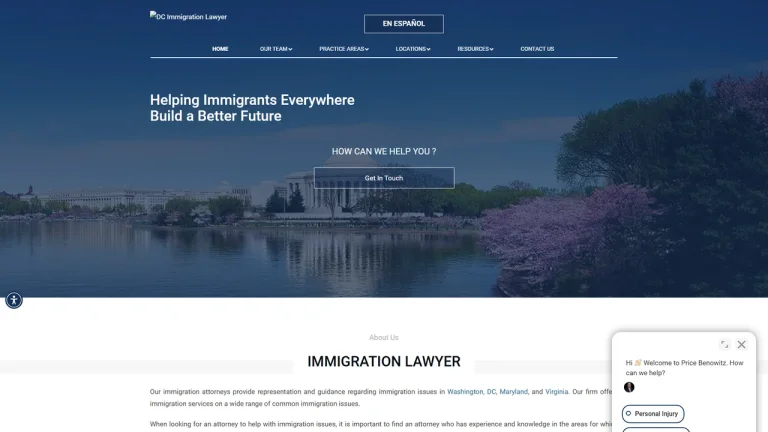
Capital Immigration Lawyers - Washington, DC
Norris Law Group - Washington, DC

Altius Immigration Law PLLC - Washington, DC
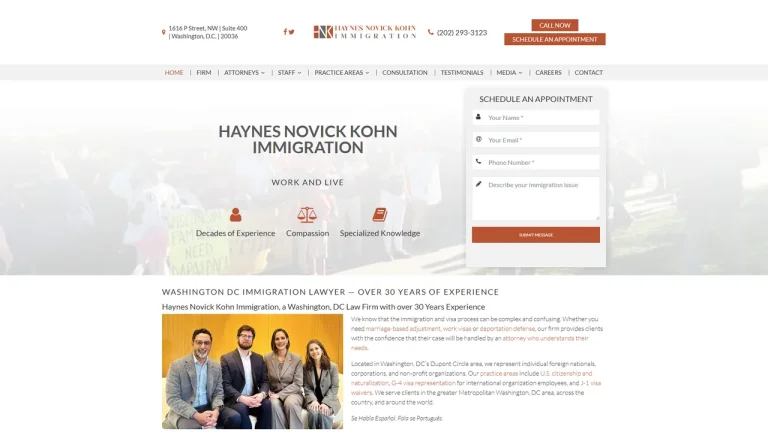
Haynes Novick Kohn Immigration - Washington, DC

Volunteer Legal Advocates - Washington, DC
Law Offices of Sherrie A Smith, Pllc - Washington, DC

Abe Legal - Washington, DC

Legall Law - Washington, DC
Beach-Oswald Immigration Law Associates, P.C. - Washington, DC

Morris H. Deutsch, Immigration Attorney and Adviser - Washington, DC

Motion Law - Washington, DC
Hacking Immigration Law LLC - Washington, DC

International Business Law Firm PC - Washington, DC
JEELANI LAW FIRM, PLC - Washington, DC
Law Office of Sebastian Krop, PLLC - Washington, DC
Law Offices of David Saffold, LLC - Washington, DC
Garfield Law Group, PC - Washington, DC
American Law and Tax Counsel PLLC - Washington, DC

Navigating Immigration Legal Representation in Washington, D.C.
Washington, D.C. serves as the administrative core of the nation's immigration apparatus, housing the headquarters of U.S. Citizenship and Immigration Services (USCIS), the Executive Office for Immigration Review (EOIR), and the U.S. Department of State. The District is home to a dynamic international population comprising foreign service personnel, international organization employees, scholars, multinational corporate executives, and vulnerable immigrants seeking humanitarian relief. Resolving status questions within this jurisdiction requires sophisticated knowledge of federal administrative regulations and local procedural avenues.
Immigration proceedings involving District residents take place across multiple administrative and judicial bodies. Adjudications for affirmative benefits, including adjustment of status and naturalization, proceed through USCIS District Field Offices. Removal proceedings and defensive asylum matters fall under the authority of the Executive Office for Immigration Review (EOIR) immigration courts. For youth seeking humanitarian relief, the Family Court of the Superior Court of the District of Columbia at the H. Carl Moultrie Courthouse plays a central role by issuing prerequisite factual findings for Special Immigrant Juvenile Status (SIJS). In instances of unreasonable agency delay, actions for writ of mandamus are lodged directly before the U.S. District Court for the District of Columbia on Constitution Avenue NW.
Retaining a qualified immigration attorney in Washington, D.C. provides essential protection against procedural errors and severe collateral consequences. From multinational visa applications in Dupont Circle and Downtown to asylum and family petitions in Columbia Heights, Petworth, and Adams Morgan, legal counsel ensures strict adherence to filing criteria. Local attorneys effectively manage agency inquiries, represent individuals at interviews, and litigate complex matters before administrative and federal benches.
Immigration Legal Fees & Service Structures in Washington, D.C.
| Case Scenario | Fee Structure | Estimated Cost (USD) | Key Cost Determinants |
|---|---|---|---|
| Family Adjustment of Status (Form I-130 / I-485) | Flat Fee | $2,500 - $6,500 | Lawful entry documentation, previous status violations, inadmissibility waivers, RFE complexity. |
| Employment & Specialty Visas (H-1B, O-1, EB-1/2) | Flat Fee / Employer Retainer | $3,500 - $10,000 | Specialized criteria documentation, prevailing wage filings, premium processing handling. |
| Defensive Asylum & Removal Litigation | Tiered Retainer | $5,000 - $14,000 | Number of master and individual calendar hearings, detention status, expert country condition witnesses. |
| Federal Court Mandamus (Unreasonable Delays) | Flat Fee / Hourly | $4,000 - $9,000 | Duration of agency delay, government motion practice, negotiation with Assistant U.S. Attorneys. |
Critical Immigration Deadlines & Statutory Timelines
Immigration proceedings are defined by unyielding statutory deadlines where a single oversight can lead to the loss of legal status or an order of removal. Individuals seeking asylum within the United States must file Form I-589 within one year of their physical arrival, as codified under 8 U.S. Code § 1158. Failure to satisfy this threshold absent extraordinary circumstances permanently bars statutory asylum relief.
For matters adjudicated before an Immigration Judge, any Notice of Appeal to the Board of Immigration Appeals (BIA) must be received within strictly 30 calendar days of the oral or written decision under 8 C.F.R. § 1003.38. For young immigrants seeking Special Immigrant Juvenile Status, prerequisite predicate orders from the D.C. Superior Court must be entered before the applicant turns 21 years of age pursuant to D.C. Code § 16-2301. Furthermore, statutory responses to Requests for Evidence (RFEs) or Notices of Intent to Deny (NOIDs) issued by USCIS must be submitted within the non-extendable deadlines outlined under 8 C.F.R. § 103.2.
Self-Petitioning vs. Licensed Immigration Counsel in Washington, D.C.
Certain routine immigration applications can be completed independently without retaining legal representation. An individual with continuous lawful presence, no criminal arrests, and standard travel documentation may choose to self-file Form N-400 for naturalization or Form I-90 for permanent resident card renewals directly through USCIS online portals, paying only statutory administrative filing fees.
Conversely, self-representation becomes hazardous when an individual faces removal proceedings, unlawful presence accrual, prior visa fraud allegations, or criminal charges in D.C. Superior Court. Under immigration doctrine, even minor municipal offenses can be classified as crimes involving moral turpitude or aggravated felonies. A licensed immigration lawyer admitted to the D.C. Bar structures relief applications, drafts appellate briefs, conducts cross-examinations, and navigates relief under the Convention Against Torture or federal writ petitions.
Red Flags and Fraud Warnings When Hiring Immigration Help
- Non-lawyer consultants or 'notarios' who advertise legal services; under District law, only licensed attorneys or DOJ-accredited representatives may practice immigration law.
- Promises or guarantees of guaranteed green cards, approved visas, or special relationships with USCIS officers.
- Refusal to provide written retainer agreements detailing fees, services, or copies of documents filed on your behalf.
- Advising applicants to omit prior arrests, unlawful employment, or previous visa denials on federal immigration petitions.
Frequently Asked Questions
What is the one-year asylum deadline and how does it apply?
Under federal immigration law, you must submit your asylum application within one year of your arrival in the United States. If you miss this deadline, you must prove changed circumstances or extraordinary circumstances to qualify for an exception.
Can a D.C. immigration attorney assist with delayed visa or green card applications?
Yes. When an immigration application remains delayed beyond normal processing times without justification, an immigration attorney can file a writ of mandamus action in the U.S. District Court for the District of Columbia to compel federal agencies to issue a decision.
What role does the D.C. Superior Court play in SIJS applications?
Before applying to USCIS for Special Immigrant Juvenile Status (SIJS), an immigrant youth must obtain a predicate order from the Family Court of the D.C. Superior Court establishing dependency, abandonment, abuse, or neglect before turning 21 years of age under D.C. law.
Can any licensed attorney represent me in immigration court?
Immigration law is federal, so an attorney licensed and in good standing with any state bar or the District of Columbia Bar can appear before USCIS and the Executive Office for Immigration Review (EOIR). However, hiring a locally based D.C. attorney ensures ease of attendance for regional proceedings.
How do criminal charges in Washington, D.C. affect immigration status?
Even minor misdemeanors in D.C. Superior Court can result in serious immigration consequences, including detention or deportation. A skilled attorney analyzes local criminal statutes to mitigate adverse effects on immigration admissibility and deportability.