
IRS Dispute Lawyers in Washington, D.C.
Resolving federal tax controversies requires assertive advocacy before the Internal Revenue Service and local federal tax courts. Retaining a qualified Washington, D.C. tax attorney ensures statutory rights are protected and enables resolution through administrative appeals, installment agreements, or settlement conferences before costly trial proceedings. Explore our curated directory below to connect with top-rated local legal counsel for your tax dispute.

Law Firm of Kevin D. Judd - Washington, DC
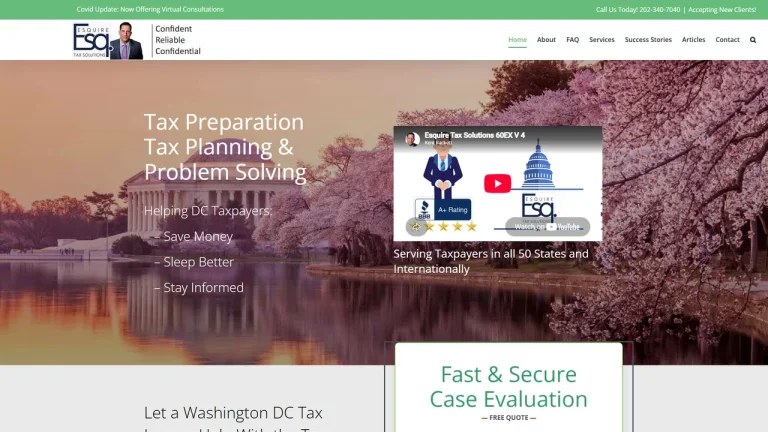
Esquire Tax Solutions - Washington, DC

Tax Relief Counsel - Tax Attorney - Washington, DC

Law Offices of Harris S. Ammerman - Washington, DC
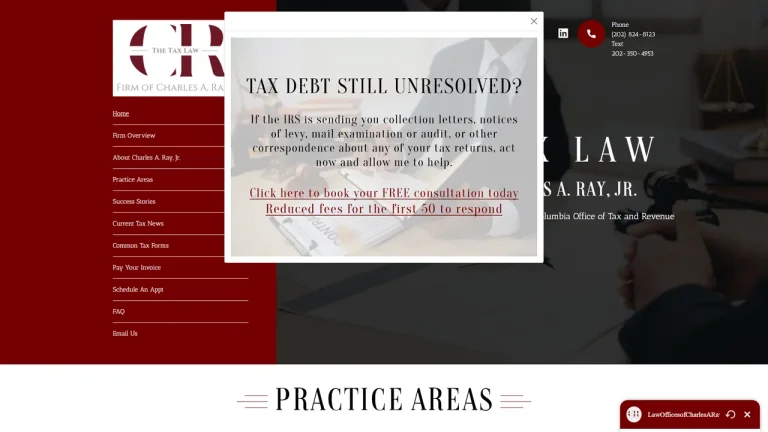
Law Firm of Charles A. Ray, P.C. - Washington, DC

Frost Law - Washington, DC

War IP Law PLLC - Washington, DC
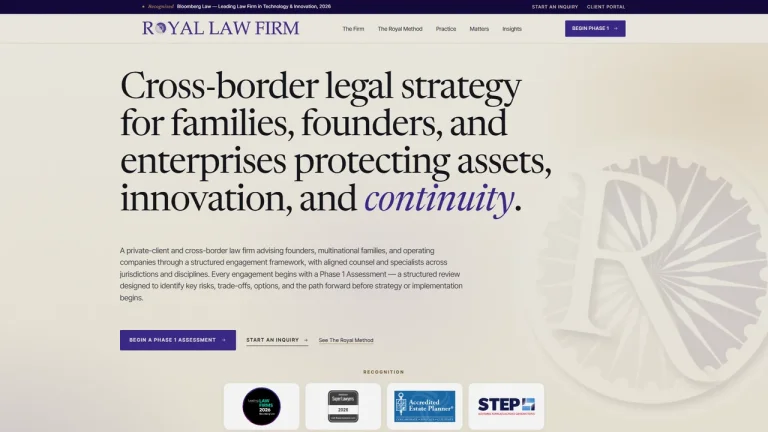
Royal Law Firm PLLC - Washington, DC

Pontius Tax Law, PLLC - Washington, DC
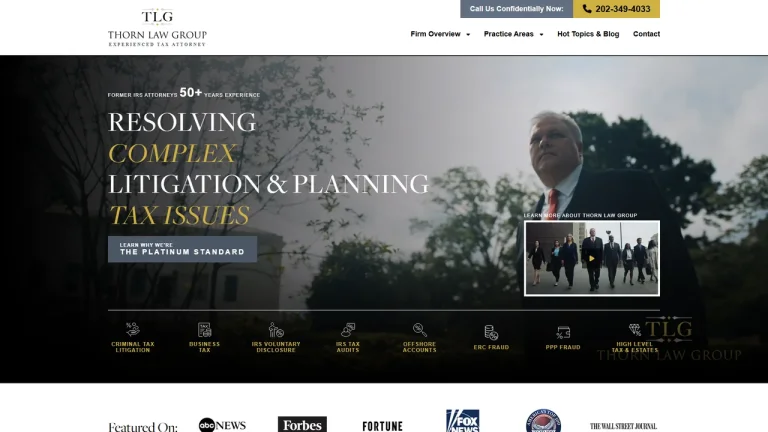
Thorn Law Group - Washington, DC

JD Howlette Law - Washington, DC

J. David Tax Law - Washington, DC

Resolving High-Stakes Tax Controversies in Washington, D.C.
Facing an audit, civil penalty assessment, or collection action from the Internal Revenue Service involves serious financial and legal risk. Washington, D.C. serves as the administrative nucleus of federal tax enforcement, housing both the IRS National Headquarters along Constitution Avenue NW and regional examination teams that handle complex taxpayer inquiries across Downtown, Dupont Circle, and Capitol Hill.
Federal tax litigation for District residents and businesses does not follow standard municipal court workflows. Disputes that cannot be settled administratively through the IRS Independent Office of Appeals proceed to specialized federal venues located right within the District, primarily the United States Tax Court situated at 400 Second Street NW, or the United States Court of Federal Claims. Navigating these forums requires procedural precision under District of Columbia Bar ethical standards.
Retaining a tax controversy attorney based in Washington, D.C. provides vital strategic advantages. Local counsel maintains regular interaction with regional IRS revenue officers and appeals officers, understanding how to structure administrative protests, negotiate offers in compromise, or seek emergency collection relief before liens attach to personal or business assets.
Washington, D.C. IRS Dispute Legal Fee Estimates
| Case Scenario | Fee Structure | Estimated Cost (USD) | Key Cost Determinants |
|---|---|---|---|
| IRS Examination & Audit Defense | Hourly / Initial Retainer | $2,500 - $7,500 | Scope of targeted tax years, volume of financial records, correspondence versus field audit demands |
| IRS Independent Office of Appeals | Retainer + Hourly Rate | $4,500 - $15,000 | Complexity of formal protest brief, disputed legal interpretations, settlement conference preparation |
| Collection Defense & Liens/Levies | Flat Fee / Staged Retainer | $3,000 - $9,000 | Collection Due Process filing, Offer in Compromise financial disclosures, wage levy emergency releases |
| U.S. Tax Court Litigation | Hourly ($450 - $950/hr) | $15,000 - $50,000+ | Formal petition drafting, stipulation of facts, expert valuation testimony, pre-trial motion practice |
Critical Legal Deadlines & Statutes in Federal Tax Disputes
Timeliness governs every aspect of tax defense, where missed administrative deadlines often forfeit legal rights permanently. When the IRS issues a formal Statutory Notice of Deficiency, commonly known as a 90-day letter under 26 U.S. Code § 6213, the taxpayer has exactly 90 calendar days to file a petition with the United States Tax Court. This statutory timeframe is jurisdictional and cannot be extended by IRS agents, settlement conferences, or judicial discretion.
Collection matters carry equally rigid timelines. Following a Final Notice of Intent to Levy and Notice of Your Right to a Hearing, taxpayers have exactly 30 days under 26 U.S. Code § 6330 to request a Collection Due Process (CDP) hearing using IRS Form 12153, which automatically suspends active levy enforcement. General assessment limitations are governed by 26 U.S. Code § 6501, which generally restricts the IRS to auditing and assessing additional tax within three years of return submission, extended to six years for substantial omissions exceeding 25 percent of gross income.
Once tax liability is formally assessed, the IRS has ten years to collect the outstanding balance pursuant to the Collection Statute Expiration Date established under 26 U.S. Code § 6502. Taxpayers seeking a recovery of overpaid taxes or erroneously assessed penalties must file an administrative refund claim under 26 U.S. Code § 6511 within three years from the date the return was filed or two years from when the tax was paid, whichever is later.
Administrative Representation vs. Tax Court Litigation
Taxpayers questioning an assessment must evaluate whether administrative resolution or judicial litigation is the appropriate path forward. For disputes involving $50,000 or less for any single tax year, taxpayers may elect the simplified Small Tax Case procedure under 26 U.S. Code § 7463 in the U.S. Tax Court. While S-case procedures feature informal evidentiary rules and lower procedural friction, the resulting judicial determination is final and cannot be appealed to the D.C. Circuit Court of Appeals.
When potential tax liabilities exceed statutory small-case thresholds or involve civil fraud penalties under 26 U.S. Code § 6663, pro se representation introduces substantial risk. Formal litigation in the regular division of the U.S. Tax Court, the U.S. Court of Federal Claims, or the U.S. District Court for the District of Columbia requires adherence to strict federal rules of evidence and civil procedure. An experienced tax attorney coordinates settlement conferences with IRS Chief Counsel attorneys to achieve concessions while preserving appellate rights.
Red Flags When Hiring a Tax Controversy Attorney
- Guaranteed pennies-on-the-dollar settlement claims promoted prior to conducting a thorough review of your official IRS tax transcripts and financial documentation.
- High-pressure sales representatives demanding large non-refundable upfront fees before an attorney admitted to practice in the District of Columbia evaluates your case.
- Firms whose practitioners lack admission to the United States Tax Court Bar or are not in good standing with the District of Columbia Bar.
- Advising taxpayers to disregard official correspondence, notice deadlines, or summonses issued by IRS field offices or revenue officers.
Frequently Asked Questions
What is the difference between an enrolled agent, a CPA, and a tax controversy attorney?
While CPAs and enrolled agents can prepare returns and represent taxpayers during routine IRS administrative audits, only a licensed attorney can provide comprehensive attorney-client privilege, litigate matters in the United States Tax Court or federal district court, and defend against civil fraud or criminal tax allegations.
What happens if I miss the 90-day deadline on an IRS Notice of Deficiency?
If you fail to petition the U.S. Tax Court within 90 days of the mailing date on a statutory notice under 26 U.S. Code § 6213, you forfeit the right to dispute the tax liability prior to payment. Your remaining remedy requires paying the assessed liability in full and filing an administrative claim for a refund followed by a refund suit in federal court.
Can a Washington, D.C. tax lawyer stop an active IRS wage garnishment or bank levy?
Yes. Counsel can petition the IRS for immediate levy release by proving economic hardship, securing an installment agreement, filing a timely Collection Due Process appeal under 26 U.S. Code § 6330, or placing the taxpayer in Currently Not Collectible status.
How does an Offer in Compromise work for D.C. taxpayers?
An Offer in Compromise allows qualifying taxpayers to resolve unpaid tax liabilities for less than the full amount owed based on doubt as to collectibility, doubt as to liability, or effective tax administration, following a rigorous IRS analysis of income, expenses, and asset equity.
Where are federal tax trials held for Washington, D.C. residents?
Tax Court trials for District residents take place at the United States Tax Court building located at 400 Second Street NW in Washington, D.C., while refund lawsuits are heard at the E. Barrett Prettyman United States Courthouse or the National Courts Building.