
Wrongful Termination Lawyers in District Of Columbia
Retaining an aggressive District of Columbia wrongful termination lawyer protects your rights against unlawful employer retaliation and discriminatory firing. Skilled employment litigators challenge unlawful dismissals under D.C. civil rights laws, negotiating substantial severance packages and back-pay settlements. Explore our verified District of Columbia legal directory below to schedule an initial consultation with a trusted employment attorney.

Zuckerman Law - Washington, DC

Solomon Law Firm, PLLC - Washington, DC
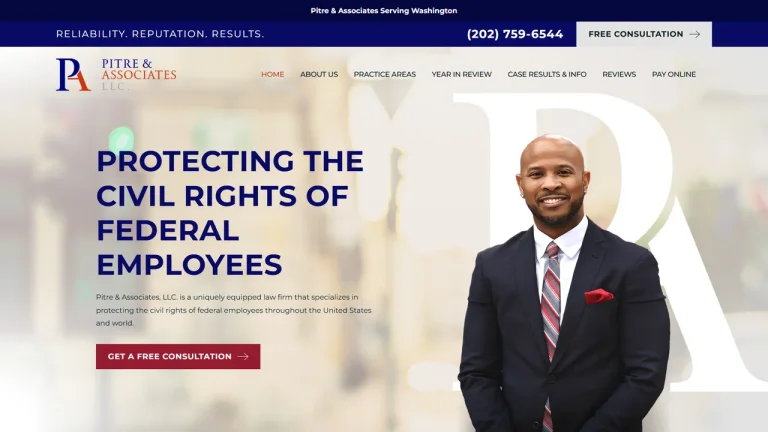
Pitre & Associates - Washington, DC
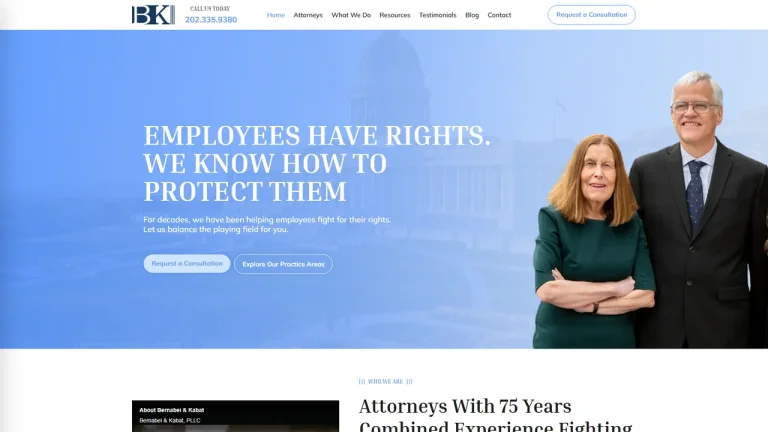
Bernabei & Kabat, PLLC - Washington, DC
Silverpine Law PLLC - Washington, DC
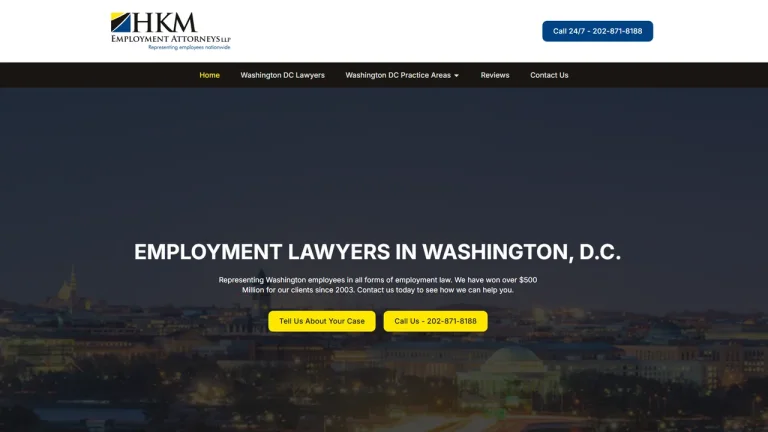
HKM Employment Attorneys LLP - Washington, DC
Alan Lescht and Associates, PC - Washington, DC
Tony Munter Qui Tam False Claims Act Lawyer - Washington, DC

The Employment Law Group - Washington, DC
Katz Banks Kumin - Washington, DC
DCWageLaw - Washington, DC
Eric Siegel Law - Washington, DC
Employment Protections & Superior Court Practice in Washington, D.C.
The District of Columbia maintains some of the strongest statutory worker protections in the United States, safeguarding employees across corporate enterprises, non-profit organizations, educational institutions, government contracting firms, and local businesses. While employment in the District is presumptively at-will, an employer's right to terminate an employee is strictly limited by comprehensive statutory anti-discrimination frameworks, public policy exceptions, and whistleblower safeguards. When terminations are motivated by illegal discrimination or retaliation, terminated employees have powerful legal remedies.
Wrongful termination claims originating in the District are litigated primarily within the Civil Actions Branch of the Superior Court of the District of Columbia, or filed in the United States District Court for the District of Columbia when federal claims are asserted. Administrative discrimination complaints are investigated through the District of Columbia Office of Human Rights (OHR) or the Equal Employment Opportunity Commission (EEOC) Washington Field Office. Attorneys handling employment litigation in the District are licensed by the District of Columbia Bar and regulated under ethical oversight by the District of Columbia Court of Appeals Board on Professional Responsibility.
District of Columbia Wrongful Termination Claims & Fee Structures
| Case Scenario | Fee Structure | Estimated Cost (USD) | Key Cost Determinants |
|---|---|---|---|
| Executive Severance Review & Settlement Negotiation | Flat Fee / Hourly | $1,500 - $3,500 | Severance package size, non-compete scope, release waiver terms |
| D.C. Office of Human Rights (OHR) Administrative Claim | Contingency / Hybrid | 33.3% of Settlement | Intake questionnaire findings, employer mediation, probable cause review |
| DCHRA Discrimination & Retaliation Lawsuit | Contingency Fee | 33.3% - 40% of Recovery | Supervisor depositions, electronic discovery review, back pay and front pay models |
| Whistleblower Retaliation Trial in Superior Court | Contingency / Retainer | 33.3% - 40% of Recovery | Public policy violation evidence, internal disclosure records, compensatory damages |
Critical Legal Deadlines & Statutes in the District of Columbia
Employees challenging unlawful termination in the District must satisfy stringent statutory limitation periods. Under the District of Columbia Human Rights Act (DCHRA) codified in D.C. Code § 2-1402.11, employers are prohibited from discharging employees based on more than twenty protected traits, including race, gender, political affiliation, familial responsibilities, and matriculation. An administrative complaint with the D.C. Office of Human Rights or a direct civil lawsuit in D.C. Superior Court must be filed strictly within one year of the discriminatory act under D.C. Code § 2-1403.16.
For whistleblower employees, protections are established under the District of Columbia Whistleblower Protection Act in D.C. Code § 1-615.53, which shields workers who report waste, fraud, abuse, or public health dangers. Under common law established by the District of Columbia Court of Appeals, private-sector at-will employees are protected under the public policy exception if terminated for refusing to violate a statute or regulation. Unpaid wages or disputed final earnings must be pursued under the D.C. Wage Theft Prevention Act codified in D.C. Code § 32-1308, which enforces a three-year statute of limitations alongside the general breach of contract limitation period in D.C. Code § 12-301(7).
Small Claims Limits vs. Superior Court Litigation in the District
The Small Claims and Conciliation Branch of the Superior Court of the District of Columbia operates with a statutory recovery cap of $10,000 under D.C. Code § 11-1321. While an employee with a minor unpaid wage balance might seek summary recovery in small claims court, wrongful termination actions should never be filed in this division. Unlawful termination claims encompass lost back pay, future lost earnings (front pay), substantial emotional distress damages, and statutory attorney fee awards that vastly exceed $10,000.
Corporate and institutional employers in Washington, D.C. routinely employ specialized employment defense law firms that move to dismiss pro se claims on complex technical grounds. Retaining an experienced District of Columbia wrongful termination attorney provides the legal resources to conduct electronic discovery of management emails, depose human resources personnel, and leverage the mandatory fee-shifting provisions of the DCHRA to achieve fair compensation in D.C. Superior Court.
Red Flags & Consumer Safety Warnings
- Attorneys who fail to warn clients about the strict one-year statute of limitations under the D.C. Human Rights Act, risking forfeiture of civil rights claims.
- Law firms requiring large upfront retainers to evaluate employment discrimination claims rather than offering contingency fee representation.
- Guarantees of specific settlement amounts or severance multiples before reviewing the employee's personnel file, severance agreement, and performance history.
- Advising an employee to sign an employer severance agreement containing a blanket release before conducting a thorough review of potential retaliation claims.
Frequently Asked Questions
What constitutes wrongful termination in the District of Columbia?
Wrongful termination occurs when an employer discharges an employee in violation of statutory anti-discrimination laws like the DCHRA under D.C. Code § 2-1402.11, in retaliation for whistleblowing, or in violation of an established public policy exception to the at-will employment doctrine.
How long do I have to file a wrongful termination claim under the DCHRA?
Under D.C. Code § 2-1403.16, an employee has exactly one year from the date of the discriminatory termination to file an administrative complaint with the D.C. Office of Human Rights or initiate a civil lawsuit in D.C. Superior Court.
Can an at-will employee sue for wrongful discharge in Washington, D.C.?
Yes. Although at-will employees may be terminated for any lawful reason, they cannot be discharged for discriminatory reasons, in retaliation for reporting unlawful practices, or for refusing to violate a law under the recognized public policy exception.
What financial damages can be recovered in a D.C. wrongful termination case?
Successful claimants can recover back pay with interest, front pay for future lost earnings, compensation for emotional distress, punitive damages in cases of malicious conduct, and reasonable attorney fees under D.C. fee-shifting statutes.
Should I sign a severance release before speaking with a D.C. employment attorney?
No. Signing a severance agreement typically waives all future legal claims against the employer, including discrimination and retaliation claims. An attorney should review the release to ensure fair compensation before you sign.