
Defective Product Injury Lawyers in Atlanta
Connect with top defective product injury lawyers in Atlanta, GA to pursue justice for injuries caused by dangerous consumer goods, medical devices, and auto parts. Experienced Fulton County product liability attorneys aggressively confront manufacturers to recover damages without premature settlement concessions. Explore our verified directory below to schedule a confidential legal review with an Atlanta product injury attorney.

The Block Firm, LLC - Atlanta, GA

Bayuk Pratt LLC - Atlanta, GA

The Pendergrass Law Firm, PC - Atlanta, GA

Abogados de Compensación Laboral - Atlanta, GA

Hawkins Parnell and Young, LLP - Atlanta, GA
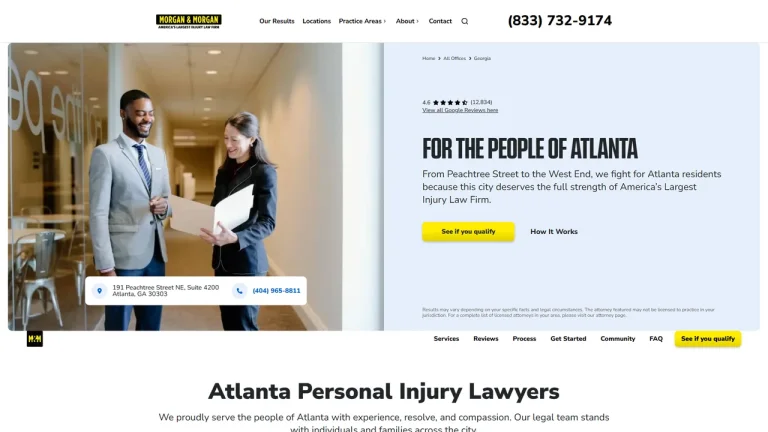
Morgan & Morgan - Atlanta, GA
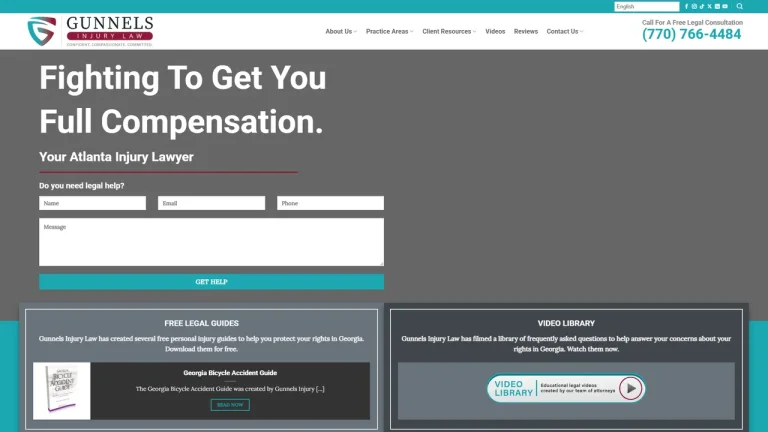
Gunnels Law Firm LLC - Atlanta, GA

Merck Law, LLC - Atlanta, GA
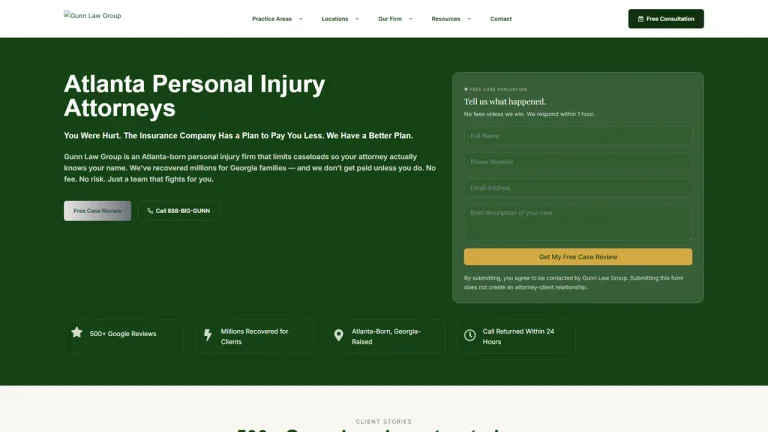
Gunn Law Group - Atlanta, GA
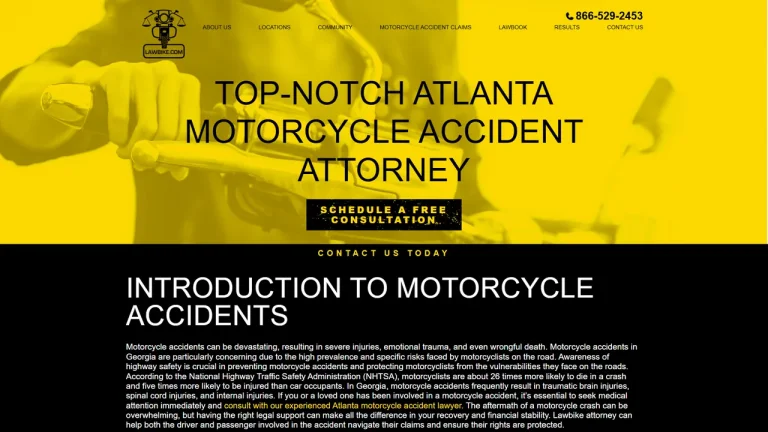
Lawbike Motorcycle Injury Lawyers - Atlanta, GA

Shani O. Brooks P.C. Attorneys at Law - Atlanta, GA

Probst Law Firm - Atlanta, GA

Witt Law Group - Atlanta, GA

Thomas Kennedy Sampson and Tompkins LLP - Atlanta, GA

The Roth Firm - Atlanta, GA

Rueb Stoller Daniel - Atlanta, GA
Lex Magna Law Firm - Atlanta, GA
Win Big Law - Atlanta, GA

Penn Law LLC - Atlanta, GA

Kirkendall Dwyer LLP - Atlanta, GA
Ragland Law Firm, LLC - Atlanta, GA

Clyde & Co - Atlanta, GA

The Keenan Law Firm - Atlanta, GA

Navigating Product Liability Claims Across Atlanta
As a major regional center for industrial manufacturing, medical innovation, and logistics distribution, Atlanta witnesses significant commerce involving intricate consumer appliances, pharmaceutical supplies, and motor vehicle components. When a commercial product malfunctions due to flawed design, factory defects, or inadequate warning labels, the resulting injuries can be life-altering, requiring sophisticated legal prosecution under Georgia product liability statutes.
Defective product litigation in Atlanta is conducted within the Fulton County State Court and Fulton County Superior Court in Downtown Atlanta, as well as the United States District Court for the Northern District of Georgia at the Richard B. Russell Federal Building. Complex product claims often involve foreign corporate entities, requiring compliance with the Georgia Long-Arm Statute and intricate federal jurisdictional rules governing multidistrict litigation (MDL) and diversity of citizenship.
Hiring a dedicated Atlanta defective product injury attorney provides the resources required to stand up against national manufacturing corporations and their defense counsel. Seasoned litigators immediately implement strict chain-of-custody protocols to preserve the malfunctioning item, retain recognized design engineering experts, and navigate the technical discovery processes necessary to prove corporate negligence or strict liability.
Legal Fee Structures for Atlanta Product Defect Cases
| Case Scenario | Fee Structure | Estimated Cost (USD) | Key Cost Determinants |
|---|---|---|---|
| Defective Consumer Appliance or Power Tool Injury | Contingency Fee (33.3% - 40%) | $0 Upfront (33.3% - 40% of recovery) | Preservation of unaltered product, engineering testing fees, proving manufacturing versus user modification. |
| Automotive Crashworthiness & Airbag Failure | Contingency Fee (40%) | $0 Upfront (40% of recovery) | Vehicle storage logistics, event data recorder (EDR) extraction, biomechanical expert modeling. |
| Medical Device Failure & Surgical Implant Defect | Contingency Fee (33.3% - 40%) | $0 Upfront (33.3% - 40% of recovery) | Coordination with national MDL dockets, FDA regulatory compliance analysis, revision surgery documentation. |
| Toxic Chemical Exposure & Inadequate Warning Labels | Contingency Fee (40%) | $0 Upfront (40% of recovery) | Epidemiological studies, toxicological expert reports, proof of manufacturer knowledge of chemical toxicity. |
Critical Legal Deadlines & Statutes in Georgia
Product liability litigation in Georgia operates under rigid statutory deadlines. Under O.C.G.A. § 51-1-11, the manufacturer of personal property sold as new property is strictly liable in tort to individuals who suffer personal injury due to a defect in the product existing at the time of manufacture. Georgia applies a risk-utility analysis to determine whether a product was defectively designed, weighing the inherent dangers of the design against the feasibility and cost of adopting an alternative safe design.
Plaintiffs face two critical statutory time bars in Georgia. First, under O.C.G.A. § 9-3-33, personal injury actions must be filed within 2 years from the date of the injury. Second, Georgia enforces a strict 10-year statute of repose under O.C.G.A. § 51-1-11(b)(2), which completely extinguishes strict liability actions brought more than 10 years after the date of the product's first sale for use or consumption, regardless of when the injury occurred. Failure to warn claims may survive the statute of repose only if the manufacturer discovered post-sale hazards and willfully failed to warn consumers.
Small Claims Limits vs. Complex Products Litigation
The Fulton County Magistrate Court is capped at $15,000 for civil disputes under O.C.G.A. § 15-10-2. Self-representation in Magistrate Court is suitable only for minor property reimbursement claims, such as recovering the retail purchase cost of a malfunctioning household gadget that caused minor property damage without bodily injury.
In contrast, bodily injuries caused by defective machinery, automotive design flaws, or dangerous medical hardware require prosecution in the Fulton County State Court, Fulton Superior Court, or federal court. Pro se claimants cannot match the resources of global corporate defendants. Product liability lawsuits require thousands of dollars in expert engineering testing, formal non-destructive examinations, and compliance with Daubert evidentiary standards for expert witnesses under Georgia law. Experienced legal representation is vital to fund litigation expenses and compel corporate disclosure during pretrial discovery.
Red Flags When Hiring an Atlanta Product Defect Lawyer
- Attorneys who fail to immediately instruct you to secure, preserve, and maintain uninterrupted chain of custody for the defective device and its original packaging.
- Law firms lacking the financial capital and resources required to retain mechanical, electrical, or biomedical engineering expert witnesses.
- Lawyers who do not regularly litigate cases in the Fulton County State Court or the United States District Court for the Northern District of Georgia.
- Firms pushing you into a collective settlement structure without analyzing whether an individual lawsuit would secure greater compensation for your catastrophic injuries.
Frequently Asked Questions
What constitutes strict product liability in Georgia?
Under O.C.G.A. § 51-1-11, a product manufacturer is strictly liable if the product was not merchantable and reasonably suited for its intended use when sold, and the defective condition was the proximate cause of the plaintiff's personal injuries, regardless of manufacturer negligence.
What is the 10-year statute of repose for defective products in Georgia?
Codified under O.C.G.A. § 51-1-11(b)(2), the statute of repose completely bars strict product liability claims filed more than 10 years after the product was first sold for use, even if the injury occurred recently, with limited exceptions for failure to warn.
How long do I have to file an injury lawsuit for a defective product in Atlanta?
Under O.C.G.A. § 9-3-33, you have 2 years from the date of the injury to file a product defect lawsuit in Georgia, provided the claim is not barred by the 10-year statute of repose.
Why is preserving the defective product so important?
Preserving the product in its exact post-incident state without alteration is mandatory. Altering, repairing, or discarding the item can trigger claims of evidence spoliation, resulting in severe court sanctions or the total dismissal of your legal claim.
Can a seller or retailer be held strictly liable in Georgia?
In Georgia, strict liability applies almost exclusively to product manufacturers under O.C.G.A. § 51-1-11. Retailers, distributors, and wholesalers generally cannot be sued under strict liability unless they participated in the design or assembly, but can still be held liable for independent negligence.